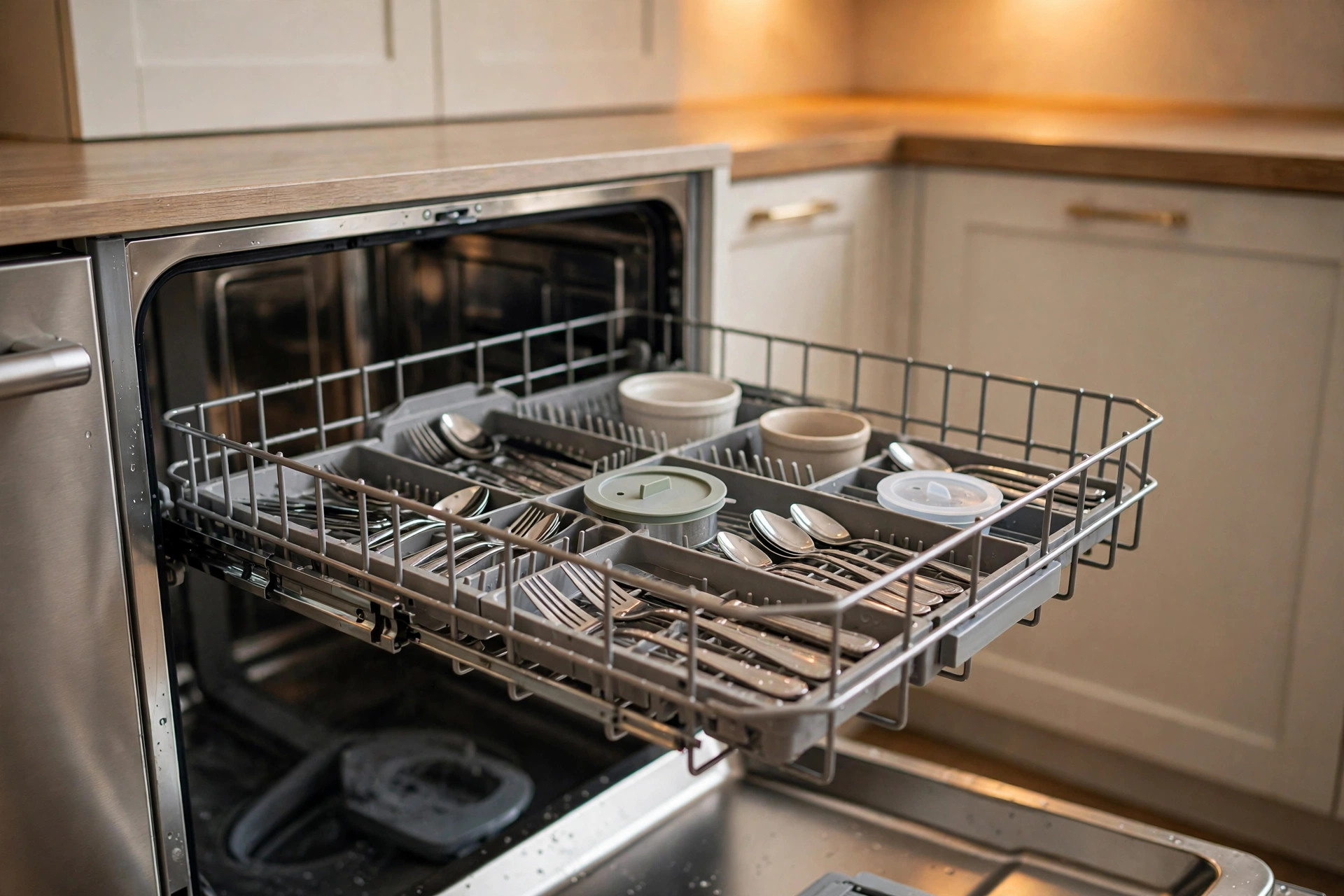

The dishwasher is one of the hardest working machines in the American kitchen. Most families run it every day, sometimes twice a day. Over the last twenty years, makers have added one change that many buyers now ask for by name: the third rack. This dishwasher third rack buying guide usa shoppers can use will explain what the rack does, who needs it, what to look for in the store, and how much to pay. The words are plain and the facts are simple, so you can make a good choice without guesswork.
A third rack is a shallow tray that slides in at the very top of the tub, above the upper rack. On most machines, it holds knives, forks, and spoons laid flat instead of standing up in a basket. It also takes spatulas, serving spoons, lids, small bowls, and coffee mugs that never fit well before. A wash arm or spray jets aimed at the rack from above send water to the flat pieces. Moving silverware out of the lower rack also frees space for plates and pots below.
Why a Third Rack Matters
The plain reason the third rack exists is space. The average American dishwasher is 24 inches wide. For decades, that space was split between two racks and a silverware basket. The basket sat in the lower rack and took room that plates needed. When silverware moves to the top tray, the lower rack gains room for large pans and cutting boards.
The second reason is cleaning. Silverware in a basket can nest together. Spoons sit face to face, and the water cannot reach between them. When the same spoons lie flat on a third rack, the spray hits both sides. Many testers report cleaner flatware and fewer spots after the change. It is not magic. It is just better water contact.
The third reason is safety. Knives point down in a basket, but you still reach into it with bare fingers. On a third rack, sharp blades lie flat in slots. You lift them by the handle without touching the edge. Homes with small children often choose this layout for that reason alone.
There is also a small gain in ease. Loading a third rack is quick. You lay each piece in a slot and push the tray shut. Some people with weak wrists or sore backs find the top tray easier than bending over a deep basket.
None of this means every home needs a third rack. A single person who runs the dishwasher twice a week may never fill the top tray.
What to Look for When You Buy: Dishwasher Third Rack Buying Guide Usa
Capacity and Rack Design
The first thing to check is the height of the third rack. Some trays are only two inches deep and hold nothing but silverware. Others are three inches deep and fit small bowls, ramekins, and coffee mugs. A deeper tray is more useful, but it takes height away from the upper rack. If you wash tall glasses and stemware often, a very deep third rack may force you to load them at an angle. Ask the dealer to show the machine with the top tray removed so you can see how much room the upper rack loses.
Next, look at how the tray is built. Good racks have rows of slots or clips that keep each fork and spoon apart. Cheap racks are just flat trays with no dividers. Pieces slide together in a flat tray, and you lose the cleaning gain. Look for racks that slide on smooth rollers. A tray that sticks or jams when full of heavy silverware will annoy you for years.
Check whether the third rack is removable. On many models, it lifts out so you can load it at the counter. This is a real help if you have small children or a stiff back. You can also use it as a serving tray for flatware when guests come over.
Also note the spray system. Some machines have a dedicated spray arm aimed at the third rack. Others rely on the upper spray arm reaching through the upper rack. Dedicated spray gives better results. The product sheet will say “dedicated third rack spray” or words close to that. The ENERGY STAR site has plain guides on how dishwasher spray systems affect water use, which is worth a look before you buy.
Cleaning Performance and Drying
A third rack adds one more layer of dishes for the water to reach. That makes the wash system more important, not less. Look for machines with multiple spray arms and a hard food disposer or a fine filter. Soil sensors are useful. They test the water and add wash time when dishes are dirty. The Bosch home appliances and Whirlpool sites explain their rack and spray designs in plain words, which can help you compare.
Drying matters more with a third rack than many buyers expect. Flat pieces hold little puddles. Look for heated dry or a fan-assist dry cycle. Plastic lids and containers dry worst. If your family uses many plastic items, give drying power extra weight in your choice.
Size, Fit, and Installation
Most dishwashers with a third rack are full-size 24-inch models. Compact 18-inch models with third racks exist, but they are rare and hold less. Measure your opening before you shop. The standard cutout is 24 inches wide, 34 inches high, and 24 inches deep. Check that your old machine is a standard size, and check the door swing against nearby cabinets.
A third rack does not change the plumbing. The machine still needs a hot water line, a drain, and a power source. If you are replacing an old dishwasher, the swap is simple. If you are adding a dishwasher where none existed, you will need a plumber and an electrician. Plan that cost into your budget.
Noise is worth checking too. The third rack adds moving parts, and some cheap models rattle when the tray is full. Look for a decibel rating under 50 dBA for a quiet kitchen. The Consumer Reports buying guides test noise on many models and are a solid free source of test data.
Types and Options
Third racks come in several forms. The basic type is the flat silverware tray. It holds only flatware and small utensils. This is the cheapest type and the easiest to use.
The next step up is the flexible tray. It has fold-down sections and adjustable dividers. You can lay small bowls on one side and silverware on the other. This is the most common type in the mid price range.
The top type is the deep third rack. It is almost a full third level, three inches deep or more. It holds cereal bowls, mugs, and large utensils. Some brands pair it with a flexible middle rack that can move up or down. The trade is less height for tall glasses in the middle rack.
There are also machines with a third rack plus a silverware basket. You can use both, or remove the basket for more lower rack space. This gives the most choice but costs more.
When you compare brands, read the fine print. Some brands count a simple cutlery tray as a third rack. Others mean a true sliding third level. The two are not the same. Look at the rack in person before you decide.
For honest reviews from real owners, the This Old House and Bob Vila sites publish plain reviews of dishwasher models with third racks. Their testers load real dishes and report what fits.
Cost and Price
A dishwasher with a third rack costs more than one without it. In the USA, expect these rough ranges:
– Basic models with a simple third rack tray: about $450 to $650. – Mid-range models with a flexible third rack and soil sensors: about $650 to $950. – High-end models with a deep third rack, quiet motors, and smart features: about $950 to $1,500 or more.
These prices shift with sales. Major holidays like Memorial Day, Labor Day, and Black Friday often bring discounts of $100 to $300. Big box stores like Home Depot and Lowe’s list current prices online, which makes comparison easy.
Do not forget the add-on costs. Delivery runs about $50 to $80. Installation runs about $150 to $250 if you do not do it yourself. Hauling away the old machine adds $20 to $40. Extended warranties cost $100 to $250 and are rarely worth it for dishwashers, since most faults show up in the first year.
Think about running cost too. A third rack model uses about the same water and power as a two-rack model of the same size. GE Appliances and the ENERGY STAR program both note that modern dishwashers use about 3 to 5 gallons per cycle. If your old machine is twenty years old, the new one may pay for itself in water and power savings over five to seven years.
Care and Upkeep
The third rack needs little care, but it needs some. Rinse it under the tap once a month. Food bits collect in the slots and clips. A soft brush clears them out. Do not use steel wool. It scratches the coating, and rust can start where the steel shows.
Check the rollers every few months. Crumbs and glass chips can jam them. If the tray sticks, pull it out and wipe the rails with a damp cloth. A drop of food-safe mineral oil on the rollers can help, but do not use cooking oil. It turns gummy.
Clean the spray jets aimed at the third rack. Hard water leaves white crust in the small holes. A toothpick clears a clogged jet. If your water is very hard, run an empty cycle with a cup of white vinegar on the top rack once a month. This keeps all the spray arms clear.
Load the rack right. Put sharp knives with blades down or flat in the knife slots. Do not stack pieces on top of each other. The whole point of the rack is that water reaches every piece.
The Spruce home care guides have step-by-step photos for cleaning dishwasher racks and filters, which many owners find easier to follow than a manual.
Safety
Dishwashers are safe machines, but a few points matter. Sharp knives should always go in the knife slots with the edge away from your fingers. Never leave a loaded third rack pulled out where a small child can reach the blades.
Keep the detergent in its box, out of reach of children and pets. Modern pods look like candy. Store them high and locked away.
Check that the machine is level when installed. A tilted machine can leak at the door seal. If you see water under the door after a cycle, stop using the machine and call a repair service.
The US Consumer Product Safety Commission lists recalls for home appliances. Before you buy, check that the model you want has no open recall. This takes five minutes and is free.
Frequently Asked Questions
Can I add a third rack to my old dishwasher? No. The third rack is built into the tub with its own spray system and rails. You cannot add it to a machine that was made without it. If you want one, you need a new dishwasher.
Does a third rack mean less room for plates? It can mean slightly less room for tall items in the upper rack, but it usually means more room overall. Silverware moves out of the lower basket, so the lower rack gains space. Most owners report fitting more dishes, not fewer.
Are third racks worth the extra money? For a busy family, yes. The gain in space and the cleaner silverware are real. For a single person or a couple who run the machine twice a week, the gain is small. Weigh the price gap, often $100 to $200, against how much you wash.
Do all brands make third rack dishwashers? Most major brands do. You will find them in the lines of Bosch, Whirlpool, GE, Samsung, LG, and others. The design differs by brand, so compare in person.
Can the third rack hold small bowls and mugs? On deep and flexible racks, yes. On basic flat trays, no. Check the depth before you buy. If small bowls matter to you, choose a rack at least two and a half inches deep.
Is it hard to load a third rack? It is easy once you learn the habit. Lay each piece flat in a slot. Do not pile pieces on top of each other. The first week feels slow. After that, most people load it faster than a basket.
A Final Word
The third rack is a simple idea that works. It puts silverware where the water can reach it, frees space below, and keeps sharp edges away from your fingers. If your dishwasher runs full every day, it is one of the best upgrades you can buy.
Shop with a tape measure and a clear head. Check the rack depth, the spray system, the noise rating, and the price with installation. Compare two or three models in person. The Consumer Reports test results can settle close calls.
If you are also planning other kitchen work, our guides to stainless range hoods, gas kitchen ranges, and microwave drawer units cover those topics in the same plain style.
References
Bob Vila. (n.d.). Home improvement advice. https://www.bobvila.com Bosch. (n.d.). Home appliances. https://www.bosch-home.com Consumer Reports. (n.d.). Product reviews and ratings. https://www.consumerreports.org ENERGY STAR. (n.d.). Energy efficient products. https://www.energystar.gov GE Appliances. (n.d.). Kitchen and home appliances. https://www.geappliances.com Lowe’s. (n.d.). Home improvement products. https://www.lowes.com The Home Depot. (n.d.). Home improvement products. https://www.homedepot.com The Spruce. (n.d.). Home and garden advice. https://www.thespruce.com This Old House. (n.d.). Home renovation guidance. https://www.thisoldhouse.com U.S. Consumer Product Safety Commission. (n.d.). Product safety information. https://www.cpsc.gov Whirlpool. (n.d.). Home appliances. https://www.whirlpool.com
Was this guide helpful?

About Jennifer Lee
The My Garden US editorial team writes practical, in-depth home and garden guides for American homeowners — tested advice, no fluff.
You May Also Like

Gas Kitchen Ranges California Homes USA: What to Know Before You Buy
August 12, 2026 0 views
Butcher Block Countertops for Sale USA: A Plain Guide to Buying the Right One
June 23, 2026 0 views
Kitchen Island Hanging Lights Texas Homes USA
April 27, 2026 0 views