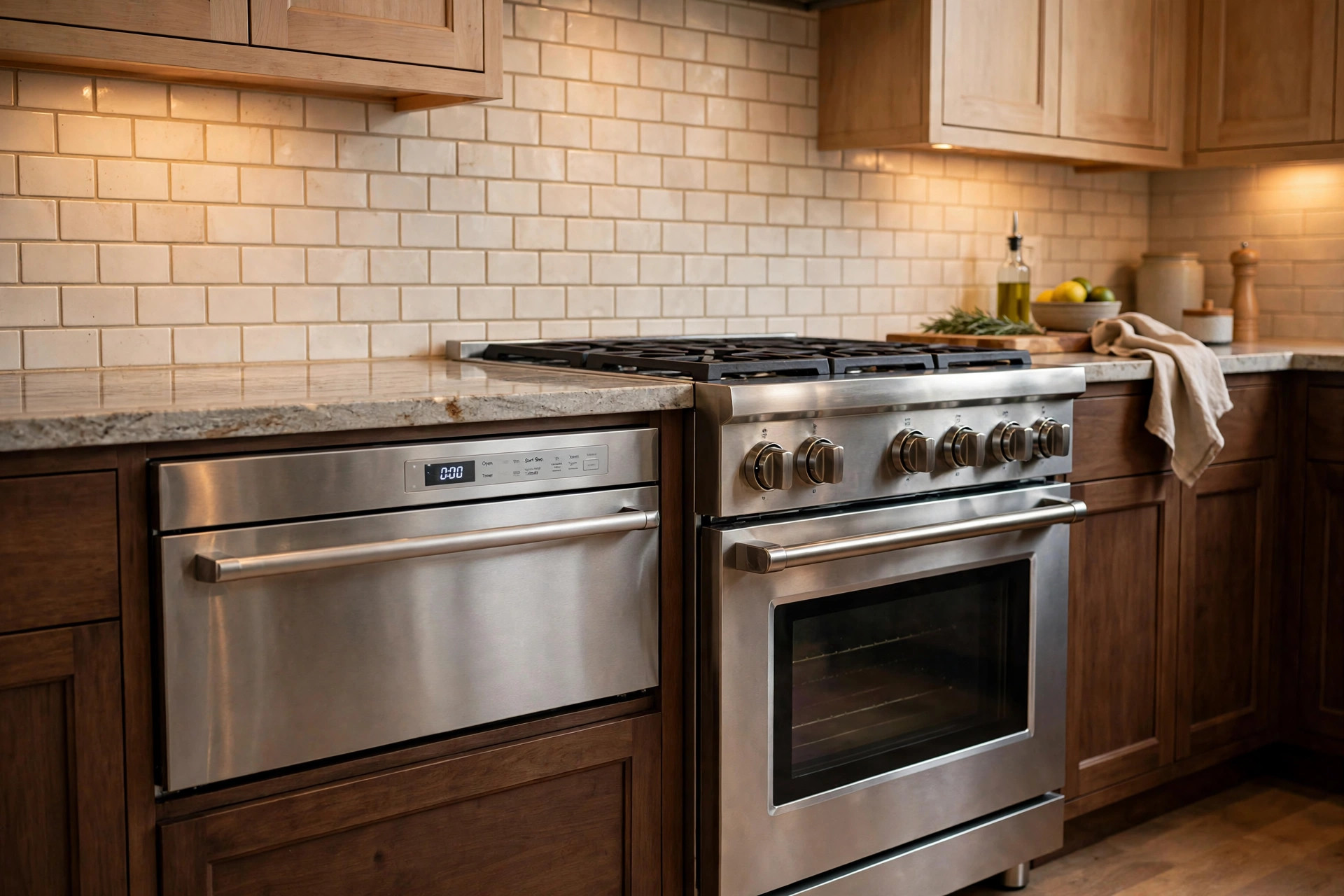

A microwave drawer is a microwave that opens like a drawer. It slides out from below the counter instead of swinging open from the front. This microwave drawer units buying guide USA will help you decide if one fits your kitchen. You will learn how these units work, what sizes exist, which features matter, and what they cost. Many American homeowners now choose a drawer microwave during a kitchen remodel. They want the clean look and the easy reach. But a drawer unit is not right for every home. Read on to learn the facts before you buy.
Why Microwave Drawer Units Matter
The microwave drawer changes where you put the microwave in the kitchen. A standard microwave sits on the counter or hangs above the range. It takes up space you could use for cooking. A drawer unit sits below the counter. That leaves the counter open for food preparation. It also moves hot food lower, where it is easier to reach for some people.
Many buyers choose a drawer microwave for the look. Kitchens with a drawer unit look less cluttered. There is no big box on the counter. The drawer front matches the other cabinets. This fits well in open kitchens where the kitchen is seen from the living room.
A drawer microwave also helps people who find it hard to reach up. Older adults and shorter cooks may prefer a microwave at waist height. A child cannot reach the hot drawer as easily as a counter unit. That is a safety gain in a family kitchen.
There are trade-offs. Drawer microwaves cost more than countertop models. They need a cut-out in the cabinet and a proper power outlet. They hold less food than some large countertop units. This guide will walk through each point so you can judge for yourself. For related remodel ideas, see our kitchen island seating buying guide usa, which often pairs with an island-based drawer microwave.
A drawer unit also changes the work flow of the kitchen. A cook can open the drawer, set in a dish, and close it with one hand. The other hand stays free. That helps when you carry a hot pan or hold a baby. A countertop microwave needs two hands more often. One hand opens the door and the other holds the dish.
The drawer form also suits a small kitchen. A galley kitchen has little counter space. Moving the microwave below the counter can free a full two feet of work space. That is a real gain in a tight room. In a large kitchen, the drawer keeps the sight lines clean. There is no tall box to break the view across the island.
What to Look for When You Choose: Microwave Drawer Units Buying Guide Usa
Size and Fit
Microwave drawers come in 24-inch and 30-inch widths in most USA stores. The 24-inch model is the most common. It fits a standard base cabinet opening. The 30-inch model looks wider and matches a 30-inch range or double wall ovens buying guide usa. Measure your cabinet opening before you shop. Note the width, the height, and the depth. Also check that the drawer can open fully without hitting the cabinet door or the dishwasher.
Power and Capacity
Most drawer microwaves run between 950 and 1,000 watts. That is enough for daily cooking. The inside space is usually 1.2 cubic feet. That holds a full-size dinner plate. It will not hold a tall stockpot. If you often cook for a large family, check the interior height. A drawer microwave cooks best with flat, wide dishes.
Controls and Ease of Use
Drawer microwaves have the control panel on the top edge of the drawer front. You press a button and the drawer slides open by itself. Look for a panel with large, clear labels. A sensor reheat button adjusts time on its own. A child lock stops small hands from opening the drawer. Some models add a keep-warm setting. Try the controls in the store if you can. They should feel simple and firm.
Venting and Power Needs
A drawer microwave needs its own grounded 120-volt outlet. Most run on a 15-amp circuit. The outlet should sit in the cabinet next to the unit, not behind it. Drawer units do not vent to the outside. They use a front vent. Leave the clear space that the manual asks for. Good planning here avoids a costly electrician visit later. You can compare appliance specs at GE Appliances or read remodel advice at This Old House.
Types and Options
Standard Drawer Microwaves
The standard model is a stainless steel drawer that slides open at the touch of a button. It heats, defrosts, and reheats. Some add a convection mode that bakes like a small oven. Convection models cost more. They suit cooks who want a second oven for holidays.
Convection Drawer Models
A convection drawer microwave adds a heating element and a fan. It browns food the way an oven does. You can bake cookies or roast a small chicken in it. These models need more power and cost more. Check that your circuit can handle the load. Many buyers find the plain microwave drawer is enough.
Trim Kits and Finishes
Most drawer microwaves come in stainless steel. Some brands offer black stainless or panel-ready fronts. A panel-ready front takes a wood panel that matches your cabinets. The drawer then hides in the kitchen design. Trim kits help the unit fit a non-standard opening. Ask the dealer if a trim kit fits your cabinet before you order. Review finish options in product roundups at The Spruce and compare store prices at Home Depot and Lowe’s.
Cost and Price
A microwave drawer costs more than a countertop microwave. In the USA, most models sell between $1,000 and $1,800. Convection models can reach $2,000 or more. A basic countertop microwave may cost under $150. The drawer price covers the motorized slide, the sensors, and the built-in design.
Installation adds to the total. If your cabinet needs a new cut-out, a carpenter may charge a few hundred dollars. If you need a new outlet, an electrician adds more. Get a quote before you buy the unit. Compare independent test ratings at Consumer Reports to see which models earn their price.
A drawer microwave can add value to a kitchen remodel. Buyers like the modern look. But you will not recover the full cost at resale. Buy one because you want to use it, not only for home value.
Care and Upkeep
Care is simple. Wipe the inside with a damp cloth after use. Food spills can bake onto the walls if you leave them. Use a mild dish soap for sticky spots. Do not use steel wool. It scratches the finish.
Clean the door seal with care. The seal keeps the microwaves inside the unit. Food stuck in the seal can cause arcing. Arcing is a small spark that can damage the unit. Check the seal each month.
The drawer slide needs little care. Do not force the drawer shut. Let the motor close it. If the drawer sticks, unplug the unit and call for service. Never take the cover off yourself. The inside holds high voltage even when unplugged. For general appliance care tips, see guides at Bob Vila.
Wipe the control panel with a soft, dry cloth. Water can seep behind the buttons and harm the electronics. If a button sticks, press it gently several times. Do not pry it with a tool.
Once a year, pull the unit out and vacuum the back and the cabinet opening. Dust can block the front vent. A blocked vent makes the unit run hot. That shortens its life. This small task takes ten minutes and pays off.
Safety
Microwave drawers are safe when used as directed. The low height is a plus. Hot food does not need to be lifted down from above your head. That lowers the risk of spills and burns.
Use microwave-safe dishes only. Glass, ceramic, and labeled plastic are fine. Never use metal, foil, or dishes with gold trim. They cause sparks. Do not run the unit empty. That can damage the magnetron.
Keep the area in front of the drawer clear. The drawer opens outward. A person standing close can be hit. Teach children to stand back and let an adult handle hot food. Check the child lock setting if your home has small children. You can find energy and safety guidance at ENERGY STAR.
Frequently Asked Questions
Can I install a microwave drawer in an existing cabinet? Yes, in many cases. You need an opening that matches the unit’s cut-out size. A carpenter can widen a cabinet if needed. You also need a grounded outlet in the next cabinet. Plan the wiring before you cut.
Is a drawer microwave better than a countertop microwave? It depends on your needs. A drawer frees counter space and looks built in. A countertop model costs far less and moves with you. If you remodel and want a clean look, the drawer wins. If you rent, a countertop model is the smarter buy.
Do microwave drawers cook as well as regular microwaves? Yes. Most drawer models run at 950 to 1,000 watts. That matches a mid-size countertop microwave. Cooking results are the same. The difference is the shape of the cavity, not the power.
Can a microwave drawer go under a cooktop? Some can and some cannot. The heat from a cooktop can damage the microwave below. Check the manual for your exact models. Many makers list which cooktops pair safely with their drawer units. When in doubt, place the drawer in the island or a separate cabinet.
How long does a microwave drawer last? A well-kept drawer microwave often lasts 8 to 10 years. The motorized slide is the part most likely to wear. Do not slam the drawer. Keep the unit clean. Use a surge protector to guard the electronics.
Are replacement parts easy to find? Major brands sell parts through dealers and service centers. Common brands include Sharp, Bosch, and Wolf. Check parts availability before you buy a lesser-known brand. You can browse current appliance lines at Whirlpool and Bosch.
Can a left-handed cook use a drawer microwave with ease? Yes. The drawer opens straight out with a button press. There is no door that swings to one side. That makes it friendly for left-handed and right-handed cooks alike. The control panel sits on the top edge where both hands can reach it.
A Short Final Word
A microwave drawer unit is a strong choice for a planned kitchen remodel. It saves counter space. It looks clean. It puts hot food at a safe height. It costs more than a countertop model and needs careful planning. Measure twice. Check the power needs. Compare models with care. If the unit fits your budget and your cabinet, it will serve your kitchen well for years. Pair it with a solid work surface; see our quartz countertop installation buying guide usa for countertop options that match a built-in look.
References
Bob Vila. (n.d.). Home improvement advice. https://www.bobvila.com Bosch. (n.d.). Home appliances. https://www.bosch-home.com Consumer Reports. (n.d.). Product reviews and ratings. https://www.consumerreports.org ENERGY STAR. (n.d.). Energy efficient products. https://www.energystar.gov GE Appliances. (n.d.). Kitchen and home appliances. https://www.geappliances.com Lowe’s. (n.d.). Home improvement products. https://www.lowes.com The Home Depot. (n.d.). Home improvement products. https://www.homedepot.com The Spruce. (n.d.). Home and garden advice. https://www.thespruce.com This Old House. (n.d.). Home renovation guidance. https://www.thisoldhouse.com Whirlpool. (n.d.). Home appliances. https://www.whirlpool.com
Was this guide helpful?

About Robert Taylor
The My Garden US editorial team writes practical, in-depth home and garden guides for American homeowners — tested advice, no fluff.
You May Also Like

Kitchen Backsplash Tiles for California Homes: A Plain Guide
January 25, 2026 0 views
Gas Kitchen Ranges USA Online Deals: How to Shop Smart and Save
June 29, 2026 0 views
How to Find Quartz Countertop Installation Deals Near Me
March 29, 2026 0 views