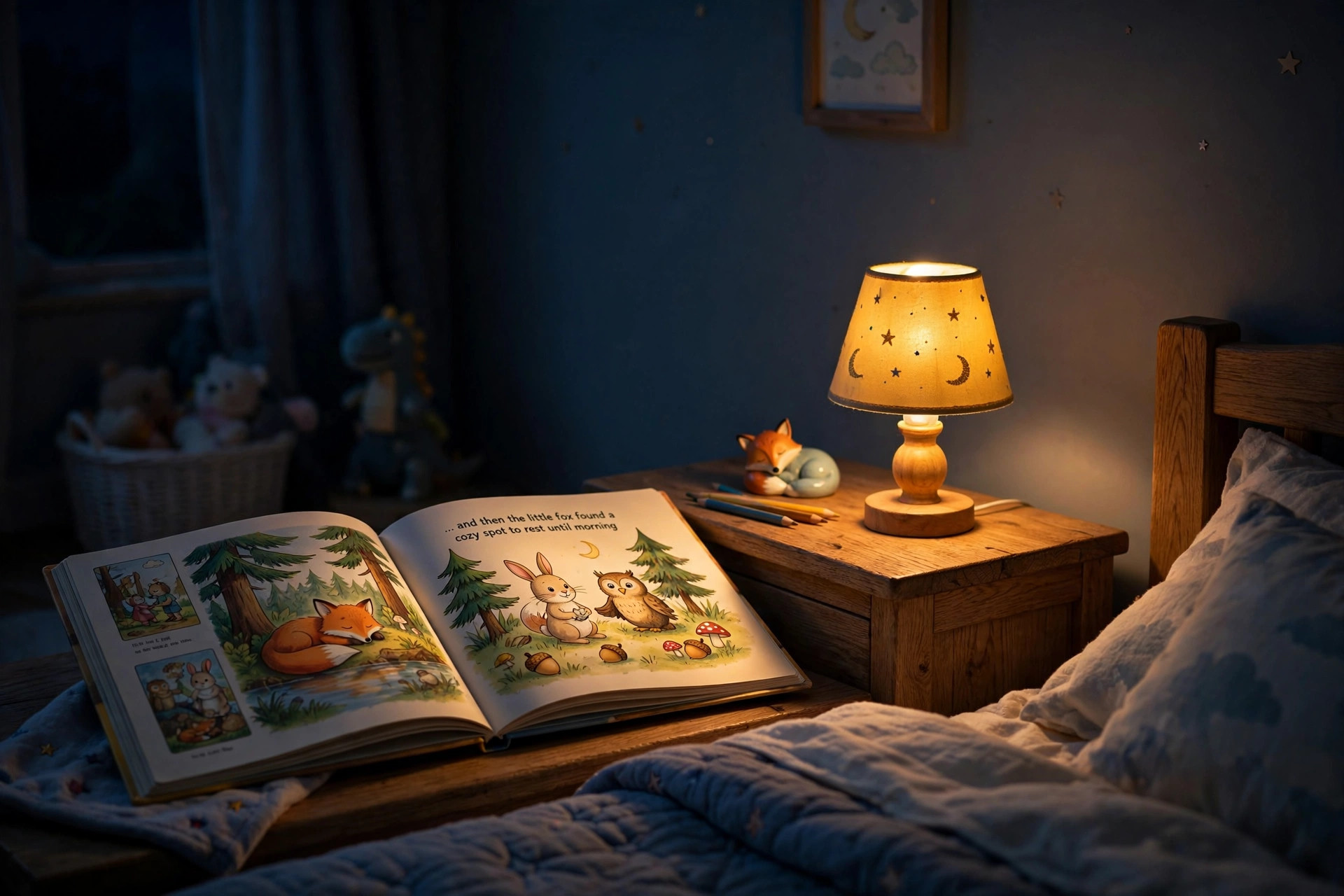

Why a Reading Lamp Matters in a Child’s Room
A kids bedroom lamp for reading in bed does more than light the pages of a book. It marks the end of the day. When a parent switches on that small lamp, a child learns that bedtime has begun. The bright ceiling light goes off. The room grows calm. The child knows it is time to rest, yet not time to sleep.
Reading in bed is a habit that grows slowly. Many children read for ten minutes each night. Some read for half an hour or more. A good lamp lets them read without eye strain. It lets them see the pictures and the words clearly. It keeps the rest of the room dark, so the mood stays sleepy. A child who reads in a bright room may feel too awake. A child who reads with only a hall light may squint at the page.
A bedtime lamp also gives a child a sense of control. The child can switch the lamp on. The child can turn the pages. The child can close the book and switch the lamp off. These small steps build trust. The child learns to settle down on his or her own. Parents who want to build a calm evening routine will find that a reading lamp is one of the simplest tools they can buy.
Lighting guides from The Spruce note that layered light makes a room feel warm and useful. A single bright ceiling light is rarely the best choice for a bedroom. A table lamp adds a second layer. It gives light where the child needs it and nowhere else. This idea is as old as the bedside lamp itself, and it still holds true today.
What to Look for When You Choose a Lamp: Kids Bedroom Lamp for Reading in Bed
The Right Brightness
Brightness is the first thing to check. A lamp for reading should be bright enough to read by, but soft enough not to hurt the eyes. Look for a bulb in the range of 400 to 800 lumens. This is roughly the light of a 40 to 60 watt old style bulb. Such a lamp lets a child read a book held in the lap. It does not flood the whole room.
Light color matters as much as brightness. Choose a warm white bulb, around 2700 to 3000 Kelvin. Warm light looks like candlelight. It feels calm. Cool white light looks like daylight. It can make a child feel alert. Reading guides from healthychildren.org, the parent site of the American Academy of Pediatrics, remind parents that bright and blue-toned light in the evening can push bedtime later. A warm lamp keeps the body clock on track.
Many lamps now come with a dimmer or with three step settings. This is a fine feature. A child can turn the lamp up to read and down to rest. If you want to learn more about nursery lighting in general, see our guide on a nursery lamp with soft warm light for night.
Size and Shape
The lamp should fit the nightstand. A base that is too wide will push books and toys off the table. A shade that is too tall will tower over the bed. For most children’s nightstands, a lamp between 12 and 18 inches tall works well. The shade should sit near the child’s shoulder level when the child sits up in bed. Then the light falls on the book, not on the child’s face.
A stable base is worth more than a pretty shape. Children knock things over. A lamp with a heavy base will wobble and stay up. A lamp with a light base will fall. Test the lamp in the store if you can. Give it a small push. If it tips at once, leave it on the shelf.
Switches a Child Can Use
A small child cannot always reach a turn knob at the back of a lamp. Look for a switch that is easy to find in the dark. A pull chain hangs down and is easy to grab. A touch base lets the child tap the lamp to turn it on. A cord with an inline switch sits on the bed or the table, where small hands can reach it. Let the child practice with the switch before the first bedtime. A child who can work the lamp alone feels proud and safe.
Cool to the Touch
Old bulbs get hot. A child who touches a hot bulb can get a burn. Choose a lamp that uses an LED bulb. LED bulbs stay cool. They also last for years. You can learn about LED efficiency and savings from the lighting tips at energy.gov. An LED bulb in a reading lamp is one of the safest choices a parent can make.
Types of Lamps for Reading in Bed
Table Lamps
The classic bedside lamp is still the best choice for most families. It sits on the nightstand. It gives a pool of light right where the book is. Table lamps come in every style, from plain to playful. Retailers such as Wayfair and IKEA carry many small lamps sized for children’s rooms. A table lamp is also easy to move. When the child outgrows the room, the lamp moves with him or her.
Clip-On Book Lights
A clip-on book light fastens to the book itself. It gives a small circle of light on the page. This can be a good choice when two children share a room. One child can read while the other sleeps, and the room stays dark. The drawback is that the light is small. Pictures and maps may be hard to see. A clip-on light is a fine spare lamp, but it is not a full replacement for a bedside lamp.
Wall-Mounted Reading Lights
A wall lamp mounts above the bed. It frees the nightstand for books and a glass of water. Many wall lights have a swing arm. The child can pull the light close to the book. Wall lamps need screws and a power cord, or a handyman to wire them in. They suit older children better than small ones.
Floor Lamps
A tall floor lamp can stand behind a reading chair. It suits a corner of the room set up for reading. It is less useful for reading in bed, since the light must reach across the mattress. Floor lamps also tip more easily than table lamps. In a small child’s room, a floor lamp is rarely the best pick.
For a full room setup, a reading corner pairs well with a small bookcase. See our guide on the best kids bookshelf rotating for small room for storage ideas that fit beside a reading nook.
Cost and Price
A kids bedroom lamp for reading in bed need not cost much. Simple LED table lamps start around ten to twenty dollars at large home stores. Lamps from children’s lines, such as those at potterybarnkids.com, often cost forty to eighty dollars. They tend to have sturdier bases and child friendly designs. A designer lamp or a wall mounted light with a swing arm can cost one hundred dollars or more.
The bulb is a small cost on its own. An LED bulb costs a few dollars and lasts for ten years or more. It also uses far less power than an old bulb. Over a year of nightly reading, the energy cost is a few dollars at most.
Reviews and test results from Consumer Reports can help parents compare models before they buy. Buying in person lets you test the switch and the weight of the base. Buying online gives more choice. Either way, check the return policy. If the lamp is too dim or too bright for the room, you want to be able to send it back.
Care and Upkeep
A reading lamp needs little care. Dust the shade once a month with a dry cloth. Dust on the shade blocks light and dulls the room. Check the cord now and then. If the cord is frayed or cracked, replace the lamp. Do not tape a damaged cord.
Change the bulb when it starts to flicker. A flickering light strains the eyes. Keep a spare LED bulb in a drawer so you are ready. LED bulbs rarely burn out, but a spare saves a trip to the store.
Teach the child to switch the lamp off after reading. This is good for the power bill and good for sleep. A timer plug can help if the child forgets. The timer turns the lamp off at a set time each night. Some parents use a timer to set a reading limit. When the lamp goes off, reading time is over.
Wipe the base with a damp cloth when it gets sticky. Children touch everything. A clean lamp lasts longer and looks better in the room.
Safety First
Safety is the most serious part of choosing a lamp for a child’s room. The U.S. Consumer Product Safety Commission, at cpsc.gov, sets rules for lamp cords, shades, and bulbs. Follow these steps to keep the room safe.
Keep the lamp away from curtains and bedding. Fabric can catch heat from a shade. Place the lamp on a steady table, not on the edge of the bed. Make sure the cord runs behind the nightstand, not across the floor. A cord across the floor is a trip hazard.
Choose a shade made of a firm material that will not melt. Paper shades look nice but need a cool LED bulb and room to breathe. Never let a child play with the lamp. A lamp is not a toy. Teach the child to touch only the switch.
For very young children, a lamp with a covered bulb is best. Some lamps hide the bulb inside a globe or a thick shade. The child sees the glow but cannot touch the bulb. As the child grows, you can move to a more open shade.
Check the lamp for a safety mark from a testing lab, such as UL or ETL. The mark is usually on the cord tag or under the base. It means the lamp was tested for fire and shock risk. Unmarked lamps from unknown sellers may skip these tests. It is not worth the risk to save a few dollars.
Bedtime routines and sleep safety tips from What to Expect can help parents build safe evening habits around the new lamp.
Frequently Asked Questions
How bright should a child’s reading lamp be?
A lamp of 400 to 800 lumens is right for most children. This is bright enough to read by without lighting the whole room. If the child squints, move the lamp closer or choose a slightly brighter bulb. If the child looks away from the light, it is too bright.
What color light is best for bedtime reading?
Warm white light, around 2700 to 3000 Kelvin, is best. It looks soft and yellow. It helps the child feel sleepy. Avoid cool white or daylight bulbs at bedtime. They can make it harder to fall asleep.
Can a reading lamp help a child sleep better?
Yes, in a small way. A reading routine tells the body that bedtime is near. A calm room with a soft lamp helps the child wind down. The lamp itself does not cause sleep, but the habit around it does. Keep the routine the same each night for the best result.
Is an LED bulb safe for children’s eyes?
LED bulbs are safe when used in a lamp with a shade. The shade spreads the light. Do not let a child stare straight into a bare bulb of any kind. A shaded lamp gives soft light that is fine for reading.
Where should the lamp sit on the nightstand?
Put the lamp on the side of the nightstand nearest the wall. The book stays in the middle. The cord runs behind the table. This keeps the lamp out of the child’s way when reaching for a glass of water.
When should a child get a reading lamp?
Many children are ready around age three or four, when they start to look at books on their own. Younger toddlers do better with a soft night light only. Older children can use a brighter lamp and even a dimmer. Match the lamp to what the child can reach and use safely.
A Final Word
A kids bedroom lamp for reading in bed is a small buy with a large effect. It gives a child light to read by. It gives the room a calm mood. It gives the evening a clear shape. Choose a lamp that is bright enough, warm in color, steady on its base, and easy for small hands to switch. Keep the cord safe and the bulb cool. Then sit back and let the child read.
Pair the lamp with a pleasant wall behind the bed for a room the child loves. Our piece on a nursery wall mural peel and stick forest shows how a simple wall change can make a reading corner feel special. More lamp ideas and buying guides can be found at lampsplus.com. With the right lamp in place, bedtime reading becomes a habit the whole family looks forward to.
For more background, see Target.
References
American Academy of Pediatrics. (n.d.). HealthyChildren.org. https://www.healthychildren.org IKEA. (n.d.). Home furnishings. https://www.ikea.com Pottery Barn Kids. (n.d.). Kids furniture and decor. https://www.potterybarnkids.com Target. (n.d.). Retail store. https://www.target.com The Spruce. (n.d.). Home and garden advice. https://www.thespruce.com U.S. Consumer Product Safety Commission. (n.d.). Product safety information. https://www.cpsc.gov Wayfair. (n.d.). Furniture and home goods. https://www.wayfair.com What to Expect. (n.d.). Pregnancy and parenting guidance. https://www.whattoexpect.com
Was this guide helpful?

About Sarah Mitchell
The My Garden US editorial team writes practical, in-depth home and garden guides for American homeowners — tested advice, no fluff.
You May Also Like

Nursery Wall Mount for Baby Monitor Camera: A Simple Guide for New Parents
August 4, 2026 0 views
The Best Nursery Bedding Set for Baby Girl: A Simple Buying Guide
April 22, 2026 0 views
Nursery Wall Organizer for Diapers and Lotion
May 12, 2026 0 views