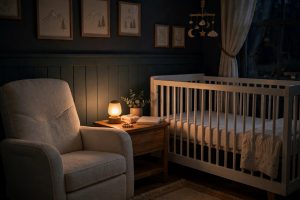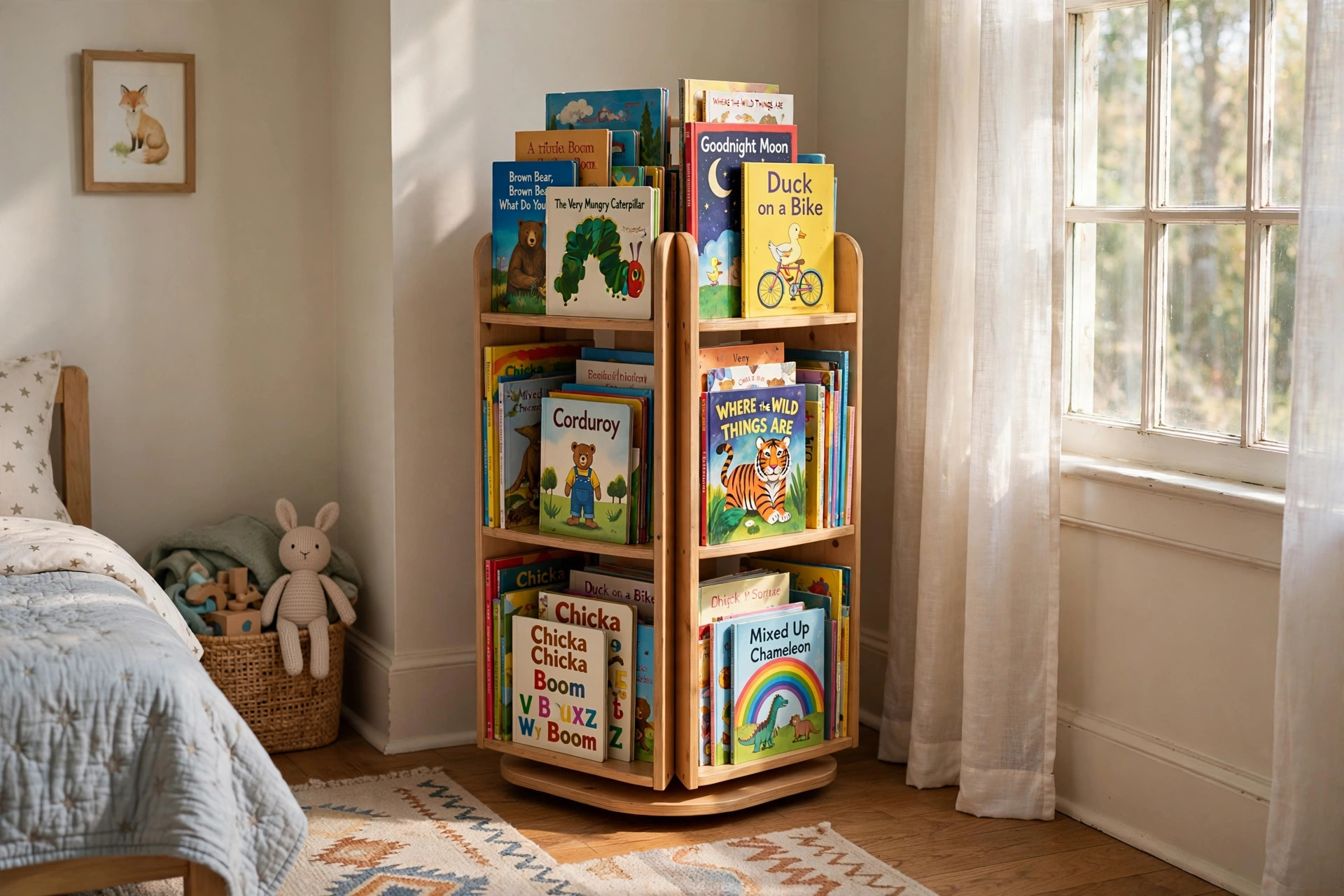

A small room can still hold a good library for a child. Parents often ask how to fit enough books in a space that measures only a few feet across. The answer may be the best kids bookshelf rotating for small room use. This type of shelf turns on a base so the child can reach books on every side. It takes up very little floor space. It also turns book time into a small adventure, because the shelf itself moves.
This guide explains what to look for, what types exist, what they cost, and how to keep them safe. It will help you choose with care.
Why a Rotating Bookshelf Matters for a Small Room
Floor space is precious in a small room. A standard bookshelf sits against a wall and gives one face of books. A rotating bookshelf uses the same footprint but offers two, three, or even four faces of storage. Some models are shaped like a small tower. Others look like a short barrel with shelves on all sides. Both designs make full use of a corner or a tight spot near a bed.
Children are more likely to read when books are easy to see and reach. A low rotating shelf lets a toddler spin it with a gentle push. The child sees the book covers, not just the spines. This matters, because young readers choose books by the picture on the cover. When covers face outward, the shelf becomes a kind of book store the child can browse.
A rotating bookshelf also teaches a child to put things back. Each side can hold a group of books by size or topic. The child learns where each book lives. Tidying up becomes a game of turning the tower until the right slot appears.
For parents, there is one more benefit. A rotating shelf can be moved from room to room. Many designs are light enough to carry. A family that rents a home can take it along without much trouble.
What to Look For When You Choose: Best Kids Bookshelf Rotating for Small Room
Not every rotating shelf is built for a small child. Keep the following points in mind before you buy.
Height
The top shelf should sit no higher than the child can reach. For a toddler, that means a total height of about 28 to 34 inches. For an older child of five or six, 40 inches may still work. If the child cannot reach the top, the books there will be ignored, and the child may climb. Climbing is never safe.
Stability
A tall narrow tower can tip. Look for a wide base and a low center of gravity. Some models include straps or brackets that fix the shelf to a wall. If the shelf will stand in the middle of a room where it cannot be anchored, choose a squat design with a heavy base.
Smooth and Safe Rotation
The shelf should turn with a light touch but not spin so freely that it keeps moving after the child lets go. A slight resistance is best. Check that there is no gap between the moving part and the base where small fingers could be pinched. Rounded edges are a must.
Materials
Solid wood and strong plywood are the classic choices. They last for years and can be handed down to a younger sibling. Plastic models are lighter and often cheaper, but they may wobble when full. Pressed fiberboard can work, yet it swells if it gets wet, so it is a poor choice for a room where spills are common.
Shelf Depth
Picture books are wide and thick. Look for shelves at least 8 inches deep on each face. Shallow slots suit board books and small paperbacks, but a book that sticks out will fall each time the shelf turns.
Finish
Choose a finish that is non-toxic and easy to wipe. Children touch, chew, and lean on furniture. Water-based paints and clear sealers are the safer options. Ask the seller what the finish is made of before you buy.
Types and Options
Rotating bookshelves for children come in a few common shapes. Each has its own strengths.
The Tower
The tower is the most common type. It has three or four sides of shelves stacked in a column. It holds the most books for its footprint. Towers suit children who own many books and need room to grow into a collection. The trade-off is height. A tall tower needs anchoring to stay safe.
The Carousel
The carousel is shorter and wider. Books sit in a ring, often with dividers like a pie chart. It holds fewer books than a tower, but it is very stable and easy for a toddler to spin. It works well on a table top or a low dresser, not only on the floor.
The Barrel
The barrel is a cylinder with shelves cut into its sides. It has no sharp corners at all, which some parents prefer for a playroom. It holds a moderate number of books. Barrels are often made of wood and cost a bit more because of the curved work.
The Two-Tier Spinner
This is a short unit with two levels, one above the other, that turns as one piece. It is a good first shelf for a baby who is just learning to stand and pull up. Because it is low, it needs no anchoring. It can move from the nursery to the living room as the child grows.
Many families pair a rotating bookshelf with other small-space pieces. A kids wall decal growth chart for measuring height can decorate the wall behind the shelf without using any floor space. A nursery rocking chair wooden for classic look placed near the shelf creates a reading corner, though it needs more room than the shelf itself. For nap time at a sitter, a toddler bedding set for daycare nap mat keeps rest time separate from book time.
Cost and Price
Prices vary with size, material, and brand. A simple two-tier plastic spinner can cost as little as 30 to 50 dollars. It is light and easy to clean, and it suits a child under three.
A medium wooden tower with three sides usually runs from 80 to 150 dollars. This is the most popular range. The shelf is sturdy, holds 60 to 100 books, and lasts through the early school years.
A large solid wood carousel or barrel can cost 150 to 300 dollars. These are pieces of real furniture. They often match other wood furniture in the room. Some can hold 150 books or more.
Handmade models from small wood shops may cost above 300 dollars. They are built to order and may offer custom colors or extra shelves. For most families, a model in the 80 to 150 dollar range is the sensible pick.
Watch for sales at large retailers. Storage and kids furniture often go on sale at the change of seasons. Compare prices across a few well-known home goods retailers such as IKEA and Wayfair before you buy, since the same model may sell for less at one store than another.
Care and Upkeep
A wooden rotating shelf needs little care. Dust it once a week with a dry cloth. Wipe spills at once so water does not soak into the finish. Every few months, check the screws and bolts. Wood can shrink and swell with the seasons, and bolts may loosen over time. Tighten what you can reach with a simple screwdriver.
The turning base deserves attention too. Many models use a lazy Susan bearing made of metal balls in a ring. Keep it clean and dry. If it starts to squeak or grind, a drop of light oil on the bearing ring often fixes the noise. Do not use thick grease, which can catch dust and make the problem worse.
Plastic models can be washed with warm soapy water. Rinse well and dry before you reload the books. Sunlight can fade plastic over time, so keep the shelf out of direct sun if you want the color to last.
Check the shelf for splinters or sharp spots each time you clean it. Wood edges can roughen with hard use. A bit of fine sandpaper smooths a rough spot in seconds. Touch up the finish if you sand down to bare wood.
Teach the child to turn the shelf slowly. Rough spinning wears the bearing faster and can throw books off the shelves. Most children learn the gentle touch quickly when you show them once or twice.
Safety
Safety comes first with any piece of children’s furniture. A rotating shelf has moving parts, so it needs a few extra checks.
Anchor tall shelves to the wall. The hardware costs only a few dollars and takes ten minutes to fit. A child will pull on the shelf, climb on it, and spin it hard. An anchored shelf cannot fall forward onto the child.
Check for pinch points. Run your own finger along the gap between the turning section and the base. If you can fit a pencil in the gap, a small finger can enter too. Some models include a soft guard ring. If yours does not, consider a different model.
Weight limits matter. Do not stack books above the shelf or pile toys on top. An overloaded top makes the unit top-heavy and harder to keep steady. Follow the maker weight limit for each tier.
Place the shelf away from windows and cords. A window cord near a bookshelf is a danger in any nursery. Keep cords out of reach or use cord shorteners. The United States Consumer Product Safety Commission publishes furniture safety guidance that is worth reading before you set up any child’s room, and you can find it at CPSC.
Check that the finish is lead-free and meets current standards for children’s products. Reputable sellers state this plainly. If a listing says nothing about the finish, ask the seller directly. The American Academy of Pediatrics offers general guidance on safe home environments for children, which is useful background for any parent setting up a room.
Look at the floor under the shelf. Hard tile lets a light shelf slide when a child spins it with force. A small rug or rubber pads under the base keeps it in place. Make sure the rug itself does not bunch up and cause a trip.
Frequently Asked Questions
How many books can a rotating kids bookshelf hold?
It depends on the design. A two-tier spinner holds about 30 to 40 picture books. A three-sided wooden tower holds 60 to 100 books. A large four-sided model can hold 120 to 150. Count the books your child owns now, then add room for about one year of growth. A shelf that is slightly too big is better than one that fills up in two months.
At what age can a child use a rotating bookshelf?
Babies as young as one year can enjoy a low two-tier spinner under a parent watch. Toddlers from age two can use a short tower on their own. Taller towers suit children of four and up, but any tall shelf should be anchored to the wall no matter the age of the child.
Does a rotating shelf work in a very small room?
Yes, and that is its main strength. Many models have a footprint of about 18 inches square. That is less floor space than a standard chair. Place it in a corner, beside the crib or bed, or even inside a closet with the door removed. The shelf turns, so the child can reach the back without pulling the unit out.
Wood or plastic: which is better?
Wood lasts longer and looks better, but it costs more and weighs more. Plastic is light, cheap, and easy to clean, but it may wobble and wear out sooner. For a toddler who is rough on furniture, wood is the wiser long-term buy. For a baby who will outgrow the shelf in a year, plastic can be enough.
Can I build one myself?
A skilled home woodworker can build a simple tower with a purchased lazy Susan bearing. Plans are common in woodworking guides such as Family Handyman. But building a safe piece for a small child takes care. The base must be heavy, the bearing must be strong, and all edges must be rounded. For most parents, buying a tested model is the safer choice.
Where should I put it in the room?
Choose a spot the child can reach without climbing over other furniture. Near the bed or the play mat works well. Keep it away from windows, cords, and heat vents. If the room has very little free floor, try the corner by the door. The shelf needs only a small patch of floor to do its job.
A Short Final Word
The best kids bookshelf rotating for small room use is the one that fits your child, your room, and your budget. Measure the space. Measure the child. Check the stability and the finish. Anchor what is tall. Then fill the shelves with books and watch what happens. A child who can see the covers and spin the shelf will reach for a book on his own. That is the whole point of the piece. The shelf is not just furniture. It is an invitation to read.
Guides to kids rooms often discuss layout and color as well as storage. You can find general decorating ideas for children’s spaces at The Spruce and product ranges aimed at families at Pottery Barn Kids. For extra storage around the room, look at options from The Container Store, and for tools to anchor or adjust the shelf, browse Home Depot or Target. Each of these is a well-known retailer or publisher with a real site behind the link.
References
American Academy of Pediatrics. (n.d.). HealthyChildren.org. https://www.healthychildren.org Family Handyman. (n.d.). DIY home repair and maintenance. https://www.familyhandyman.com IKEA. (n.d.). Home furnishings. https://www.ikea.com Pottery Barn Kids. (n.d.). Kids furniture and decor. https://www.potterybarnkids.com Target. (n.d.). Retail store. https://www.target.com The Container Store. (n.d.). Storage and organization products. https://www.containerstore.com The Home Depot. (n.d.). Home improvement products. https://www.homedepot.com The Spruce. (n.d.). Home and garden advice. https://www.thespruce.com U.S. Consumer Product Safety Commission. (n.d.). Product safety information. https://www.cpsc.gov Wayfair. (n.d.). Furniture and home goods. https://www.wayfair.com
Was this guide helpful?

About Jennifer Lee
The My Garden US editorial team writes practical, in-depth home and garden guides for American homeowners — tested advice, no fluff.
You May Also Like
Toddler Potty Chair for Bathroom Training: A Simple Guide for Parents
February 22, 2026 0 views
Kids Vanity Table with Stool for Makeup: A Simple Buying Guide
September 21, 2026 0 views
Best Convertible Toddler Bed with Safety Rail for Growing Children
July 6, 2026 0 views