
Clean water comes into the house through one pipe. A whole house water filtration system treats every drop of that water before it reaches a tap, a shower, or an appliance. Many homeowners ask about the whole house water filtration cost installed before they decide to buy one. The answer depends on the type of system, the size of the home, and the quality of the water that enters it. This guide explains the cost, the options, and what to expect when a system is put in.
Why It Matters
Water from a city supply is treated at a plant. Even so, it can pick up sediment, chlorine taste, and minerals on its way to the home. Well water has no plant treatment at all. It can carry iron, sulfur smell, hard minerals, and bacteria. A whole house filter stands at the main water line and cleans it all.
Filtered water tastes better. It smells better. It also protects the home. Hard water leaves scale in pipes and water heaters. That scale cuts the life of appliances and raises energy bills. A filtration or softening system slows that damage. Many homeowners pair a filter with regular plumbing care, such as a water heater maintenance checklist for homeowners, to keep the whole system in good shape.
There is also the cost of bottled water. A family that buys bottled water for drinking can spend several hundred dollars a year. A whole house system ends much of that cost. It also gives clean water at every tap, not just one.
Health is another reason people buy these systems. Old city pipes can add rust and sediment to the water. Rural wells can add farm runoff after heavy rain. A good filter lowers these risks. Parents of small children and owners of older homes often list peace of mind as the top benefit. Clean water also helps laundry. Clothes washed in filtered water keep their color longer. Whites stay white. Towels stay soft. These small gains add up over the years a family lives in the home.
What to Look For When Choosing a System: Whole House Water Filtration Cost Installed
Start with a water test. A test shows what is in the water. City water utilities publish a yearly quality report. Private well owners can send a sample to a certified lab. The test results decide what kind of filter is needed. There is no point in buying a system built for iron if the real problem is chlorine.
Next, check the flow rate. Flow rate is measured in gallons per minute. A small home may do well with 6 to 10 gallons per minute. A larger home with many bathrooms may need 12 to 18 gallons per minute. If the system is too small, water pressure drops when two showers run at once.
Filter life matters too. Some cartridges last three months. Others last five years. Long-life cartridges cost more up front but less over time. Ask how often each part must be changed and what each part costs.
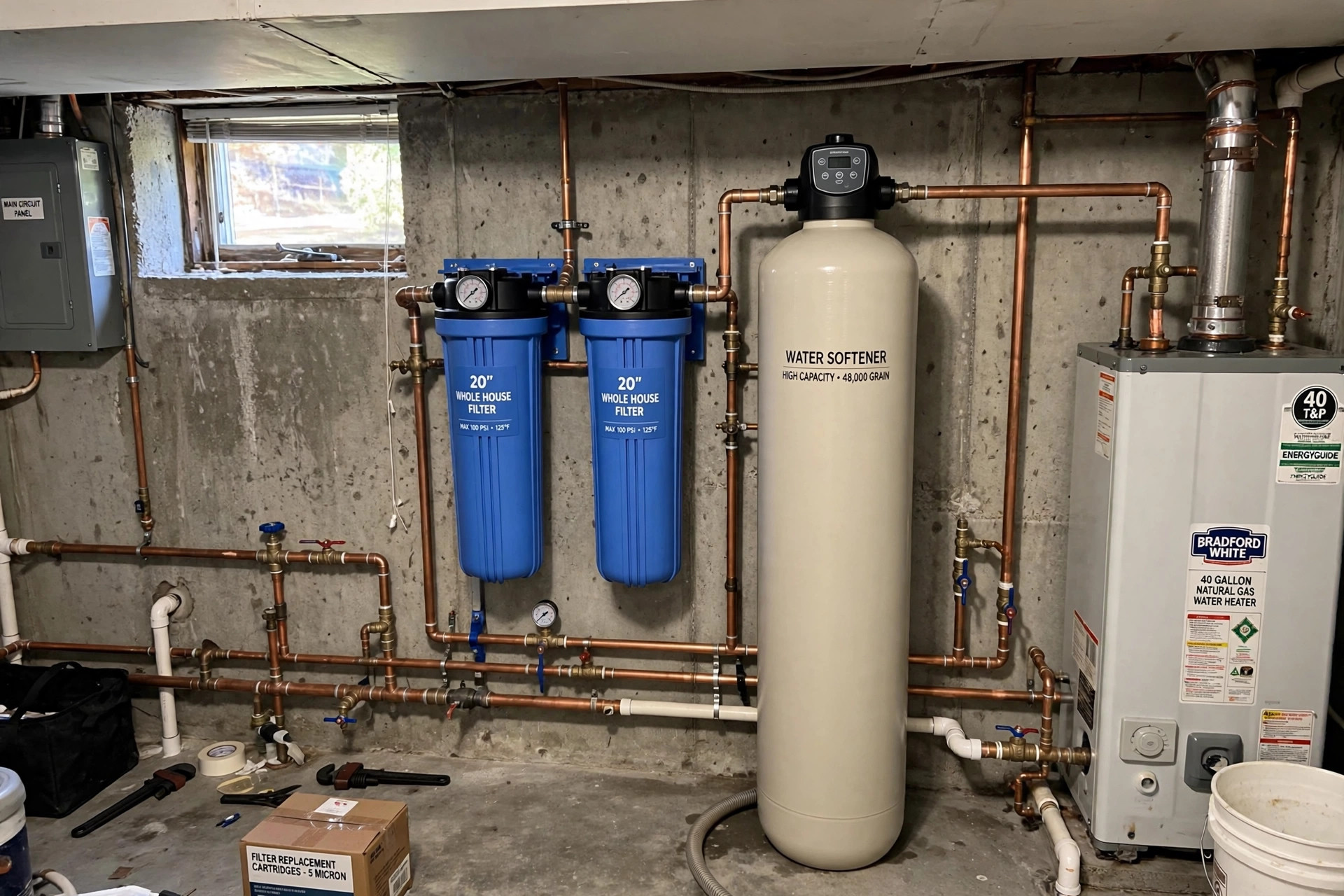
Look at the space where the unit will go. Most systems sit near the main water shutoff valve, often in a garage, basement, or utility room. Measure the space before buying. Big tanks need room. Some setups also need an electrical outlet and a drain line.
Check the warranty. Good systems carry a warranty of five years or more on the tank and valve. Read what the warranty covers and what voids it.
Types of Whole House Water Filtration Systems
Sediment Filters
Sediment filters catch sand, dirt, rust, and silt. They are the simplest type. They often sit first in line and protect the more delicate filters behind them. A sediment filter alone is the cheapest option.
Carbon Filters
Carbon filters remove chlorine, bad taste, bad smell, and many chemicals. Granular activated carbon is common. Carbon block filters catch finer particles. Most homes with city water use a carbon filter as the main unit.
Water Softeners
Softeners remove calcium and magnesium, the minerals that make water hard. They use salt and resin beads. A softener is often paired with a carbon filter. Homeowners who notice white scale on faucets may find that faucet-mounted options help at one tap, but a whole house unit solves the problem everywhere.
Iron and Sulfur Filters
Well water often contains iron and sulfur. Iron stains sinks and laundry. Sulfur smells like rotten eggs. Special media filters oxidize and trap these minerals. These units cost more than simple carbon filters.
Reverse Osmosis
Whole house reverse osmosis is rare in homes. It treats water very well but is costly and wastes some water. Most families who want reverse osmosis use a small under-sink unit for drinking water and a simpler whole house filter for the rest.
UV Purifiers
UV light kills bacteria and viruses. It does not remove chemicals or minerals. A UV unit is often added after a filter for well owners who worry about germs.
Cost and Price
The whole house water filtration cost installed falls into three main parts: the unit, the labor, and any extras.
A basic sediment or carbon filter unit costs between $300 and $900. A mid-range carbon and softener combo costs between $1,000 and $2,500. A high-end system with iron removal, softening, and UV can cost $3,000 to $6,000 or more.
Labor adds $300 to $1,200 in most cases. A simple swap near an easy-to-reach main line is cheap. A job that needs new copper or PEX pipe runs, a drain line, or an outlet costs more. Homes with old plumbing may need extra work before the filter can go in.
Extras can include a pre-filter, a pressure gauge, a bypass valve, and a new main shutoff valve. These add $100 to $500.
So what is the typical total? For most American homes, the whole house water filtration cost installed lands between $1,000 and $3,500. Simple jobs can come in under $1,000. Complex well-water systems with softening and iron treatment can pass $5,000. Getting two or three written quotes from local plumbers is the best way to know the price for one house.
When you ask for quotes, ask for the same details from each plumber. The quote should list the unit brand and model, the type of filter media, the flow rate, and the labor cost. It should also say whether the price covers a permit, a bypass valve, and hauling away the old parts. A low quote that leaves out these items is not really low. A high quote from a plumber with a strong local record can be worth it. Check reviews and ask neighbors for names before you choose.
Yearly upkeep adds to the long-term cost. Carbon cartridges cost $50 to $300 a year depending on the unit. Softener salt costs $5 to $10 a bag, and a family may use one bag a month. UV bulbs need yearly replacement at about $70 to $120. Over ten years, upkeep can match the first-year install cost. Smart buyers plan for it from the start.
Care and Upkeep
A filter that is not cared for stops working well. Follow the maker schedule for cartridge changes. Write the date on each new cartridge with a marker. That simple habit keeps the schedule honest.
Check pressure gauges once a month. A big drop in pressure between the inlet and outlet gauge means the filter is clogged and needs changing.
Softener owners should check the salt level every month. Letting the brine tank run dry can harm the resin. Once a year, clean the brine tank and check the drain line for clogs.
UV systems need the quartz sleeve wiped clean each year. A dirty sleeve blocks the light and lets germs pass.
Watch for leaks. Check the fittings and the floor under the unit now and then. A small drip can turn into a big repair. Homes on well water should test the water once a year to make sure the system still handles the iron and sulfur load. Well owners should also keep an eye on related parts, since a failing tank can change water pressure; many ask about the well pressure tank replacement cost usa when pressure problems appear.
Keep the area around the unit clear. Valves and gauges need to be reached in a hurry if something goes wrong.
Keep the maker manual in a folder near the unit. It lists part numbers for cartridges and seals. When a part fails on a weekend, having the part number on hand saves a trip and a guess. Some owners also set a phone reminder for each change date. Small habits like these keep the water clean and the unit healthy for years.
Safety
Turn off the main water supply before any work on the unit. Release the pressure through a nearby faucet. Water under pressure can burst a fitting and flood a room.
If the system uses electricity, keep cords and outlets dry. A ground fault outlet is wise in damp utility rooms.
Salt-based softeners add a small amount of sodium to the water. People on strict low-sodium diets should talk to a doctor or use potassium chloride instead of salt.
Never drink water from a system you are unsure about. If the filter has been off for weeks, flush the lines and change the cartridges before using the water again.
For homes with very old pipes, a filter will not fix lead from the pipes themselves. A water test for lead is smart in houses built before 1986.
Frequently Asked Questions
How long does installation take?
Most jobs take two to four hours. A plumber shuts off the water, cuts the main line, mounts the unit, and tests for leaks. Complex jobs with new pipe runs or electrical work can take a full day.
Does a whole house filter lower water pressure?
It can, a little. A clean, well-sized filter drops pressure by only a few pounds per square inch. An undersized or clogged filter drops it much more. Matching the unit to the home flow rate avoids the problem.
How often do filters need to be replaced?
It depends on the type. Sediment cartridges last three to six months. Carbon cartridges last six months to five years. Softener resin lasts many years with care. The maker manual gives the exact schedule.
Can I install the system myself?
A handy homeowner can install a simple single-stage filter. Multi-tank systems with drains and electrical parts are best left to a licensed plumber. Wrong pipe work can flood a home and void the warranty.
Is filtered water safe for pets and plants?
Yes. Carbon-filtered water is fine for pets. Softened water has extra sodium, so some gardeners keep one unsoftened outdoor spigot for plants. The American Society for the Prevention of Cruelty to Animals notes that clean water is a basic need for pets, and filtered tap water meets that need well.
Does a filter remove fluoride?
Most carbon filters do not remove much fluoride. Reverse osmosis and some special media do. If fluoride removal is the goal, check the product specs before buying.
A Short Final Word
A whole house water filter is one of the most useful upgrades a home can get. It improves taste, protects pipes and appliances, and cuts bottled water cost. The whole house water filtration cost installed is fair for what it gives, and the price stays reasonable when the system matches the real water problem. Test the water, size the unit right, and have it put in by a good plumber. With steady care, the system will serve the home for many years.
For more background, see Family Handyman, Moen, and U.S. Environmental Protection Agency. For more background, see The Home Depot, Lowe’s, and Delta Faucet. See Kohler for more detail.
References
ASPCA. (n.d.). Pet care and animal welfare resources. https://www.aspca.org Delta Faucet. (n.d.). Kitchen and bathroom faucets. https://www.deltafaucet.com Family Handyman. (n.d.). DIY home repair and maintenance. https://www.familyhandyman.com Kohler. (n.d.). Bathroom and kitchen fixtures. https://www.kohler.com Lowe’s. (n.d.). Home improvement products. https://www.lowes.com Moen. (n.d.). Faucets and plumbing fixtures. https://www.moen.com The Home Depot. (n.d.). Home improvement products. https://www.homedepot.com U.S. Environmental Protection Agency. (n.d.). Protecting human health and the environment. https://www.epa.gov
Was this guide helpful?

About Sarah Mitchell
The My Garden US editorial team writes practical, in-depth home and garden guides for American homeowners — tested advice, no fluff.
You May Also Like

Best Bidet Toilet Seat Reviews USA 2026: A Plain Guide for Homeowners
July 16, 2026 0 views
Water Heater Replacement Cost Near Me 2026: A Complete Price Guide
February 22, 2026 0 views
Water Filter Pitcher for Lead Reviews USA: A Plain Guide
August 22, 2026 0 views