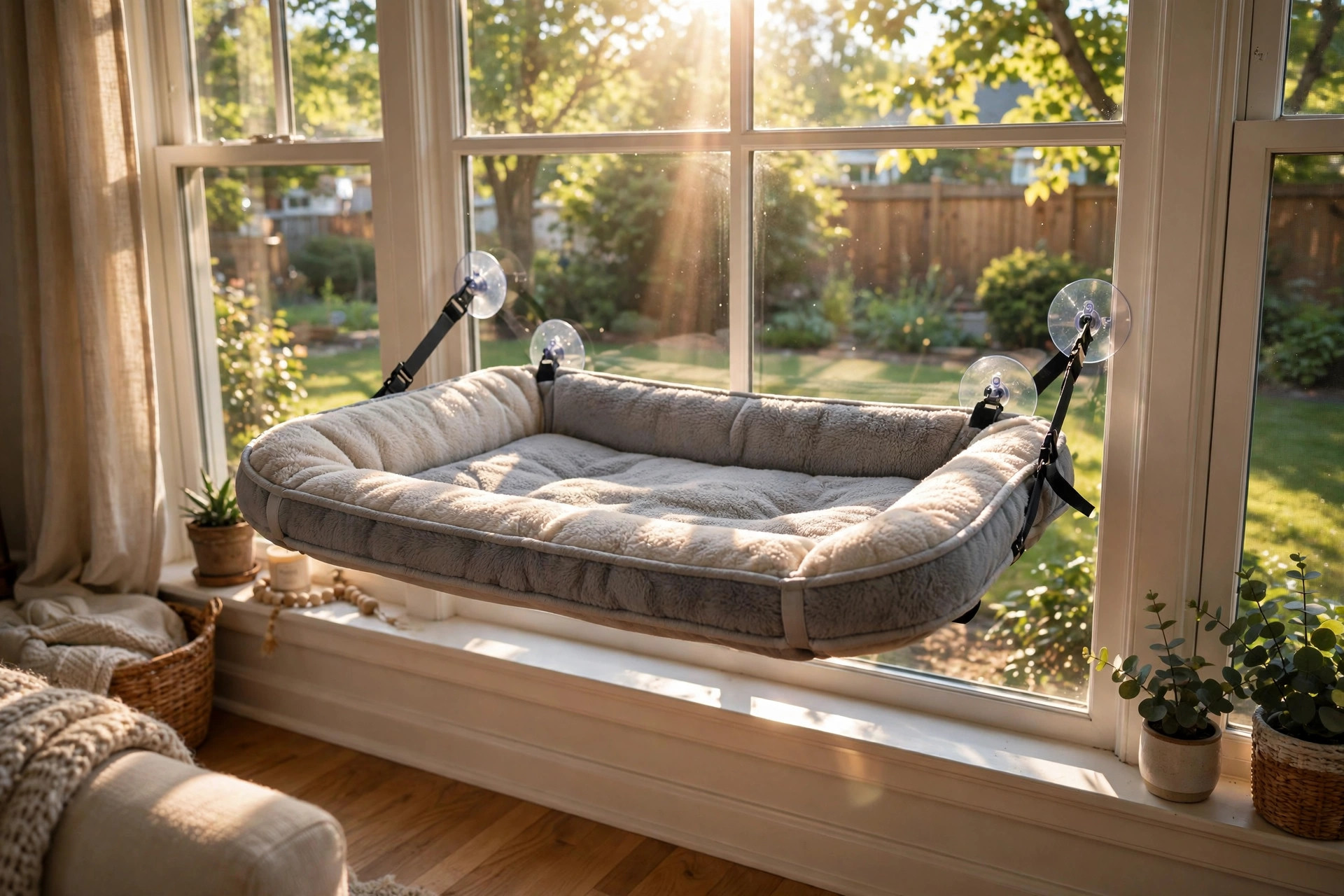

A Warm Spot by the Glass
A cat window perch for sunny window lounging is one of the simplest gifts you can give a cat. Cats love warm light. They will find it on their own, stretched across a bed, a desk, or a kitchen counter. A window perch gives them a proper place to do it. It mounts on the sill or hangs from suction cups, and it holds the cat at the level of the glass where the sun pours in.
The idea is not new. Pet stores have sold window beds for many years. What has changed is the range of choice. Today you can buy a basic foam pad that hooks on a sill, a hammock of mesh fabric held by suction cups, a wooden shelf bracketed into the wall studs, or a plush heated pad made for cold months. Each one answers the same need.
This guide walks through the whole subject. It covers why cats love sunbathing, the types of perches sold today, how to choose one for your home and your cat, what you can expect to pay, how to keep the perch clean and safe, and answers to common questions. By the end you will know which perch suits your cat best.
Why Cats Seek the Sun: Cat Window Perch for Sunny Window Lounging
Warmth and Comfort
Cats are built for warmth. Their normal body heat runs higher than ours, and they work to hold it. A patch of sun is free heat. When a cat sleeps in a warm spot, its body spends less energy staying warm. That is why old cats and thin cats seek sun most of all. A cat window perch for sunny window lounging puts that heat within easy reach all afternoon.
The View from Above
Cats are watchers by nature. A window at cat height is like a television that never turns off. Birds land in the yard. Leaves move in the wind. A perch at sill level turns this daily show into a full-time seat. Many owners report that their cats grow calmer when they have a window seat.
A Place of Its Own
In a house with people, dogs, and other cats, a cat needs a private corner. A window perch is a high, small space that belongs to one cat. Most other pets cannot climb there, and small children cannot reach it. For a shy cat, this privacy matters a great deal. For more on keeping cats happy indoors, see PetMD and its indoor cat care guides.
Types of Cat Window Perches
Suction Cup Hammocks
The suction cup hammock is the most common type. Two or four large suction cups press against the window glass. They hold a frame of wire or wood. A sheet of fabric or mesh hangs in the frame like a hammock. The cat climbs up and lies in the sling.
These hammocks are cheap and easy to move. They leave no marks when you take them down. Their weak point is the suction. On clean smooth glass they hold well. On dirty or old glass they can fail. Many models rate their hold at ten to fifteen pounds. If your cat is large, read the rating with care. You can find suction cup styles at Chewy, which lists weight limits for each model.
Sill Mounted Pads
A sill mounted pad hooks over the window sill or clamps to it. It is usually a flat padded tray with raised edges. Some have a small arm that presses against the wall below for extra support. These work best when the window sill is wide and flat. They are very stable because the sill itself carries the weight.
The limit is sill size. In older homes the sills are often wide wood, which suits these pads well. In newer homes with narrow vinyl sills, a hook-on pad may not grip. Measure your sill depth before you buy.
Wall Bracketed Shelves
A wall bracketed shelf screws into the wall or into studs beside the window. The shelf juts out under the window at sill height. It is by far the strongest option. A well set bracket can hold a large cat with room to spare.
The price of this strength is permanence. You will drill holes in the wall. If you rent your home, ask your landlord first. The shelf also takes more work to install. But once it is up, it will not budge. For hardware and brackets, The Home Depot stocks wood, brackets, and anchors that suit this kind of job.
Heated Window Perches
A heated perch is a padded tray with a low heat pad built in. It plugs into a wall outlet. The heat is mild, about the warmth of a sleeping body. It suits old cats, thin cats, and homes in cold climates. Some models warm only when the cat lies on them. Others run steady.
Never place a heated perch where water can reach the cord. Keep the cord out of reach of chewing cats. Check the pad often for wear. For general pet safety guidance around heated products, ASPCA offers useful advice.
Enclosed Window Beds
Some window perches are closed on three sides, like a small box with one open front. These suit shy cats that like a den. The walls block drafts and give the cat a sense of cover while it faces the sun. They cost more than open trays and they take more space, so check your window width first.
How to Choose the Right Perch
Know Your Cat’s Weight
Every perch has a weight limit. Weigh your cat before you shop. A six pound cat has many choices. A sixteen pound cat has fewer. Buy a perch rated for at least five pounds more than your cat weighs. This margin keeps the perch safe as the cat grows or gains weight.
Measure the Window
Take three measurements. First, the width of the glass or sill where the perch will sit. Second, the depth of the sill from glass to edge. Third, the height from the floor to the sill, since an old or stiff cat may need a step to climb up. Write the numbers down and bring them with you when you shop.
Check the Sun Path
Not all windows get sun. Watch your rooms through one day. Note which windows catch direct sun and for how long. South and west facing windows in the northern hemisphere get the most afternoon light. East windows get gentle morning light. A cat window perch for sunny window lounging only works in a window the sun actually reaches. Place it where the light falls for the longest stretch.
Look at the Fabric
The bed of the perch should be washable. Cats shed, and a sunny perch will collect dust and hair fast. Removable covers that go in the washing machine are best. Avoid loose weave fabric that claws can snag. A tight woven canvas or a smooth plush holds up longer.
Suction Cups or Screws
If you rent, suction cups or hook-on designs keep your walls whole. If you own your home and your cat is heavy, screws into studs are worth the small effort. There is no shame in either choice. The best mount is the one that holds your cat with no doubt at all.
If you are weighing bigger climbing options too, you may like our guide to the best cat tree for large cats sturdy tall. It covers floor standing towers that pair well with a window seat. And if your cat scratches the couch arm on the way to the window, our cat scratching pad for couch arm protection may help save your furniture.
Cost and Price
Prices for a cat window perch for sunny window lounging run wide. A simple suction cup hammock costs about fifteen to thirty dollars. A padded sill mounted tray runs twenty to forty dollars. A wall bracketed wooden shelf costs thirty to sixty dollars before you count screws and anchors. A heated window perch runs forty to eighty dollars. A large enclosed window bed can cost sixty to one hundred dollars or more.
Name brands cost more than store brands, but the gap is not huge. The main thing you pay for is weight capacity and build quality. Read the weight rating before the brand name.
You can compare current prices at Petco and Chewy. For those who like to build their own, Lowe’s and The Home Depot sell wood and brackets at fair prices. Set a budget, then shop inside it.
Care and Upkeep
Cleaning the Bed
Vacuum the perch once a week with a hand tool. This keeps hair and dust from building up. Wash removable covers once a month, or more often if your cat sheds heavily. Use a mild soap and warm water. Dry the cover fully before you put it back. Damp fabric can grow mold.
Checking the Mount
Once a month, test the mount. Press the suction cups and check their seal. Tug the frame gently. Tighten any screws that have worked loose. A two minute check keeps the perch safe. For advice on safe pet product use, The Humane Society publishes practical tips.
Sun and Fabric Fade
Direct sun will fade fabric over months. This is normal. Dark covers fade fastest. If the look bothers you, choose a light color cover. Never spray fabric protector on a perch your cat will lick. If the fabric thins or tears, replace the cover or the whole perch.
Safety First
Falls
A cat window perch for sunny window lounging sits high off the floor. Make sure the window behind it is closed or has a secure screen. A screen held by friction alone can pop out under a cat’s weight. Screw mounted screens are safer. If you open the window for air, lock it so the cat cannot push through. For window safety standards, The Spruce Pets has a clear overview.
Glass and Heat
Glass magnifies sun. On a hot day the perch surface can grow very warm. Feel it with your hand at midday in summer. If it is too hot for your palm, it is too hot for the cat. Move the perch to a window with morning light, or add a light curtain to cut the glare. Cats can overheat, so fresh water should always sit near the perch.
Cords
Heated perches have cords. Run the cord where the cat cannot chew it. Tape it along the wall or use a cord cover. Unplug the unit if you leave home for more than a day. Check the cord monthly for bite marks. If you see damage, stop using the perch.
Old or Sick Cats
A cat with stiff joints may struggle to jump to a high perch. Place a sturdy step or a low stool beside the window. This gives the cat a halfway rest. The American Kennel Club focuses on dogs, but its senior pet care articles remind owners that older animals of every kind need easy access to their favorite spots. If your cat stops using the perch it once loved, a vet visit is wise. The change may point to pain.
Frequently Asked Questions
Will my cat actually use a window perch?
Most cats will, but not all. Cats that already sit on sills or backs of couches are the best candidates. Give the cat time. Place a treat on the perch for the first few days. Do not force the cat up. Some cats take a week to trust a new perch.
How much weight can a suction cup perch hold?
Most rate between ten and twenty pounds. This is the tested limit on clean glass. Real world hold can be less if the glass is dirty or the room is cold. For cats over fifteen pounds, a wall bracketed shelf is the safer choice. Always leave a margin between the cat’s weight and the rating.
Is it safe to leave the perch by an open window?
Only if the screen is secure. A loose screen is a real danger. Cats lean on screens, and a friction fit screen can give way. Use screens that screw into the frame. Better yet, keep the window closed when you are not home. Fresh air is nice, but a fall from a second floor can be fatal.
Can kittens use a window perch?
Kittens can use a low perch once they climb with ease, usually around four months. Avoid heated perches for kittens under six months, since young cats may chew cords. Supervise the first visits until the kitten learns the perch is steady.
What if my windows face north and get little sun?
A perch still has value as a lookout, even without direct sun. But for the full sunny lounge effect, you need sun. If no window gets sun, consider a heated perch instead. It gives the cat the warmth it seeks without the sunbeam. You can read more about indoor enrichment at Wayfair, which covers pet furniture trends.
How do I clean a perch that cannot go in the wash?
Brush off loose hair with a lint roller. Wipe the surface with a damp cloth and a drop of mild dish soap. Rinse the cloth and wipe again. Let the perch air dry fully. Never soak a wood base or an electric heated pad. For the pad, follow the maker’s cleaning guide.
A Short Final Word
A cat window perch for sunny window lounging is a small purchase with a large payoff. It gives the cat warmth, a view, and a private place high above the noise of the house. It costs little, it takes minutes to set up, and it will be used every single day the sun shines.
Measure your window. Weigh your cat. Pick the mount that fits your home. Then set the perch where the afternoon light falls and let the cat do the rest. For dog owners thinking of winter comfort too, our guide to the heated dog house for winter cold climates covers warm shelter options for cold months.
References
American Kennel Club. (n.d.). Dog care and training resources. https://www.akc.org ASPCA. (n.d.). Pet care and animal welfare resources. https://www.aspca.org Chewy. (n.d.). Pet supplies. https://www.chewy.com Lowe’s. (n.d.). Home improvement products. https://www.lowes.com Petco. (n.d.). Pet supplies and services. https://www.petco.com PetMD. (n.d.). Pet health information. https://www.petmd.com The Home Depot. (n.d.). Home improvement products. https://www.homedepot.com The Humane Society of the United States. (n.d.). Animal protection and care. https://www.humanesociety.org The Spruce Pets. (n.d.). Pet care guides and product reviews. https://www.thesprucepets.com Wayfair. (n.d.). Furniture and home goods. https://www.wayfair.com
Was this guide helpful?

About Jennifer Lee
The My Garden US editorial team writes practical, in-depth home and garden guides for American homeowners — tested advice, no fluff.
You May Also Like

Best Pet Odor Candle for Dog Smell Removal: A Practical Guide
June 13, 2026 0 views
Best Pet Hair Vacuum for Hardwood Floors: A Simple Buying Guide
June 15, 2026 0 views
Outdoor Dog Water Fountain for Backyard Play
July 16, 2026 0 views