
Anyone who has priced out a yard project knows that soil is the quiet cost that can surprise you. Bags from the garden center add up fast. A single raised bed can swallow twenty bags before it looks full. That is why so many people search for cheap topsoil delivery near me prices. They want a full truckload dumped in the driveway for less money than the bags would cost. This guide walks through what topsoil delivery really costs, what makes prices move up or down, and how to order with care so the load you get is worth the money you pay.
Why Topsoil Quality Matters More Than the Price Tag
Topsoil is the top layer of the ground, usually the first six to twelve inches. It holds the organic matter that feeds plants. It holds the small life that keeps soil loose. Good topsoil is dark, crumbly, and smells like earth. It lets water pass through but holds enough for roots to drink.
Cheap soil that is full of clay, rocks, or weed seed is not a bargain. It can cost you twice as much in the end. Plants fail in poor soil. Weeds take over. You may have to dig it out and start again. That is the most common mistake buyers make. They chase the lowest number and forget to ask what is in the load.
A good load of topsoil saves labor too. When the soil is already screened and loose, you can spread it with a rake and a wheelbarrow in an afternoon. When it comes full of chunks and sticks, every wheelbarrow load becomes hard work. Pay attention to quality first. Then hunt for a fair price. The two together give you the real meaning of cheap topsoil delivery near me prices.
What to Look for Before You Order: Cheap Topsoil Delivery near Me Prices
Start by asking the supplier a few plain questions. Where did the soil come from? Has it been screened? What is in it? A straight answer tells you a lot about the business you are dealing with.
Screened topsoil has passed through a screen that takes out rocks, roots, and trash. It costs a bit more than unscreened fill dirt, but it is the kind you want for lawns and gardens. Fill dirt is cheaper and works fine under a shed or to level a low spot, but it will not grow much on its own.
Ask about the source. Soil scraped from a new housing site may carry weed seed or builder trash. Soil from a long-standing farm field is often richer. Some yards blend compost into their topsoil. A 50-50 mix of topsoil and compost can be a fine choice for vegetable beds, and it may cost a little more per yard.
Look at a sample if you can. Hold a handful. Squeeze it. Good topsoil holds together when squeezed and breaks apart when poked. If it stays in a hard ball, it has too much clay. If it falls through your fingers like dust, it has too much sand. Smell it as well. Clean topsoil smells like a forest floor. A sour or chemical smell is a warning sign.
Types of Topsoil You Can Have Delivered
Most yards and supply companies sell a few grades of soil. The names change from place to place, but the kinds are much the same everywhere.
Screened topsoil is the standard choice for lawns and planting beds. It has been run through a screen, usually about half an inch, to remove stones and debris. It spreads well and takes seed or sod without much extra work.
Unscreened or rough topsoil costs less per yard. It may hold sticks, small stones, and clumps. It works for filling low spots or building up grade where plants do not matter. Some buyers order a load of rough soil for the base and a smaller load of screened soil for the top.
Topsoil-compost blends mix soil with leaf compost, aged bark, or mushroom compost. These blends feed plants right away and hold water better in hot weather. They are a strong pick for raised beds and new garden plots.
Sandy loam drains fast and warms early in spring. It suits lawns that stay soggy. Clay loam holds water and nutrients longer but can pack down hard. Ask the yard which blend they sell most to home gardeners. The answer will tell you what works in your area.
Some companies also deliver specialty mixes for particular jobs. A lawn-leveling mix might be part sand and part soil. A raised-bed mix might hold extra compost. If you are building river rock landscaping in the front yard, you may want a firm soil base under the rock so the stones sit level and stay put.
Cost and Price: What Drives Topsoil Delivery Prices
The price of a delivered load comes down to a few parts. The soil itself usually sells by the cubic yard. A cubic yard is a pile about three feet wide, three feet long, and three feet tall. It fills a full-size pickup bed heaped high.
In many parts of the country, screened topsoil runs between twenty and fifty dollars per cubic yard at the yard. Unscreened soil may run ten to twenty-five dollars. Blends with compost sit at the higher end. Prices change with the season and the region. Spring is the busy time, and prices climb when demand is high.
Delivery is the second part of the bill. Many yards charge a flat delivery fee for a set distance, often thirty to seventy-five dollars, plus a little more per mile beyond that. Some yards waive the delivery fee if you buy a full truckload, often ten to twelve yards. A few set a minimum order, such as two or three yards, because a small load costs them almost as much to run as a big one.
Volume is where the real savings live. One cubic yard delivered may cost eighty dollars all in. Ten yards from the same yard may work out to thirty-five dollars per yard delivered. If you have a big job, order the whole amount at once. Ask a neighbor to split a load if you only need part of it.
Get two or three quotes before you commit.
How Delivery Works and How to Prepare
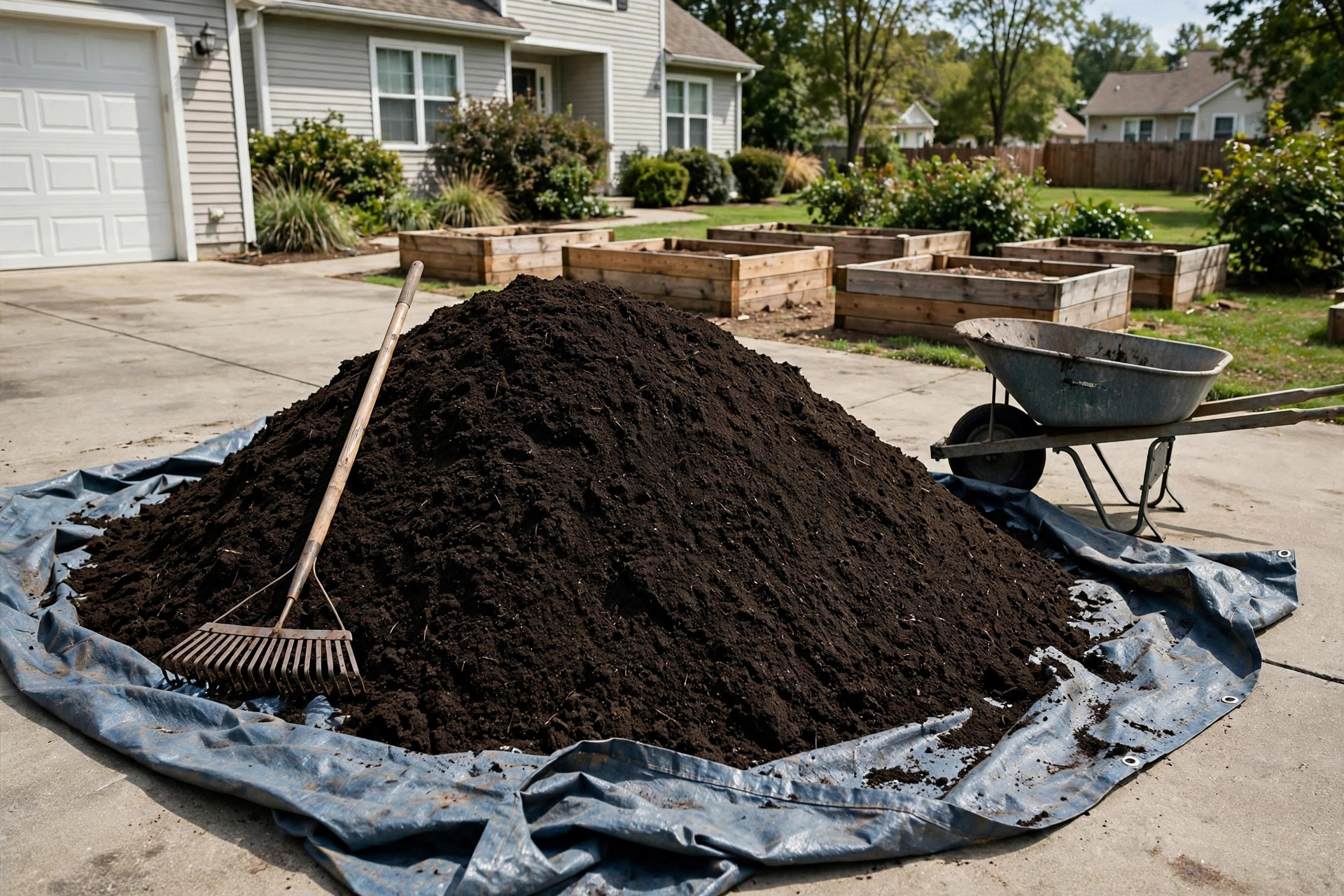
Most deliveries come on a dump truck that tips the load onto your driveway or into your yard. A full load of ten yards makes a pile roughly the size of a small car. Plan the drop spot before the truck arrives.
Pick a spot the truck can reach without tearing up your lawn. A driveway works well. Lay down a tarp first. The tarp catches the soil and makes cleanup far easier. It also keeps the pile off your concrete so you are not scrubbing stains later.
Think about access. A big dump truck needs room to turn and lift its bed. Low tree limbs and power lines can block the way. Tell the driver about gates, soft ground, or tight turns when you place the order.
Weather matters. Do not schedule a delivery right before heavy rain. A fresh pile turns to mud, and you cannot spread mud with a rake. A dry week is best. If the soil arrives damp, that is fine. Damp soil spreads well and packs into beds nicely. Soaking wet soil is the problem.
When the load lands, check it before the driver leaves. Walk around the pile. Look for trash, big rocks, or a strange smell. Most yards stand behind their product and will make it right if the load is wrong. Speak up at once rather than a week later.
Spreading and Using Your Topsoil
A cubic yard of topsoil weighs close to a ton. Even a small pile is serious work. For a few yards, a wheelbarrow, a shovel, and a garden rake will do. For ten yards or more, think about renting a small loader or hiring a hand for the day.
For a new lawn, spread the soil four to six inches deep. Rake it level and firm it lightly by walking over it or rolling it. Seed or lay sod within a day or two so rain does not wash the surface. Water new seed lightly every day until it sprouts.
For garden beds, dig the new soil into the top few inches of what is already there. This blends the two layers so water moves between them. Roots grow deeper when the soil below is not a hard wall. Many gardeners follow up in fall with the best lawn fertilizer for fall application on their grass areas and a layer of mulch on their beds to feed the soil through winter.
Keep your tools in shape for the job. Sharpening mower blades without removing them is one small chore that keeps a lawn cut clean, and clean cuts help new grass thicken after a topdressing of fresh soil.
Do not work soil that is soaking wet. It packs into clods that dry like bricks. Wait a day or two after rain. The soil should feel like a wrung-out sponge, damp but not dripping. That is the right time to spread, rake, and plant.
Care and Upkeep of Delivered Soil
Topsoil is not a one-time fix. It settles. It washes. Its food runs out. A little care each year keeps it rich.
Add compost every spring or fall. A one-inch layer worked into the top few inches feeds the soil life and keeps the texture loose. Mulch around plants holds moisture and stops weeds. Grass clippings left on the lawn return food to the soil for free.
Watch how water moves. If rain pools in the same low spot, add a little soil there each fall and regrade. If soil washes off a slope, plant ground cover or add edging to slow the flow. Small fixes each year beat big fixes every five years.
Test your soil every few years. A county extension office or a garden center kit will tell you the pH and the nutrient levels.
Keep new beds weeded in the first season. Fresh topsoil often carries a few weed seeds no matter how well it was screened. Pull them while they are small. A year of steady weeding leaves the bed nearly clean.
Safety Notes for Handling and Storing Topsoil
Soil work is honest work, but it asks for a few safety habits. A cubic yard weighs as much as a small car, so lift with your legs and take breaks. Shoveling for hours in the heat can bring on heat sickness. Drink water, rest in shade, and stop if you feel dizzy.
Wear gloves. Soil can hide broken glass, sharp sticks, or rusty bits of wire. Sturdy shoes or boots protect your feet from a dropped shovel. If the soil is dusty, a simple dust mask keeps the fine particles out of your lungs.
Keep children and pets off a fresh pile until you have spread it. Piles can shift and slide. Some compost blends run hot in the center and can steam on a cool morning, which is normal but worth keeping small hands away from.
Store any leftover soil on a tarp and cover it. An open pile grows weeds fast and washes away in hard rain. A covered pile stays clean and ready for the next small job. If you ordered from a yard that also sells mulch and stone, the same cover trick works for those piles too.
FAQ
How much topsoil do I need for my yard? Measure the length and width of the area in feet, then multiply by the depth in feet. A four-inch layer over a ten-by-ten-foot bed needs about one and a quarter cubic yards. Most yards round up. Order a little extra. Running short costs you a second delivery fee.
Is a cubic yard of topsoil heavy? Yes. A cubic yard weighs roughly one ton, sometimes more when wet. A pickup truck can carry one to two yards safely. A dump trailer or dump truck is the right tool for bigger loads.
What is the cheapest way to get topsoil? Buy in bulk from a local soil yard and have it delivered in one full truckload. That almost always beats bagged soil on price. Some towns give away free compost or wood chips from municipal programs, which can stretch a load further.
Can I mix topsoil with the dirt I already have? Yes, and you should. Dig the new soil into the top few inches of your old soil so the two layers blend. This stops water from sitting at the boundary between them and lets roots grow deeper.
When is the best time to order topsoil delivery? Early spring and fall are the best planting times, but late summer and fall often bring the best prices because yards are less busy. Avoid ordering right before heavy rain, and do not spread soil that is soaking wet.
A Final Word
Cheap topsoil delivery near me prices are real, but the word “cheap” should mean a fair price for good soil, not the lowest number on any load. Get two or three quotes. Ask what is in the soil. Buy by the truckload when you can, order in the slow season, and prepare your drop spot before the truck rolls in. Do those things and the pile in your driveway will turn into a lawn and garden that pay you back for years.
References
Briggs & Stratton. (n.d.). Power equipment and engines. https://www.briggsandstratton.com Deere & Company. (n.d.). Agricultural and lawn care equipment. https://www.deere.com Toro. (n.d.). Lawn care and landscaping equipment. https://www.toro.com
Was this guide helpful?

About David Wilson
The My Garden US editorial team writes practical, in-depth home and garden guides for American homeowners — tested advice, no fluff.
You May Also Like
How to Aerate Lawn Without Machine: Simple Methods That Work
March 6, 2026 0 views
How to Find Cheap Crushed Stone for Landscaping Near Me
January 10, 2026 0 views
The Best Lawn Mower for Wet Grass: A Plain Buyer’s Guide
July 9, 2026 0 views