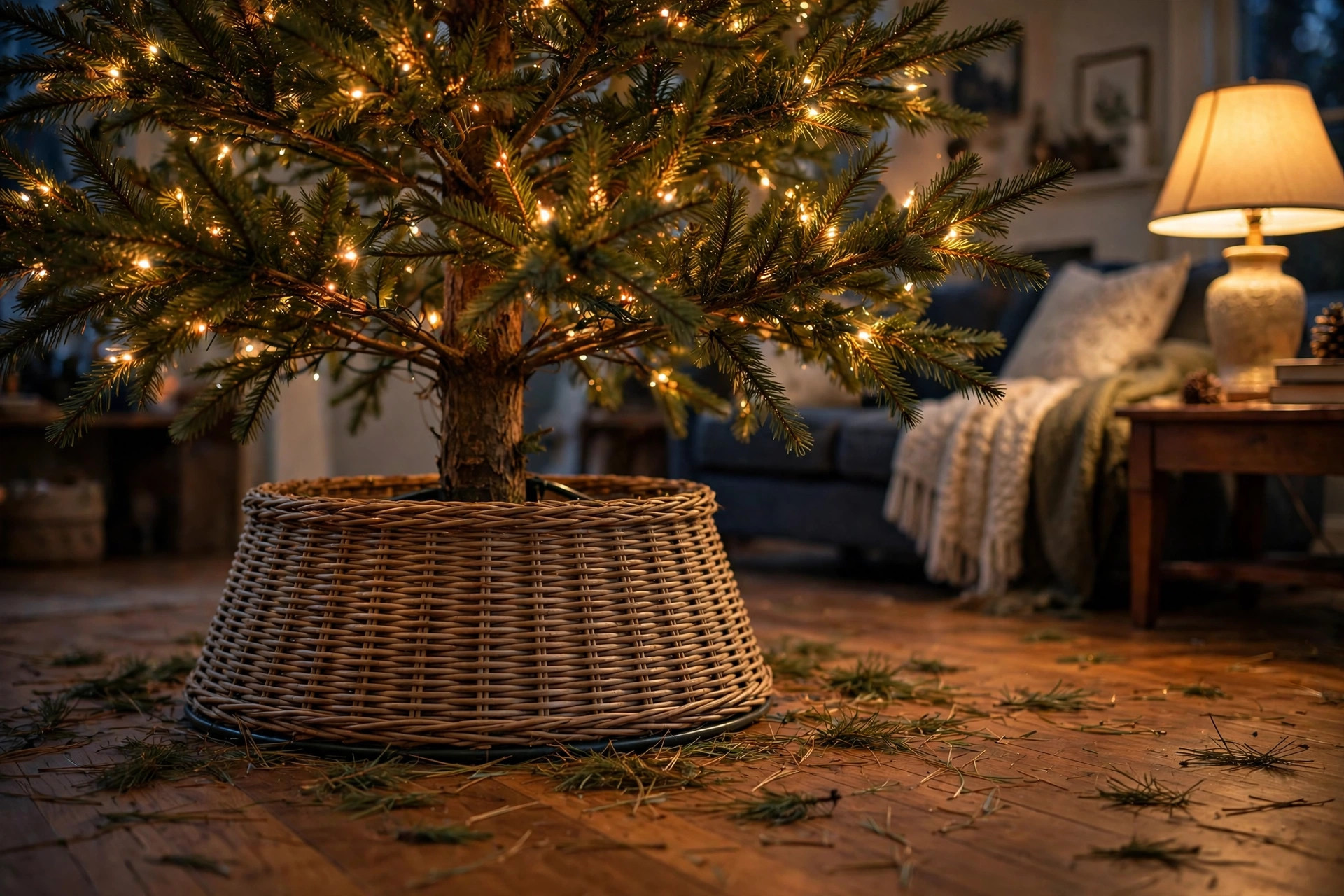

A real Christmas tree brings a fine smell and a living look to the house. It also brings a problem that no one sees in the store photos. The metal stand under the tree is ugly. Water spills from it. Needles gather around it. The best christmas tree stand cover for real trees solves all three of these problems at once. It hides the stand. It catches drips. It gives the base of the tree a clean, finished look.
This guide walks through the choices in plain terms. It covers why a cover matters, what to look for, the main types, what they cost, how to care for them, and how to keep the tree safe. By the end, the buyer will know exactly which cover fits a real tree.
Why a Tree Stand Cover Matters
Most tree stands are built for strength, not looks. They are painted green or black metal, with bolts and screws sticking out. They hold a gallon or more of water to keep the tree fresh. On a bare wood floor or a light carpet, that water is a risk. A small splash during watering can leave a stain. A slow leak can warp boards.
A cover turns this weak point into a strength. It hides the metal parts so the eye goes to the tree and the lights. A skirt laid flat over the stand catches fallen needles and keeps them in one place for easy pickup. A collar or basket walls off the water reservoir so a curious dog or a crawling child cannot reach it. For anyone who hangs christmas icicle lights for roof eaves outside, the indoor tree still deserves the same care. The cover is a small buy that lifts the whole display.
Covers also help with real trees in a way that fake trees never need. A real tree drops needles every day, most near the trunk. Without a cover, those needles scatter across the room. With a skirt or collar, they fall onto one surface and stay there. The room looks cleaner, and vacuuming takes less time.
What to Look for in a Good Cover: Best Christmas Tree Stand Cover for Real Trees
Four points matter most when shopping.
Size and fit. Measure the stand before buying. Write down the width of the base and its height. The cover must be wider than the stand so it hides it fully. For a collar, check the inner opening too. It should close around the trunk with little gap. A collar that is too wide leaves the stand visible from above. A skirt that is too small lets the metal show at the edges.
Water access. A real tree drinks a lot of water in December. The owner must reach the reservoir every day or two. Some covers lift off easily for watering. Some have a gap or a hinged panel. This matters a lot. A cover that must be taken apart to water the tree will end up left off, and then it serves no purpose. Pick one that allows quick watering without a fight.
Material and weave. Natural materials such as wicker, rattan, seagrass, and woven paper look best with a real tree. They also breathe, so trapped damp air can escape. Metal collars are strong and easy to wipe, but they can rust if water sits on them. Fabric skirts are cheap and light, but they soak up spills and stain. Think about where the tree stands. On hard floors, any material works. On carpet, choose a cover with a solid or lined bottom, or lay a waterproof mat under the stand first.
Stability. The cover must not rock the tree or get in the way of the trunk. A collar that presses against the trunk can push the tree off center. A basket with a narrow base can tip if the tree leans. Set the tree in the stand, make it straight, and then add the cover. Never set the cover down first and force the tree into it.
Helpful extras include a lined interior, a split back for easy placement, and a finish that matches the room. Shoppers who also buy a lighted gold star topper for the top of the tree often pick a collar in a matching metal tone.
Types of Tree Stand Covers
Tree Collars
A collar is a ring that stands around the base of the trunk. It is usually ten to twelve inches tall. Collars come in round, square, and hexagon shapes. Metal collars in brass, copper, or galvanized steel are popular. Wood collars with a farmhouse look sell well too. A collar takes up little floor space, so it suits small rooms and apartments. It hides the stand from the side. It does not cover the floor, so needles will still land on the carpet or wood around it. Many buyers pair a collar with a small round rug for this reason.
Baskets and Boxes
A basket is a deep container with a wide base. The stand sits inside it. Wicker and seagrass baskets are the most common. Wooden boxes, often painted or stained, give a rustic feel. Baskets hide the stand from every angle and catch some fallen needles. The deep sides also block pets from the water. The drawback is access. Watering means lifting the tree skirt of branches or reaching over the basket rim. Some baskets have a front cutout to solve this. Measure the stand height against the basket depth. If the stand is taller than the basket, the top edge of the metal will show.
Tree Skirts
A skirt is a flat cloth or woven circle laid on the floor around the stand. It is the oldest and cheapest option. Skirts come in velvet, burlap, faux fur, and quilted cotton. They cover a wide area, so they catch needles and hide cords from lights. They do not hide the stand itself. The metal base remains visible from the side. Many families layer a skirt under a collar for the best of both. Skirts wash easily, which helps when sap drips onto them. For homes that decorate for every season, a plain skirt can also serve under porch and yard decorations at other times of the year.
Collapsible and Folding Covers
Newer designs fold flat for storage. These are often made of felt, canvas, or molded paper pulp. They appeal to buyers with little attic space. They cost more than a simple skirt. Their walls are thinner, so they hide the stand but add little protection against bumps. Check reviews for sturdiness before buying one of these.
Cost and Price
Prices run wide. A simple fabric skirt costs between eight and twenty-five dollars at craft stores like Michaels. A woven paper or fabric collar runs twenty to forty dollars. Solid metal collars cost thirty to seventy dollars, with brass and copper at the high end. Hand-woven wicker or rattan baskets cost forty to ninety dollars, and large wooden boxes can pass one hundred dollars.
Big home stores such as Home Depot and Lowe’s stock all of these types each November. Online marketplaces like Wayfair offer wider choice in finishes and sizes. Specialty tree shops such as Balsam Hill sell collars matched to their own stands.
Price often follows material and size. A larger tree needs a larger cover, and larger covers cost more. Handmade baskets cost more than pressed metal. A fair rule is to spend about ten to fifteen percent of the tree budget on the cover. A sixty-dollar tree deserves a fifteen-dollar cover at least. The cover lasts for years, so the yearly cost is small.
Care and Upkeep
A cover needs little care, but a few habits keep it looking good.
Wipe metal collars with a dry cloth after watering the tree. Water drops cause spots and, over time, rust. Check the inside of the collar once a week for trapped needles and dust. Woven baskets can be shaken out over a trash can. Vacuum fabric skirts with the brush tool, or wash them by hand in cold water if sap has stained them. Let every cover dry fully before storing it in January.
Store the cover in a dry place. A damp attic can mildew wicker. A hot garage can warp thin metal. Slip the collar or basket into a large bag to keep dust off. Keep the receipt and the size tag. Next year, when buying a taller tree, the tag will show whether the old cover still fits.
Check the tree stand itself while the cover is off. Tighten loose bolts. Look for cracks in plastic reservoirs. A cover hides problems, so a quick check each season prevents a mid-December failure.
Safety Around a Real Tree
Real trees and water and electricity mix under every cover, so safety comes first.
Keep the water reservoir filled. A fresh tree is far less likely to catch fire than a dry one. The Consumer Product Safety Commission warns every year about dry trees near heat sources. Water daily. If the water level drops below the cut end of the trunk, sap can seal the wood and the tree will stop drinking.
Keep the tree at least three feet from fireplaces, radiators, and heating vents. Do not let the cover touch a hot surface. Wicker and fabric burn. Even metal collars can pass heat to a dry skirt lying against them.
Check light cords before hanging them. Throw out any string with cracked insulation or loose sockets. Do not overload one outlet. Turn the tree lights off before bed and when leaving the house. A timer plug makes this easy.
Keep pets and small children in mind. Tree water often contains preservatives that can upset a dog’s stomach. A basket or collar with high sides keeps the water out of reach better than a flat skirt. Pine needles can also irritate paws and mouths. Sweep fallen needles often.
For decorating ideas beyond the base of the tree, sites like The Spruce, HGTV, and Country Living publish fresh holiday guides each season.
Frequently Asked Questions
What size tree collar do I need for a real tree? Measure the stand, not the tree. Add four to six inches to the stand’s widest point. That is the collar diameter to buy. The collar should also stand taller than the reservoir so the water bowl stays hidden. Most stands for six to seven foot trees fit a twenty-two to twenty-six inch collar.
Can I use a tree skirt with a real tree that needs daily watering? Yes. Lift the branches near the trunk, reach under the skirt, and pour water into the reservoir. Choose a skirt with a slit from the edge to the center so it opens around the trunk without bunching. Keep a long-spout watering can nearby to make the job neat.
Do tree collars work with any stand? They work with most stands, but very wide or very tall stands need a matching collar. Tripod-style stands with long legs need a wider collar than a simple cylinder stand. Check the stand’s footprint against the collar’s inner width before buying.
Will a basket make my tree less stable? A basket does not hold the tree up. The stand still does that job. The basket only hides the stand. Set the tree straight in the stand first, tighten the bolts, and then lower the basket over it. Never rest the tree’s weight on the basket walls.
How do I keep the cover from scratching hardwood floors? Stick felt pads under a metal collar or wooden box. Lay a waterproof mat under the whole setup before adding the cover. Wipe up water at once. Even small spills can dull a floor finish if left overnight.
Should I buy the cover before or after the tree? Buy after measuring the stand, but shop early in the season for the best choice. Popular sizes sell out by mid-December. If buying a new stand and cover together, pick the stand first and match the cover to it.
A Final Word
The best christmas tree stand cover for real trees is the one that fits the stand, allows easy watering, and suits the room. A metal collar gives a clean modern look. A woven basket gives warmth. A skirt gives value and easy cleaning. Any of them beats a bare metal stand.
Buy early, measure twice, and water the tree every day. The tree will stay fresh longer, the floor will stay clean, and the base of the tree will look as good as the star on top.
References
Balsam Hill. (n.d.). Artificial Christmas trees and decor. https://www.balsamhill.com Country Living. (n.d.). Country home and lifestyle. https://www.countryliving.com HGTV. (n.d.). Home and garden ideas. https://www.hgtv.com Lowe’s. (n.d.). Home improvement products. https://www.lowes.com Michaels. (n.d.). Arts and crafts supplies. https://www.michaels.com The Home Depot. (n.d.). Home improvement products. https://www.homedepot.com The Spruce. (n.d.). Home and garden advice. https://www.thespruce.com U.S. Consumer Product Safety Commission. (n.d.). Product safety information. https://www.cpsc.gov Wayfair. (n.d.). Furniture and home goods. https://www.wayfair.com
Was this guide helpful?

About Michael Thompson
The My Garden US editorial team writes practical, in-depth home and garden guides for American homeowners — tested advice, no fluff.
You May Also Like

Best Christmas Bows for Wreaths and Garlands
March 16, 2026 0 views
Fall Leaf Garland for Fireplace Mantel Decor: A Simple Autumn Touch
September 2, 2026 0 views
Christmas Tree Stand for Real Trees Heavy Duty: A Complete Buying Guide
March 27, 2026 0 views