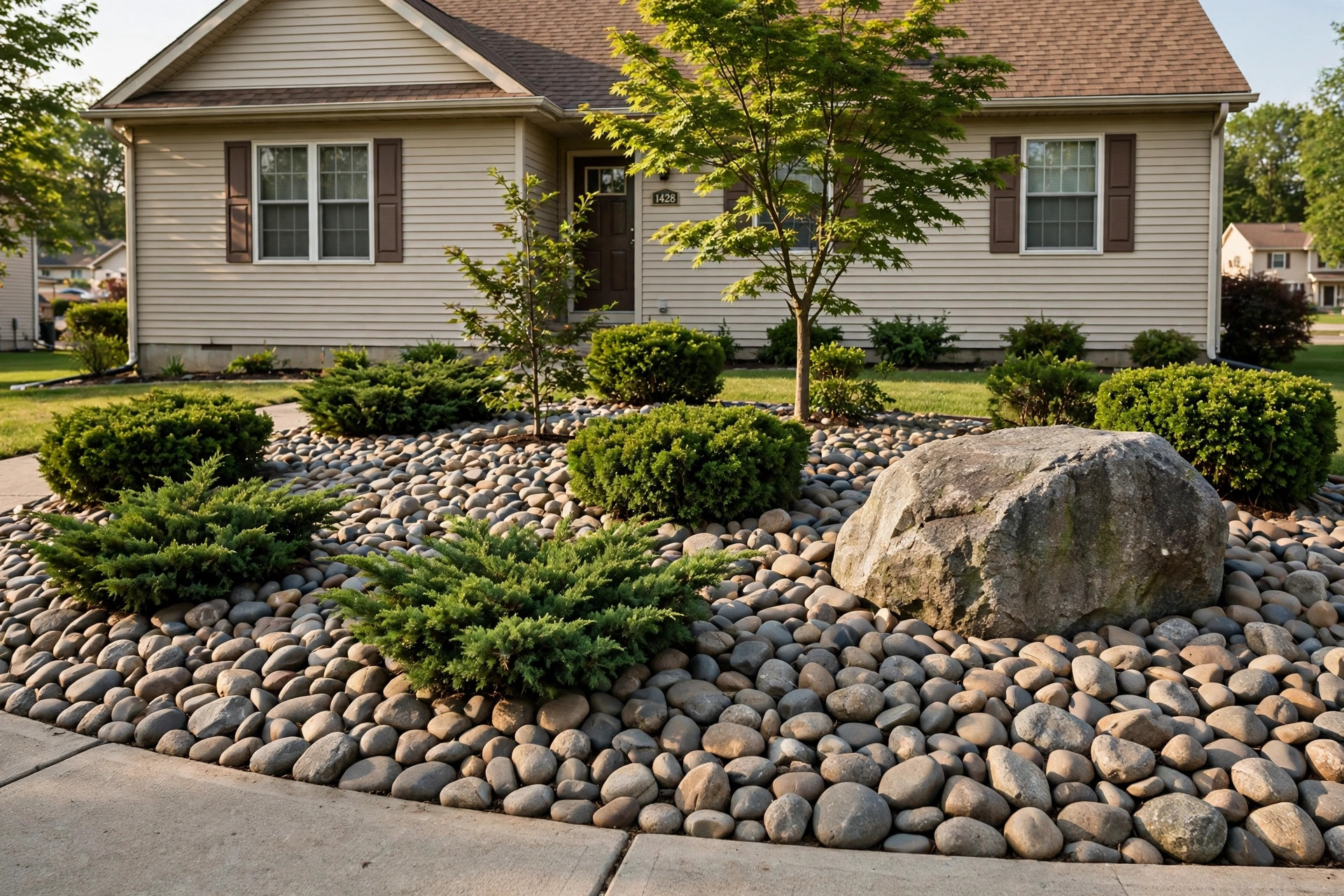

When you search for river rock landscaping ideas front yard photos, you see the same thing again and again. A plain lawn is replaced by smooth stone beds. The home looks neater. The work of mowing and watering falls off. This is why so many American homeowners now turn to river rock for the front of the house.
River rock is natural stone that water has worn smooth over thousands of years. It comes in soft gray, tan, brown, and mixed shades. It never rots. It does not blow away in a storm. Once it is laid, it sits there for years with little care. This article walks through the best ideas, the stone types, the cost, and the steps to lay it right.
Why It Matters
The front yard is the first thing a guest or a buyer sees. A tired lawn with bare spots sends a poor message. Fresh stone beds say the home is cared for. Landscapers have said for decades that curb appeal raises home value. River rock gives that lift at a fair price.
There is a second reason. Grass needs water, mowing, seed, and fertilizer every year. In dry states, a full lawn can drink hundreds of gallons a week in summer. A stone bed with hardy shrubs needs almost none of that. The front yard stays neat through heat, wind, and drought.
A third reason is work. Mulch must be topped up each year as it breaks down. Rock stays put. Once your river rock bed is built, your yearly chores shrink to pulling a few weeds and rinsing dust off the stone.
Types of River Rock to Know: River Rock Landscaping Ideas Front Yard
Not all stone called “river rock” is the same. Stone yards grade it by size and color. Pick the right one for the look you want.
Small Pebble Rock
Pebble rock runs about three eighths of an inch to three quarters of an inch across. It feels smooth underfoot and packs into a firm surface. Many owners use it as the top layer over walkway beds. It is light enough to move in a wheelbarrow but heavy enough to stay where you put it. Pebbles work well around mailboxes, lamp posts, and the edges of a porch.
Medium River Rock
Medium stone runs one to two inches across. This is the most common pick for front yard beds. It shows a soft, rounded texture that reads well from the street. Medium rock drains rain fast and lets soil breathe. It also holds its shape on a slight slope, where smaller pebbles might wash downhill.
Large Cobble
Cobbles run three to six inches across, and some yards sell even larger boulders. Use them as accents. A cluster of three large stones can anchor the corner of a bed. A single boulder beside the walkway gives a finished, planted look. Cobbles also line the edge of a bed better than any plastic border, because they cannot crack or tip over.
Colors and Blends
Natural river rock is mostly gray with warm tones. Some stone is tan or pinkish from iron in the soil. Yards also sell “mix” blends with gray, tan, and brown stones together. A mixed blend hides dust and fallen leaves better than one flat color. If your house has red brick, a warm tan blend often looks best. If your house is white or gray, a cool gray blend usually fits.
Design Ideas for the Front Yard
The best river rock landscaping ideas front yard owners use all share one trait. The rock works with plants, not instead of them. Stone alone can look cold. Stone with green shrubs looks finished.
Curved Planting Beds
Draw a gentle curve along the front of the house. A bed that sweeps in and out looks natural, like a stream edge. Lay your medium river rock as the bed surface, then plant low evergreen shrubs behind it. Junipers, boxwood, and dwarf hollies are common picks. The curve breaks up a straight brick wall and gives the house a softer line.
Rock Borders and Edges
You do not need to fill the whole yard with stone. A strip of river rock two feet wide along the sidewalk or driveway gives a clean edge. It keeps grass clippings off the walk and stops mulch from washing onto the concrete. Large cobbles laid in a single row make a border that lasts for decades. For another edging material option, see mulch for flower beds if you want to pair bark mulch with your stone.
Dry Creek Beds
A dry creek bed is a shallow channel filled with river rock. It looks like a stream with no water. More than a decoration, it moves rain away from the house. Set the creek where water already runs after a storm. Line the bottom with landscape fabric, then fill with medium rock and add a few cobbles on the sides. In heavy rain, the creek guides water to the street instead of into the foundation.
Foundation Cover
Many homes have a bare strip of soil along the foundation. Grass grows poorly there, shaded by the eaves. River rock is the answer. Fill the strip with medium stone over landscape fabric. Splash from the roof will land on rock instead of mud. The house stays cleaner, and weeds find little soil to root in.
Rock Around Trees
The ring under a street tree is hard to mow. Fill it with river rock instead. Keep the stone at least six inches away from the trunk so the bark stays dry. The rock ring looks tidy and protects the trunk from mower bumps.
How to Choose and Lay the Stone
Good planning saves money and labor. Follow these steps in order.
First, sketch the beds on paper. Mark curves with a garden hose laid on the ground and stand back to look. Walk to the street and check the shape from the road, since that is the view that matters.
Second, kill the grass under the bed. You can smother it with cardboard for two weeks or cut it out with a flat spade. Do not skip this step. Grass poking through rock looks sloppy and is hard to remove later.
Third, dig the bed three to four inches deep. Rake it level. Lay woven landscape fabric over the soil and pin it with staples. The fabric blocks weeds while letting rain pass through. Cheap thin fabric tears and lets weeds through in a season. Buy the woven kind.
Fourth, set your border. Lay large cobbles, metal edging, or stone blocks along the bed edge. The border holds the rock in the bed when rain falls.
Fifth, spread the rock two to three inches deep. A garden rake levels it fast. Do not make it deeper than four inches. Too deep, and the rock shifts underfoot and traps leaves you cannot blow out.
Sixth, plant your shrubs through the fabric. Cut an X in the fabric, dig the hole, set the plant, and fold the fabric back around the stem. Pull the rock back up to the plant base.
Before you buy stone, call the stone yard and ask what size they carry. Yards near rivers and lakes often sell local rock at better prices than bagged stone from a big box store. If you compare prices, check the manufacturer’s site for related gear, such as Toro for bed edgers and blowers that keep rock beds tidy, and Deere for wheelbarrows and carts used on delivery day.
Cost and Price
River rock costs more than mulch but lasts many times longer. A fair plan compares both over ten years.
Bagged rock at a home store runs three to eight dollars for a half cubic foot bag. That adds up fast. Bulk rock at a stone yard runs thirty to eighty dollars per ton for medium river rock, and most front yard beds need one to three tons. Delivery often adds fifty to one hundred dollars, but the yard may deliver free over a minimum load.
A ten by twenty foot bed at three inches deep needs about 1.7 tons of stone. At fifty dollars a ton, the rock costs under one hundred dollars. Add landscape fabric, pins, and edging, and most owners finish a medium bed for two to four hundred dollars. A hired landscaper charges one to three thousand dollars for the same work, depending on the region.
Compare that to hydroseeding costs if you planned to grow a new lawn instead. New grass is cheaper up front, but the watering and mowing bill arrives every month. For watering, many owners pair rock beds with drip lines; see sprinkler installation costs for a sense of what a small system costs.
Care and Upkeep
River rock asks for little, but it is not zero work. Plan two short visits a year.
In spring, walk the beds and pull weeds. A few will root in dust that settles between stones. Pull them by hand or spray with a home-use weed killer. Blow fallen leaves out with a leaf blower held at a low angle. Rake gently if leaves mat down.
In fall, repeat the cleaning before winter. Check the border after heavy rain. If the rock has shifted off a slope, rake it back and add a cobble or two to pin it.
Every three to five years, rinse the stone with a garden hose. Dust and pollen dull the color. A rinse brings the sheen back. You may also top up low spots with one extra bag of rock. That is the whole upkeep list.
Safety
Stone work is safe work, but respect the weight. A ton of rock is heavy, so move it in small loads. A full wheelbarrow of wet river rock can top one hundred pounds. Bend your knees and keep loads light.
Keep beds clear of the walkway. Loose pebbles on concrete are a slip risk. Sweep the sidewalk after spreading. If your bed sits beside a driveway, choose medium rock, not small pebbles, so tires do not scatter it.
Watch the grade near the foundation. Rock beds should slope away from the house. Water trapped against the foundation causes far worse trouble than weeds. When in doubt about grading, ask a local landscaper for a quick look before you order stone.
Frequently Asked Questions
How much river rock do I need for a front yard bed? Measure the bed in feet. Multiply length times width times depth in feet, then divide by 27 for cubic yards. One ton of river rock covers about one hundred square feet at two inches deep. Most small front beds need one to two tons.
Will weeds grow through river rock? They will if you lay rock on bare soil. Good woven landscape fabric stops nearly all of them. Pull the few that root in settled dust. Never lay cheap plastic sheeting under rock, because it traps water and kills nearby plants.
Is river rock cheaper than mulch? Up front, no. Bulk mulch costs twenty to forty dollars a yard, and rock costs more per load. Over five years, rock wins, because mulch must be replaced every year or two while rock lasts. The Briggs & Stratton site notes the engines and blowers that make yearly bed cleanup quick with either material.
Does river rock hurt plants? No, when it is laid right. Rock drains well and does not steal nitrogen the way fresh wood mulch can. Keep stone a few inches from shrub stems and tree trunks. In very hot climates, light-colored rock reflects less heat onto leaves than dark lava rock does.
Can I lay river rock over old mulch? You can, but rake the old mulch thin first. A thick mulch layer under rock holds water and lets weeds root. A thin layer breaks down and helps the soil. Cut the grass out, lay fabric, and then spread the rock.
What size river rock is best for the front yard? One to two inch medium rock is the best all-round pick. It looks good from the street, drains fast, and stays on gentle slopes. Use pebbles for flat paths and large cobbles for borders and accent spots.
A Final Word
River rock landscaping for the front yard is one of the simplest upgrades an owner can make. The stone is honest material. It does not fade, tear, or rot. Plan the beds with care, lay the fabric, spread the rock at the right depth, and plant a few hardy shrubs. The result is a front yard that looks cared for in every season and asks for little more than a spring cleaning.
References
Toro. (n.d.). Lawn and landscape equipment. https://www.toro.com Deere. (n.d.). John Deere equipment for homes and farms. https://www.deere.com Briggs & Stratton. (n.d.). Outdoor power equipment engines. https://www.briggsandstratton.com
Was this guide helpful?

About Sarah Mitchell
The My Garden US editorial team writes practical, in-depth home and garden guides for American homeowners — tested advice, no fluff.
You May Also Like

Where to Buy Centipede Grass Sod in Georgia: A Plain Guide
May 25, 2026 0 views
Ornamental Grasses for Texas Heat Reviews: 10 Tough Varieties That Survive the Summer
August 1, 2026 0 views
How to Fix Sprinkler Head Leaks
August 14, 2026 0 views