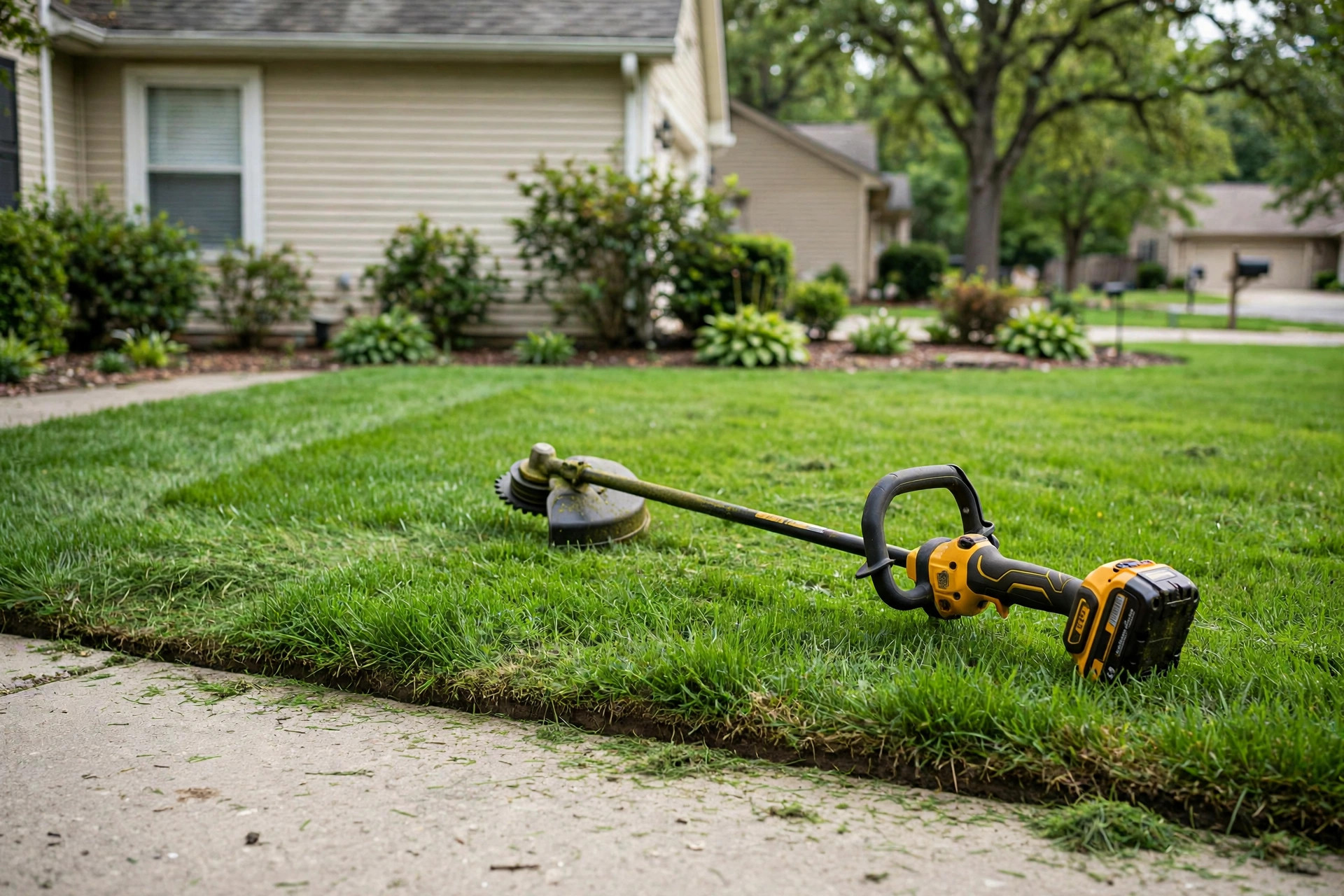

A lawn can be mowed and watered and still look rough. The reason is often the edge. Grass grows over the walk. It spills onto the drive. The line between lawn and bed turns soft and ragged. One tool can fix all of this: the string trimmer. When you learn how to edge lawn with string trimmer, your yard gains a clean border in an hour of work.
Many people own a trimmer already. They use it to cut tall grass by a fence. They have never tried edging with it. Edging is a small change in how you hold the tool. It is not hard to learn. This guide shows each step in plain words.
Why Edging Matters
A neat edge changes how the whole property looks. A straight cut along the walk makes the lawn look larger. It shows care. Neighbors notice. Home buyers notice. If you sell a house, a crisp edge lifts the value of the yard at no cost.
Edging is also good for the grass. When grass creeps over concrete, it grows thin and weak. The roots bake in the heat of the walk. A clean cut stops this spread. It keeps the lawn where it belongs.
Edging cuts down on pests too. Weeds like crabgrass root in the crack where lawn meets walk. A tight edge removes their home. It also stops ants from using long grass as a bridge into beds.
You do not need a special edging machine for small yards. A good string trimmer will do the job. Many homeowners compare a cordless edger vs gas edger comparison guide and find the trimmer they own works just fine.
What You Need Before You Start: How to Edge Lawn with String Trimmer
Gather your tools before you cut. You will need a string trimmer with a full tank or a charged battery. Gas models work well for big yards. Battery models are light and quiet for small yards. Check that you have enough trimmer line. A worn line cuts poorly.
Wear safety gear. Eye glasses guard against flying bits of grass and dirt. Long pants protect your legs. Sturdy shoes keep your feet safe. Some people wear ear plugs with a gas trimmer. Work gloves help your grip.
Walk your lawn first. Pick up sticks, stones, and toys. A stick can snap a trimmer line. A stone can shoot out fast and hurt. Clear the line where you will cut.
Look at the edge you want to make. The best guide is a concrete walk or drive. The hard line of the concrete shows you where to cut. If you are edging a bed, mark the line with a garden hose or a string. This keeps your edge straight.
How to Edge Lawn With String Trimmer: Step by Step
Step 1: Get the Trimmer Ready
Start the trimmer or snap in the battery. Let it warm up if it is gas. Make sure the line feeds out to full length. If your trimmer has an auto feed head, tap it on the ground to send out new line.
Step 2: Turn the Head Vertical
This is the key move. For normal trimming you hold the head flat, parallel to the ground. For edging you turn it so the head stands up. The cutting line should spin in a vertical plane, like a wheel rolling along the ground.
Most trimmers let you twist the shaft or the head into this position. Some have a lock that holds the head at ninety degrees. Check your manual. If your model does not turn, you can still edge by tilting the trimmer on its side. This takes more practice but it works.
Step 3: Line Up With the Edge
Stand on the walk side if you are edging a sidewalk. Stand in the driveway for drive edges. Hold the trimmer so the line hangs just over the border where grass meets concrete. The line should touch the grass and the soil, not the concrete itself.
Do not press the line hard into the dirt. A light touch cuts the grass clean. Pressing hard wears the line down fast. It also kicks up dust.
Step 4: Walk Slowly and Steady
Start the line spinning at full speed. Walk forward at a slow pace. Let the tool do the work. Move in one direction so the trimmings fall back onto the lawn, not onto the clean walk. On most trimmers this means walking right to left along the edge.
Keep the head at the same height as you move. A steady hand makes a straight cut. If you bob up and down, the edge will look wavy. Take your time. There is no prize for speed.
Step 5: Cut a Small Trench
A good edge is not just a cut. It is a small trench, about an inch deep, between grass and concrete. This trench stops the grass from growing back over the walk so fast.
Let the spinning line sink slightly into the soil at the border. The cut roots and dirt will fly up. Do not dig deep. An inch or two is enough. Deeper than that can harm the root zone of the lawn.
Step 6: Clean Up
When you finish, sweep the walk or drive with a broom or blower. Cut grass bits will sit on the concrete and turn brown if left there. A quick sweep leaves a sharp line between green lawn and clean walk.
Look at your work from across the yard. A straight edge should run the full length. Small wavy spots can be touched up with a second pass.
Common Mistakes to Avoid
Going too fast is the most common error. A rushed edge looks choppy. The line bounces and cuts unevenly. Slow down and let the trimmer cut at its own pace.
Holding the head at the wrong angle is another error. If the head is half tilted, the cut line is slanted. The grass then grows back faster on one side. Keep the head fully vertical for a straight wall of grass.
Using a short line also causes trouble. A line that is too short cuts a narrow path. It forces you to make many passes. Feed out a full length of line before you start.
Hitting the concrete wears the line down to nothing in minutes. Keep the line on the grass side of the border. Aim to cut grass and roots, not stone.
Forgetting safety gear is a real risk. The line spins at thousands of turns per minute. Bits of dirt fly up. Always wear eye protection. Brands that make yard tools, such as Toro and John Deere, print this warning in every manual.
Types of String Trimmers for Edging
Electric Corded Trimmers
These are light and cheap. You plug them in and cut. They work for small yards near an outlet. The cord limits how far you can go. For edging a front walk, they are fine.
Battery Cordless Trimmers
These run on rechargeable batteries. They are quiet and easy to start. Newer models cut well enough for edging. If you are shopping, battery powered hedge trimmer reviews 2026 show how far battery tools have come. Carry a spare battery for big yards.
Gas Trimmers
Gas models are the strongest. They cut thick grass and small weeds with ease. They are heavier and louder. They need fuel and oil. For large yards or first cuts of spring, gas power helps.
Cost and Price
A string trimmer for edging does not have to cost much. Basic corded models sell for twenty to forty dollars. Battery models run fifty to one hundred fifty dollars. Gas models range from one hundred to three hundred dollars.
Trimmer line costs a few dollars a spool. A spool lasts many cuts. Buy line that fits your trimmer model. Thicker line cuts tougher grass but wears faster.
A dedicated lawn edger machine costs one hundred to three hundred dollars. It is not needed for most homes. Your trimmer does the same job with a change of grip.
Care and Upkeep
Clean the trimmer after each use. Wipe grass off the head. Check the air filter on gas models. Store the tool in a dry shed or garage. Gas should not sit in the tank for months.
Keep extra line on hand. When the line gets short, the trimmer loses power. Feed new line often. This keeps the edge cut sharp.
Sharpen your edging skill each spring. The first cut of the season sets the line for the year. Cut a fresh trench when the grass starts to grow. Then keep it up with light passes every two to three weeks.
Mow before you edge. The mower leaves a tall border of grass along the walk. Edging after mowing cuts that border down to size. This order gives the cleanest look.
Safety Tips
Read the manual for your trimmer. Each model has its own warnings. Keep children and pets away from the work area. A flying pebble can hurt at twenty feet.
Do not edge on wet grass if you can help it. Wet grass clumps and sticks. The line cuts poorly. Wait for the lawn to dry after rain.
Watch for hidden wires and pipes. Sprinkler lines and lamp wires sometimes run near walks. A trimmer line can cut a thin wire. Know where your lines run before you cut deep.
Take breaks on hot days. Edging a full yard takes time. Drink water. The work is not hard but the sun is.
Briggs and Stratton offers guides on small engine care for gas trimmer owners. Proper care keeps the engine safe and strong.
FAQ
Can I edge my lawn with any string trimmer?
Most trimmers can edge. The head needs to turn vertical or tilt to the side. Check your model first. Straight shaft trimmers edge well. Curved shaft models can edge but are less handy on long straight walks.
How often should I edge?
Edge every two to three weeks in the growing season. Grass grows fast in spring and summer. Light passes keep the trench clean. In fall and winter, edge once to keep the line neat.
Should I edge before or after mowing?
Mow first, then edge. The mower trims the grass tall along borders. Edging after cleans up that border. If you edge first, the mower can mess up your fresh line.
How deep should the edge cut be?
Cut one to two inches deep. This is deep enough to stop grass from creeping back. Going deeper can hurt lawn roots. A shallow trench works just as well.
My line keeps breaking. What is wrong?
Old line gets brittle and snaps. Buy fresh line each season. Hitting concrete or metal also breaks line. Keep the cut on grass and soil. If the line feeds too short, it works harder and breaks sooner.
Is edging better than using a spade?
A spade makes a fine edge on beds. It is slow work for long walks. A trimmer cuts an edge fast along concrete. Many people use both. They dig beds with a spade and trim walks with the trimmer. For driveway edging ideas for curb appeal, a trimmer gives the fastest clean line.
A Short Final Word
Learning how to edge lawn with string trimmer takes one afternoon. The skill stays with you. Each cut gets straighter. Your yard will look tidy with little extra work. A trimmer you own already can do the job. Put on your glasses, turn the head vertical, and walk slow. The clean edge is worth it.
References
Toro. (n.d.). Lawn mowers, snow blowers and outdoor power equipment. https://www.toro.com Deere & Company. (n.d.). Agricultural, construction and lawn care equipment. https://www.deere.com Briggs & Stratton. (n.d.). Small engines and outdoor power products. https://www.briggsandstratton.com
Was this guide helpful?

About James Carter
The My Garden US editorial team writes practical, in-depth home and garden guides for American homeowners — tested advice, no fluff.
You May Also Like
Lawn Irrigation Winterization Service Near Me: What to Know Before the First Freeze
September 23, 2026 0 views
How to Build a Fire Pit Area in Your Backyard
March 30, 2026 0 views
Sod vs Seed Cost Comparison Guide: Which Way Saves You More?
September 28, 2026 0 views