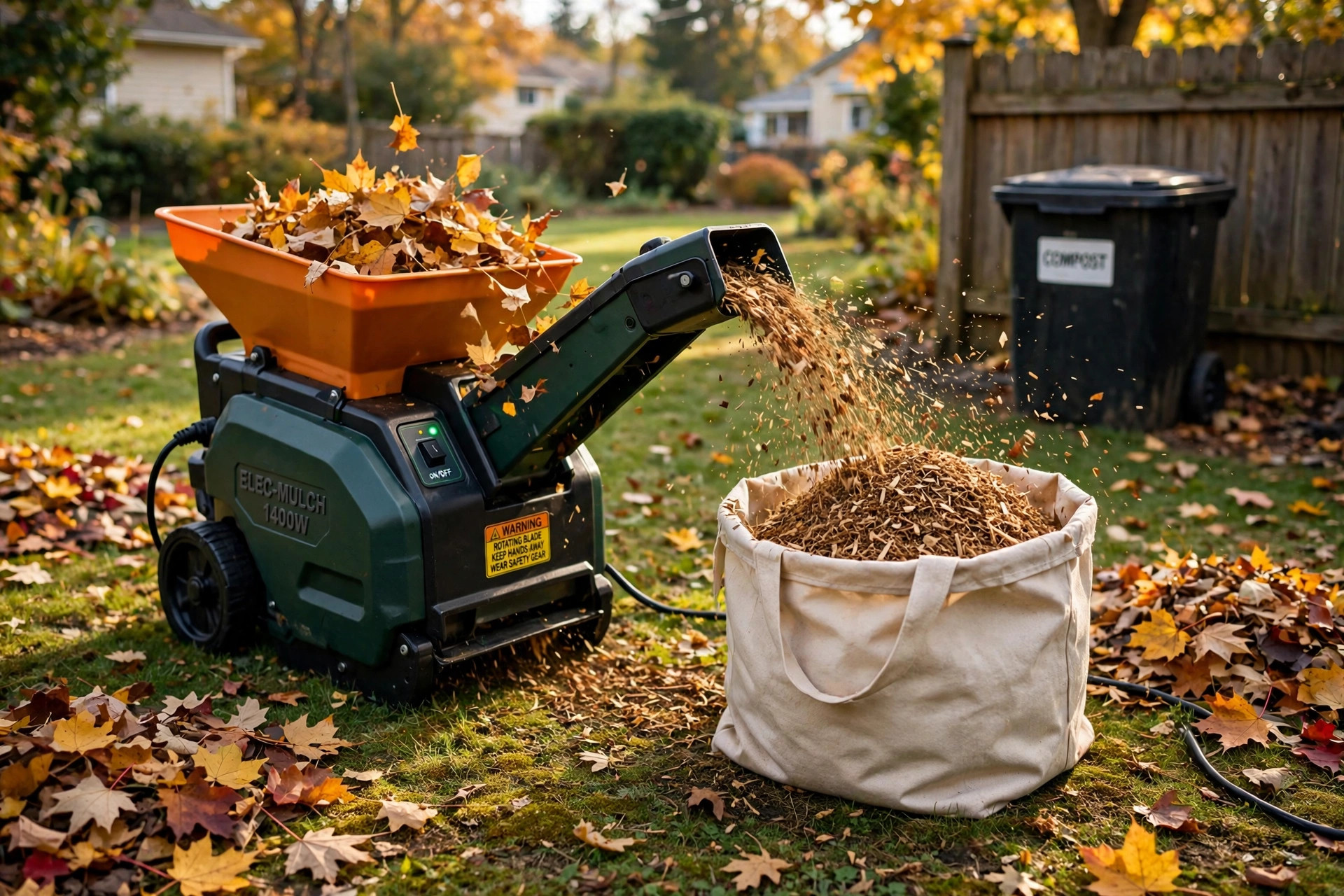

Fall brings color to the yard. It also brings leaves. Piles of them. A good leaf mulcher turns those leaves into useful material. Shredded leaves break down fast in a compost pile. This guide collects the best leaf mulcher for compost reviews to help you choose the right machine for your home.
Why Shredded Leaves Matter for Compost
Whole leaves take a long time to rot. They pack tight and block air. Air is what a compost pile needs. Shredded leaves let air move through the pile. They also add more surface area. Small pieces break down many times faster than whole ones.
Compost feeds the soil. It adds the food that plants need. It makes clay soil loose and sandy soil rich. A mulcher cuts the leaves into bits the size of a coin. Those bits mix well with grass clippings and kitchen scraps. The pile heats up and does its work.
A leaf mulcher also saves space. One big bag of whole leaves shrinks to a small pile of shreds. Many models claim a reduction ratio of ten to one or more. That means ten bags of leaves become one bag of mulch. Fewer trips to the curb. More free compost for the garden.
Cities charge for yard waste pickup in many places. Each bag at the curb costs money. Shredding cuts the bag count. The savings add up over the season. Some towns even ban leaves in the trash. A mulcher keeps you inside the rules.
How to Choose a Leaf Mulcher: Best Leaf Mulcher for Compost Reviews
Power Source
Leaf mulchers come in three kinds. Electric models plug into a cord or run on a battery. Corded models are light and simple. Battery models cost more but move freely. Gas models run on small engines. They handle large yards and thick piles.
For a small yard, an electric mulcher is enough. For a large lot with many trees, a gas model saves time. Battery models sit in the middle. They suit medium yards where a cord would be a nuisance.
Motor Power and Cut Size
Look at the motor rating. Corded electric models often run at twelve to fifteen amps. That is enough for dry leaves. Gas models are rated in cubic centimeters. Bigger engines chew through wet leaves and small twigs.
Also check the reduction ratio. A ten to one ratio is common. Some machines claim sixteen to one. The finer the shred, the faster the compost pile works. Fine shreds are best for compost. Coarser shreds suit mulch beds around trees.
Collection Bag
Most mulchers feed into a bag. Bag size matters. A small bag fills fast and slows the work. A large bag lets you shred longer before you stop. Check how the bag attaches. It should stay tight while the machine runs. A bag that slips off makes a mess and stops the work.
Weight and Wheels
You will move the machine around the yard. Light models are easier on the back. Some models have wheels that roll like a lawn mower. Wheeled models are worth the extra weight on rough ground. Fixed models are lighter and suit flat yards.
Noise
Gas mulchers are loud. Ear protection is a good idea. Electric models run quieter. If you work early in the morning, a quieter machine keeps the peace with neighbors.
Types of Leaf Mulchers
Electric Corded Mulchers
These are the most common kind for home use. They plug into an outlet with an extension cord. They are light, often under fifteen pounds. They cost the least. They suit yards under half an acre. The cord limits how far you can roam. Keep the cord behind you to avoid cuts. Use a cord rated for outdoor work. A thin indoor cord can heat up and fail. Check the cord for cuts before each use. Damaged cords are a shock hazard.
Corded models are also the easiest to store. They hang on a hook in the garage. They need no fuel and no charging. Just coil the cord and put the machine away.
Battery-Powered Mulchers
Battery models use large rechargeable packs. They give the freedom of gas without the fumes. Run time is the limit. Most batteries last thirty to forty-five minutes per charge. A second battery doubles the work time. These cost more than corded models.
Gas-Powered Mulchers
Gas mulchers are the workhorses. They shred fast and handle wet leaves. They also take small branches. They need oil, fuel, and yearly tune-ups. They are heavy and loud. They suit large yards and country lots. String trimmers and other gas tools share the same engine care.
Standalone Shredders and Chippers
Some machines do more than leaves. Shredder-chippers take branches up to two inches thick. They turn branches into chips and leaves into shreds. They cost more and weigh more. For a home with many trees, one machine can do the whole fall cleanup.
What the Reviews Say
Reviewers agree on a few points. Electric mulchers win for ease of use. They start with a switch. They need little care. Gas models win for raw power. They keep going when the leaves are wet and heavy.
The best leaf mulcher for compost reviews point to fine shredding as the key feature. Machines that leave big pieces force you to run the leaves twice. That wastes time. Look for models praised for fine, even output in one pass.
Durability is the other theme. Metal blades last longer than plastic line. Line trimmers wear fast on dry leaves. Blades need sharpening now and then. A machine with easy blade access saves trouble later. Toro leaf blowers and vacuums pair well with a mulcher for a full cleanup plan.
Independent test groups agree. Consumer Reports tests yard tools for noise, power, and ease of use. Their ratings favor machines that are simple to start and simple to clean. Read their latest ratings before you buy.
Cost and Price
Prices spread wide. Simple corded mulchers start near one hundred dollars. Good mid-range electric models run one hundred fifty to two hundred fifty dollars. Battery models with a charger and spare battery can reach three hundred dollars or more. Gas mulchers start near three hundred dollars and climb past five hundred for heavy-duty units.
Think about yearly cost. Electric models cost almost nothing to run. Gas models need fuel and oil. Batteries wear out after a few years and cost money to replace. Add the cost of extension cords or spare batteries when you compare prices.
Rental is another path. For a one-time cleanup, renting a big gas mulcher may cost less than buying. Check lawn dethatcher rental prices near me to see how rental rates run in your area. Rental shops often rent mulchers too.
Care and Upkeep
Clean the machine after each use. Leaves and dust pack around the blade. A brush and a damp cloth do the job. Unplug the machine before you clean it. Never reach into the housing with your fingers.
Sharpen the blade once a season. A dull blade tears leaves instead of cutting them. Torn leaves compost slower. Check the manual for the right sharpening angle. Replacement blades are cheap and easy to fit.
Store the mulcher dry. Hang it on a wall if you can. Gas models need fuel treatment before winter storage. Old fuel gums up the carburetor. Drain the tank or add stabilizer in the fall.
Check the collection bag for tears. A torn bag leaks dust. Patch small holes or replace the bag. A clean machine lasts many seasons.
Before winter, give the machine one last cleaning. Run it empty to clear the housing. Wipe down the outside. Coil cords neatly so they do not kink. For gas models, add fuel stabilizer or drain the tank. A machine that sleeps clean starts easy in spring.
Using Shredded Leaves in Compost
Shredded leaves are the brown part of compost. Brown material gives carbon. Green material gives nitrogen. Mix about three parts shredded leaves to one part green material like grass clippings. Keep the pile damp like a wrung sponge. Turn it with a fork every week or two.
A robot lawn mower for half acre yards drops fine clippings all season. Those clippings mix well with shredded leaves in the fall. The two make a strong compost pair.
In spring, the compost is ready. It looks dark and smells like earth. Spread two inches on garden beds. Dig it into the top of the soil. Your plants will show the difference.
Shredded leaves also work as mulch. Spread them three inches deep around trees and shrubs. They hold moisture and stop weeds. They feed the soil as they break down.
Safety Tips
Always wear eye protection. Shredded leaves fly fast. Safety glasses keep dust and bits out of your eyes. Gloves protect your hands when you feed the machine.
Keep children and pets away while the mulcher runs. The intake is strong. Small hands should stay clear. Unplug the machine before you clear a jam. Use a stick, not your hand, to push stuck leaves through.
Do not feed stones or wire into the mulcher. Hard objects chip the blade. They can also shoot out of the bag. Pick through the leaves before you start. Rake up the big sticks first. A top rated string trimmer for thick weeds clears the stems that mulchers cannot take.
Work on level ground. A tipping machine is a hazard. Let the motor reach full speed before you feed leaves. Feed slowly. A rushed feed jams the blade.
Frequently Asked Questions
Are shredded leaves better than whole leaves for compost?
Yes. Shredding speeds up the rot. Whole leaves can take a year to break down. Shredded leaves can finish in two or three months in a warm pile. The small pieces let air and water reach every part of the pile.
Can a leaf mulcher handle wet leaves?
Most can, but wet leaves shred less fine. They clump and stick. Let the leaves dry a day in the sun when you can. Gas models handle wet leaves better than electric ones. If the machine jams, stop it and clear the intake before you restart.
How fine should the shred be for compost?
Pieces about the size of a coin work well. Finer is even better. Fine shreds mix into the pile and heat up fast. If your machine leaves big pieces, run them through a second time.
Do I need a bag for the mulcher?
Most models need the bag attached to run. The bag catches the shreds and keeps dust down. Some machines let you work without a bag and aim the output at a pile. Check the manual before you try that.
Can I shred leaves for mulch instead of compost?
Yes. Shredded leaf mulch is excellent around trees and garden beds. Spread it three to four inches deep. Keep it a few inches from plant stems. It will break down and feed the soil over the season.
How long does a leaf mulcher last?
A good machine lasts five to ten years with basic care. Clean it after use. Sharpen the blade. Store it dry. Electric models last longer because they have fewer parts to wear out.
A Final Word
Leaves are free. Compost is valuable. A leaf mulcher turns the first into the second. The best leaf mulcher for compost reviews favor machines that shred fine, run easy, and last for years. Match the machine to your yard size. Keep it clean. Then watch your compost pile turn fall waste into spring gold.
References
Toro. (n.d.). Lawn care equipment. https://www.toro.com Briggs & Stratton. (n.d.). Outdoor power products. https://www.briggsandstratton.com Consumer Reports. (n.d.). Product ratings and reviews. https://www.consumerreports.org
Was this guide helpful?

About Michael Thompson
The My Garden US editorial team writes practical, in-depth home and garden guides for American homeowners — tested advice, no fluff.
You May Also Like
The Best Dandelion Killer That Wont Kill Grass
February 4, 2026 0 views
Affordable Retaining Wall Builders Near Me: How to Find Good Help at a Fair Price
April 29, 2026 0 views
Rock Garden Ideas for Front Yard That Add Lasting Curb Appeal
August 15, 2026 0 views