
Introduction
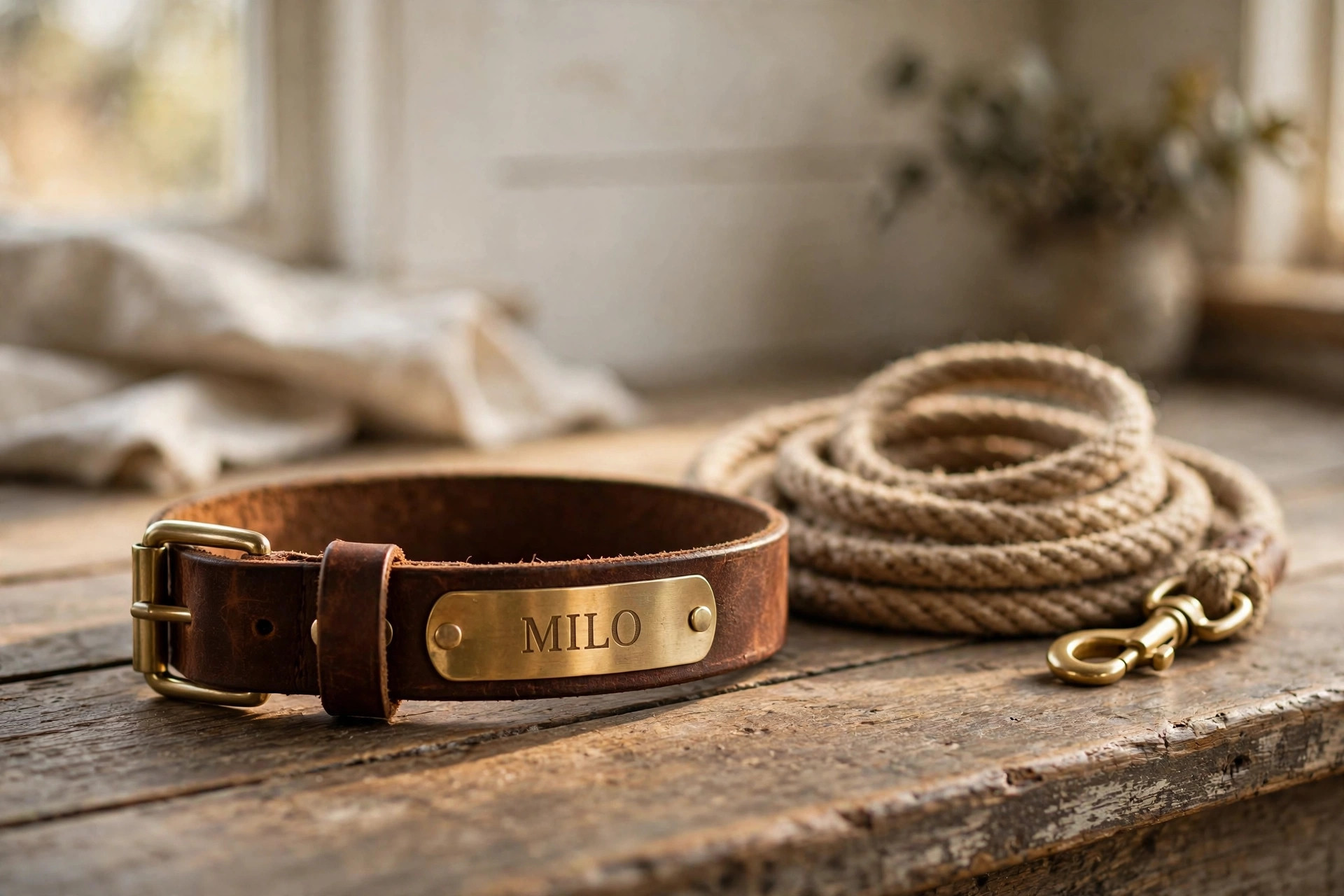
A good collar is the first thing a lost dog needs. The best dog collar with nameplate engraved usa is not the most costly one on the shelf. It is the collar that stays on the dog, stays readable in rain and mud, and gives a finder the facts to bring your pet home. A hanging tag can snag on a branch or fall off. A nameplate is fixed to the collar itself. It sits flat against the leather or nylon. It does not jingle. It does not fade as fast. This guide walks through the choice in plain terms. You will learn what makes a collar strong, what makes an engraving last, how to measure a dog for a fit, and what a fair price looks like. You will also find notes on care, safety, and common questions. By the end you can buy with a clear mind.
Why an Engraved Nameplate Matters: Best Dog Collar with Nameplate Engraved Usa
A quieter form of identification
Hanging tags make noise with every step. Many owners find that sound tiring. A nameplate is silent. It is riveted or sewn to the collar band. The dog wears it day and night with no rattle. Neighbors and strangers can still read it from a short distance.
It stays on the job longer
Tags hang from a ring. Rings open with time. A hook can catch on a crate or a fence and tear the tag away. A nameplate is part of the collar. It fails only when the collar itself fails. That is why many vets and trainers prefer the best dog collar with nameplate engraved usa over a tag alone.
It holds up to weather
American dogs face rain, snow, mud, and heat. A good plate is made of brass, stainless steel, or anodized aluminum. These metals do not rust the way cheap tags do. The letters are cut into the metal, not printed on it. Paint or ink wears off. Cut letters remain.
It can carry more facts
A nameplate has room for three to four lines of text. Most owners put the dog’s name, the owner’s phone number, and the words “I am lost” or the owner’s name. Some add a note about medicine, such as “Needs meds daily.” A hanging tag rarely holds that much.
How to Choose: What to Look For
Collar material
Leather is the classic pick. It is strong, kind to the coat, and looks better with age. Full-grain leather lasts for years. Nylon webbing is lighter and cheaper. It dries fast after a swim. It comes in many colors. BioThane, a coated webbing, is a newer choice. It feels like leather but sheds water and mud. It is worth a look for dogs that swim often.
The plate itself
Look at the metal. Brass and stainless steel are the best for outdoor life. Aluminum plates are light but scratch more easily. Check how the plate is fixed. Riveted plates hold tight. Sewn plates are also sound. Slide-on plates that clamp around the band are fine, but they can shift. The plate should sit flat, with no sharp edge that could cut the dog’s neck.
Depth of the engraving
Good engraving cuts into the metal. This is called deep engraving. It catches light, so the letters are easy to read. Shallow laser marks can fade with wear. Ask the seller how deep the cut is. Some sellers offer to fill the letters with black enamel. The fill looks sharp at first, but it may chip off in time. Plain cut letters last longest.
Hardware
The buckle matters. A solid metal buckle is stronger than a plastic quick-release. But plastic buckles are easier for children and older hands. For a strong puller, metal is the safer bet. Check the D-ring where the leash clips on. It should be welded shut, not merely bent. Welded rings do not pull open under strain. If you need more control on walks, a well-made harness helps; see our guide to the best no pull dog harness for strong pullers.
Width and size
A collar should be about as wide as two-thirds of the dog’s neck length at the thinnest point is not the rule; simpler: for small dogs, 3/4 inch width is enough. For medium dogs, 1 inch. For large and giant breeds, 1 inch to 1.5 inches spreads the pull across the neck. Too thin a collar on a big dog digs in. Too wide a collar on a small dog is stiff and harsh.
Measuring Your Dog
Take a soft tape measure. Wrap it around the middle of the dog’s neck where the collar will sit. Leave room for two fingers between the tape and the neck. That is the collar size. Most collars adjust two inches either way. If the dog is still growing, buy toward the small end of the range so the collar will still fit as the pup grows.
Do this twice, on two different days. Dogs tense up when they sense a tape. A calm measure is truer. Write the number down. When you order, match the number to the maker’s size chart, not to a label like “large.” Sizes vary from maker to maker.
Types and Options
Flat leather collars with brass plates
This is the standard. A strap of leather, a buckle, and a brass plate riveted near the buckle. They suit most dogs. They last for years with a little oil.
Nylon collars with stainless plates
Lighter and cheaper. Good for water dogs and for owners who want a low price. The nylon should be thick, at least 1 millimeter, with stitched edges.
Rolled leather collars
The leather is rounded instead of flat. These are kind to long coats, which can mat under a flat band. The plate on a rolled collar is usually smaller. They suit breeds like golden retrievers and poodles.
Martingale collars with nameplates
A martingale tightens a little when the dog pulls, then stops. It helps keep narrow-headed dogs, like greyhounds, from slipping out. Some makers offer martingales with a small engraved plate. They are not for tie-outs.
What to Engrave
Keep it short and useful. Four lines are the usual limit.
– Line 1: the dog’s name – Line 2: your phone number, with area code – Line 3: a second phone number, or “CALL MY OWNER” – Line 4: a medical note, if one is needed
Use large letters. A plate read at six feet in daylight is a good plate. Avoid tiny script fonts. Block letters read best. Include the area code. A finder in another county cannot call a bare local number.
Do not put the dog’s full home address on the plate. A phone number is enough for a reunion. Some owners add the word “MICROCHIPPED.” This tells a finder to visit a vet or shelter, where a scanner can read the chip. The chip and the plate work as a pair. Neither one alone is as strong as both.
Cost and Price in the USA
Prices vary with material and with how the work is done. A basic nylon collar with an engraved aluminum plate may cost between 15 and 25 dollars. A mid-range leather collar with a brass plate often runs 35 to 60 dollars. Hand-made full-grain leather collars with deep engraving can reach 80 to 120 dollars. Custom sizing adds a little more.
Engraving is often included in the price. Some sellers charge 5 to 10 dollars extra for extra lines of text. Rush orders cost more. Buying a set of two collars, one for the house and one for the yard, can save on shipping.
Remember that a collar is a small price next to a lost-dog search. Ads, flyers, and lost days cost far more. A strong collar with a clear plate is cheap insurance.
You can compare prices and read buyer reviews at large pet retailers. Chewy carries a wide range of engraved collars with customer photos. PetSmart and Petco list many models in store and online. The Home Depot also stocks basic pet collars in its pet aisle.
Fit and Daily Wear
Put the collar on the dog. You should be able to slide two fingers flat between the collar and the neck. The plate should face outward. The D-ring should sit at the throat or just under it. Turn the collar slowly. It should not twist by itself.
Check the fit every month. Dogs gain and lose weight. Winter coats add bulk. A collar that fit in July may be tight in January. Puppies outgrow a collar fast. Check weekly for a pup under six months.
Most dogs wear the collar all day. At night, many owners take it off to let the skin rest. This is fine if the dog sleeps inside. For dogs that go out at night, keep the collar on. A lost dog at night is still a lost dog.
Care and Upkeep
Leather
Wipe a leather collar with a damp cloth when it is dirty. Let it dry away from heat. Once every few months, rub in a little leather conditioner or neatsfoot oil. This keeps the leather soft. Do not soak leather in water. Check the rivets that hold the plate. If one is loose, have it reset before the plate falls off.
Nylon and BioThane
These wash easily. Use warm water and mild soap. Rinse well. Hang to dry. BioThane needs almost no care. It resists odor, which is a blessing with dogs that swim.
The plate
Polish the plate now and then with a soft cloth. Brass will darken with time. This is called patina. It does not hurt the letters. If you want the bright look, use a brass polish. Rinse the plate well after, so no polish touches the dog’s skin. Check the letters once a year. Hold the plate to the light. If the letters are wearing thin, have the plate re-engraved. A plate you cannot read is a plate that cannot help.
Safety Notes
No collar is safe for every setting. Never leave a collar on an unsupervised dog that is crated with wire bars. The collar can catch on a bar and choke the dog. Take the collar off for crate time, or use a breakaway collar.
Outdoor dogs need special care. A tie-out can twist around a tree. A collar can snag on a fence. For dogs kept outdoors, review the yard for snag points. The ASPCA offers guidance on safe outdoor housing for dogs. On walks, a well-fitted harness gives extra control for strong pullers; see our guide to the best no pull dog harness for strong pullers.
Cats need a different tool. A dog collar does not belong on a cat. Cats climb and squeeze through tight spots. They need breakaway collars that open under strain. See our guide to the cat harness and leash set for outdoor walks for feline gear.
Check the dog’s neck skin under the collar every few weeks. Redness or hair loss means the collar is too tight, too rough, or dirty. Loosen it, clean it, and watch the skin. If the problem stays, change the material.
Shopping Tips
Buy from a maker that shows real photos of the engraving, not drawings. Read the reviews and look for notes about letter depth and plate strength. Ask how long the order takes. Hand-made collars can take two to three weeks.
Order the right size the first time. Many custom collars cannot be returned once engraved. Measure twice. When in doubt, ask the seller. A good seller will help you pick a size.
Look for a warranty on the hardware. Buckles and rings should hold for years.
For breed-specific sizing help, the AKC publishes breed standard notes that can guide collar width choices. PetMD has vet-reviewed articles on collar safety and fit. The Spruce Pets reviews collars and explains the pros and cons of each material. PetSafe sells training collars and leashes that pair well with a daily engraved collar.
Frequently Asked Questions
Is a nameplate collar better than a hanging tag?
For most dogs, yes. A nameplate does not fall off, does not jingle, and does not snag as easily. It stays readable longer. Many owners still keep one small tag as a backup. The two together are the safest setup.
How long does an engraving last?
A deep cut in brass or stainless steel lasts for years, often for the life of the collar. Shallow marks wear faster. Check the letters each year. If they grow faint, have the plate re-cut.
Can the plate be replaced if the collar wears out?
Yes. Many makers sell plates alone. You send your text, and they cut a new plate that rivets to a fresh collar. Keep a note of the exact wording so the new plate matches.
Will the metal plate bother my dog?
Most dogs ignore it within a day. The plate sits flat and light. If the dog scratches at it, check for a sharp edge or a fit that is too tight. A smooth, well-fitted plate causes no trouble.
Should the dog wear the collar all the time?
For dogs with yard access, yes, except in the crate. A dog that slips out the door at midnight needs its ID on. For indoor-only dogs that sleep in a crate, you may remove the collar at night. Keep it by the door so it goes back on first thing.
What is the best material for a dog that swims?
BioThane or nylon. Leather soaks up water and can stiffen. BioThane sheds water and does not hold odor. Pair it with a stainless steel plate, which will not rust. If your dog roams far off leash, a best gps dog collar for escape artist dogs adds live tracking on top of the engraved plate.
A Final Word
The best dog collar with nameplate engraved usa is a simple tool with one job: to bring your dog home. Choose a strong band, a plate of brass or stainless steel, and letters cut deep enough to read for years. Measure the neck with care. Keep the collar clean and the fit true. The cost is small, and the peace of mind is large. A dog cannot tell a stranger your phone number. Its collar can.
References
American Kennel Club. (n.d.). Dog care and training resources. https://www.akc.org ASPCA. (n.d.). Pet care and animal welfare resources. https://www.aspca.org Chewy. (n.d.). Pet supplies. https://www.chewy.com Petco. (n.d.). Pet supplies and services. https://www.petco.com PetMD. (n.d.). Pet health information. https://www.petmd.com PetSafe. (n.d.). Pet products and dog toys. https://www.petsafe.com PetSmart. (n.d.). Pet supplies and services. https://www.petsmart.com The Home Depot. (n.d.). Home improvement products. https://www.homedepot.com The Spruce Pets. (n.d.). Pet care guides and product reviews. https://www.thesprucepets.com
Was this guide helpful?

About Emily Rodriguez
The My Garden US editorial team writes practical, in-depth home and garden guides for American homeowners — tested advice, no fluff.
You May Also Like
Best Dog Ear Wipes for Weekly Cleaning Routine
August 22, 2026 0 views
Pet Steps for Truck Bed Access for Large Dogs
May 20, 2026 0 views
Pet Carrier for Cats Airline Approved Soft Sided: A Complete Travel Guide
January 10, 2026 0 views