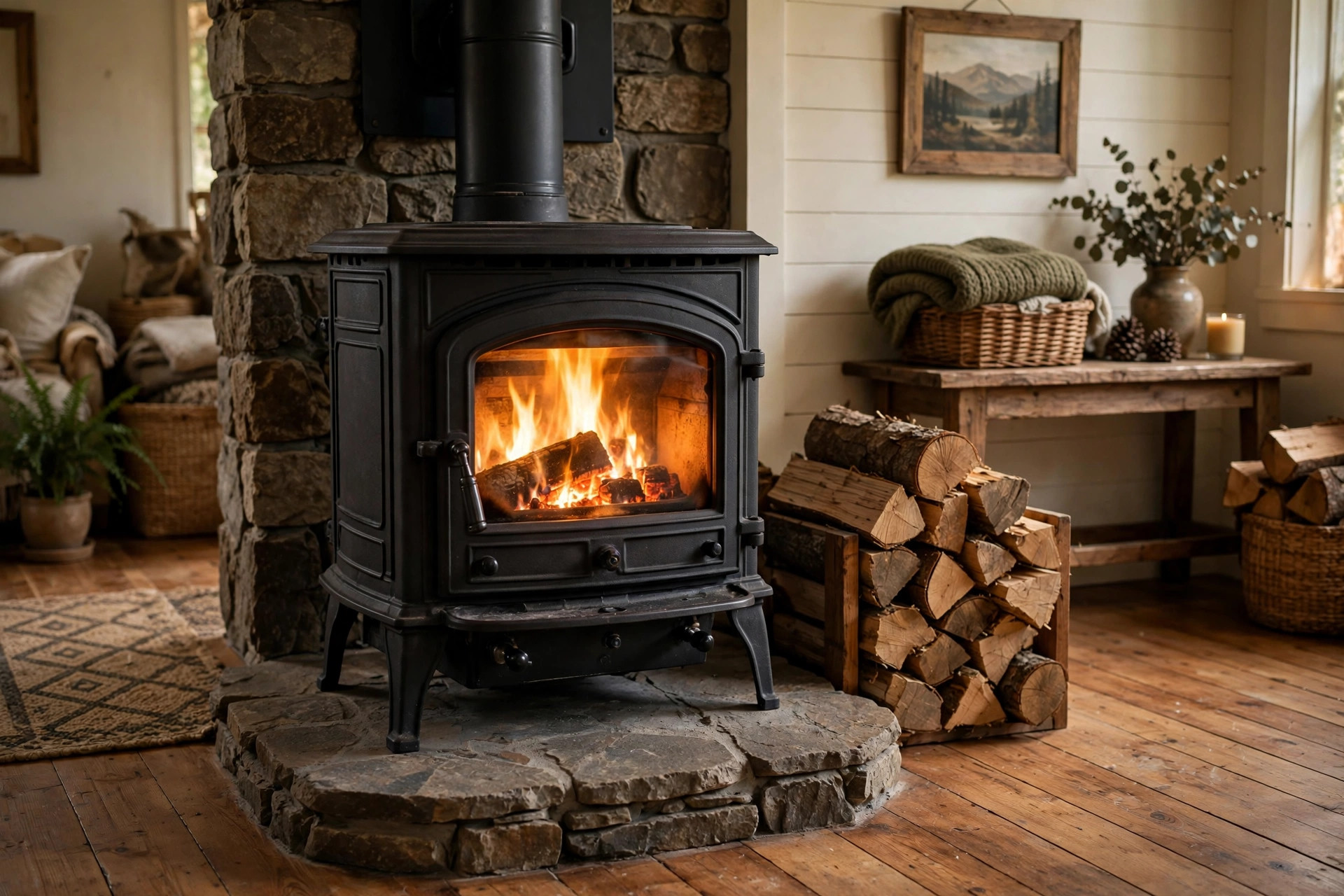

This best wood burning stoves buying guide is written for the homeowner who wants real heat from a real fire. A wood stove is one of the oldest ways to warm a home. It is also one of the most satisfying. The fire shows through the glass door. The room warms from the stove outward. The wood pile by the door is part of the charm. But buying the wrong stove is an expensive mistake. The wrong size means a cold house or a roaring beast you cannot control. This guide walks through every step: size, type, efficiency, safety, cost, and care. By the end, you will know exactly what to look for and what to avoid.
Why a Wood Stove Is Worth the Effort
A wood stove gives heat that feels different from forced air. The warmth comes from a hot surface that radiates into the room. People gather near it. The floor near the stove stays warm. On a cold night, this matters more than the numbers on a chart.
A stove also gives you a backup heat source. When the power fails in a winter storm, the furnace stops. A wood stove keeps going. It is a form of insurance that also happens to be pleasant.
There is a cost reason too. Firewood is often the cheapest fuel per unit of heat in rural areas. Even bought firewood can cost less than oil or electric heat in many markets. A well-run stove can cut the winter heating bill by a large share.
How to Size a Stove for Your Home: Best Wood Burning Stoves Buying Guide
Sizing is the first decision and the most common place to go wrong. A stove is sized by the space it must heat, not by how big the firebox looks in the showroom.
Start with the square footage of the area you plan to heat. Then adjust for your climate and your house. A well-insulated modern home in a mild region needs less heat per square foot than an old farmhouse in a cold region. Ceiling height matters too. Rooms with tall ceilings need more heat because warm air rises.
Stove heat output is listed in BTUs. A rough rule: a stove rated at 25,000 to 35,000 BTUs heats about 500 to 1,000 square feet. A stove rated at 60,000 to 80,000 BTUs can heat 2,000 square feet or more in a mild climate. These are rough figures. Use them as a starting point, not a promise.
The right size is the one that will run at a comfortable mid-range burn through most of the winter. If you live in a very cold place, err toward the larger end of the range. If your winters are mild, the smaller end works fine.
Types of Wood Stoves
Catalytic Stoves
A catalytic stove has a special coated plate inside, called a catalyst, that burns the smoke at a lower temperature. This gives the stove very long burn times, often ten hours or more on one load of wood. The heat output is steady and even. Catalytic stoves are among the cleanest-burning models on the market.
The trade is maintenance. The catalyst wears out after several years and must be replaced. The part costs money, and the stove must be run correctly to keep the catalyst in good shape. If you want the longest burn and the highest efficiency, and you are willing to follow the instructions, a catalytic stove is a strong choice.
Non-Catalytic Stoves
A non-catalytic stove uses firebox design and air tubes to burn clean. The fire is more dramatic. The flames are taller and more visible through the glass. These stoves are simpler to run and need less maintenance than catalytic models.
Burn times are shorter, often six to eight hours. Efficiency is good but usually a step below the best catalytic models. For most buyers, a non-catalytic stove is the easy choice. It asks less of the owner and still heats well.
Wood Burning Fireplace Inserts
An insert is a stove built to slide into an existing masonry fireplace. It turns an open fireplace, which loses most of its heat up the chimney, into a real heater. If you have a fireplace you never use because it heats nothing, an insert changes that completely. Many guides to wood burning fireplace inserts walk through the sizing and fitting details.
What to Look for When You Shop
Heat Output and Efficiency
Look for the stove’s efficiency rating. Modern EPA-certified stoves burn at 70 percent efficiency or better. The best reach into the low 80s. Compare this with old pre-1990 stoves, which often sat near 50 percent. Efficiency is not just about saving wood. A more efficient stove also makes less smoke and less creosote, which means a cleaner chimney and cleaner air.
Check that the stove is certified to current EPA wood stove standards. The EPA site explains the rules for wood heaters in plain language. A certified stove burns cleaner and qualifies for many local rebate programs. Some areas will not allow the installation of an uncertified stove at all.
Burn Time and Firebox Size
The firebox is the chamber where the wood burns. A bigger firebox holds more wood and gives a longer burn. If you want the stove to last through the night without reloading, look for a model with an advertised burn time of eight hours or more. Note that advertised burn times are usually the best case. Your real burn time will be shorter on the coldest nights.
Firebox size also sets the log length the stove accepts. Standard models take 16-inch or 18-inch logs. Larger stoves take 20-inch logs or more. Match the stove to the firewood you can buy or cut easily.
Materials and Build Quality
Most stoves are made of cast iron or welded steel. Cast iron holds heat longer and gives it off more slowly after the fire dies down. Steel heats up faster and costs less. Both work well when the stove is well built. What matters more is the quality of the welds, the door seal, and the air controls.
Open and close the door in the showroom. It should seal firmly with a gasket that feels solid. The air controls should move smoothly and stay where you set them. The glass should be ceramic glass rated for high heat, not plain glass. Reviews from buyers often mention how a stove holds up after three or four winters. Reading stove buying advice at This Old House is a good way to learn what holds up in real homes.
Clearances and Space
Every stove has required clearances: the minimum safe distance from walls, furniture, and the floor. These numbers come from the manufacturer and from the building code. Small stoves need less space. Some models have heat shields that reduce the required clearances.
Measure your planned spot before you shop. Bring the numbers to the dealer. A stove that cannot be placed safely in your room is not a bargain at any price. The floor under the stove also matters. Most stoves need a non-combustible hearth pad under and in front of the door.
Cost and Price
A good new wood stove costs roughly 1,000 to 3,000 dollars for the stove alone. Basic steel models sit at the low end. Large cast-iron models and top catalytic stoves sit at the high end. Used stoves cost less, but old uncertified stoves may not meet current codes.
The stove is only part of the bill. The chimney system often costs as much as the stove itself. A proper Class A insulated chimney can run 1,000 to 2,500 dollars installed, depending on the height and the roof work. The hearth pad, wall shields, and professional installation add more.
Budget 2,500 to 6,000 dollars for a complete installed job in most American homes. Many owners recover the cost in three to five years through lower heating bills. Check for tax credits and local rebates before you buy. Stove selection at Home Depot and stove buying guides at Lowe’s both list current models with installed-package pricing.
Care and Upkeep
A wood stove asks for simple, regular care. Give it that care and it will serve for twenty years or more.
Burn only dry, seasoned firewood. Wood should be split and stacked for at least six months, and a year is better. Dry wood burns hot and clean. Wet wood hisses, smokes, and coats the chimney with creosote. A moisture meter costs little and settles every argument about whether the wood is ready.
Empty the ash pan when the ash bed gets deeper than about two inches. Keep a thin bed of ash on the firebox floor. A small ash bed helps the fire burn evenly.
Clean the glass with a damp cloth and wood ash or a stove-glass cleaner when it soots up. Never use oven cleaner on stove glass. Check the door gasket once a year. Close the door on a dollar bill; if the bill pulls out easily, the gasket needs replacing.
The chimney needs sweeping. How often depends on how you burn. A stove run hot with dry wood may need sweeping once a year. A stove run low and slow with marginal wood may need it twice a season. If you see more than a quarter inch of creosote buildup, it is time. Many chimney sweeps offer an annual inspection that is worth the fee. Wood stove care tips from Bob Vila cover the yearly checklist in good detail.
Safety Rules That Matter
A wood stove is safe when it is installed and run correctly. Nearly every stove fire traces back to a broken rule.
Keep the clearances the manufacturer calls for. Do not stack firewood or set furniture closer than the manual allows. Combustible walls near the stove need proper heat shields.
Install smoke detectors and a carbon monoxide detector on every floor. Test them monthly. The detectors are your warning system if something goes wrong.
Never burn trash, painted wood, treated lumber, or glossy paper in the stove. These release toxic fumes and can damage the stove and chimney. Burn only clean firewood.
Keep a fire extinguisher near the stove room and make sure every adult in the house knows how to use it. Teach children that the stove is hot and the area around it is off limits. A small gate or railing works well for toddlers.
Have the chimney inspected every year, even if you sweep it yourself. A professional eye catches cracked liners and loose flashing that you might miss. Guidance on chimney caps and covers helps you pick the right top for your flue; see this guide to chimney caps and covers for the options.
Frequently Asked Questions
How much space can a wood stove heat? A small stove heats 500 to 1,000 square feet. A medium stove heats 1,000 to 2,000 square feet. A large stove heats 2,000 square feet or more. Your insulation, climate, and floor plan move these numbers up or down. Use the BTU rating and your home’s traits to size the stove, not the firebox alone.
Are wood stoves bad for air quality? Old uncertified stoves are smoky. Modern EPA-certified stoves are far cleaner. They burn most of the smoke before it leaves the firebox. Burning dry wood in a hot stove keeps emissions low. In areas with air quality rules, only certified stoves may be installed or sold.
Can I install a wood stove myself? Some owners do, but most should not. The chimney is the dangerous part. A bad chimney installation can cause a house fire. Many building codes require a permit and an inspection. A professional installer knows the clearance rules and the chimney standards. The money spent on installation buys safety and peace of mind.
Wood stove or pellet stove: which is better? A wood stove gives more heat per load and works without electricity. A pellet stove feeds itself from a hopper and runs on a thermostat, but it needs electric power to run the auger and fan. If your power fails often, the wood stove wins. If you want set-and-forget convenience, look at pellet stoves and compare the running costs.
How long does a wood stove last? A well-built stove lasts twenty to thirty years with basic care. The parts that wear out are the door gaskets, the glass, and, in catalytic models, the catalyst. All are replaceable. The steel or cast-iron body itself can outlast the house it sits in.
What size logs should I buy? Buy logs cut to fit your firebox with a few inches to spare. For most stoves that means 16-inch logs. Splits should be three to six inches across. Smaller splits light faster and burn hotter. Larger rounds burn longer but need a hot bed of coals to get going.
A Final Word
The best wood burning stove is not the most expensive one. It is the one sized right for your home, certified to current standards, and built to last. Measure your space first. Buy only dry wood. Respect the clearances. Give the chimney its yearly attention. Start your short list with wood stove ratings from Consumer Reports and wood stove guidance at The Spruce, then visit a local dealer and put your hands on the models you like. Energy saving heating guidance from Energy.gov is also worth a read before you spend.
For more background, see Family Handyman, Napoleon, and Heatilator.
References
Family Handyman. (n.d.). DIY home repair and maintenance. https://www.familyhandyman.com Heatilator. (n.d.). Fireplaces and fireplace products. https://www.heatilator.com Lowe’s. (n.d.). Home improvement products. https://www.lowes.com Napoleon. (n.d.). Fireplaces, grills, and heating products. https://www.napoleon.com The Home Depot. (n.d.). Home improvement products. https://www.homedepot.com The Spruce. (n.d.). Home and garden advice. https://www.thespruce.com This Old House. (n.d.). Home renovation guidance. https://www.thisoldhouse.com U.S. Environmental Protection Agency. (n.d.). Protecting human health and the environment. https://www.epa.gov
Was this guide helpful?

About Michael Thompson
The My Garden US editorial team writes practical, in-depth home and garden guides for American homeowners — tested advice, no fluff.
You May Also Like
Where to Buy Firewood Storage Racks in Arizona
May 10, 2026 0 views
Where to Buy Electric Fireplace Mantels in Arizona
July 18, 2026 0 views
Energy Efficient Tile Fireplace Surrounds for Sale: A Buyer’s Guide
September 5, 2026 0 views