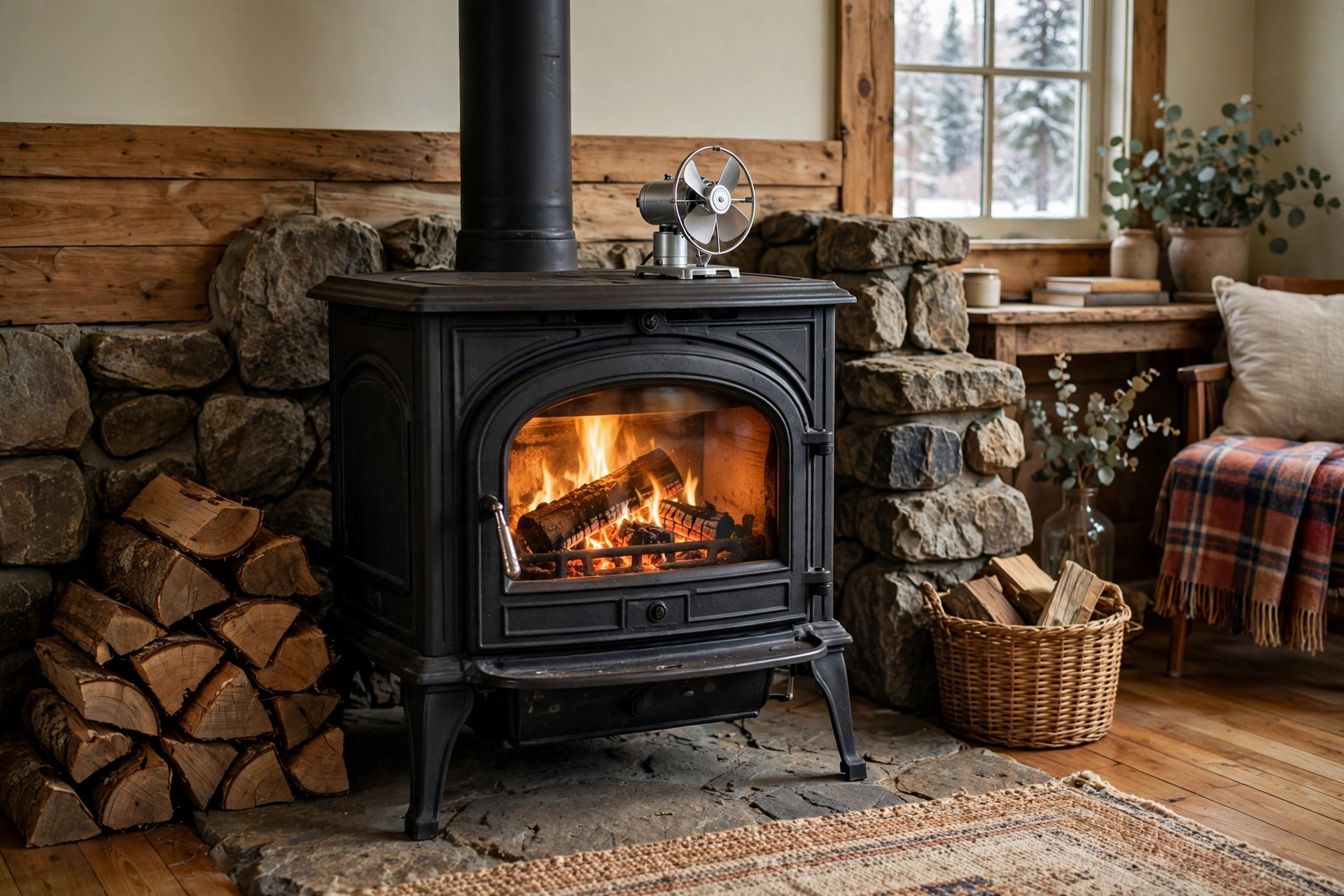

A stove that burns hot may still leave one corner of the room cold. Heat rises from the stove top and stays near the ceiling. A fan that needs no power cord can fix this. This ventless heat powered stove fans buying guide will walk through the whole matter in plain terms.
Why Heat Powered Stove Fans Matter
A wood stove or a pellet stove can heat a house well. But much of its heat rises straight up. The room near the stove feels warm while the far wall stays cold. People sometimes burn more wood to make the far wall warm. That costs more money and wears the stove down.
A heat powered stove fan sits on the stove top. It uses the heat of the stove itself to turn its blades. No plug is needed. No batteries are needed. As the stove heats up, the fan starts on its own. It pushes warm air out into the room instead of letting it rise to the ceiling. The room warms more evenly. The stove owner can burn less wood for the same comfort.
These fans work best in homes that heat with wood stoves, pellet stoves for heating, or ventless gas stoves. They are small tools with a simple job, and they do it well when matched to the right stove. For a homeowner who is also weighing a new stove purchase, a wood burning stove buying guide for online shoppers can help with that larger decision first.
How These Fans Work: Ventless Heat Powered Stove Fans Buying Guide
The fan has a base made of a metal called a thermoelectric module. One side of the base touches the hot stove top. The other side is cooled by the air above. The difference in heat between the two sides makes a small electric current. This current runs a tiny motor that turns the blades. This is called the thermoelectric effect, and it has been used in simple devices for many decades.
When the stove is cold, the fan does nothing. As the stove top reaches about 150 degrees, the fan starts to turn. It runs faster as the stove gets hotter. It slows down as the fire dies. The fan never needs a switch. Some models have a small lever to tilt the blades for the best angle, but most run on their own.
Why No Vent Is Needed
The word ventless in this guide has two meanings. First, the fan needs no power cord or vent to run. Second, these fans are often used with ventless stoves, which do not have a flue to the outside. The fan itself makes no smoke and burns no fuel. It only moves air. It works on a wood stove, a pellet stove, or a ventless gas stove all the same.
Types of Heat Powered Stove Fans
Not all stove fans are built the same. The main types differ in size, blade count, and start temperature.
Standard Three-Blade Fans
The most common type has three or four blades. It stands about eight to ten inches tall. It moves a modest amount of air and fits most stoves. For the average living room with one wood stove, this type is enough. It is also the lowest in price.
Large Four and Five-Blade Fans
Larger fans stand twelve inches or more. They have four or five blades and move more air. They suit large rooms, open floor plans, or rooms with high ceilings. They cost more and need a larger flat space on the stove top. On a small stove they may take up too much room.
Low-Temperature Fans
Some fans are built to start at a lower temperature, near 140 degrees. They turn sooner and keep turning longer as the fire cools. They are good for stoves that run at a low steady burn. They may not move as much air at high heat as the standard type.
Mini Fans
Small fans, about five to six inches tall, are made for small stoves and cabins. They are light and take little space. They move less air, but on a small stove that is all that is needed. They are a good match for a corner stove in a small room.
What to Look for When You Buy
The market has many brands and many prices. The checklist below will help a buyer tell a good fan from a poor one.
Stove Top Temperature Range
Every fan has a rated start temperature and a maximum safe temperature. The start temperature is usually between 140 and 180 degrees. The maximum is usually near 650 degrees. Make sure the fan fits the normal running heat of the stove. A fan rated for a wood stove may overheat on a very hot stove if the stove runs too hot.
Blade Count and Airflow
More blades move more air, but they also need more heat to turn fast. Three blades are fine for small rooms. Four or five blades are better for large rooms. Look for the airflow rating in cubic feet per minute. A rating of 100 to 150 cubic feet per minute is common for standard models.
Base Size and Stability
The base must sit flat on the stove top. Measure the flat space on the stove before buying. A large fan needs a base at least six inches wide. The fan should feel heavy and steady in the hand. Light fans with thin bases can tip over or fall off when bumped.
Build Quality
Good fans are made of anodized aluminum. They do not rust and they handle heat well. The blades should be even and free of bends. The motor should be sealed against dust. Cheap fans may use thin metal and loose joints that wear out in one season.
Noise
These fans are known for being quiet. A good fan makes only a soft hum. Read buyer reviews with care on this point. A fan that rattles or squeals is a poor one. If the store shows the fan running, listen before you buy.
Warranty
A one-year warranty is common. Better makers offer two years. Keep the receipt. These fans live in a harsh place, on top of a hot stove, and a good warranty shows that the maker trusts the product. Product tests and buyer guides from sources such as The Spruce can also help sort good makers from poor ones.
Cost and Price
Most heat powered stove fans cost between 30 and 120 dollars. Standard three-blade models run from 30 to 60 dollars. Large or low-temperature models run from 60 to 120 dollars. Price does not always track quality, but very cheap fans under 25 dollars often fail early.
The fan can pay for itself over time. A room that heats evenly may need less wood. If the fan saves even a small part of the wood bill each winter, it earns back its cost in one or two seasons. The fan also adds comfort that has no price, since warm rooms on cold nights are worth much.
Buyers should watch for shipping costs and return rules when they order online. Home centers such as Home Depot carry these fans in store and online, which makes returns easy. Smaller specialty sellers may offer better prices but slower shipping.
Care and Upkeep
A stove fan needs little care, but a few habits will make it last for years.
Keep the blades clean. Dust builds up on the blades over the heating season. Wipe the blades with a soft cloth when the stove is cold. A dusty fan moves less air and works harder.
Keep the base clean too. The bottom of the base must touch the stove top fully. Ash and soot on the stove top can lift the base and cut the heat flow. Wipe the stove top where the fan sits once a month during the season.
Store the fan in the off season. When spring comes, take the fan off the stove and put it in its box. Heat, dust, and summer damp can wear the motor. A fan that is stored well may last five to ten years.
Do not oil the motor. These motors are sealed. Oil can damage them. If the fan stops turning, let the stove cool and check for dust or a bent blade first.
Safety
These fans are safe when used as the maker directs, but a few rules matter.
– Place the fan at the back of the stove top, away from the door and from the front edge. This keeps it out of reach of hands and pets. – Never let the stove top get hotter than the fan’s maximum rating. An overheating fan can damage its motor. A stove top thermometer is a cheap tool that shows the heat at a glance. – Keep children and pets from touching the fan. The base and blades get hot while the stove runs. – Do not move the fan while the stove is hot. Use a thick glove or wait until the stove is cold. – The fan is not a toy. Do not let children spin the blades by hand while it is on the stove.
Ventless gas stoves have their own safety rules. The Environmental Protection Agency gives guidance on safe indoor fuel burning. Follow the stove maker’s manual on fresh air and room size.
Where to Buy
Heat powered stove fans are sold at home centers, hardware stores, and stove shops. Large stores often let a buyer see the fan and feel its weight. Stove shops may offer advice on which model fits a given stove. Online sellers offer a wide range and buyer reviews. When buying online, check the return policy before placing the order.
Some buyers look for a fan that matches a stove brand. Makers of stoves, such as Napoleon and Heatilator, sell stoves and parts, and their dealers can advise on fans that fit their models. A good dealer will know which fan size fits which stove top.
Frequently Asked Questions
Do these fans really work without electricity?
Yes. The fan makes its own power from heat. One side of its base is hot against the stove, and the other side is cooled by the room air. This heat difference makes a small current that turns the blades. No cord and no battery are needed.
How much warmer will the room get?
The fan does not make more heat. It moves the heat the stove already makes out into the room. Owners often say the room feels several degrees warmer and heats more evenly. The far corners of the room warm up sooner.
Will the fan work on my stove?
It works on most wood stoves, pellet stoves, and ventless gas stoves. The stove top must be flat where the fan sits, and the top must reach the fan’s start temperature. Round or sloped tops do not work. Check the stove manual if you are unsure.
Can I use it with fireplace glass doors?
These fans are made for stove tops, not fireplaces. If your fireplace has glass doors, the doors change how heat moves. For advice on doors and glass, a fireplace glass doors buying guide is a better source. Some people set a fan on the hearth in front of a fireplace, but the maker may not rate the fan for that use.
How long does a stove fan last?
A well-made fan lasts five to ten years with care. Cheap fans may fail in one or two seasons. The most common failure is a worn motor. Keep the fan clean and store it in the off season to make it last.
Do I need a chimney cap for the fan to work?
The fan moves room air and has nothing to do with the chimney. But a good chimney cap matters for any stove that has a flue. A chimney caps and covers buying guide can help with that separate purchase.
A Final Word
A heat powered stove fan is a small buy with a real payoff. It needs no power, makes little noise, and pushes warm air where it is needed. Choose a fan that fits the stove top, match the size to the room, and buy from a maker that stands behind its product. With a little care, the fan will serve for many winters.
Related guides on this site include high efficiency gas log sets for sale, freestanding electric stoves reviews and buying guide, and buy tile fireplace surrounds online in texas.
References
Family Handyman. (n.d.). DIY home repair and maintenance. https://www.familyhandyman.com Heatilator. (n.d.). Fireplaces and fireplace products. https://www.heatilator.com Lowe’s. (n.d.). Home improvement products. https://www.lowes.com Napoleon. (n.d.). Fireplaces, grills, and heating products. https://www.napoleon.com The Home Depot. (n.d.). Home improvement products. https://www.homedepot.com The Spruce. (n.d.). Home and garden advice. https://www.thespruce.com This Old House. (n.d.). Home renovation guidance. https://www.thisoldhouse.com U.S. Environmental Protection Agency. (n.d.). Protecting human health and the environment. https://www.epa.gov
Was this guide helpful?

About Lisa Anderson
The My Garden US editorial team writes practical, in-depth home and garden guides for American homeowners — tested advice, no fluff.
You May Also Like
Energy Efficient Propane Fire Pits for Sale: A Practical Buying Guide
March 19, 2026 0 views
EPA Certified Fireplace Remote Controls With Free Shipping: A Plain Guide to Buying and Using Them
April 29, 2026 0 views
Best Firewood Storage Racks for California Apartments
April 24, 2026 0 views