
A cold evening can end a good night outdoors too soon. A propane patio heater changes that. This top rated propane patio heaters buying guide will help you pick the right model for your yard, your budget, and your family. You do not need to be an expert. You only need to know what matters: heat output, safety, fuel cost, and build quality.
Why a Propane Patio Heater Matters
An American backyard is an investment. Patios, decks, and outdoor furniture cost real money. Yet most owners use these spaces only half the year. A good patio heater adds weeks, even months, of outdoor living.
Propane heaters are popular for a reason. They are easy to move. They need no gas line. They start with the push of a button. A single tank can give many hours of warmth. For many homes, they are the simplest way to make a patio usable in spring and fall.
A top rated propane patio heater does more than make the air feel warm. It lets you host dinners in October. It lets you sit outside with coffee in March. It turns a cold deck into a real second living room.
What to Look for in a Top Rated Propane Patio Heater: Top Rated Propane Patio Heaters Buying Guide
Not all patio heaters are built alike. The best models share a few key traits.
Heat output. Heat is measured in BTUs. Most full-size propane patio heaters put out 40,000 to 48,000 BTUs. That is enough to warm a circle of about 15 to 20 feet. Tabletop models are weaker, often 9,000 to 12,000 BTUs. Pick output to match your space.
Ignition system. Look for a simple push-button or electronic ignition. Piezo ignitions are common and cheap, but they can be hard to use with gloves on. Electronic igniters cost a little more and light with one press. Reviews on home improvement sites such as The Spruce often note which ignitions hold up over time.
Safety features. A top rated unit always has a tip-over switch. This shuts the gas off if the heater falls. It should also have an oxygen depletion sensor on some models, and a sturdy base that holds the propane tank steady. A weighted base matters in windy yards.
Build quality. Stainless steel lasts longer than painted metal. The burner head and reflector should feel solid, not thin. Cheap units rust fast. Pay a little more for stainless steel if your heater will sit outside year round. Buyers guides from This Old House stress this point in almost every heating review.
Ease of use. Check that the tank is easy to swap. Look for wheels that roll over pavers and grass. A built-in cover is a nice extra, but a separate cover works too.
Types of Propane Patio Heaters
Propane patio heaters come in four main styles. Each fits a different kind of space.
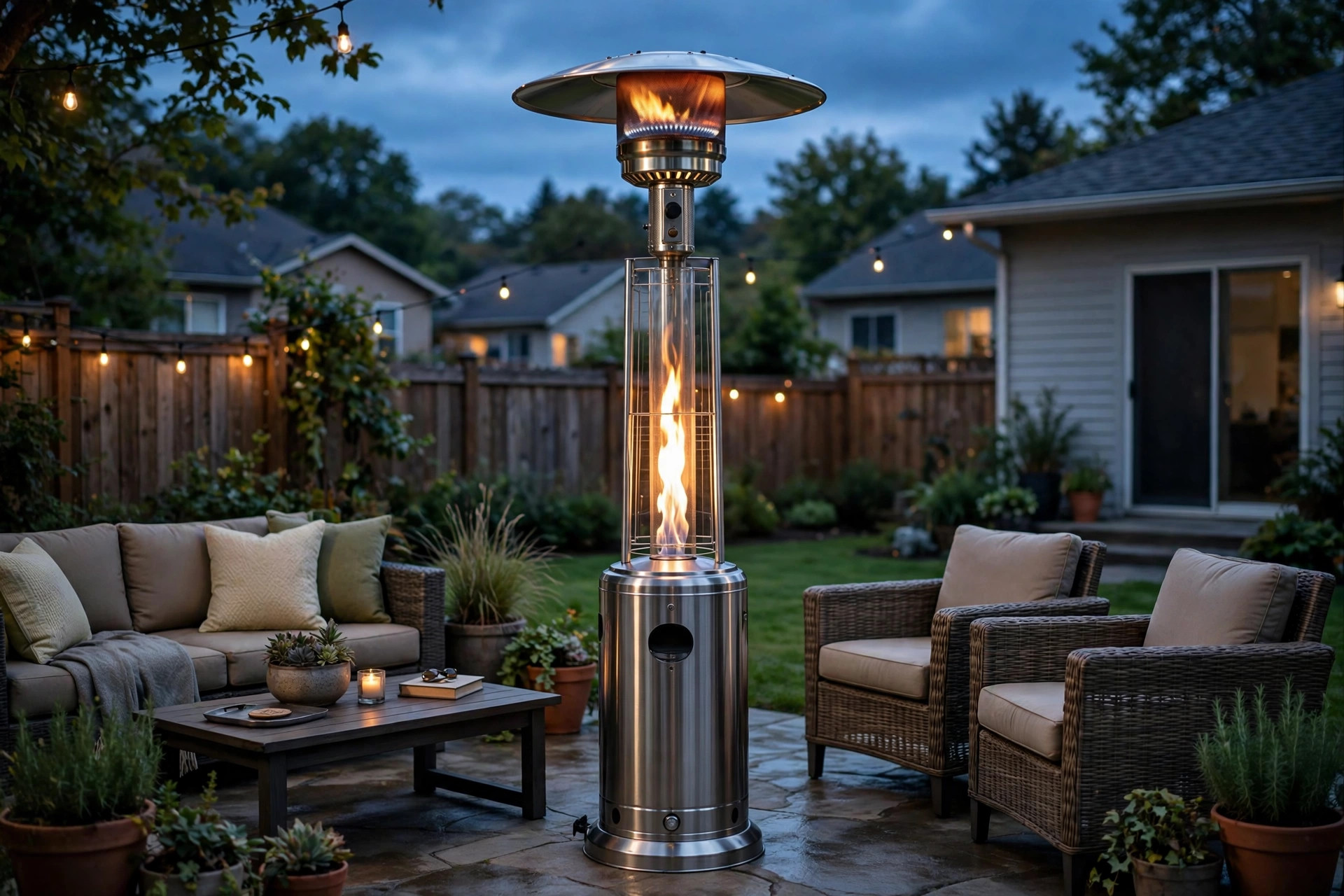
Standing tower heaters. These are the tall mushroom-top units seen at restaurants. They stand about seven feet tall. They heat a wide area. They are the most common choice for home patios. They hold a standard 20-pound propane tank inside the base. Many buyers start their search with our top rated outdoor patio heaters buying guide before narrowing down to propane.
Pyramid flame heaters. These have a glass tube that shows a real dancing flame. They look beautiful at night. They cost more than tower heaters. The glass tube needs care, since it is breakable. They suit patios where style matters as much as warmth.
Tabletop heaters. Small and light, these sit on a table or stand. They use small one-pound propane canisters. They warm only a few chairs. They are cheap and easy to store. They are a good test of whether you like patio heating before you buy a full-size unit.
Freestanding commercial units. These are heavier and taller. They put out more heat per hour. They are made for big decks and restaurant patios. They cost more and use more fuel. Most home owners do not need this size.
If you also want the look of real fire, a look at our energy efficient propane fire pits for sale guide can show you open-flame options that pair well with a heater.
Heat Output and BTUs Explained
BTU stands for British Thermal Unit. It is the standard measure of heat energy. A higher BTU number means more heat.
A 46,000-BTU tower heater can raise the air temperature around it by 10 to 15 degrees. That does not sound like much. On a 50-degree night, it is the difference between going inside and staying out. Wind lowers the effect. A heater near a windbreak, such as a fence or wall, works much better than one in open air.
Think about your patio size before you buy. A 10-foot round seating area does fine with one 40,000-BTU heater. A large deck with two seating groups may need two heaters. Two smaller units often beat one big one. They spread the heat evenly. They also let you heat only the side of the patio that is in use.
Some shoppers compare propane with electric models. Electric heaters are clean and silent. They cost less to run per hour. But they must be plugged in, and they do not move well. Our best electric patio heaters buying guide covers that side of the market if you want to compare both.
Cost and Price of Propane Patio Heaters
Prices vary by style and quality.
– Tabletop heaters: $80 to $150. – Standing tower heaters: $150 to $350. – Pyramid flame heaters: $250 to $500. – Commercial freestanding units: $400 to $700.
Fuel is the running cost. A 20-pound propane tank holds about 4.6 gallons of propane. A 46,000-BTU heater burns about two gallons per hour on high. That means one tank lasts about 10 to 12 hours on high, or up to 20 hours on a lower setting. Tank refills run $15 to $25 in most parts of the country. Home centers like The Home Depot and Lowe’s sell tanks, refills, and replacement parts in store.
Add the cost of a cover, around $20 to $40. Add new wheels or parts over the years. Even so, a $250 heater that lasts five years costs less than $50 a year. For most families, that is cheap outdoor living.
Care and Upkeep
A propane patio heater needs little care. A few habits will add years to its life.
Keep it covered. Sun and rain age the finish. A simple cover blocks both. Cover the heater when it is not in use, especially in winter.
Clean the burner. Dust and spider webs can block the burner ports. Once a season, turn the gas off and brush the burner clean with a soft brush. A blocked burner lights poorly and burns uneven.
Check the hose and connections. Before the first use each fall, look at the gas hose for cracks. Tighten connections by hand. Put a little soapy water on the joints with the gas on. If you see bubbles, gas is leaking. Shut the tank off and replace the part. Project guides at Family Handyman show this leak test step by step.
Store tanks safely. Never store a propane tank inside the house or garage. Keep tanks upright in a cool, shaded spot outside. Remove the tank from the heater during long storage.
Watch for rust. Touch up small rust spots with heat-safe paint. Replace a badly rusted reflector, since it throws less heat when it is dull.
Safety Tips for Propane Patio Heaters
Propane is a safe fuel when used with care. Follow these rules.
Use it outdoors only. Never run a propane patio heater inside a home, tent, or closed garage. Propane gives off carbon monoxide. Outdoor air keeps it safe. The U.S. Environmental Protection Agency offers clear facts on carbon monoxide risks from fuel-burning appliances.
Keep clearances. Give the heater at least three feet of space on all sides. Keep it six feet from low ceilings, awnings, and tree branches. The top of a tower heater gets very hot.
Place it on a flat, hard surface. A heater on grass or gravel can tip. Set it on concrete, stone, or deck boards. Lock the wheels if it has them.
Turn it off when you leave. Do not leave a lit heater running unattended. Turn the gas off at the tank first, then at the heater. Let it cool before you cover it.
Keep children and pets away. The burner head and reflector stay hot long after the flame is out. Teach children that the heater is not a toy. Keep dogs from leaning on the base.
Check for recalls. Before you buy a used heater, search the model number online. Old units may have known valve or ignition problems. Makers such as Napoleon and Heatilator list current safety notices on their homepages.
Frequently Asked Questions
How long does a 20-pound propane tank last on a patio heater? On high heat, about 10 to 12 hours. On a medium or low setting, about 18 to 22 hours. Wind and cold make the heater work harder, so real time varies. Most families get two to three weeks of evening use from one tank.
Are propane patio heaters safe on a wooden deck? Yes, if you give them proper clearance. Set the heater at least three feet from rails and furniture. Place it on a stable spot. Never put it under a low roof. Many owners use them on wood decks every fall without trouble.
Can I use a propane patio heater in winter? You can. The heater will warm a bubble of air around it even on cold days. But it cannot heat an open yard like a furnace heats a room. Below freezing, the useful warm zone shrinks. A windbreak or patio enclosure helps a lot.
What is the difference between a patio heater and a fire pit? A patio heater burns propane in a closed burner and throws heat through a reflector. It is clean and steady. A fire pit gives open flame and a campfire feel. Fire pits often burn wood or propane. A heater is safer near furniture and easier to control.
Do I need a permit to use a propane patio heater? Most towns do not require a permit for home patio heaters. Some apartment complexes and HOAs have rules about open flames and propane tanks. Check your lease or HOA rules before you buy.
Which is cheaper to run, propane or natural gas? Natural gas costs less per hour in most areas. But natural gas heaters need a fixed gas line and a plumber. Propane heaters need no hookup. If you already own a propane grill, you already have the fuel supply.
A Short Final Word
A top rated propane patio heater is one of the best buys for an American backyard. It is simple, safe, and it works. Pick the right size for your space. Check the safety features. Keep the burner clean. Then enjoy your patio long after the season turns cold. The nights are only getting cooler. Your evenings outside do not have to end.
References
Family Handyman. (n.d.). DIY home repair and maintenance. https://www.familyhandyman.com Heatilator. (n.d.). Fireplaces and fireplace products. https://www.heatilator.com Lowe’s. (n.d.). Home improvement products. https://www.lowes.com Napoleon. (n.d.). Fireplaces, grills, and heating products. https://www.napoleon.com The Home Depot. (n.d.). Home improvement products. https://www.homedepot.com The Spruce. (n.d.). Home and garden advice. https://www.thespruce.com This Old House. (n.d.). Home renovation guidance. https://www.thisoldhouse.com U.S. Environmental Protection Agency. (n.d.). Protecting human health and the environment. https://www.epa.gov
Was this guide helpful?

About Sarah Mitchell
The My Garden US editorial team writes practical, in-depth home and garden guides for American homeowners — tested advice, no fluff.
You May Also Like
Luxury Indoor Firewood Holders With Free Shipping
September 2, 2026 0 views
Top Rated Chimney Inspection Services for Homeowners
January 31, 2026 0 views
Best Electric Fireplace Mantels for Humid Climates: A Buyer Guide
August 13, 2026 0 views