Every spring, gardeners face the same question. Should they put landscaping fabric under mulch, or should they skip it and lay mulch straight on the soil? The choice sounds small. It is not. It changes how your beds drain, how your plants grow, and how much weeding you will do for years to come.
The term landscaping fabric under mulch pros cons covers a long debate. Some landscapers swear by the fabric. Some gardeners warn against it. Both sides have a point. This article looks at the facts in plain terms so you can decide for your own yard.
Why the Choice Matters
Weeds are the main enemy of any flower bed or shrub border. Mulch alone helps. A three inch layer of bark or wood chips blocks light and keeps many weed seeds from sprouting. But mulch breaks down. It sinks into the soil. Within a year or two, the weeds return.
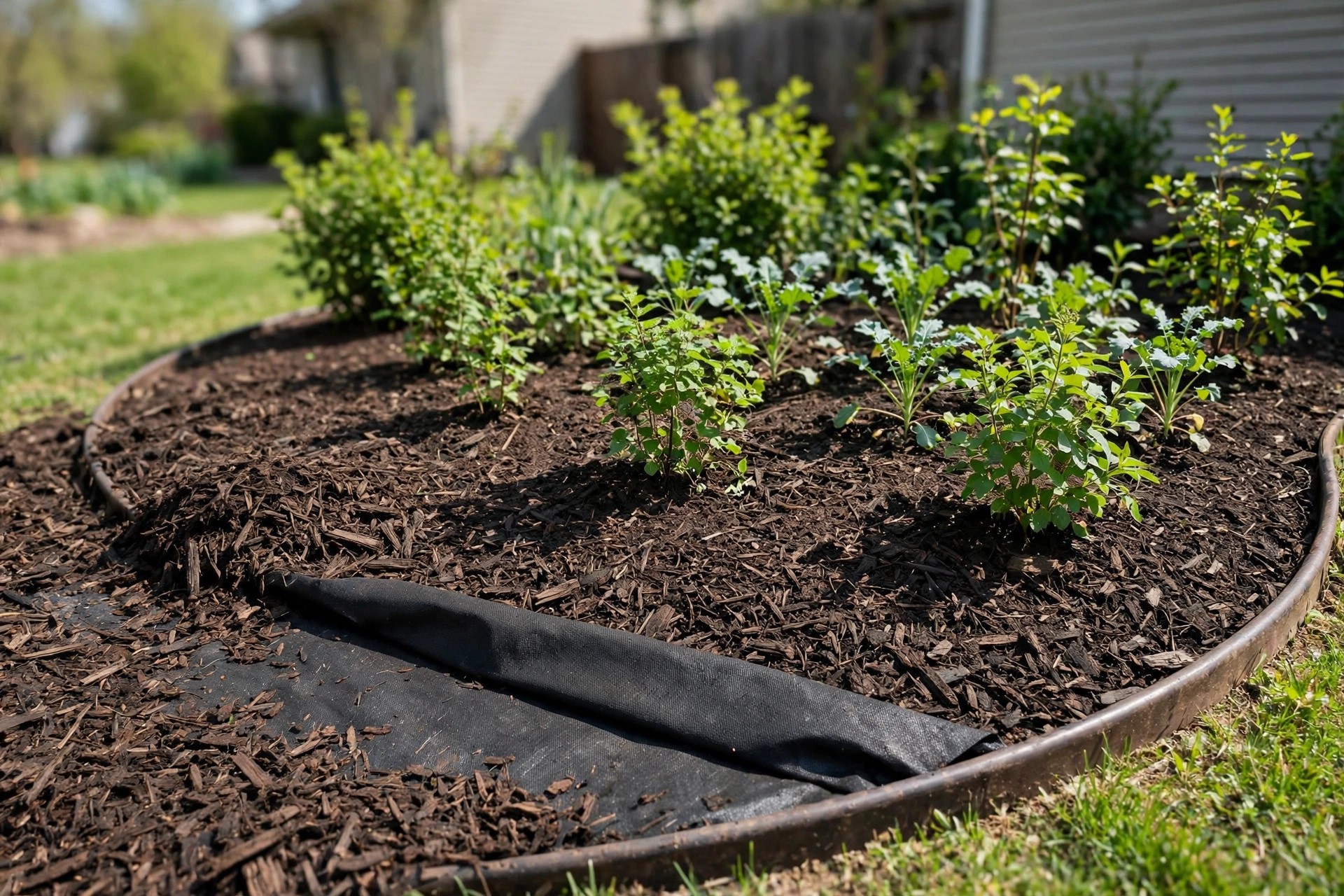
Landscaping fabric is sold as the answer. It is a sheet of woven or spun material, usually made from polypropylene. You roll it over the bed, cut holes for your plants, and cover it with mulch. The idea is simple. Light cannot reach the soil. Weed seeds below the fabric cannot sprout.
The promise is a weed free bed for years. The cost is low. A roll that covers a hundred square feet often sells for less than thirty dollars. For many homeowners, that sounds like a fair deal. But the pros and cons of landscaping fabric under mulch run deeper than the price tag.
How Landscaping Fabric Works: Landscaping Fabric under Mulch Pros Cons
To judge the pros and cons of landscaping fabric under mulch, it helps to know what the product really is. There are two main kinds.
Both kinds come with a weight rating. Heavier fabric blocks weeds better but also blocks more air and water. Most home garden rolls fall in the middle range.
The fabric is laid flat over bare soil. The edges are pinned down with metal staples, sometimes called landscape pins. Planting holes are cut with a knife or scissors. Then mulch goes on top, usually two to four inches deep. The mulch hides the fabric and protects it from the sun. Sunlight breaks down plastic fabric fast. A covered roll lasts far longer than an exposed one.
The Pros: Why People Use It
The first and clearest benefit is weed control. In the first one or two years, fabric under mulch stops most weeds. Dandelions, crabgrass, and other common pests cannot push up through a sound sheet. Homeowners who hate weekly weeding often love the change. The time saved is real.
The second benefit is less work with chemicals. When the fabric blocks weeds, there is less need for weed killer sprays. This matters to families who want fewer chemicals near pets and children. If you are already looking into pet safe lawn weed killer reviews, fabric may cut the need for such products in your beds.
A third benefit is erosion control on slopes. On a hill, mulch tends to wash down after heavy rain. Fabric pinned to the ground holds the mulch in place better than bare soil does. Gardeners with steep banks often use fabric for this reason alone.
A fourth benefit is a clean look. Fabric keeps the mulch from mixing with the soil below. The bed edge stays crisp. For formal beds around a home foundation, this tidy look appeals to many owners.
There is also the matter of mud. In low spots, fabric keeps mulch from sinking into wet ground.
The Cons: Why People Regret It
The problems with landscaping fabric appear slowly. Most show up in year three, four, or five. That is why first year reviews are often glowing while long time gardeners shake their heads.
The biggest problem is what happens on top of the fabric. Mulch breaks down into fine dark matter. Dust blows in. Fallen leaves rot. All of this settles into a thin layer of soil on top of the fabric. Weed seeds land in that layer and sprout. Their roots tangle into the fabric fibers. When you pull them, you rip the fabric.
The second problem is soil health. Healthy soil is alive. Worms, fungi, and tiny organisms move through it and feed your plants. Fabric forms a lid over this living world. Fallen leaves and mulch cannot rot down into the soil the way nature intends. Over years, the soil under the fabric can become hard, dry, and poor. Plants in such beds often grow slower than plants in open soil.
The third problem is water and air flow. Even the best fabric slows the movement of water into the soil. In heavy rain, water can run off the bed instead of soaking in. Plant roots near the surface may stay too dry while the mulch above looks wet.
The fourth problem is root spread. Trees and large shrubs send roots outward as they grow. Fabric blocks or redirects these roots. Some roots grow under the fabric and lift it in bumps. For long lived plants, this is a serious risk.
The fifth problem is the cost of removal. When fabric fails, taking it out is miserable work. It tears into strips. Roots grow through it. Bits of plastic stay in the soil for decades. This is the complaint that gardeners voice most often.
When Fabric Makes Sense
The pros and cons of landscaping fabric under mulch do not point to one answer for everyone. They point to this: fabric fits some uses and fails in others.
Fabric works best around permanent, shallow rooted plantings where you do not plan to dig again. Foundation shrubs, rock beds, and paths are good examples. A bed of gravel over fabric on a path can stay clean for a decade. That is a real win.
Fabric also makes sense under decks and in narrow strips where plants are few and maintenance is low.
Fabric is a poor choice in vegetable gardens, perennial flower beds, and anywhere you dig and replant each year. The fabric gets in the way of the spade. It stops you from working compost into the soil. In these beds, the cons clearly outweigh the pros.
It is also a poor choice around trees. A young tree needs wide spreading roots. Fabric near a trunk is a known cause of slow growth and root problems. Keep fabric well away from tree trunks.
Types of Fabric and What to Choose
If you decide to use fabric, the type matters. Here are the main options in plain terms.
Woven Polypropylene Fabric
This is the most common kind sold in garden centers. It is strong, cheap, and long lasting. It is best for paths and rock beds. Its tight weave blocks the most weeds but also blocks the most water.
Spun Bonded Fabric
This kind feels soft like felt. Water passes through it more easily. It tears more easily too. It is a middle choice for shrub beds where some water flow matters.
Natural Fiber Options
Burlap and jute sheets are sold as green choices. They block weeds for one season, then rot into the soil. It costs more per year of use than plastic, but it leaves nothing behind.
Cardboard and Newspaper
Many gardeners use thick cardboard or layers of newspaper as a free weed barrier. Wet it well, lay it flat, and cover with mulch. It blocks weeds for a season or two, then rots and feeds the soil.
Cost and Price
Fabric itself is cheap. A three by fifty foot roll, which covers one hundred fifty square feet, often sells for twenty to forty dollars at a home center. Landscape pins cost a few dollars per pack. For a small bed, the total fabric cost is often under fifty dollars.
The mulch on top is the real cost. To cover fabric well, you need two to four inches of mulch. A cubic yard of bulk bark mulch covers about one hundred square feet at three inches deep. Shoppers comparing options often read a best mulch for flower beds bulk delivery guide before they order.
Labor is the hidden cost. Laying fabric well takes time. The ground must be cleared, the fabric cut and pinned, the holes made, the mulch spread. Removing failed fabric years later costs more time than installing it did.
Compare this to the cost of mulch alone. Many gardeners find that four inches of good mulch, topped up each year, controls weeds almost as well as fabric in the short run and feeds the soil in the long run.
How to Install It Right
If you choose fabric, a careful install makes all the difference. A sloppy install fails in year one.
Start by clearing the bed. Pull all weeds, roots and all. Some gardeners spray the area first and wait two weeks, then pull what dies. Check a pre emergent weed killer application timing guide if you want to stop new weed seeds before you lay the fabric.
Rake the soil smooth. Lay the fabric flat with no folds or bumps. Overlap each seam by at least six inches so weeds cannot slip through the joints. Pin the edges every foot or so with landscape staples.
Spread two to four inches of mulch over the whole surface. Keep the mulch a few inches away from plant stems and tree trunks to prevent rot. Step back and check that no fabric shows. Sunlight will weaken any exposed strip within months.
Care and Upkeep
Fabric under mulch is not a fit and forget product. It needs yearly care.
Each spring, check the mulch depth. Top it up where it has sunk or washed away. Pull any weeds that have rooted in the mulch layer before they set seed. Weeds pulled young come out easy. Weeds left to grow tangle into the fabric.
Watch the planting holes. As shrubs grow, their stems thicken and can press against the fabric edges. Widen the holes as needed so stems are not choked.
Never till or dig through fabric. The tines of a tiller will shred it into hundreds of plastic bits that mix into the soil. If you must dig, cut the fabric cleanly and re pin the edges when you are done.
Safety Notes
The fabric itself is not toxic, but some cheap products may contain dyes or treatments. Buy plain black fabric from a known brand rather than bargain rolls of unknown origin. Large equipment makers publish plain guidance on yard products, and it pays to buy from a trusted source such as Toro or Deere dealers and established garden centers.
Wear gloves when cutting fabric. The edges can be sharp. Staples and pins should be pushed fully into the ground so no one steps on a raised point.
Do not burn old fabric. Polypropylene gives off foul fumes when burned. Bag it and send it with household trash.
FAQ
How long does landscaping fabric last under mulch?
Most plastic fabric lasts five to ten years under a good mulch cover. Woven fabric lasts longer than spun fabric. Sunlight is the main enemy, so a full mulch cover is what gives the fabric its long life.
Does landscaping fabric stop all weeds?
No. It stops most weeds that try to grow up from the soil below. It does not stop weed seeds that land on top of the mulch and sprout in the decayed mulch layer. After a few years, most beds need hand weeding again.
Can I put new mulch over old mulch on top of fabric?
Yes, and you should. Add one to two inches of fresh mulch each year or two to keep the depth at three to four inches. Fresh mulch also covers weed seedlings that have started in the old layer.
Is landscaping fabric bad for the soil?
It can be. Fabric slows the movement of worms, water, air, and organic matter into the soil. Over many years, soil under fabric often becomes compacted and less alive. In beds where soil health matters most, such as vegetable gardens, most experts say to skip the fabric.
Should I use fabric under rock or gravel?
This is one of the best uses for fabric. Rock does not break down into soil the way bark does, so the weed problem on top stays small. Fabric keeps the rock from sinking into the mud.
What can I use instead of landscaping fabric?
Thick mulch alone, four inches deep, stops many weeds. Cardboard or newspaper under mulch works for a season or two and then feeds the soil. Burlap works for one season. A pre emergent herbicide applied at the right time stops weed seeds from sprouting without any barrier at all.
A Final Word
The debate over landscaping fabric under mulch pros cons will not end soon, because both sides speak from real experience. Fabric does cut weeding in the early years. It does cost little up front. But it does not last forever, it does harm soil life, and it is hard to remove once it fails.
Use it where it fits. Paths, rock beds, and permanent shrub borders are its home. Skip it where you dig, replant, and feed the soil each year. In those beds, deep mulch and a sharp hoe will serve you better than any plastic sheet.
Whatever you choose, weigh the full story before you buy the roll. The cheapest option today is not always the cheapest option ten years from now. A bed that stays healthy with simple care is worth more than a bed that looks clean for two seasons and then becomes a chore. For plain product facts and yard care standards, sources such as Consumer Reports and the equipment guides from Briggs & Stratton are worth a look before you spend.
References
Briggs & Stratton. (n.d.). Outdoor power equipment and engines. https://www.briggsandstratton.com Consumer Reports. (n.d.). Product reviews and ratings. https://www.consumerreports.org Deere & Company. (n.d.). Lawn and garden equipment. https://www.deere.com Toro. (n.d.). Lawn mowers, irrigation, and outdoor equipment. https://www.toro.com
Was this guide helpful?

About Sarah Mitchell
The My Garden US editorial team writes practical, in-depth home and garden guides for American homeowners — tested advice, no fluff.