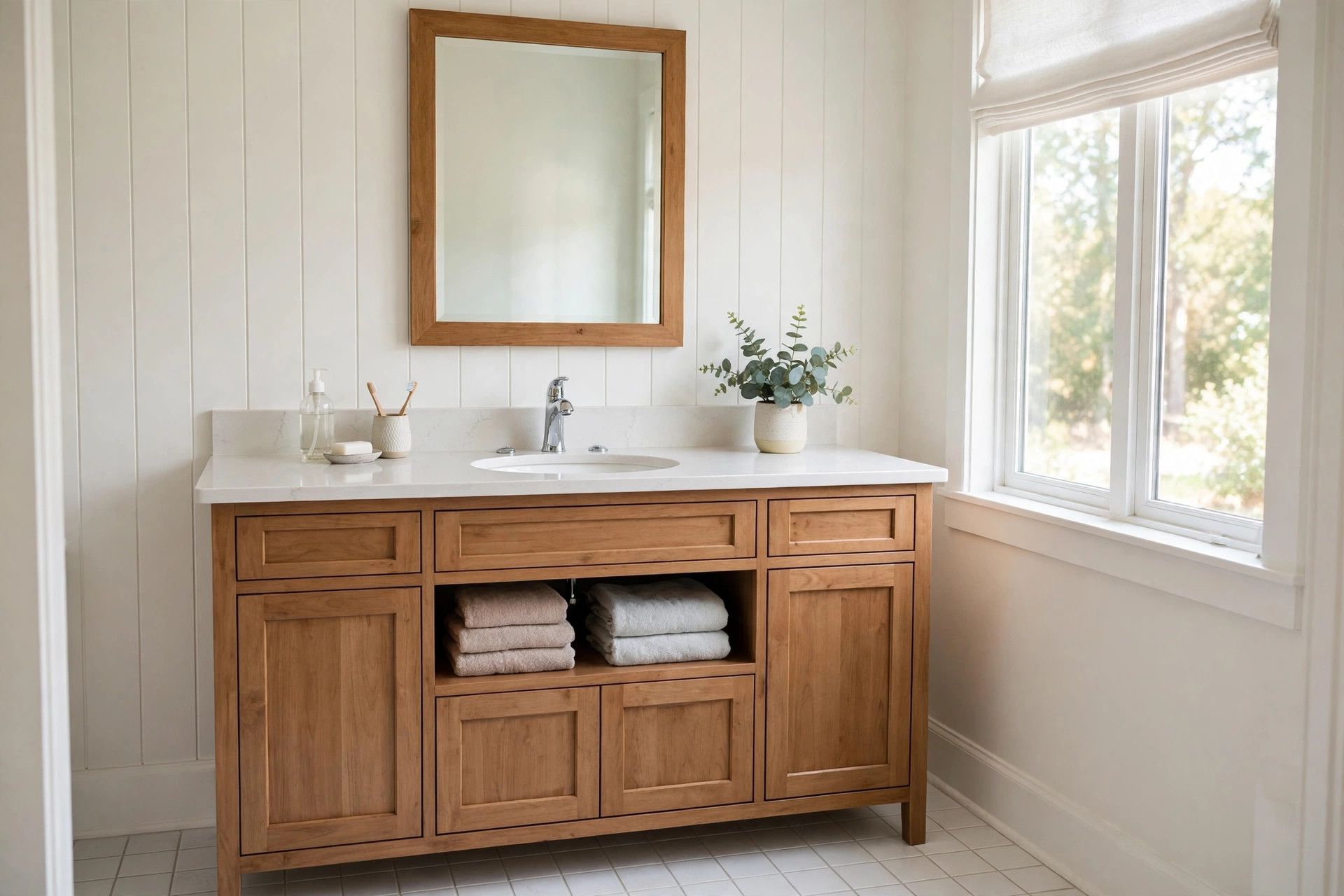
This bathroom sink vanities American homes guide begins with a simple truth. The vanity is the workhorse of the bathroom. It holds the sink. It stores the towels and the soap. It sets the tone of the room every morning. Choose it well, and the whole bath feels settled and calm. The aim here is to give you clear facts so you can pick the right vanity for your home, your budget, and your family.
Why the Vanity Matters So Much
Most people enter the bathroom and see the mirror first. Behind the mirror stands the vanity, and it does more work than any other piece in the room. A good vanity keeps pipes hidden and dry. It gives you a flat place to set a toothbrush holder and a soap dish. It holds drawers that swallow clutter. In older American homes, the vanity often replaces a plain pedestal sink and adds storage that the house lacked for decades.
A poor choice causes trouble fast. A vanity that is too wide blocks the door swing. One that is too short forces tall people to stoop over the sink. Cheap particleboard boxes swell and sag when water splashes reach them year after year. That is why guides like this one matter. A little study before you buy saves real money and real regret.
Families should also think about how the bath is used each day. A hall bath shared by three children needs tough surfaces and deep drawers. A guest powder room needs only good looks and a small footprint. The master bath of a double sink vanities buying guide usa reader may need two basins and his-and-hers storage. Match the vanity to the daily pattern, and it will serve for years.
What to Look For When You Choose: Bathroom Sink Vanities American Homes Guide
Start with size. Measure the wall where the vanity will stand. Note the door swing, the toilet position, and the shower curb. Most American baths accept a vanity between 24 and 60 inches wide. Standard depth runs 18 to 21 inches. Height has crept up over the years. The old 30-inch height now feels low to many adults. A comfort height of 34 to 36 inches suits most people and matches modern kitchen counters.
Next, study the cabinet box. Solid wood and plywood boxes hold up best in damp air. Furniture-grade plywood resists swelling far better than particleboard or medium-density fiberboard. Look at the back panel and the drawer boxes. Dovetail joints on drawers signal real craft. Soft-close hinges and slides cost a little more but keep the cabinet quiet and protect fingers. Experts at This Old House often remind readers that bath cabinets live in steam, so build quality matters more here than in a dry hallway.
Then comes the top and the sink. Cultured marble tops are common and low in price. Granite and quartz tops cost more but resist stains and heat. Solid-surface tops allow the sink to be molded right into the top, which means no seam to caulk and clean. Porcelain vitreous china basins are the classic choice. They clean easily and look bright for decades. Undermount sinks give a smooth wipe-down surface. Drop-in sinks cost less and install with simple tools. Vessel sinks sit on top like bowls and make a strong style statement, though they raise the rim height and need careful plumbing.
Plumbing fit matters too. Check where the drain and supply lines come through the wall or floor. A vanity with an open back or a removable back panel makes the plumber’s work much easier. If your pipes sit off center, choose a cabinet with adjustable shelves or drawers that step around the trap. When in doubt, talk to a plumber before you buy, not after.
Types and Options Found in American Homes
Single-sink vanities are the most common. They fit baths from 24 to 48 inches wide. A 30-inch model suits a small hall bath. A 36-inch model gives welcome counter space on both sides of the basin. These are the backbone of the market and the easiest to replace.
Double-sink vanities run 60 inches and wider. They serve master baths and busy family baths. Each person gets a basin and a stretch of counter. They need more wall space and a second drain line, so plan the plumbing early. Readers comparing paired basins can study our double sink vanities buying guide usa for a closer look at two-basin layouts.
Freestanding furniture vanities look like fine dressers or sideboards. They bring warmth to a bath and suit traditional and farmhouse styles. Many have turned legs and open space beneath. That space looks graceful but collects dust and makes mopping harder.
Floating wall-mount vanities hang from the wall with no legs touching the floor. They make small baths feel larger because the tile runs unbroken beneath them. They also make floor cleaning simple. They must anchor to wall studs or solid blocking, so they need a carpenter’s eye during install.
Corner vanities fit into tight powder rooms where every inch counts. They tuck into the corner and leave the rest of the floor open. Storage is smaller, but in a half bath that is often enough.
Vessel and console styles sit at the fashion end of the range. A console vanity pairs a stone top with metal legs and an open shelf. It looks light and airy. It stores little. A vessel sink on a slab top makes a bold statement in a guest bath. Both styles trade storage for style, so weigh that trade with care.
Finish choices run wide. White and light gray painted finishes remain the safe favorites in American homes. They brighten small baths and match almost any tile. Natural oak and walnut bring warmth and hide water spots better than dark paint. Navy and deep green have grown popular in recent years for a rich, custom look. Whatever finish you pick, check that it is rated for bath use and easy to wipe clean.
Cost and Price: What to Expect
Prices for bathroom sink vanities in American homes span a wide range. A small stock vanity from a big-box store may cost between 150 and 400 dollars. These units work well in rental units and quick refreshes. A mid-range vanity with a plywood box, soft-close hardware, and a stone top runs from 500 to 1,500 dollars. This is the sweet spot for most owner-occupied homes. A semi-custom or custom vanity, built to fit an odd wall or match existing woodwork, can run from 2,000 to 6,000 dollars or more.
The top adds to the bill. A cultured marble top often comes bundled with the cabinet. Granite or quartz adds several hundred dollars. Faucets are almost always sold apart from the vanity, so budget 80 to 400 dollars for a good faucet. Installation by a plumber and a handyman may add 200 to 600 dollars, depending on how much pipe work the job needs.
Shoppers should compare total cost, not sticker price alone. A cheap cabinet that fails in five years costs more than a solid one that lasts twenty. Check warranty terms. Many makers back their cabinets for at least five years, so read the fine print on water damage, since bath steam is the main enemy. Helpful buying guides at The Home Depot compare stock sizes with honest reviews.
If your project includes the shower too, plan the whole budget together. A frameless shower doors buying guide usa can help you price glass alongside the vanity so the bath reads as one room. And if the whole bath is a full remodel, a general bathroom sink vanities buying guide usa with fixtures and finishes in one list keeps spending under control.
Sales follow the calendar. Big-box stores cut prices on bath goods in late winter and around holiday weekends. Floor models can save a third off list. Just inspect them for dings and missing parts before you pay.
Care and Upkeep Through the Years
A vanity asks little if you treat it right. Wipe splashes off the top and the cabinet front each day. Water that sits on wood finish will find a way in. Use a soft cloth and mild soap. Harsh scouring pads scratch stone and dull paint. Once a month, open the doors and look under the sink. Feel the trap and the supply lines for dampness. A slow drip caught early costs a washer. A slow drip caught late costs a cabinet.
Caulk lines need fresh eyes twice a year. The bead where the top meets the wall keeps water from running down behind the cabinet. If it cracks or pulls away, scrape it out and lay a new bead of bath-grade silicone. The ring around the sink rim deserves the same check. These small jobs take minutes and add years to the cabinet’s life.
Drawers and hinges need a drop of care now and then. Tighten loose screws. Wipe the drawer slides clean of grit. If a soft-close hinge stops catching, most brands sell a cheap replacement cartridge. Keep the maker’s name and model number in a drawer so you can order parts years later.
Ventilation is the silent partner of every bath cabinet. Run the exhaust fan during showers and for twenty minutes after. Moist air is what swells cheap boxes and peels paint. A good fan protects the vanity, the mirror, and the paint on the walls. Guidance from the U.S. Department of Energy bath ventilation pages explains fan sizing in plain terms, and it is worth a read before a remodel.
Safety Points Every Homeowner Should Know
Bathrooms mix water, hard surfaces, and electricity, so safety deserves a section of its own. Anchor tall or narrow vanities to the wall. A climbing child can tip a top-heavy cabinet, and the stone top adds real weight. Anti-tip brackets cost little and install in minutes.
Keep cleaners and medicines out of low drawers where small children reach. A simple latch on the under-sink doors solves the problem. If the home has elders, pick lever-handle faucets that turn with a closed fist. Rounded countertop edges cut fewer hips and heads than sharp stone corners.
Electrical safety matters near the sink. Outlets within six feet of the basin should be GFCI protected. Test them monthly with the test button. Never set a plugged-in appliance where it can fall into a filled sink. The Consumer Product Safety Commission publishes plain safety sheets for home bathrooms, and every parent and grandparent should skim them.
Floor safety counts too. A floating vanity leaves the floor open, which helps a walker or wheelchair pass close. A comfort-height top lets seated users reach the basin. Small choices in the vanity add up to a bath that works for every age.
Browsing photo galleries at HGTV shows how real American homes pair vanities with tile and paint. How-to pieces at Bob Vila walk through installs step by step. Brand catalogs from Kohler, Moen, Delta Faucet, and American Standard show matching faucets and basins, while Lowe’s lists stock sizes, and design ideas at The Spruce round out the picture.
Frequently Asked Questions
What is the standard size of a bathroom vanity in American homes? The most common widths run 24, 30, 36, 48, and 60 inches. Depth is usually 18 to 21 inches. Height for older units is 30 to 32 inches, while new comfort-height units stand 34 to 36 inches. Measure your wall and your door swing before you shop, and write the numbers down.
Should I pick a single or a double sink? Pick a double sink when the wall allows 60 inches or more and two people share the morning rush. A single sink with wide counter space often serves a family bath better than two cramped basins. Think about real habits, not wish lists.
What material lasts longest in a damp bathroom? A plywood or solid-wood cabinet box with a quartz or granite top lasts longest. Porcelain basins outlast most plastic ones. Good ventilation matters as much as material. Even the best cabinet suffers in a bath with no working fan.
Can I install a vanity myself? A handy homeowner can swap a same-size vanity with basic tools. Shut off the water, disconnect the trap and supply lines, lift out the old box, set the new one level, and reconnect. Call a plumber if pipes must move, if shutoff valves are frozen, or if the drain sits in the floor in an odd spot.
How do I clean a stone vanity top without harm? Use warm water and a drop of dish soap with a soft cloth. Rinse and dry. Skip vinegar and lemon on marble, since acid etches the stone. Skip bleach on most quartz. A stone-safe spray from the cleaning aisle handles daily soil.
When should a vanity be replaced instead of repaired? Replace it when the box swells or delaminates, when doors no longer hang true, or when mold grows inside the cabinet. A fresh top and new hardware can save a sound box. A rotten box is past saving, and money spent on it is money lost.
A Final Word
A bathroom vanity is a quiet purchase that shapes loud daily routines. Measure twice. Buy the best box you can afford. Seal the seams, run the fan, and wipe the splashes. Do those simple things, and this bathroom sink vanities American homes guide will have done its job. Your bath will look right, work hard, and stay sound for many years to come.
References
American Standard. (n.d.). Bathroom and kitchen products. https://www.americanstandard.com Bob Vila. (n.d.). Home improvement advice. https://www.bobvila.com Delta Faucet. (n.d.). Kitchen and bathroom faucets. https://www.deltafaucet.com HGTV. (n.d.). Home and garden ideas. https://www.hgtv.com Kohler. (n.d.). Bathroom and kitchen fixtures. https://www.kohler.com Lowe’s. (n.d.). Home improvement products. https://www.lowes.com Moen. (n.d.). Faucets and plumbing fixtures. https://www.moen.com The Home Depot. (n.d.). Home improvement products. https://www.homedepot.com The Spruce. (n.d.). Home and garden advice. https://www.thespruce.com This Old House. (n.d.). Home renovation guidance. https://www.thisoldhouse.com U.S. Consumer Product Safety Commission. (n.d.). Product safety information. https://www.cpsc.gov U.S. Department of Energy. (n.d.). Energy efficiency and renewable energy. https://www.energy.gov
Was this guide helpful?

About Jennifer Lee
The My Garden US editorial team writes practical, in-depth home and garden guides for American homeowners — tested advice, no fluff.