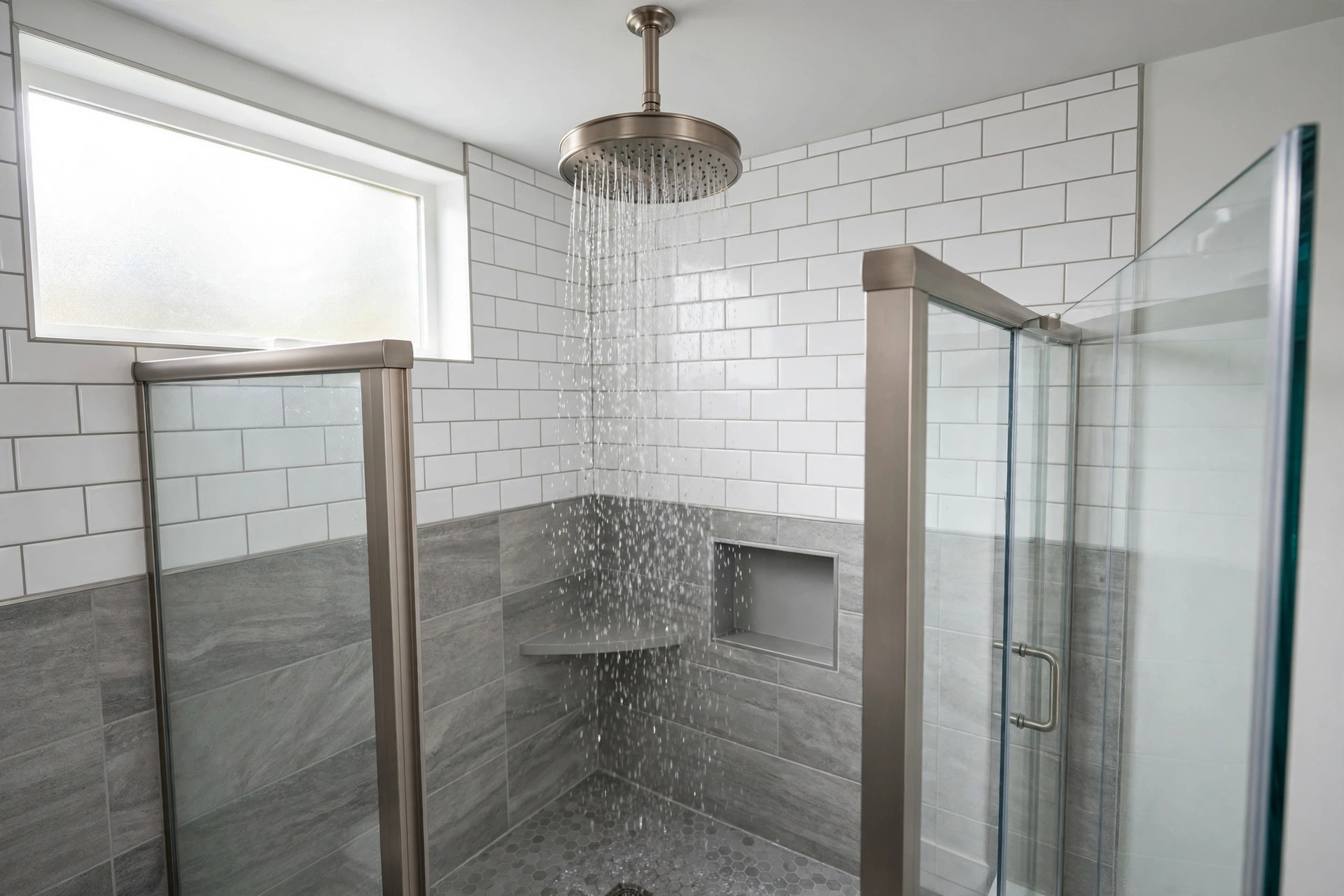

A rain shower head sends water down in a wide, gentle sheet. It feels like standing in warm rain. Many people in American homes now choose this style for a calm start to the day. This rain shower heads American homes guide will help you learn how they work, which types exist, and how to pick the right one for your house.
Rain heads look different from old wall heads. They are wide and flat. They hang above the head. Water falls straight down. The spray is soft. It covers the full body at once. That is why so many buyers love them.
Why Rain Shower Heads Matter
A shower should relax the body. A rain shower head does this well. The wide spray covers the shoulders, arms, and legs all at once. There is no need to move around to get wet.
Many homes in the United States have plain shower heads from the 1980s or 1990s. Those heads spray in a hard stream. They often clog with mineral build up. A new rain head can make an old shower feel new again.
A rain head can also add value to a bathroom. Buyers like modern baths. A wide head looks clean and calm. It suits tile showers and tub showers alike. For those who are also updating the full shower, a look at walk in shower kits can help plan the whole space.
Comfort is the main point. The water feels soft on the skin. Some people say it helps them unwind after long work days. Others like it for a slow morning routine. Kids often like the wide spray too. It rinses soap from hair fast. A rain head can make bath time less of a chore for small children.
How Rain Shower Heads Work: Rain Shower Heads American Homes Guide
A rain shower head is simple. It is a flat disc or square with many small nozzles. Water enters from the back. The nozzles spread the water over a wide area.
Most heads are 8 to 16 inches wide. The water falls by gravity. This gives the soft rain feel. The head hangs high so the water has room to spread.
Water pressure matters. Low pressure can make the spray feel weak. Most American homes have enough pressure for a rain head. A plumber can test the pressure if you are not sure.
Federal law sets the flow rate. Shower heads sold in the United States must use no more than 2.5 gallons per minute. Many models use less. The Environmental Protection Agency posts water use rules for homes. Low flow models save water and still feel fine.
Types and Options
Rain shower heads come in a few main styles. Each style fits a different bathroom.
Ceiling Mount Heads
Ceiling mount heads hang straight down from the ceiling. The water falls in a perfect sheet. This style gives the truest rain feel. It works best with tall ceilings. The room should be at least 8 feet high. A short ceiling puts the head too close to the face.
Wall Mount Heads With an Arm
Wall mount heads use a long arm from the wall. The arm bends or stays straight. This style is easy to add to an old shower. No ceiling pipe work is needed. The head sits at a slight angle. The spray still feels wide and soft. Many homes use this style because it is simple to install.
Dual Head Sets
Some sets pair a rain head with a hand shower. The hand shower hangs on a slide bar. You can use one head or both. This is a good pick for families. It helps with cleaning the tub and washing pets. It also helps older folks who need a seat.
Fixed and Adjustable Nozzles
Fixed nozzles have one spray pattern. It is always soft rain. Adjustable models offer two or three patterns. Some add a massage setting. More settings mean more parts. More parts can wear out over time. Simple fixed models often last longer.
What to Look for When Choosing
Size
Bigger is not always better. A 10 inch head suits most showers. A 16 inch head needs a large stall and strong water flow. A small tub shower may do best with an 8 inch head. Think about the size of the stall first.
Water Flow
Check the flow rate on the box. It is listed in gallons per minute. A 2.5 gallon head gives strong rain. A 1.75 gallon head uses less water. It still feels fine for most people. Low pressure homes should pick the lower flow rate. The head will work better with less demand.
Water Pressure in Your Home
Rain heads like good pressure. Most city water has enough. Well systems can vary. If the spray feels weak, a pressure test can tell the truth. Many fixture makers, such as Delta, list the pressure range for each model. Stay in that range for best results.
Material
Brass heads are strong and last long. They cost more. Stainless steel looks clean and resists rust. Plastic heads are light and cheap. They can crack after years of heat. Metal is the better buy for a long term home. Brands like Kohler and Moen offer metal models in many finishes.
Finish
Finish is the outer color. Chrome is bright and easy to clean. Brushed nickel hides water spots. Matte black suits modern baths. Oil rubbed bronze suits old style homes. Match the finish to the faucet and the towel bars. A mixed bath can look messy.
Nozzle Type
Silicone nozzles are soft. They bend to push out mineral build up. This helps in hard water areas. Hard plastic nozzles clog more often. They need more scrubbing. Silicone is worth the small extra cost.
Installation and Plumbing Notes
Many rain heads fit a standard half inch pipe. That is the same size as most old heads. A wall mount head can often screw on in ten minutes. Teflon tape on the threads stops drips.
Ceiling mount heads need more work. A pipe must run through the ceiling. The ceiling must hold the weight. A heavy 12 inch head needs a firm mount. Most home owners hire a plumber for this job. The This Old House site shows how shower plumbing runs behind walls. It is a good primer before you call a pro.
Check the height. The head should sit 7 to 8 feet above the floor. Tall people need the higher end. A head that is too low feels like a normal shower. The rain effect is lost.
Drain size matters too. A wide head puts more water on the floor. The drain must keep up. Old drains can be slow. A plumber can check the drain flow before the install.
If you plan new glass around the shower, read about frameless shower doors to match the modern look.
Cost and Price
Prices run wide. A basic plastic rain head can cost 30 dollars. A mid range metal head costs 80 to 150 dollars. High end brass models cost 200 to 400 dollars.
The arm and trim add cost. A curved wall arm can cost 40 dollars. A ceiling drop pipe can cost 60 dollars. Finish also shifts the price. Chrome is often cheapest. Brushed nickel and matte black cost more.
Labor is the big extra. A simple swap costs little if you do it yourself. A plumber may charge 150 to 300 dollars to move a pipe to the ceiling. Full shower rework costs far more. Big box stores like Home Depot and Lowes list head prices online for easy comparison.
Set a budget first. For most homes, a good metal head in the 100 dollar range is a smart buy. It lasts many years. It feels far better than a cheap plastic head.
Care and Upkeep
Rain heads need little care. The main foe is mineral build up. Hard water leaves white crust on the nozzles. The crust blocks the spray. The head then sprays in odd jets.
Soak the head in white vinegar once a month. Fill a plastic bag with vinegar. Tie it over the head. Leave it for one hour. Rinse with clean water. Silicone nozzles can also be rubbed by hand to push out crust.
Wipe the finish with a soft cloth. Do not use harsh cleaners. Bleach and strong acids can dull the finish. Warm water and mild soap are enough.
Check for leaks at the joint twice a year. A small drip wastes water. Fresh Teflon tape often fixes it. If the head rattles or moves, tighten the mount. A loose head can fall and crack tile.
Sites like Bob Vila and The Spruce keep simple care guides for bath fixtures. Their steps match what most plumbers say.
Safety
Hot water can burn. Set the water heater to 120 degrees. This is warm enough for a good shower. It is cool enough to avoid burns. This matters in homes with kids and older folks.
A rain head drops a lot of water fast. The floor can get slick. A non slip mat or textured tile helps. Grab bars help older users. They are cheap and easy to add.
Ceiling mounts must be firm. A heavy head that is poorly mounted can fall. Use the right anchor for the ceiling type. When in doubt, hire a pro.
Check local code if you move pipes. Some towns need a permit for plumbing changes. A quick call to the city office can save trouble. The American Standard site lists code notes with many of its models.
FAQ
How wide should a rain shower head be? Most homes do well with 8 to 10 inches. Large stalls can take 12 to 16 inches. Match the head to the stall size and the water flow you have.
Will a rain shower head work with low water pressure? It can work if you pick the right model. Choose a head with a lower flow rate, near 1.75 gallons per minute. Test your home pressure first. Some makers list the minimum pressure on the box.
Can I install a rain shower head myself? A wall mount swap is a fine do it yourself job. You need an adjustable wrench and Teflon tape. A ceiling mount needs pipe work in the ceiling. Hire a plumber for that part.
Does a rain head use more water than a normal head? Not always. The law caps all shower heads at 2.5 gallons per minute. Many rain heads use 1.75 to 2.0. They feel full because the water spreads wide. Water saving models can cut the bill.
How long does a rain shower head last? A good metal head can last 10 to 15 years. Plastic heads last 3 to 5 years. Hard water shortens the life. Monthly vinegar soaks help a lot.
Which finish is easiest to keep clean? Brushed nickel hides spots best. Chrome shows spots but wipes clean fast. Matte black needs a soft cloth to avoid scratches. Pick the finish that matches your cleaning habits.
A Short Final Word
A rain shower head is a small change with a big feel. The wide, soft spray turns a plain bath into a calm space. Pick the right size, mind the water pressure, and keep it clean. Then enjoy the rain each morning. For a full picture of rain head models on the market, this rain shower heads buying guide rounds out the choice. Design ideas for the whole bath can be found at HGTV, which shows how wide heads fit many bath styles.
References
American Standard. (n.d.). Bathroom and kitchen products. https://www.americanstandard.com Bob Vila. (n.d.). Home improvement advice. https://www.bobvila.com Delta Faucet. (n.d.). Kitchen and bathroom faucets. https://www.deltafaucet.com HGTV. (n.d.). Home and garden ideas. https://www.hgtv.com Kohler. (n.d.). Bathroom and kitchen fixtures. https://www.kohler.com Lowe’s. (n.d.). Home improvement products. https://www.lowes.com Moen. (n.d.). Faucets and plumbing fixtures. https://www.moen.com The Home Depot. (n.d.). Home improvement products. https://www.homedepot.com The Spruce. (n.d.). Home and garden advice. https://www.thespruce.com This Old House. (n.d.). Home renovation guidance. https://www.thisoldhouse.com U.S. Environmental Protection Agency. (n.d.). Protecting human health and the environment. https://www.epa.gov
Was this guide helpful?

About Lisa Anderson
The My Garden US editorial team writes practical, in-depth home and garden guides for American homeowners — tested advice, no fluff.
You May Also Like

Bathroom Vanity Light Bars Reviews Buying Guide USA
February 13, 2026 0 views
Shower Niche Inserts USA Online Deals: A Plain Guide
May 20, 2026 0 views
Bidet Toilet Seats Reviews: Buying Guide for USA Homes
April 2, 2026 0 views