
Finding the best boiler for radiant floor heat usa homeowners can trust takes some study. Radiant floor heat warms a house from the ground up. Warm water moves through tubes under the floor. The floor gives off gentle heat. It feels like warm sunshine on your feet. This system needs a boiler that can run at low water temperatures for many hours. Not every boiler can do this well. This guide explains the main types, what to look for, what they cost, and how to keep them safe and healthy.
Why the Right Boiler Matters for Radiant Floor Heat
Radiant floor heat is not like baseboard heat. Baseboards need very hot water, often 180 degrees. Radiant floors work best with water near 100 to 120 degrees. Lower water temperature means higher efficiency. It also means longer run times at steady output.
The best boiler for radiant floor heat usa buyers choose will match this low-temperature job. An oversized boiler will short cycle. It will turn on and off many times each hour. Short cycling wastes fuel and wears parts out fast. An undersized boiler will run all day and still leave rooms cold.
A good match gives steady warmth. It saves fuel. It lasts longer. In cold states like Minnesota, New York, and Colorado, many families depend on this comfort for five or six months of the year. A poor match shows up in high bills and cold corners.
What to Look for When You Choose a Boiler: Best Boiler for Radiant Floor Heat Usa
Heat Output Size
Boilers are rated in BTU per hour. A common mistake is to buy too much output. Old rules said to size by the square feet of the house. That method is out of date. Newer homes hold heat better than old ones.
Ask your contractor for a heat load calculation. This math looks at insulation, windows, doors, and your local climate. It tells you the true heat need of the house. For radiant floor systems, the number is often lower than owners expect. A right-sized boiler for a 2,000 square foot home may run near 60,000 to 80,000 BTU per hour.
Fuel Type
Fuel choice shapes your options. Natural gas is clean and cheap where lines run. Propane works where gas lines do not reach, but it costs more per gallon. Oil is still common in the Northeast. Wood boilers serve rural homes with cheap wood. Electric boilers fit small spaces and mild areas.
Check what fuel is easy to get at your address. Price swings matter. A cheap boiler can turn costly if its fuel is dear in your town.
Modulating Burner and Controls
A modulating burner changes its fire to match the need. On mild days it burns low. On cold nights it burns high. This suits radiant floors, which like long gentle burns. Look for a boiler with a 5-to-1 or higher turndown ratio. That means the low fire is one-fifth of the high fire or less.
Outdoor reset control is another key feature. It reads the outdoor temperature and lowers the water temperature on mild days. Radiant floor systems run best with this control. It trims fuel use and keeps rooms even.
Types of Boilers for Radiant Floor Heat
Condensing Gas Boilers
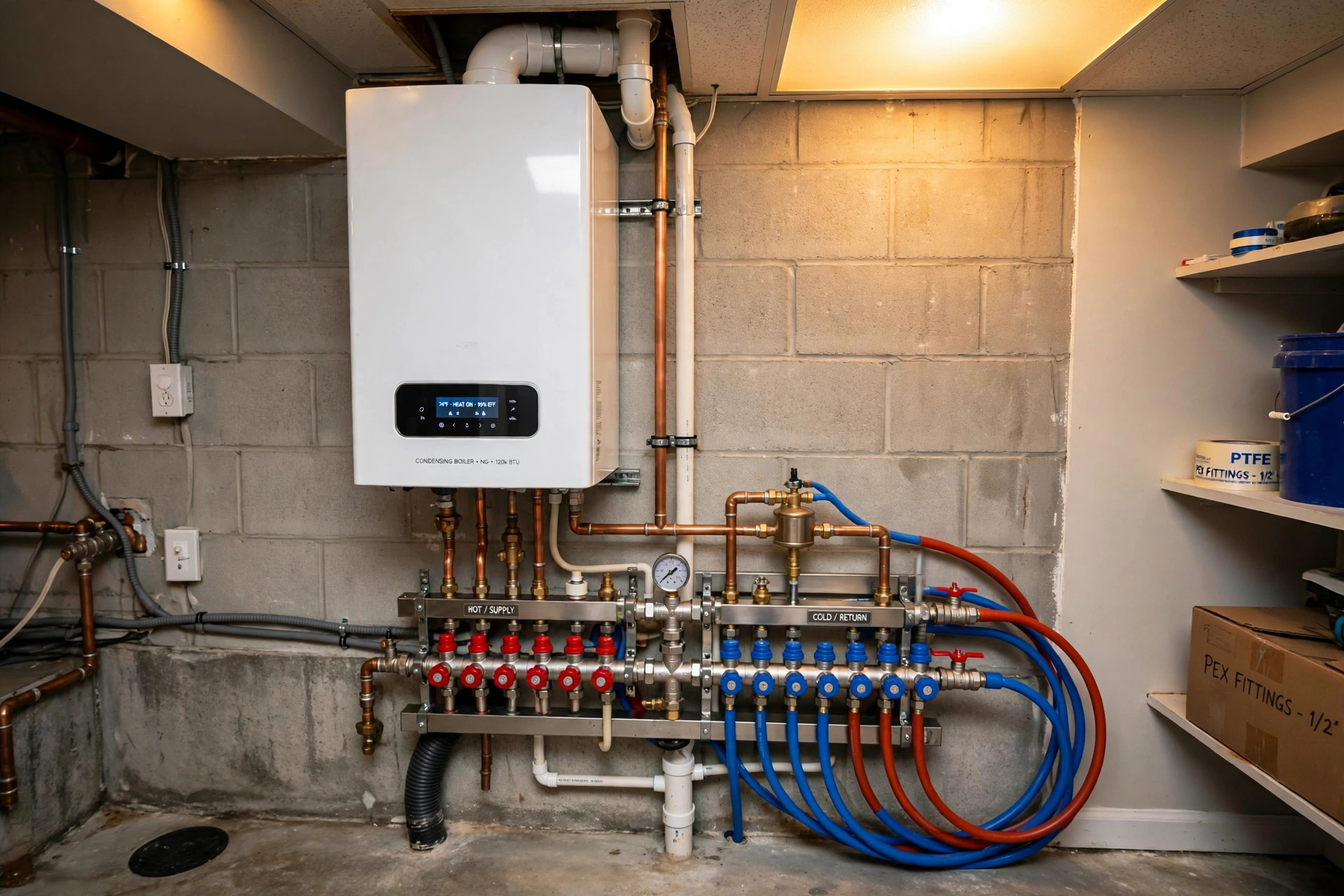
Condensing boilers are the most efficient gas choice. They pull extra heat from the exhaust gas. Efficiency can reach 95 percent AFUE or more. AFUE means Annual Fuel Utilization Efficiency. It is the share of fuel that becomes useful heat.
These boilers love low water temperatures. That makes them a natural fit for radiant floors. The return water must be cool enough for the gas to condense, usually below 130 degrees. Radiant floor systems return cool water by nature. That is why this pair works so well.
Brands sold across the United States include models from well-known makers like Trane, Carrier, Rheem, Lennox, and Goodman. Many offer wall-hung units that save floor space. They need a drain for the condensate water they make. They also need plastic vent pipe, not a tall chimney.
Non-Condensing Gas Boilers
Non-condensing boilers cost less up front. Efficiency usually runs 80 to 85 percent AFUE. They must run hotter to protect the heat exchanger from flue gas damage. That hot water can be mixed down for the floor through a mixing valve.
For a radiant floor system, this type needs extra care. The boiler runs at high temperature while the floor loop runs cooler. The mixing valve blends hot boiler water with cooler return water. It works, but it wastes some of the fuel savings a condensing unit would give.
Oil Boilers
Oil boilers are common in New England and the mid-Atlantic. They burn heating oil from a tank on the property. Efficiency for new units runs near 85 to 87 percent AFUE. They are tough and long-lived.
Oil pairs with radiant floors through a mixing valve or a primary-secondary piping layout. The boiler holds hot water while the floor loop draws what it needs. If you already burn oil, this is a simple path. If you plan a fuel switch, weigh the oil to gas boiler conversion cost usa installers quote before you decide.
Electric Boilers
Electric boilers are simple and quiet. They turn almost all their power into heat. They are small and need no vent pipe. They suit small homes, additions, or areas with mild winters.
The catch is the price of electricity. In most states, electric heat costs more than gas heat per unit of warmth. Run the math with your local electric rate. In a few areas with cheap hydro power, they can make sense.
Combi Boilers
A combi boiler heats rooms and makes hot tap water in one box. It is a smart choice when space is tight. There is no separate water heater tank. This saves room in small basements and utility closets.
Readers often search for a combi boiler vs tankless comparison usa homeowners rely on. A combi unit does two jobs. A separate tankless heater only makes hot water. For radiant floor homes, a combi boiler must be sized for both the heat load and the hot water demand. Check that the unit can serve both at once on cold days.
Outdoor Wood Boilers
An outdoor wood boiler sits in the yard, away from the house. It burns wood and sends hot water underground to the home. It suits rural owners with cheap firewood.
These units need feeding with wood and regular ash cleaning. Some states and towns limit their use. Check local rules before you buy. The outdoor wood boiler cost installed usa figures run higher than indoor gas units because of the trench work and piping.
Cost and Price: What You Will Pay
Price varies by type, size, and region. Use these ranges as a guide for 2026.
A condensing gas boiler often runs 4,000 to 8,000 dollars installed. The unit alone may cost 2,500 to 5,000 dollars. Labor adds the rest.
A non-condensing gas boiler often runs 3,000 to 6,000 dollars installed. An oil boiler often runs 4,500 to 8,500 dollars installed. An electric boiler may run 1,500 to 4,000 dollars installed. An outdoor wood boiler can run 8,000 to 15,000 dollars installed because of the underground lines.
Radiant floor tubing adds its own cost. A full new floor system may add 6 to 20 dollars per square foot. If you already have the tubing in place, you only pay for the boiler and the hookup.
Get three written quotes. Ask each contractor to list the boiler model, the AFUE rating, the vent work, and the control package. A vague quote hides cost. A clear quote lets you compare.
The boiler replacement cost near me 2026 searches show that labor is the wild card. Tight basements, old piping, and long vent runs raise the price. Homes with easy access cost less.
Care and Upkeep
A boiler needs yearly service. Call a licensed technician each fall before the cold starts. The visit should cover several tasks.
The technician cleans the burner and the heat exchanger. He checks the vent pipe for blockages. He tests the safety controls and the relief valve. He checks water pressure in the system. He looks for leaks at valves and pumps.
Condensing boilers need the condensate trap cleaned. The trap can clog with sediment. A clogged trap can shut the unit down on a cold night.
Keep the area around the boiler clear. Do not store paint, boxes, or cleaning goods near it. The unit needs air to breathe. A clean space also helps the technician work fast.
Check the system pressure gauge once a month in winter. Most home boilers run near 12 to 20 psi when cold. If pressure drops often, call for service. A slow leak may be at work.
Flush the radiant floor loops on the schedule your installer gives. Clean water flows better and heats more evenly. Dirty water can wear pumps and valves.
Safety
Boilers burn fuel. Fuel can make carbon monoxide. This gas has no color and no smell. It can kill. Place carbon monoxide alarms on each floor of your home. Test them each month. Change the batteries on schedule.
Never block the vent pipe. Snow, ice, leaves, and nests can choke it. A blocked vent can push exhaust gas into the house. Check the outdoor vent after heavy snow.
Let only trained workers service the boiler. Do not open gas valves or adjust burners yourself. The relief valve is a safety part. Do not cap it or block its drain line.
If you smell gas, leave the house at once. Do not flip switches. Call the gas company from a safe place outside.
Wood boiler owners should keep a clear zone around the unit. Store firewood away from the boiler. Clean ash into a metal can with a lid.
Frequently Asked Questions
What size boiler do I need for radiant floor heat?
You need a heat load calculation for your exact home. As a rough rule, many 2,000 square foot homes need 60,000 to 80,000 BTU per hour. Oversized units short cycle and waste fuel. Let a contractor do the math.
Can any boiler work with radiant floor heat?
Almost any boiler can feed a radiant floor loop with the right piping and mixing valves. But condensing gas boilers fit best. They reach their top efficiency at the low water temperatures radiant floors use.
Gas or oil: which is better for radiant floor heat?
Gas usually wins on fuel price and cleanliness where lines run. Oil is a solid choice in the Northeast where tanks are common. Compare your local fuel prices per unit of heat before you choose.
How long does a boiler last?
A well-kept boiler lasts 20 to 30 years. Cast iron units can run longer. Annual service, clean water, and correct sizing stretch the life of any boiler.
What is the best boiler for radiant floor heat usa homes in cold climates?
Cold-climate homes do well with a modulating condensing gas boiler and outdoor reset control. The burner follows the load. The water temperature follows the weather. Rooms stay even from October to April.
Does radiant floor heat save money?
It can. Low water temperatures lift boiler efficiency. Even heat lets many owners set the thermostat a degree or two lower. Savings depend on fuel price, insulation, and the size of the system.
A Final Word
The best boiler for radiant floor heat usa families buy is the one that fits their home, their fuel, and their budget. Start with a heat load calculation. Choose a modulating unit with outdoor reset. Get clear written quotes from licensed installers. Keep up the yearly service. A radiant floor system is a long-term comfort choice. The right boiler makes it warm, steady, and kind to your wallet for decades.
References
Carrier. (n.d.). Heating and cooling systems. https://www.carrier.com ENERGY STAR. (n.d.). Energy efficient products. https://www.energystar.gov Family Handyman. (n.d.). DIY home repair and maintenance. https://www.familyhandyman.com Goodman. (n.d.). Heating and cooling equipment. https://www.goodmanmfg.com Lennox. (n.d.). Heating and cooling systems. https://www.lennox.com Rheem. (n.d.). Heating, cooling, and water heating. https://www.rheem.com This Old House. (n.d.). Home renovation guidance. https://www.thisoldhouse.com Trane. (n.d.). Heating and air conditioning. https://www.trane.com U.S. Department of Energy. (n.d.). Energy efficiency and renewable energy. https://www.energy.gov
Was this guide helpful?

About David Wilson
The My Garden US editorial team writes practical, in-depth home and garden guides for American homeowners — tested advice, no fluff.
You May Also Like
What Does HVAC UV Light Installation Cost Near Me?
April 10, 2026 0 views
Gas vs Electric Pool Heater Cost Comparison
April 28, 2026 0 views
Whole House Dehumidifier Installation Cost USA: A Full Guide
September 26, 2026 0 views