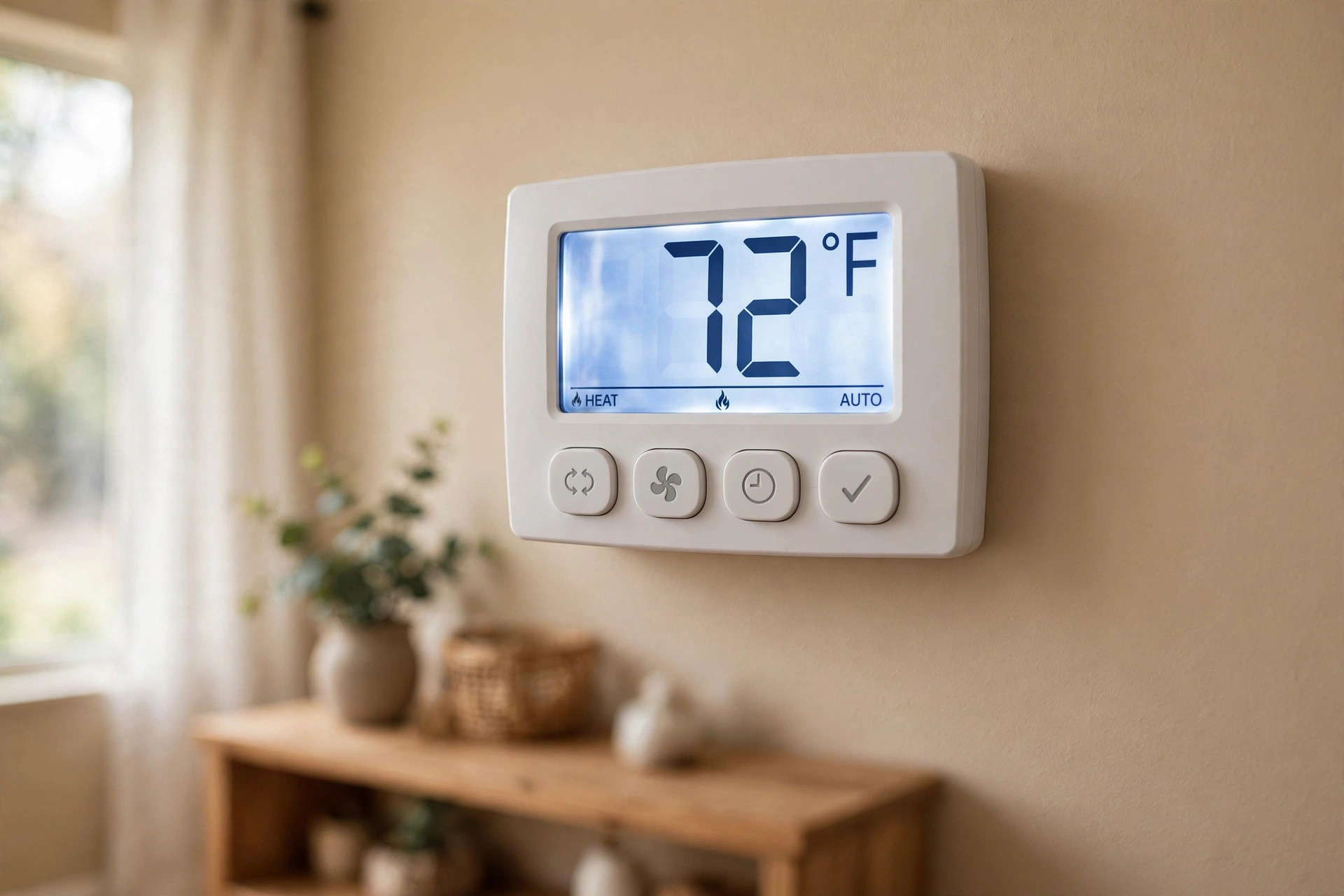

Finding the best programmable thermostat for seniors usa buyers can trust is not hard, but it does take care. Many thermostats on store shelves today were built for young phone users. Their tiny screens, small menus, and endless options can confuse anyone who wants only one thing: a warm house in winter and a cool house in summer. Seniors need clear numbers, large buttons, and a design that works the first time and every time. This guide looks at what makes a thermostat senior friendly, how to pick one, what it costs, and how to keep it running for years.
Why It Matters for Older Homeowners
A thermostat is the one device that controls comfort for the whole home. For seniors, comfort is not a luxury. Older bodies lose heat faster and feel cold sooner. Doctors have long noted that rooms that are too cold can be a real health risk for older people, especially at night. A good thermostat keeps the house steady. It lowers heat while people sleep or are away, then brings the warmth back up before they wake or return. That is the whole job of a programmable thermostat. It follows a set plan without anyone having to touch it.
Money matters too. Heating and cooling are often the largest part of a home energy bill. A programmed plan can cut that bill by a real amount each year. The savings come from simple timing: less heat at night, less cooling on a hot afternoon when no one is home. Over a year, the savings can be greater than the price of the thermostat itself. Government guides on home energy use note that smart scheduling of heating and cooling is one of the easiest ways to save energy in an American home, and Energy offers plain guides on how thermostats save money.
There is also a matter of independence. A senior who can read the display and set the plan stays in charge of the home. No waiting for a child to visit. No worry about a confusing screen. The right thermostat gives back that small but important piece of control.
What to Look for When Choosing: Best Programmable Thermostat for Seniors Usa
The best model for a senior is not always the model with the most features. Fewer features, done well, often win. Here are the points that matter most.
Large, backlit display. The numbers must be easy to read from across the room. A backlit screen lights up when touched, so it can be read at night. Some screens show only the room temperature in very large digits. That is ideal.
Big buttons. Touch screens can be hard for hands with arthritis or weak grip. Large raised buttons give clear feedback. Some models use one big dial. A dial is simple and hard to get wrong.
Simple programming. Many seniors only need four settings: wake, leave, return, and sleep. A thermostat that sets these four blocks with a few button presses is perfect. Avoid models that need a phone app for basic setup. The thermostat itself should do the work.
Clear instructions. A paper manual with large print is worth a great deal. Some makers post simple video guides on sites like Family Handyman, which many homeowners already trust for step-by-step help.
Battery or wired power. Most models run on batteries or on power from the heating system wires. Batteries are simple to change, but they must be changed on time. Wired models never need batteries, though they may need a common wire in the wall.
Lock features. A good thermostat can lock the settings so they are not changed by accident. This is helpful when grandkids visit and press buttons out of curiosity.
Compatibility. Not every thermostat works with every heating system. Electric baseboard heat, for example, needs a special line-voltage model. Before buying, check the type of system in the home: gas furnace, heat pump, baseboard, or oil. A buyer with a heat pump should also read our guide to the best thermostat for heat pump reviews usa to see which models handle heat pumps well.
Types of Programmable Thermostats
Programmable thermostats come in a few clear types. Knowing the types makes the choice easier.
7-Day Models
A 7-day model lets the user set a different plan for each day of the week. This fits seniors with a steady weekly routine, such as church on Sunday or a club meeting on Tuesday. Most 7-day models are flexible and easy to adjust.
5-1-1 Day Models
These models use one plan for the five weekdays, a second plan for Saturday, and a third plan for Sunday. They are simple and suit homes where weekends look different from workdays. Many seniors find this type easy to learn.
5-2 Day Models
The 5-2 model uses one plan for weekdays and one plan for the whole weekend. It is the simplest programmable type. For many older homeowners, this is enough.
Smart Learning Models
Smart models try to learn the household routine by themselves. They can be changed from a phone, and some answer voice commands. These are fine for seniors who like new devices, but they are often more complex than needed. A senior who wants simplicity should skip them and pick a plain programmable model instead. Homeowners curious about smart options can look at the wifi thermostat for vacation home reviews usa guide for how remote control works.
Big names in heating equipment, such as Carrier, Trane, Lennox, Rheem, and Goodman, each make or recommend thermostats built to work with their furnaces and air conditioners. Matching the thermostat to the system brand is often a safe choice.
Cost and Price
Price is one of the first things buyers ask about. A basic programmable thermostat for seniors usually costs between forty and one hundred dollars at major home stores. Models in this range have large screens, simple buttons, and full programming. That is all most seniors need.
Smart thermostats with phone apps and learning features cost more, often between one hundred fifty and two hundred fifty dollars. For most senior households, the extra money buys features they will never use. The plain model is the wiser buy.
Installation is a separate cost. A simple swap, where the new thermostat replaces an old one on the same wall, can be done by many handy homeowners. A pro usually charges between one hundred and two hundred fifty dollars for the job, which takes less than an hour. Homes that lack a common wire, or that need wiring changes, can cost more. Our article on smart thermostat installation cost near me gives a fuller picture of what local installers charge.
Some power companies in the USA offer rebates for efficient thermostats. It is worth calling the local utility before buying. A rebate can cut the price in half. The Energy Star program also lists models that meet federal efficiency standards, which is a good mark of quality.
Over time, the thermostat pays for itself. A programmed plan that lowers heat by a few degrees at night and during empty hours can trim the heating bill by a clear share each winter. The unit often earns back its price within the first year or two.
Installation Made Simple
Installing a programmable thermostat is a calm job if done step by step. Most models come with color-coded wire labels and a simple guide. Older homeowners may still prefer to have a family member, a neighbor, or a pro do the work. There is no shame in that. Safety comes first.
The basic steps are as follows. First, turn off power to the heating and cooling system at the breaker box. This is the most important step. Second, take a photo of the old wiring before removing anything. Third, label each wire with the stickers that come in the box. Fourth, mount the new base plate on the wall. Fifth, connect the wires to the matching terminals. Sixth, attach the face, restore power, and follow the setup screens.
If the wall has no common wire, some models need one added or can run on batteries instead. A battery model is fine for most homes. Change the batteries once a year, at the same time as the smoke alarm batteries, so it is never forgotten.
Care and Upkeep
A programmable thermostat needs very little care. That is one of its best traits. Keep the unit clean by wiping it gently with a soft dry cloth. Do not spray cleaners on it. Keep it out of direct sun and away from lamps or TVs that give off heat, because heat near the unit can fool its sensor.
Change the batteries once a year. Some models flash a warning when batteries run low. Do not wait for the warning. A dead battery can shut the whole system down on a cold night.
Check the program twice a year, at the start of heating season and at the start of cooling season. Routines change, and the plan should match. This small check takes five minutes and keeps the savings steady.
If the display ever goes blank, check the batteries and the breaker first. These two steps solve most problems. If the system runs but the temperature feels wrong, the thermostat may need to be moved to a better spot on the wall, away from drafts and heat sources.
Safety Notes
Safety deserves its own section because it matters most for seniors living alone. Never let the house drop below fifty-five degrees in winter, even when away. Pipes can freeze and burst, and that repair costs far more than the heat saved.
Set the wake and return times a little early so the house is warm before rising. A warm bathroom and warm bedroom in the morning reduce the risk of slips and falls that come from hurrying while cold and stiff.
Keep a paper copy of the program settings in a drawer. If the thermostat ever resets after a power outage, the settings can be put back in minutes without guessing.
For seniors with poor vision, ask a family member to write the most-used temperatures in large print on a card taped near the thermostat. Simple helps.
Frequently Asked Questions
What is the easiest thermostat for a senior to use? The easiest models have a big backlit screen, large buttons, and only four daily settings: wake, leave, return, and sleep. Look for models sold as simple or easy-to-read. Avoid models that need a phone app for daily use.
Do seniors need a smart thermostat? Most do not. A plain programmable thermostat gives the same savings with far less trouble. Smart models suit seniors who already use a smartphone and want to check the house from afar.
Can a senior install a programmable thermostat alone? Many can, if the wiring matches and the power is off. But there is nothing wrong with asking for help. A family member or a local pro can finish the job in under an hour.
Will a programmable thermostat work with baseboard heaters? Only a special line-voltage model works with electric baseboard heat. A standard low-voltage thermostat must not be used on baseboard systems. Check the system type before buying.
How much money can a programmable thermostat save? Savings depend on the climate and the price of fuel, but many households see a clear drop in heating and cooling bills. Energy guides from sources like This Old House note that planned setback schedules are among the simplest ways to cut energy waste.
What if the power goes out? Most programmable models keep their settings through short outages. Battery-backed models keep full power. After a long outage, check the screen and reset the time if needed.
A Short Final Word
The best programmable thermostat for seniors usa shoppers can buy is the one that is read in one glance and set in one minute. Big numbers, large buttons, and a simple four-part plan beat every fancy feature. Pick a model that fits the heating system, set the schedule once, and let it do its quiet work. Comfort, safety, and savings will follow, day after day, without another thought.
References
Carrier. (n.d.). Heating and cooling systems. https://www.carrier.com ENERGY STAR. (n.d.). Energy efficient products. https://www.energystar.gov Family Handyman. (n.d.). DIY home repair and maintenance. https://www.familyhandyman.com Goodman. (n.d.). Heating and cooling equipment. https://www.goodmanmfg.com Lennox. (n.d.). Heating and cooling systems. https://www.lennox.com Rheem. (n.d.). Heating, cooling, and water heating. https://www.rheem.com This Old House. (n.d.). Home renovation guidance. https://www.thisoldhouse.com Trane. (n.d.). Heating and air conditioning. https://www.trane.com U.S. Department of Energy. (n.d.). Energy efficiency and renewable energy. https://www.energy.gov
Was this guide helpful?

About Sarah Mitchell
The My Garden US editorial team writes practical, in-depth home and garden guides for American homeowners — tested advice, no fluff.
You May Also Like

Smokeless Fire Pit Reviews 2026 USA: What the Reviews Say and How to Choose
April 28, 2026 0 views
Blown In vs Batt Insulation Cost Comparison
September 21, 2026 0 views
Inflation Reduction Act HVAC Rebates Explained
July 9, 2026 0 views