Every summer, many lawns turn brown in patches. The grass pulls up like a loose rug. Skunks and birds dig holes in the soil. The cause is often grubs. Grubs are the fat white larvae of beetles. They live under the grass and eat the roots. A few grubs do little harm. Many grubs can ruin a lawn in weeks.
Most grub killers on store shelves are strong chemicals. Many homeowners do not want these near their children, dogs, or vegetable gardens. That is why the best organic grub control for lawns matters. Organic methods kill grubs without leaving harsh poisons in the soil. They cost more and work more slowly. But they are safe for families, pets, and the small creatures that keep soil alive.
This guide explains how grubs damage lawns, how to spot the damage, and which natural products work best. It also covers timing, cost, and safe use.
Why Grub Control Matters for Your Lawn
Grubs feed on grass roots. When roots are gone, the grass cannot take in water. It turns yellow, then brown, then dies. A damaged lawn invites weeds. Weeds move fast into bare spots. Once weeds take hold, they are hard to remove.
Grubs also bring other pests. Moles, skunks, raccoons, and birds love to eat grubs. They tear up the turf to reach them. The damage from digging can be worse than the damage from the grubs themselves.
Chemical grub killers work fast. They also kill earthworms and helpful insects. They can wash into streams after rain. Some must be kept away from children and pets for days. Organic control avoids these problems. It targets the grubs and leaves the rest of the yard alone.
How to Spot Grub Damage: Best Organic Grub Control for Lawns
Grub damage looks like drought damage at first. That is why many people water more and wait. Water does not fix grub damage. Look for these signs instead.
Brown patches appear in late summer. The patches grow larger week by week. The grass in the patch feels spongy under your feet. The roots are gone, so the sod rolls up like carpet.
Dig a small square of soil about three inches deep. Count the white C-shaped larvae. If you find more than six grubs per square foot, treatment is wise. Fewer than that, and the lawn may recover on its own.
Watch the animals. Skunks dig cone-shaped holes at night. Birds peck at the grass in large flocks. Moles tunnel just under the surface. When animals dig with purpose, grubs are often the reason.
What to Look For When You Choose
Not every product labeled “natural” works well. Read the label before you buy. A good organic grub product names its active ingredient in plain words. Milky spore, beneficial nematodes, and neem oil are proven choices. A product that hides behind the word “blend” may do little.
Check the target list on the package. Some products work only on Japanese beetle grubs. Others work on many grub types. Buy the product that matches the grubs in your yard. Your county extension office can tell you which grubs are common in your area.
Look at the coverage. Most bags state how many square feet they treat. Measure your lawn before you shop. Buying too little is the most common mistake.
Check the timing rules on the label. Organic products often need to go down at a set time of year. Milky spore needs warm soil. Nematodes need cool, moist soil. Neem oil works best when grubs are young and feeding. A product applied at the wrong time is money wasted.
Look for pet and child safety notes. Most organic products are safe once dry or watered in. Still, keep people and pets off the lawn until the label says it is safe. Good labels say this in plain words.
Types of Organic Grub Control
Milky Spore
Milky spore is a natural bacteria called Bacillus popilliae. It infects Japanese beetle grubs and turns their blood milky white. The sick grub dies and spreads the bacteria to more grubs. This is the oldest organic grub treatment in America. It has been used since the 1940s.
Milky spore works slowly. It can take two to three years to build up in the soil. But once it is there, it lasts for ten to twenty years. One treatment can protect a lawn for a long time. It works best in warm climates where Japanese beetles are the main pest. It does little against other grub types.
Apply milky spore in spring, summer, or fall when the soil is warm. Spread the powder in a grid pattern, one teaspoon every four feet. Water it in lightly. Wear gloves, and keep the dust out of your eyes.
Beneficial Nematodes
Beneficial nematodes are tiny worms that hunt grubs. You cannot see them with the naked eye. You mix them with water and spray or water them into the lawn. They enter the grub’s body and release bacteria that kill it. The nematodes then breed inside the dead grub and move on to the next one.
Two types work against grubs. Heterorhabditis bacteriophora hunts deep in the soil. Steinernema carpocapsae works closer to the surface. Many stores sell a mix of both. Nematodes are living creatures. They die in heat and dry soil. Apply them in early morning or evening. Water the lawn before and after treatment. Do not let the soil dry out for two weeks.
Nematodes work fast. You can see results in two to four weeks. They are safe for people, pets, plants, and earthworms. They die back when the grubs are gone. You may need to reapply each year.
Neem Oil
Neem oil comes from the seeds of the neem tree. It does not kill grubs on contact. It works as a growth regulator. Grubs that eat treated roots cannot molt into adults. They die before they can breed. Neem oil also repels adult beetles, so fewer eggs are laid in the yard.
Neem oil works best as a preventive step. Apply it in early summer when adult beetles lay eggs. Mix it with water as the label directs. Spray the lawn evenly. Repeat every two weeks through the egg-laying season. Neem oil breaks down in sunlight, so apply it in the evening.
Neem oil is safe for most garden life when used as directed. It can harm bees if sprayed on open flowers. Spray the grass, not the flower beds. Keep the spray off blooms.
Organic Granular Products
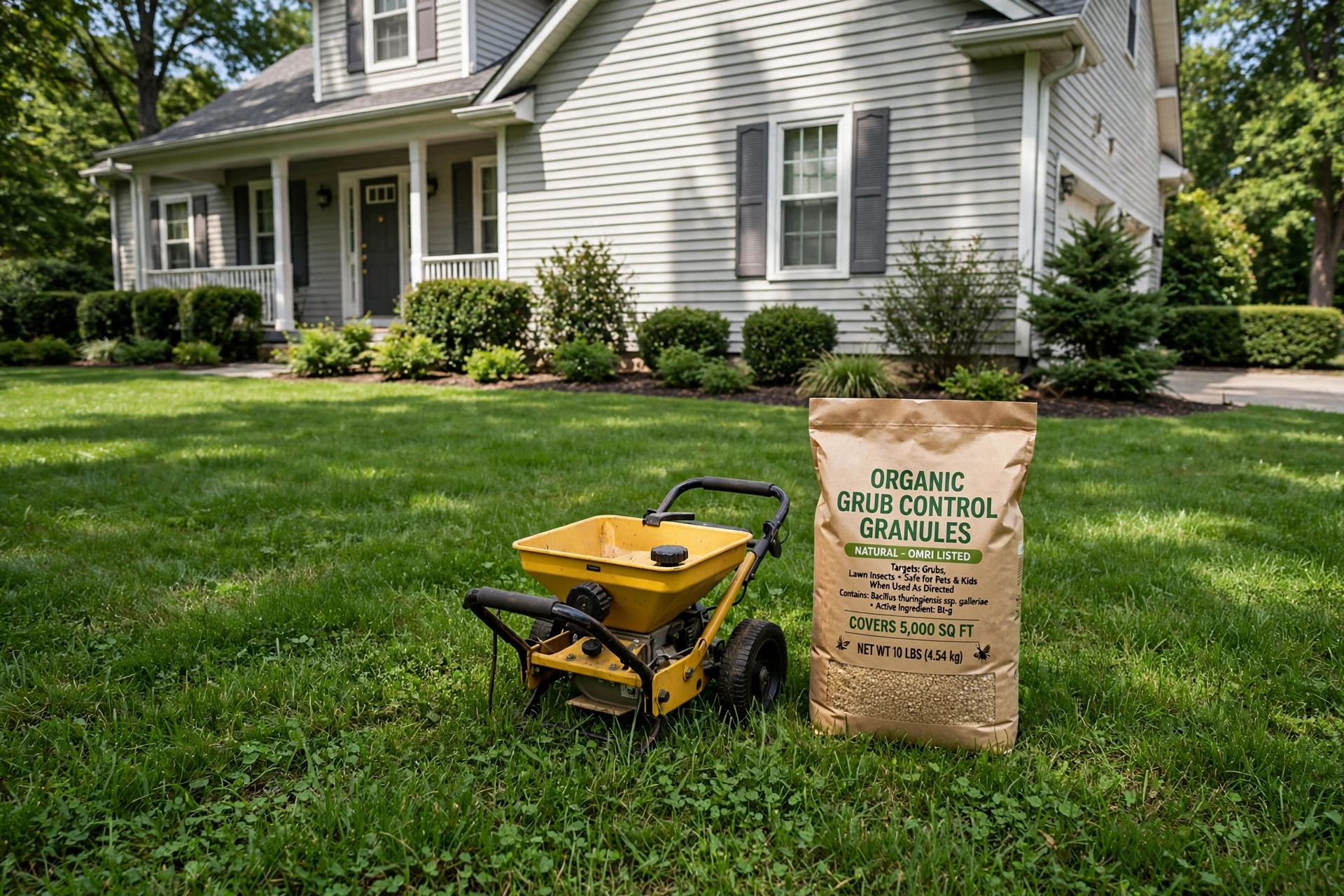
Several brands sell organic grub granules. These often use neem seed meal, castor oil, or plant-based soaps as the active part. Some add beneficial microbes to the mix. Granules are easy to use. You spread them with a push spreader, then water them in.
Granules are a good choice for large lawns. Liquid products take a long time to spray over an acre. A bag of granules and a spreader can treat a big yard in an hour. Read reviews before you buy. Results vary more with granules than with nematodes or milky spore. Many homeowners pair granules with a strong watering plan for the best effect. A good push spreader from a trusted lawn equipment maker makes the job even and fast.
How and When to Apply
Timing decides whether organic grub control works. Most grubs do their worst feeding in late summer. The best time to treat depends on the product.
Milky spore can go down any time the ground is not frozen. Spring and early fall are best. The soil is warm and moist. The bacteria spread well.
Nematodes need cool, wet soil. Late August and September are ideal in most states. The young grubs are near the surface and feeding hard. Water the lawn well the day before. Apply in the evening. Water again right after.
Neem oil works on eggs and young grubs. Start in late June or early July. That is when Japanese beetles lay eggs. Repeat through August.
Granular products follow their own label. Most work best in late summer. Water the granules in with at least half an inch of water. This carries the active part down to the root zone where grubs feed.
Do not apply any product to a bone-dry lawn. Water first. Grubs move deeper in dry soil. Wet soil brings them up and makes treatment work better. Avoid applying before a heavy storm. Hard rain can wash the product away.
Cost and Price
Organic grub control costs more than chemical control. A chemical bag for 5,000 square feet may cost twenty dollars. An organic product for the same area may cost forty to sixty dollars. Nematodes for a full yard often run fifty to eighty dollars per treatment.
Milky spore looks costly at first. A box that treats 2,500 square feet can cost forty dollars. But one full treatment can last a decade or more. Over time, it is the cheapest option of all.
Labor matters too. Spreading granules is quick. Spraying nematodes takes more care. You must mix, spray, and water in the same evening. If you hire a lawn service, ask if they offer organic programs. Many now do. A seasonal organic plan may cost a few hundred dollars per year for an average yard. Price guides from major yard equipment brands can help you compare the cost of doing it yourself against hiring help.
Care and Upkeep After Treatment
Treatment is only half the job. A strong lawn fights grubs on its own. Thick grass shades the soil. Beetles prefer to lay eggs in thin, sunny lawns. Keep your grass dense and you will have fewer grub problems.
Water deeply and rarely. One inch of water per week is enough for most lawns. Deep watering grows deep roots. Deep roots survive some grub feeding. Shallow daily watering grows weak roots.
Mow high. Set the blade to three or four inches. Tall grass shades the soil and keeps it cool. Cool soil is less inviting to egg-laying beetles. Sharp blades cut clean. Dull blades tear the grass and stress it.
Feed the lawn in fall. Fall feeding builds strong roots for winter. Strong roots recover faster from grub damage. If you want to learn more about matching feed to your grass type, read our guide to the best fertilizer for St. Augustine grass in Texas. The timing ideas in our pre-emergent weed killer application timing guide also help you plan the full season.
Overseed thin spots each fall. New seed fills gaps before weeds move in. A full lawn is the best long-term grub defense.
Safety for Children, Pets, and Wildlife
This is the main reason people choose organic grub control. Chemical grub killers can be risky for small children who play on the grass. Dogs eat grass and dig in soil. Cats roll in it. Organic products remove most of this worry.
Milky spore is safe for people, pets, birds, fish, and plants. It harms only Japanese beetle grubs. Nematodes are safe for everything except soil pests. Neem oil is safe once dry. Still, keep children and pets off the lawn until sprays have dried.
Store all products out of reach of children. Even natural products can upset a stomach if eaten. Follow the label. The label is the law.
Organic control also protects pollinators. Chemical grub killers can harm bees that visit clover in the lawn. Neem oil and nematodes leave bees alone when used right. For more on keeping the whole yard safe for pets, see our pet safe lawn weed killer reviews.
FAQ
How long does organic grub control take to work?
It depends on the product. Nematodes can cut grub numbers in two to four weeks. Neem oil needs a full season to show its effect. Milky spore builds up over two to three years. Organic methods are slower than chemicals. They trade speed for safety.
Is organic grub control safe for dogs?
Yes, in most cases. Milky spore and nematodes are safe for dogs, cats, and wildlife. Neem oil is safe once the spray has dried. Keep pets off the lawn until the product is dry or watered in, as the label directs.
Can I use organic grub control with regular fertilizer?
Yes. Most organic grub products work fine with fertilizer. Apply the fertilizer first, water it in, then apply the grub product. Do not mix products in the same spreader unless the labels say you can.
Will organic grub control kill earthworms?
No. That is one of its best features. Milky spore, nematodes, and neem oil leave earthworms alone. Earthworms keep soil loose and healthy. Chemical grub killers often kill them.
Do I need to treat every year?
Milky spore needs only one full treatment. It renews itself in the soil for years. Nematodes and neem oil need yearly use. Granular products also need yearly use. Watch your lawn each August. If brown patches return, treat again.
What is the cheapest organic option?
Over ten years, milky spore is cheapest. One treatment protects the lawn for a decade or more in warm regions. Year to year, neem oil is often the lowest-cost choice. Nematodes cost more but work fastest.
A Final Word
Grubs are a common lawn problem. They do not have to mean harsh chemicals. The best organic grub control for lawns gives you real choices. Milky spore offers long-term protection. Nematodes offer fast, safe kills. Neem oil offers gentle prevention. Organic granules offer easy spreading for big yards.
Pick the product that fits your grubs, your budget, and your patience. Time it right. Water it in. Then build a thick lawn that resists grubs on its own. Your grass, your pets, and your soil will all be better for it. Check independent product reviews before you buy, and you will spend your money with confidence.
References
Toro. (n.d.). Lawn care equipment and yard tools. https://www.toro.com Deere & Company. (n.d.). Lawn and garden care. https://www.deere.com Consumer Reports. (n.d.). Product reviews and ratings. https://www.consumerreports.org
Was this guide helpful?

About Emily Rodriguez
The My Garden US editorial team writes practical, in-depth home and garden guides for American homeowners — tested advice, no fluff.