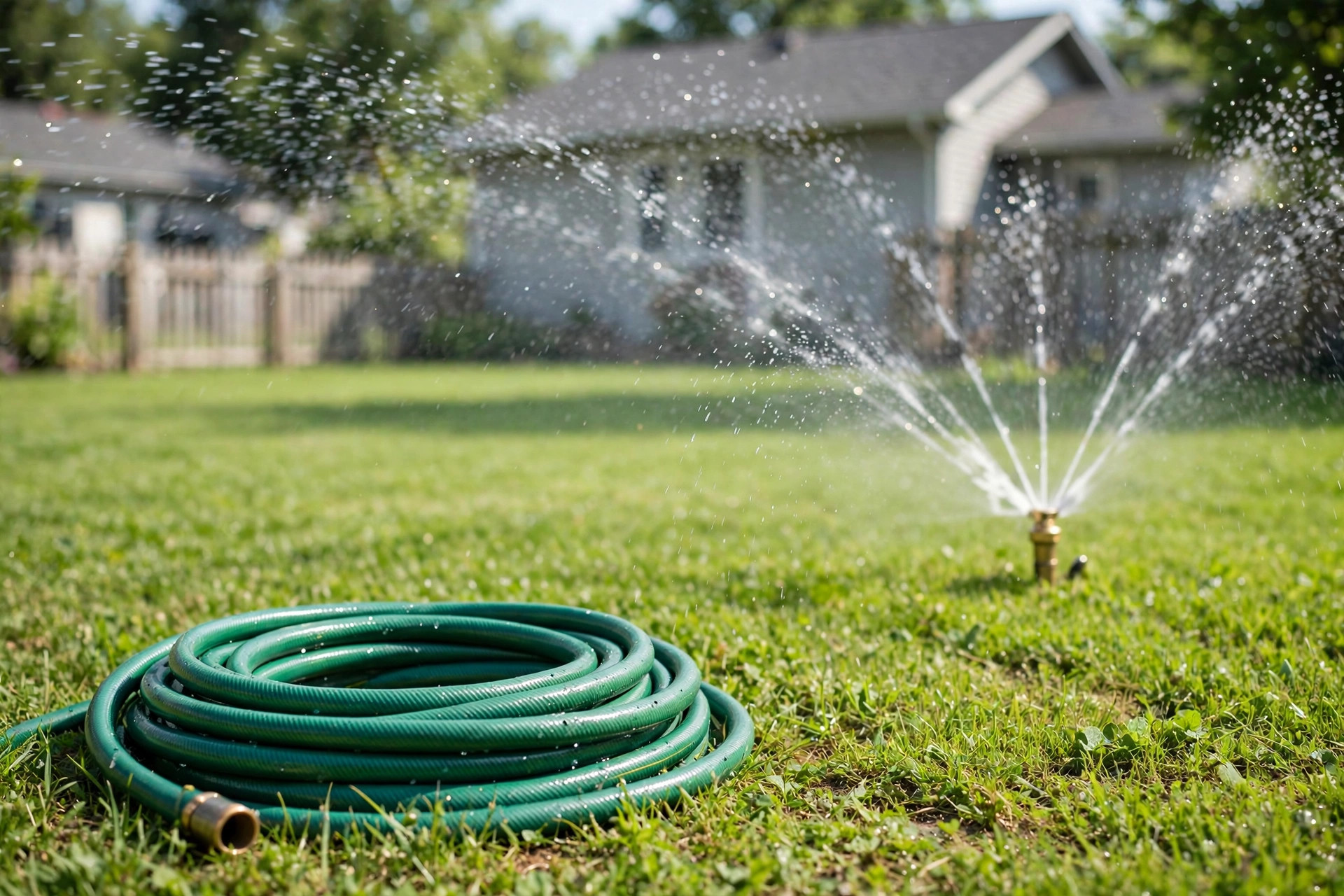

A green lawn does not happen by luck. It needs water, and water needs a good hose. The best garden hose for lawn watering is the one that fits your yard, gives steady flow, and lasts for many years. Many people buy the first hose they see at the store. Then it kinks, leaks, or breaks within one season. This guide will help you avoid that mistake. It explains the main types of hoses, what to look for, what they cost, and how to keep one in good shape.
Why Your Choice of Hose Matters for the Lawn
Grass needs about one inch of water each week. In hot weather it may need more. A weak hose gives thin flow and poor pressure. Then some parts of the lawn get too little water. Those parts turn brown. A heavy duty garden hose holds pressure better and lets a sprinkler do its job across the full lawn.
A poor hose also wastes time. Kinks stop the water every few minutes. Leaks at the fittings soak your shoes and waste water. Over one summer, that wasted time and water add up. A good hose is a tool you will use for years. It pays to choose with care.
What to Look for When You Choose a Hose: Best Garden Hose for Lawn Watering
Start with the basics. A garden hose has five parts that matter: material, length, diameter, fittings, and burst rating. Each one affects how the hose works on your lawn.
Material. Rubber hoses are the toughest. They stay flexible in cold weather and resist kinks. Vinyl hoses are lighter and cost less, but they crack sooner and kink more. Some hoses mix rubber and vinyl for a middle ground.
Length. Measure from your outdoor faucet to the far corner of the lawn. Add a few extra feet so the hose reaches without a tight pull. Do not buy more length than you need. Extra length lowers water pressure and makes the hose heavy to move.
Diameter. Most garden hoses are one half inch, five eighths inch, or three quarters inch across the inside. A wider hose moves more water. For lawn watering, five eighths inch is a sound choice for most homes. Three quarters inch is better for very large lawns or long runs.
Fittings. The metal ends that connect to the faucet and the sprinkler should be brass, not thin plastic. Brass fittings resist cracks and do not rust. Look for a large, easy-to-grip collar that you can tighten by hand.
Burst rating. This number, printed on the hose, tells how much pressure the hose can take before it bursts. A rating of 300 psi or more is fine for most homes. If your house has very high water pressure, look for a higher rating.
Types of Garden Hoses
Not all hoses are built the same. Here are the main kinds you will find in stores.
Rubber Hoses
Rubber hoses are the old standard. They are heavy, tough, and flexible in cold weather. A good rubber hose can last ten years or more. The main drawback is weight. A 100-foot rubber hose is hard to carry and drag across the lawn.
Vinyl Hoses
Vinyl hoses are light and cheap. They work well for small yards and light jobs. They tend to kink and crack in heat and cold. Most last two to four years. They are a fair pick if you water a small lawn and keep the hose in the shade.
Expandable Garden Hoses for the Yard
An expandable garden hose for yard work is made of stretchy latex inside a fabric shell. It starts short and grows longer under water pressure, then shrinks back when the water is off. These hoses are very light and easy to store. The drawback is strength. Many expandable hoses break within a year or two, and they often give lower water pressure at the sprinkler. They suit small lawns and flower beds more than large grass areas.
Reinforced and Metal Hoses
Some hoses have many layers of mesh inside the rubber for extra strength. Stainless steel hoses have a metal outer skin. They resist punctures and chewing from pets. They are stiff and can be hard to coil, and the metal gets hot in the sun.
Soaker Hoses
A soaker hose has tiny holes along its length. Water seeps out slowly along the ground. It is not the tool for wide lawn watering, but it works well for garden beds and strips of grass along a fence. Some owners lay soaker hoses in narrow spots where a sprinkler cannot reach.
Getting the Right Length, Diameter, and Fittings
These three choices decide how well your hose waters the lawn. Take them one at a time.
Length. Common hose lengths are 25, 50, 75, and 100 feet. For a small front lawn, 50 feet is often enough. For a large back yard, you may need 75 or 100 feet. Measure twice. A hose that is too short will drag your sprinkler out of place. A hose that is too long will lose pressure and tangle. If one faucet cannot reach the whole lawn, you can join two hoses with a brass coupling, but one right-length hose works better.
Diameter. The inside diameter sets the flow. A half-inch hose is fine for hand watering flowers. For lawn watering through a sprinkler, five eighths inch is the common and sensible pick. A three-quarter-inch hose moves the most water and is the choice for big lawns and long runs over 75 feet. A wider hose is heavier and costs more, so do not buy wider than your lawn needs.
Fittings and washers. Check the fittings before you buy. Brass is best. Look at the washer inside the female fitting. It should be thick rubber, not thin plastic. A good washer stops drips at the faucet. When a hose leaks at the connection, the washer is usually worn. Replacing a washer costs little and fixes most drip problems.
Cost and Price
Garden hose prices cover a wide range. A basic 50-foot vinyl hose may cost under 25 dollars. A mid-range reinforced rubber hose in five eighths inch often costs 40 to 80 dollars. A top-quality rubber hose or a long heavy-duty model can cost 80 to 150 dollars. Expandable hoses cost 20 to 50 dollars but need replacing sooner.
Think in terms of cost per year, not price at the store. A 100-dollar hose that lasts ten years costs ten dollars a year. A 25-dollar hose that lasts two years costs more than twelve dollars a year. It also wastes your time with kinks and leaks. For most lawn owners, a mid-range rubber or reinforced hose is the best value.
You do not need to spend a fortune on the best garden hose nozzle for watering lawn areas either. A simple brass nozzle or a sturdy sprinkler head costs little and lasts. Put your main money into the hose itself, which does the hard work of carrying water under pressure all summer.
Care and Upkeep
A hose lasts longer with simple care. Most damage comes from sun, kinks, and freezing water left inside.
Store it out of the sun. Heat and UV light break down rubber and vinyl. When you are done watering, coil the hose and hang it on a wall hook or reel in the shade. A hose reel is worth the cost. It keeps the hose off the ground and makes coiling easy.
Drain it after use. Turn off the faucet, then open the nozzle and let the water run out. Water left inside can freeze in cold nights and split the hose from within. It also adds weight that strains the fittings.
Winter care. Before the first hard freeze, drain the hose fully, coil it, and store it indoors in a garage or shed. If you must leave it outside, at least disconnect it from the faucet so water cannot sit in the fitting and freeze against the house pipe.
Fix small problems early. A worn washer causes a drip at the faucet. A small crack near the fitting can be cut off, and a repair coupling fitted in its place. A hose with many patches and splits is telling you its time is up. Replace it before it fails in the middle of a dry spell.
Keep it clean. Dirt and grit wear the outer skin. Rinse the hose now and then. Keep it off sharp stones and away from lawn mower blades.
Safety
A garden hose is a simple tool, but it has real risks. A hose left across a walkway is a trip hazard, especially for older visitors. Coil it after each use. A hose under pressure can burst if it is old or damaged, so check the hose each spring for cracks and soft spots. Never drink from a hose that has been sitting in the sun. Heat draws chemicals from the hose lining into the water. If you have small children, choose a hose marked safe for drinking water and flush it before use. Store hoses and fittings away from fertilizers and weed killers so chemicals do not splash onto the hose.
It is also wise to turn the faucet off at the source when you are done, not just at the nozzle. This takes pressure off the hose and fittings and lowers the risk of a burst while you are away. For more yard safety rules, the U.S. Consumer Product Safety Commission publishes guidance on outdoor equipment.
FAQ
What length of garden hose is best for lawn watering? Measure from your faucet to the farthest point of the lawn and add five to ten feet. For most homes, 50 to 75 feet is right. Longer runs need a wider diameter to keep pressure up.
What is the best diameter for a lawn watering hose? Five eighths inch suits most lawns. It gives good flow to a sprinkler without too much weight. Use three quarters inch for lawns larger than half an acre or runs over 75 feet.
Is a lightweight garden hose for lawn care a good idea? A lightweight garden hose for lawn care is easy to carry and good for small yards. But very light hoses often kink and wear out sooner. A medium-weight rubber or reinforced hose is a better long-term pick for regular lawn watering.
Rubber or vinyl: which is better? Rubber costs more but lasts longer, kinks less, and works in cold weather. Vinyl costs less and weighs less but cracks and kinks more. For a lawn you water all summer, rubber is the better buy.
How do I stop my hose from kinking? Buy a kink-resistant model, uncoil the full hose before turning on the water, and avoid sharp bends. A hose reel helps because it stores the hose in wide, even loops.
How long should a good garden hose last? A quality rubber hose lasts seven to ten years with good care. A mid-range reinforced hose lasts four to six years. Cheap vinyl and expandable hoses often last one to three years.
A Short Final Word
The best garden hose for lawn watering is not the most costly one on the shelf. It is the hose that matches your yard: the right length, a five eighths inch bore for most lawns, brass fittings, and a tough rubber or reinforced body. Spend a little more up front, store it in the shade, drain it before winter, and it will serve your lawn for many summers. A lawn is watered one week at a time. A good hose makes each week easy.
For owners who also tend the rest of the yard, the same care applies to other jobs. Our guides on weed barrier fabric reviews for gardens, stump killer for tree stumps reviews, and how to build a fire pit area cover common lawn and landscape tasks step by step. Trusted makers such as Toro and John Deere also offer lawn equipment guidance, and Briggs & Stratton covers small engines used in many yard tools.
References
Toro. (n.d.). Lawn mowers and outdoor power equipment. https://www.toro.com Deere & Company. (n.d.). Lawn care and yard equipment. https://www.deere.com Briggs & Stratton. (n.d.). Outdoor power equipment engines. https://www.briggsandstratton.com U.S. Consumer Product Safety Commission. (n.d.). Outdoor and yard product safety. https://www.cpsc.gov
Was this guide helpful?

About Robert Taylor
The My Garden US editorial team writes practical, in-depth home and garden guides for American homeowners — tested advice, no fluff.
You May Also Like
Sprinkler Valve Replacement Cost Near Me: What Homeowners Should Know
May 16, 2026 0 views
Outdoor Power Equipment Repair Near Me: A Practical Guide for Homeowners
August 3, 2026 0 views
How to Build Raised Garden Bed Cheap: A Plain Guide
August 2, 2026 0 views