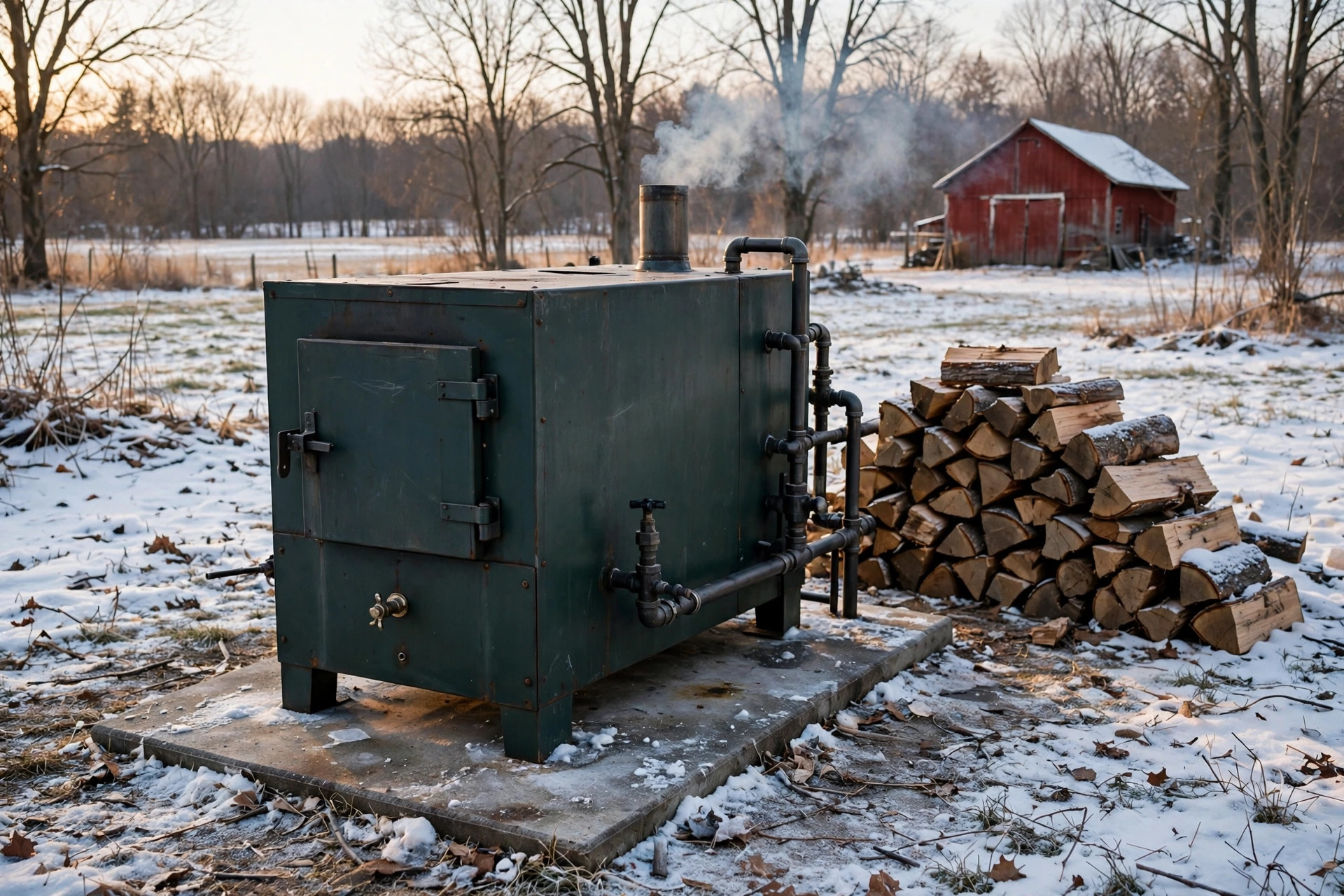

Reading outdoor furnace for home heating reviews usa will save you money and trouble. An outdoor furnace is a large metal box that sits in your yard. It burns wood or coal. Hot water or hot air then travels through pipes into your house. The fire stays outside, so smoke and ash stay outside too. Many families in cold states use these units. They like the low fuel cost. Wood is cheap in rural parts of America. But not every unit is good. Some models break down fast. Some use too much wood. This guide will help you read reviews the right way. It will show you what to look for, what types exist, what they cost, and how to keep one safe.
Why an Outdoor Furnace Matters
Heating bills rise every winter. Gas and oil cost more each year. Electric heat can shock you when the bill arrives. An outdoor furnace lets you heat with wood you cut yourself. Wood costs little if you own land with trees. Even bought firewood is often cheaper than gas. The savings add up over ten or twenty years. Many owners say the unit paid for itself in five to eight years.
The mess stays out of the house. Anyone who has run a wood stove inside knows the dust. Bark and ash get on the floor. Smoke sometimes drifts into the room. An outdoor furnace keeps all that in the yard. You load wood once or twice a day. The house stays clean and warm.
One unit can heat more than the house. It can heat a garage, a barn, or a workshop. Some owners heat their domestic hot water with the same unit. That cuts the water heater bill too. A few models heat a pool in the fall. You get more value from one fire.
Safety is another reason people choose them. A chimney fire inside a house is a danger. A fire in a steel box fifty feet from the house is far less risky. Insurance companies often treat outdoor units well. Your rates may not rise as they would with an indoor stove. Always check with your agent first. Rules vary by state and by company.
How to Read Reviews the Right Way: Outdoor Furnace for Home Heating Reviews Usa
Reviews help, but only if you read them well. Many reviews are old. A model from 2010 may not match the model sold today. Look for the date of each review. Give more weight to reviews from the last two or three years. Companies change designs. New rules from the EPA changed many units after 2015.
Watch for real detail. A good review names the size of the house. It says how many cords of wood were burned. It tells how often the owner loads the fire box. A review that only says “works great” tells you little. A review that says “heats my 2,400 square foot home on six cords a year in northern Michigan” tells you a lot.
Look at the bad reviews too. Every unit has some. Ask what the complaint is. Rust is a common one. If many owners report rust in year three, that is a pattern. If one owner reports a bad dealer, that is a dealer problem. Learn the difference. Patterns matter more than single stories.
Check who wrote the review. Dealer websites show mostly good reviews. Forums show a mix. Sites like This Old House give hands-on tests. Owner forums on Family Handyman carry long threads with real photos. Read both kinds of sources. You will get a fuller picture.
What to Look For When You Buy
Size and Firebox
Size matters most. A unit too small will run day and night and still leave rooms cold. A unit too large will smolder and waste wood. Match the unit to your square footage and your climate. A 2,000 square foot home in Georgia needs less heat than the same home in Minnesota. Good makers publish sizing charts. Use them. When in doubt, call the maker and ask. Tell them your home size, wall insulation, and winter lows.
The firebox is the heart of the unit. Big fireboxes hold big logs. That means fewer trips to the yard. Look for a firebox that takes 24-inch logs or longer. Small fireboxes need constant feeding. That gets old fast in January.
Build Quality
The steel shell should be thick. Many good units use 409 stainless steel or heavy carbon steel. Thin shells rust through sooner. Ask about the warranty on the firebox. Ten years is common. Twenty years is better. Read the fine print. Some warranties only cover parts, not labor.
The door seal matters. A bad seal lets air leak in. Leaked air makes the fire burn hot and waste wood. Good units have tight doors with thick gaskets. In reviews, owners praise doors that stay tight after years of use.
Efficiency
Newer units burn cleaner. The EPA set strict rules for outdoor furnaces. Units that meet the rules use less wood and make less smoke. Look for the EPA tag on the unit. Check ENERGY STAR for efficient heating ratings.
Controls
Modern units have digital controls. The control sets water temperature. It runs the fan and the draft. Simple controls are best. You want to read the screen at a glance in the cold. Some units link to a thermostat in the house. That is a nice feature.
Dealer and Parts
Buy from a dealer who is close. You will need parts someday. A pump, a gasket, or a control board may fail in year eight. A local dealer can help fast. Ask how long the dealer has sold the brand. Ask if they stock common parts. Reviews often name good and bad dealers. That is useful local knowledge.
Types of Outdoor Furnaces
Wood Only
The classic type burns split logs. It is simple and cheap to run if you have wood. Most American buyers choose this type. Reviews for wood units focus on wood use and loading ease. These are the most common units in reviews from the northern states.
Wood and Coal
Some units burn both wood and coal. Coal burns longer than wood. It is useful in very cold snaps. But coal is dirty. It makes more ash and more smoke. Coal costs money where wood is free. Few homeowners need this type. It suits farms and shops more than homes.
Pellet Units
A few outdoor units burn wood pellets. Pellets feed by auger. You fill a hopper and the unit feeds itself for days. This is the easiest type to run. Pellets cost more than cut wood. The auger and motor add parts that can break. Reviews praise the ease and complain about pellet prices.
Multi-Fuel
Some makers sell units that burn corn or biomass. These are rare for homes. Fuel supply can be a problem. Stick with wood unless you have a steady cheap source of other fuel.
Cost and Price
An outdoor furnace costs real money. Plan on $8,000 to $15,000 for the unit itself. Large models can pass $18,000. Installation adds $2,000 to $5,000 more. You need a concrete pad. You need insulated pipe trenched to the house. You need an electric line to the unit. A heat exchanger ties into your indoor system. Get three quotes from installers. Prices vary by region.
Running costs are mostly wood. A cold-climate home may burn six to ten cords a year. A cord of bought firewood runs $150 to $300 depending on the state. Cut your own and the cost is your time and a chainsaw. Electricity for the fans and pumps is small. Plan on $20 to $40 a month in the heating season.
Compare this to your current bill. If you pay $300 a month for gas heat, you spend $1,800 a season. An outdoor furnace might cut that to $600 in wood. The unit pays for itself in six to ten years. Makers like Carrier and Rheem publish fuel cost guides that help with the math. Keep the unit 15 to 20 years and you come out well ahead.
Do not forget upkeep costs. You will replace door gaskets. You may replace a pump. Water treatment chemicals cost a little each year. Budget $200 a year for parts and chemicals. That is still far less than a gas bill.
Care and Upkeep
An outdoor furnace needs steady care. It will last decades if you treat it well. Neglect kills them in years.
Water treatment is the first job. The unit holds water in a steel tank. Untreated water rusts steel from the inside. Add the treatment chemicals the maker sells. Test the water each year. This one step adds years to the life of the unit. Reviews of failed units often trace back to skipped water treatment.
Clean the ash on schedule. Most units need ash removal every one to two weeks in heavy use. Let ash pile up and airflow drops. The fire smolders. Keep a metal ash can with a lid nearby. Spread cool ash on the garden in spring.
Check the door gasket each fall. Close the door on a dollar bill. If the bill slides out easy, the seal is worn. Replace the gasket. It is a cheap part. A tight door saves wood all winter.
Brush the chimney and heat exchange tubes monthly in the burn season. Creosote builds up in any wood burner. A clean unit burns hotter and safer. Wear gloves and a mask. The job takes twenty minutes.
In summer, keep some water in the unit or drain it fully. Follow the maker guide. Either way, check for rust spots. Touch up paint on the shell. A little paint each year stops rust from spreading.
Store wood right. Burn only dry wood. Wet wood smokes and makes creosote. Stack wood off the ground under cover. Give fresh cut wood six to twelve months to dry. A moisture meter costs $30 and pays for itself. Lennox and Goodman both note dry fuel as key to clean burns in their heating guides.
Safety Rules
An outdoor furnace is safer than an indoor stove, but it is still a fire. Follow these rules.
Set it back from the house. Most codes ask for 50 feet or more. Check your town rules before you buy. Some towns ban outdoor furnaces or limit smoke. Know the law first. A unit you cannot legally run is a waste of money.
Keep the area clear. Cut grass and weeds around the unit. Store wood at least ten feet away. Do not pile leaves or trash near it. A clear zone stops stray sparks from starting a yard fire.
Watch the smoke. Thick smoke means the wood is wet or the air setting is wrong. Neighbors will complain about smoke. Some towns fine owners for it. Burn dry wood and set the draft right.
Install a water temperature alarm if the unit lacks one. Overheat can boil the water and crack the tank. The alarm warns you in the house. It is cheap insurance.
Teach the family the basics. Show them how to shut the unit down. Keep children away from the hot surfaces. The door and stack get very hot. A simple fence around the unit keeps kids and pets safe.
FAQ
How long does an outdoor furnace last? A well-kept unit lasts 15 to 25 years. The firebox steel and water treatment decide the life. Units with skipped water treatment may fail in under ten years. Thick stainless models last longest.
Can it heat my whole house? Yes, if sized right. It heats through your existing ducts or radiators using a heat exchanger. It can also heat water for taps and showers. Many owners heat a garage or shop too. Size the unit to the total load.
How often do I load wood? Once or twice a day in cold weather. Large fireboxes may go 12 hours between loads. Small ones need loading every six to eight hours. Pellet units can run for days on one hopper fill.
Is it legal where I live? Rules vary. Some towns allow them with setback rules. Some ban them. A few states limit which models can be sold. Check with your town office and state air board before you buy. The dealer should know local rules too.
Does it work with my current furnace? Yes. The outdoor unit ties into your indoor system with a water-to-air heat exchanger in the duct. Your indoor furnace becomes backup heat. An installer can set this up in a day or two.
How does it compare to a heat pump? A heat pump runs on electricity and needs no wood. It is cleaner and easier. But it costs more to run in very cold weather. Many cold-climate buyers pair an outdoor furnace with better winter indoor air. For a related read on winter comfort, see our guide to the ideal indoor humidity in winter usa guide. Homeowners who want low effort often pick a heat pump. Homeowners with free wood often pick the furnace.
A Short Final Word
An outdoor furnace for home heating is a big buy. Read many reviews. Look for detail on wood use, rust, and dealer help. Size the unit right. Burn dry wood. Treat the water. Keep up with small care jobs. Do these things and the unit will heat your home for decades at low cost. Skip them and you will join the owners who write the bad reviews. The choice is yours. For more on home heating value, read our piece on cool roof shingles cost vs regular usa and the best evaporative cooler for garage usa to round out your whole-house plan.
References
Carrier. (n.d.). Heating and cooling systems. https://www.carrier.com ENERGY STAR. (n.d.). Energy efficient products. https://www.energystar.gov Family Handyman. (n.d.). DIY home repair and maintenance. https://www.familyhandyman.com Goodman. (n.d.). Heating and cooling equipment. https://www.goodmanmfg.com Lennox. (n.d.). Heating and cooling systems. https://www.lennox.com Rheem. (n.d.). Heating, cooling, and water heating. https://www.rheem.com This Old House. (n.d.). Home renovation guidance. https://www.thisoldhouse.com Trane. (n.d.). Heating and air conditioning. https://www.trane.com U.S. Department of Energy. (n.d.). Energy efficiency and renewable energy. https://www.energy.gov U.S. Environmental Protection Agency. (n.d.). Protecting human health and the environment. https://www.epa.gov
Was this guide helpful?

About Robert Taylor
The My Garden US editorial team writes practical, in-depth home and garden guides for American homeowners — tested advice, no fluff.
You May Also Like
Best Line Voltage Thermostat Reviews USA: A Plain Guide to Smart, Simple, and Reliable Heating Control
January 11, 2026 0 views
Best Tower Fan for Bedroom Reviews USA: A Practical Buying Guide
June 18, 2026 0 views
Best Central Air Conditioner Brands 2026 USA
August 9, 2026 0 views