
Introduction
A garage in summer can feel like an oven. The concrete floor holds heat. The metal door radiates it. A car engine adds more. For many owners, air conditioning is too dear to install. The best evaporative cooler for garage usa shoppers offers a middle path. It cools with water and air, not with refrigerant. It costs less to buy and far less to run.
An evaporative cooler is also called a swamp cooler. It draws warm air through pads soaked in water. The water takes heat from the air as it evaporates. The air that comes out is cooler and fresher. It works best in dry heat, which is why it suits many parts of the American West and South. In humid states it helps less, but it can still move fresh air through a work space.
This guide explains how to size one, which types suit a garage, what they cost, how to care for them, and how to use them in safety. It also answers common questions from buyers.
Why an Evaporative Cooler Suits a Garage: Best Evaporative Cooler for Garage Usa
A garage is not a sealed room. It has gaps under doors and vents in the walls. Air conditioning fights this and loses. An evaporative cooler works with it. The units need fresh air in and used air out. A garage door cracked open a few inches gives the air a path. That keeps pressure balanced and cooling steady.
Running costs are small. A typical portable unit draws about as much power as a few light bulbs. A window air conditioner draws far more. Over a long summer the savings add up. For a man or woman who works in the garage on weekends, the electric bill stays low.
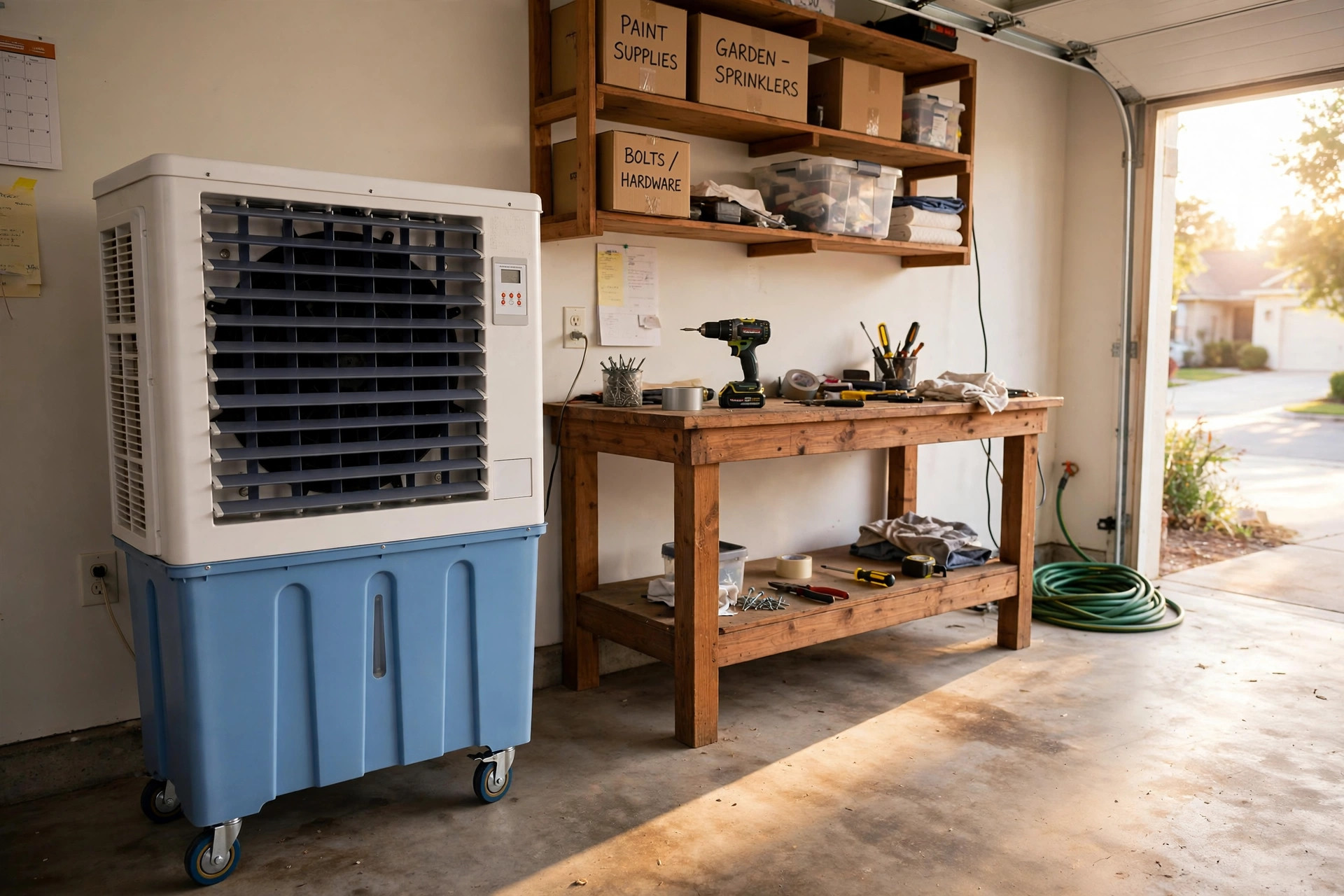
Portability is another gain. Many units ride on casters. They roll from the workbench to the car bay. They need no ductwork and no permit. A shop owner can buy one in the morning and use it the same day. People who rent a home can take the unit along when they move.
The cooler also vents fumes. A garage that smells of paint, glue, or gasoline benefits from constant fresh air. The unit pushes old air out as it draws new air in. That steady exchange makes the space healthier to work in. It does not replace a proper exhaust fan for strong fumes, but it helps with day to day use.
How to Choose the Right Unit
Size it by CFM
Coolers are rated in CFM, which means cubic feet per minute. It tells how much air the unit moves. A garage of 400 square feet needs less air than a shop of 1,200 square feet. A common rule says to pick a unit rated for about twenty air changes per hour. For a two car garage, look for 2,500 to 4,500 CFM. For a large shop, look for 5,000 CFM or more.
Buying too small is the most common error. An undersized unit runs all day and never cools. Measure your garage first. Multiply length by width for square feet. Then check the maker ratings for that space. It is better to buy a little more capacity than a little less.
Check the water tank
Portable units carry their own water in a tank. Small tanks hold five to ten gallons. Large tanks hold twenty gallons or more. A bigger tank means fewer refills. Some units also take a garden hose hookup. The hose feeds water in all day. That is the best choice for a shop where the cooler runs for hours.
Look at speed settings and controls
A good unit has at least three fan speeds. Low speed suits mild days. High speed suits the hottest afternoons. Some models add a remote control or a timer. These are nice to have, not needs. Simple dials are fine and tend to last longer.
Consider noise
A garage is a work space, so noise matters. Large units are louder than small ones. If you talk on the phone or listen to the radio in the garage, pick a unit known for quiet fans. Pads in good shape also cut noise. Worn pads let air whistle through.
Portability and build
Look for sturdy casters and a tough plastic or metal shell. The best evaporative cooler for garage usa workshops is one that survives dust and bumps. A unit that feels flimsy in the store will not last in a working garage. Check that the water tank slides out for cleaning.
Types of Evaporative Coolers
Portable cart units
These are the most common choice for a garage. They sit on the floor and roll on wheels. They hold their own water and plug into a standard outlet. Sizes range from small desk style boxes to tall units as big as a refrigerator. For most two car garages, a mid size cart unit is the right pick. Models listed on sites like Family Handyman and This Old House often top buyer guides for home shops.
Window units
A window cooler mounts in a garage window or a wall opening. It does not take floor space. It draws outside air in and pushes cool air across the room. It suits a garage that has a spare window near the work area. It needs a water line or a manual fill tray. It also needs the window frame to hold its weight.
Ducted whole garage units
Some owners mount a large cooler on the roof or on a wall and run a short duct to a vent. This cools the whole garage from one spot. It costs more and needs some handiwork to install. It is the best fit for a large shop or a garage that is used as a full time work space. For energy facts on cooling options, ENERGY STAR and the U.S. Department of Energy publish plain guides on home cooling.
Fan and pad rigs
A few owners build their own cooler from a fan and a wet pad. It works after a fashion, but it is hard to size and hard to keep clean. A factory built unit is safer and more steady. The small savings are not worth the trouble for most people.
Cost and Price
Portable evaporative coolers for a garage sell from about one hundred fifty to seven hundred dollars. Small units for a single car garage sit near the low end. Large high CFM units for shops sit near the high end. Window units run from two hundred to five hundred dollars. A ducted roof unit with install labor can reach one to two thousand dollars.
Running cost is low. A mid size unit uses around two hundred to four hundred watts. At typical United States rates, that is only a few cents per hour. Water use is modest too, a few gallons per hour on hot days. Compared with a window air conditioner of similar size, the cooler costs about a third as much to run.
Pad replacement adds a small yearly cost. Standard aspen pads sell for twenty to fifty dollars a set. Rigid media pads cost more but last longer. Budget for one pad change per season if you use the unit daily. Some makers, such as Carrier, Rheem, Lennox, Goodman, and Trane, offer full cooling systems too, but a garage rarely needs that level of equipment.
Care and Upkeep
An evaporative cooler is simple to keep. Empty and rinse the tank every few weeks in the season. Standing water grows algae and can smell. A splash of white vinegar in the rinse water helps cut slime. Wipe the tank dry before long storage.
Check the pads each month. Look for mineral crust or tears. Hard water leaves white scale on pads. Soaking pads in a vinegar bath can clear light scale. Replace pads that are matted or torn. Clean pads cool better and run quieter.
Oil the fan motor if it has oil ports. Many new motors are sealed and need no oil. Check the belt on belt driven units. A loose belt slips and moves less air. Tighten it to the maker spec, about one inch of play in the middle.
Before winter, drain the unit fully. Unplug it. Cover it or move it inside. Water left in a tank can freeze and crack the plastic. In dry states, a cover keeps dust off the pads. A little care each fall adds years to the unit. General upkeep advice for home systems also appears on Family Handyman and This Old House, which both cover seasonal home tasks.
Safety Notes
Water and electricity need respect. Plug the unit into a grounded outlet with a ground fault breaker if you can. Keep the cord away from water on the floor. Never fill the tank while the unit is plugged in and running. Dry your hands before you touch the switch.
Vent the garage. Leave a door or window cracked while the cooler runs. Without an air path, humidity builds up and the cooling effect fades. A stuffy, damp garage is also a poor place to work. If you use paint, solvents, or strong cleaners, give them their own exhaust fan and fresh air. The cooler helps with mild odors, not with heavy fumes.
Keep children and pets from climbing on the unit. A full tank is heavy and can tip. Anchor a tall unit against a wall if it wobbles. In very hot states, drink water and take breaks. No cooler makes a garage safe in extreme heat for long work. Know the signs of heat strain: headache, dizziness, and heavy sweat that stops.
Frequently Asked Questions
Does an evaporative cooler work in a humid state?
It works best in dry heat, below about fifty percent humidity. In places like Florida or Louisiana, the cooling effect is small. It still moves fresh air, which some owners like. In dry states like Arizona, Nevada, Texas, and New Mexico, it works very well. Check your local summer humidity before you buy.
How much cooler will my garage get?
Expect a drop of ten to twenty degrees Fahrenheit on a dry day. A garage at one hundred degrees may fall to eighty or eighty five. It will not feel like air conditioning. It feels like a steady cool breeze. Shade on the garage and a cracked door help the most.
Can I use a portable evaporative cooler for a workshop with power tools?
Yes. Saws and sanders do not mind humid air. Keep the unit clear of sawdust piles. Wipe dust from the intake grill each week. Do not aim the cool air straight at open electronics or at fresh paint. Dust and moisture can harm fine finishes.
Do I need a window vent for a garage swamp cooler?
You need some path for air to leave. A garage door cracked two to four inches is enough for most portable units. A window unit needs its own window. A ducted unit needs a vent or an open door. Without an exit path, the air gets heavy and the cooling fades.
What is the best evaporative cooler for garage usa shops that run all day?
Pick a unit with a garden hose hookup so the tank never runs dry. Look for 4,000 CFM or more for a two car shop. Rigid media pads last longer under daily use. A timer and a remote save trips across the shop. Buy from a maker with a parts line so pads and pumps are easy to find.
How long do evaporative coolers last?
A well kept unit lasts ten to fifteen years. The shell and motor last longest. Pumps fail first, often after five to eight years. Pads need yearly change with hard water. Winter storage and monthly cleaning add the most life.
A Final Word
The best evaporative cooler for garage usa buyers is the one that fits the space, the climate, and the budget. Measure the garage. Pick honest CFM ratings. Give the air a way out. Keep the pads clean. Do these four things and the unit will pay for itself in one hot summer. A cool garage is a garage you will actually use.
For related home projects, you may also like our guides on hvac uv light installation cost near me, radiant barrier installation cost near me, and gas boiler installation cost for old house.
References
Carrier. (n.d.). Heating and cooling systems. https://www.carrier.com ENERGY STAR. (n.d.). Energy efficient products. https://www.energystar.gov Family Handyman. (n.d.). DIY home repair and maintenance. https://www.familyhandyman.com Goodman. (n.d.). Heating and cooling equipment. https://www.goodmanmfg.com Lennox. (n.d.). Heating and cooling systems. https://www.lennox.com Rheem. (n.d.). Heating, cooling, and water heating. https://www.rheem.com This Old House. (n.d.). Home renovation guidance. https://www.thisoldhouse.com Trane. (n.d.). Heating and air conditioning. https://www.trane.com U.S. Department of Energy. (n.d.). Energy efficiency and renewable energy. https://www.energy.gov
Was this guide helpful?

About David Wilson
The My Garden US editorial team writes practical, in-depth home and garden guides for American homeowners — tested advice, no fluff.
You May Also Like

Wood Stove vs Pellet Stove Cost Comparison
June 24, 2026 0 views
Barndominium Insulation Options and Costs USA
March 9, 2026 0 views
Furnace Maintenance Checklist for Fall USA: Get Ready Before Winter
June 14, 2026 0 views