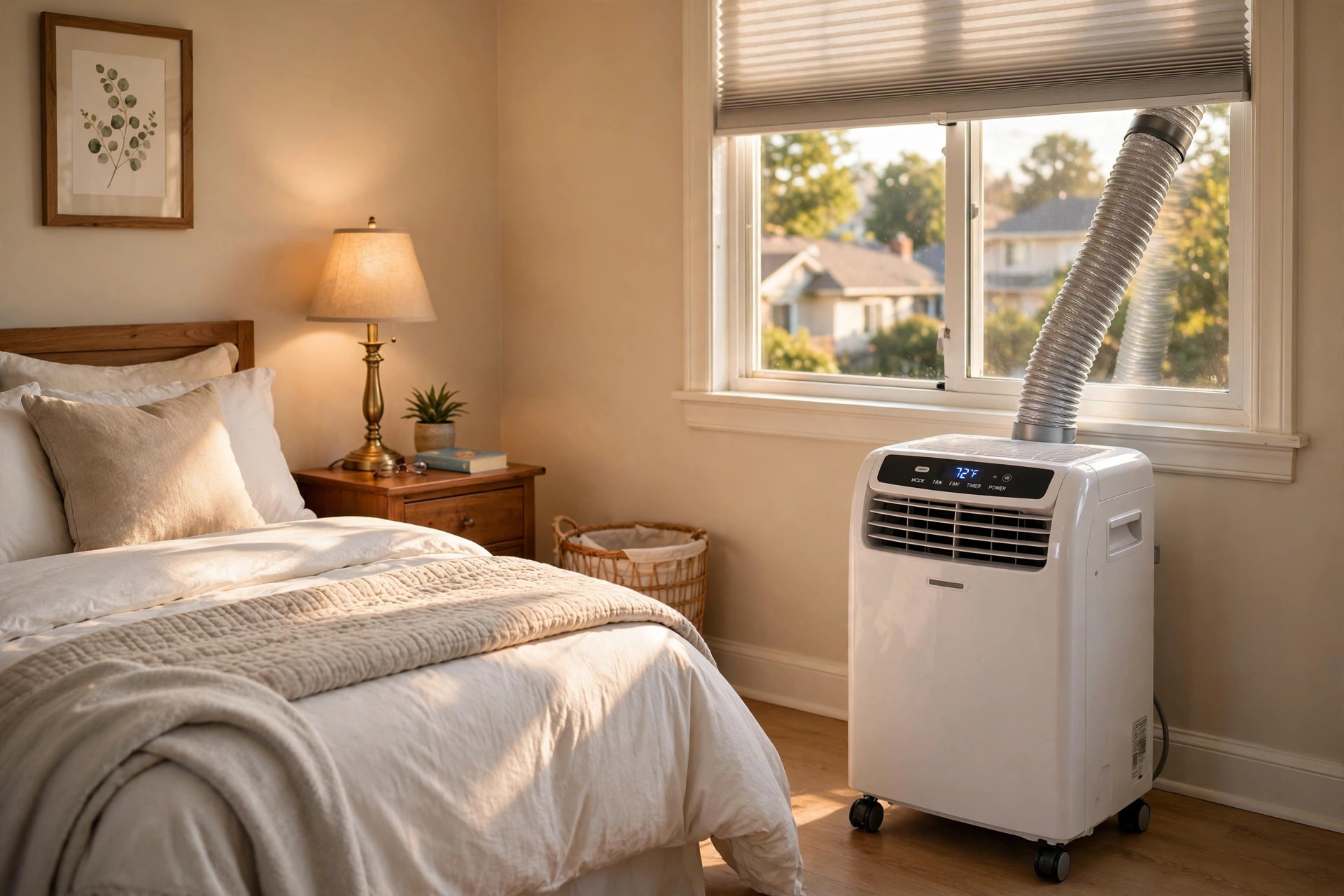

Sleep suffers when the bedroom stays hot. A portable air conditioner can fix the problem fast. It rolls on wheels, plugs into a wall outlet, and vents warm air out a window. The best portable AC for bedroom reviews USA buyers write praise this simple setup. No wall holes. No tools. No contractor.
This guide walks through the best portable AC for bedroom reviews USA shoppers trust most. It explains what reviewers check, which sizes fit which rooms, and how much these machines cost to run. Everything is written in plain words. The goal is to help you pick a unit that cools your bedroom, keeps the noise down, and fits your budget.
Why a Portable AC Matters for the Bedroom
A hot bedroom makes sleep hard. Body temperature must drop for deep rest. When the room stays above 75 degrees, many people toss and turn. A portable AC brings the room down to a comfortable range. Most reviewers report steady cooling within half an hour.
Central air does not reach every room well. Second-floor bedrooms run hot. Old homes lack ducts. Renters cannot change the building. A portable unit solves all three cases. It sits where you need it and moves when you do not.
Many owners also use these units as backup. When the main system breaks in July, the portable unit keeps the bedroom livable until the repair crew arrives. Reviews often call this the second-best use of the machine.
How to Read Bedroom AC Reviews: Best Portable Ac for Bedroom Reviews Usa
Reviews of portable air conditioners share a pattern. Buyers judge five things: cooling power, noise, ease of setup, the window kit, and the price of running the machine. A good review covers all five.
Cooling power is measured in BTU, or British Thermal Units. Higher BTU means more cooling. A bedroom of 250 square feet needs about 8,000 BTU. A room of 400 square feet needs about 10,000 BTU. Reviewers who bought too small complain the room never cools. Reviewers who bought too large complain the unit cycles on and off and leaves the air damp.
Noise matters more in a bedroom than anywhere else. Manufacturers print decibel ratings. A unit at 50 decibels hums like a quiet office. At 56 decibels it sounds like light traffic. Reviewers sleep next to these machines. They notice. Units with a true sleep mode win praise in bedroom reviews.
The window kit deserves attention. Every portable AC needs a way to push hot air outside. Kits fit standard double-hung windows. Sliding windows and casement windows need extra parts. Reviewers note which brands include good kits and which force a second purchase.
Running cost is the last big point. Portable units use more power than window units of the same size. A 10,000 BTU unit draws about 1,000 watts. At average United States rates, that costs roughly ten to twelve cents per hour. Reviewers who run the machine all night through August see the electric bill rise.
Types of Portable Air Conditioners for Bedrooms
Single-Hose Models
Single-hose units pull room air in, cool it, and push warm air out the hose. They are cheap and simple. They cool the room fine. Their flaw is that they create slight negative pressure, which pulls warm air in from other rooms. Reviewers accept this trade for the lower price.
Dual-Hose Models
Dual-hose units use one hose to bring in outside air and a second hose to push warm air out. They cool faster and work better in heat waves. They cost more. Bedroom reviewers split on this choice. Some say the extra cost pays off in comfort. Others say a single hose cools a bedroom fine.
Units With Heat or Dehumidifier Modes
Some portable units also heat in winter or dry damp air. A bedroom unit with a dehumidifier mode helps in humid states. Reviewers in Florida and Texas value this feature. The heat mode suits small spaces but rarely replaces a furnace.
What to Look for Before You Buy
Start with room size. Measure the bedroom in square feet. Match the BTU rating to the chart on the box. For rooms with high ceilings or strong sun, move up one size.
Check the noise rating at the lowest fan speed. Bedroom use means low speed most nights. A unit that is quiet on low and loud on high still works for sleep. Look for a sleep mode or a night setting that dims the display.
Study the drain system. Air conditioners pull water from the air. Many portable units evaporate most of this water through the hose. In humid weather they still fill a tank. A unit with a drain hose or a pump saves you midnight trips with a full tank.
Read the window kit details. Note the minimum and maximum window width. If your windows are unusual, check that adapters exist before you order. Carrier and Trane publish helpful guidance on sizing home cooling equipment.
Look at the energy efficiency ratio, or EER. Higher EER means less power for the same cooling. ENERGY STAR lists certified room cooling products and explains how to compare their running costs.
Finally, weigh the unit. Portable models run 50 to 70 pounds. Wheels help. Reviewers with stairs in the home care about weight when they store the unit each fall.
Cost and Price in the USA
A good portable AC for a bedroom costs between 300 and 600 dollars. Single-hose 8,000 BTU models sit at the low end. Dual-hose 12,000 BTU models with heat reach the high end. Prices rise in spring when demand builds.
Running costs add up. Eight hours of nightly use at 1,000 watts costs about one dollar per night at average rates. A full summer month runs near 30 dollars on the electric bill. Reviewers suggest setting the thermostat to 74 or 75 degrees instead of 68. Each degree saves real money.
Maintenance costs are small. Filters wash with water. No refrigerant service is needed in normal years. Goodman and Rheem offer homeowner guides that cover basic upkeep of cooling equipment.
If you also cool other rooms, compare options. Some reviewers pair a bedroom portable unit with a whole-house fan or a duct booster project from a bypass vs fan powered humidifier comparison guide to balance airflow. Whole-home projects differ from room cooling, but the sizing lessons carry over.
Setup in a Typical Bedroom
Setup takes about twenty minutes. Roll the unit near a window. Attach the hose to the back of the machine. Slide the window kit into the open sash. Lock it in place and connect the hose. Plug the unit into a grounded outlet.
Do not use an extension cord. These machines draw heavy current. A direct wall outlet is safest. Keep the hose short and straight. Long, bent hoses trap hot air and weaken cooling. Reviewers who kink the hose report weak results.
Place the unit away from curtains and bedding. It needs clear air around the intake and the vent. Leave at least a foot of space on the sides. This Old House walks through similar placement rules for room cooling equipment.
Care and Upkeep
Clean the air filter every two weeks in summer. A clogged filter cuts cooling and raises the power bill. Most filters slide out and rinse under a tap. Let the filter dry fully before it goes back.
Wipe the case with a damp cloth. Check the window kit each spring for cracked plastic. Empty the water tank when the full indicator lights up. If the tank fills often, your room is humid. Consider a unit with continuous drain.
Store the unit upright in fall. Never tip it on its side for long. Let it sit upright for a day before first use in spring. This protects the compressor. The U.S. Department of Energy recommends similar seasonal care for home cooling systems.
Noise and Sleep Quality
Bedroom reviewers rank noise above almost everything else. Look for units rated at or below 52 decibels on low. Some brands run near 48 decibels, which most sleepers accept.
Test placement. A unit across the room sounds softer than one beside the bed. A rug under the machine cuts vibration hum. Closing the bedroom door keeps the cool air in and blocks hallway noise.
White noise helps some sleepers. A steady fan hum masks street sounds. Reviewers who are light sleepers sometimes prefer the low hum to silence. Those who need full quiet should pick the lowest decibel model they can afford.
Safety in the Bedroom
Portable AC units are safe when used as directed. Keep them away from water. Do not place drinks on top of the machine. Water and electricity do not mix.
Check the cord each season. A frayed cord needs replacement before use. Never run the cord under a rug. Heat builds under rugs and damages insulation.
Vent the hose only to the outside. Never into an attic or a wall space. The hot air must leave the house. A blocked hose can overheat the unit. Lennox publishes safety notes on proper venting of portable and room cooling equipment.
Use a dedicated outlet when possible. Sharing an outlet with a space heater or a hair dryer can trip the breaker. If the breaker trips often, have an electrician check the circuit.
Comparing Portable ACs to Other Bedroom Cooling Options
Window units cool better for the price. They cost less to buy and less to run. Their downside is the heavy lift into the window and the blocked view. Renters with strict rules often cannot use them.
Fans move air but do not cool it. A good fan works on mild nights. In real heat it only pushes warm air around. Many reviewers run a fan with the portable AC to spread cool air faster.
Mini-split systems cool best of all. They are quiet and efficient. They cost thousands of dollars and need professional install. For a single bedroom on a budget, the portable unit wins on simplicity.
Evaporative coolers suit dry climates only. In humid states they add moisture and fail to cool. Bedroom reviewers in Arizona like them. Reviewers in Georgia do not.
Frequently Asked Questions
How many BTU does a bedroom portable AC need?
An average bedroom of 200 to 300 square feet needs 8,000 BTU. Rooms of 300 to 450 square feet need 10,000 to 12,000 BTU. Measure your room and follow the box chart. When in doubt, size up slightly.
Are portable air conditioners loud at night?
Most run between 50 and 56 decibels. The lowest setting is the quietest. Models with a sleep mode dim lights and slow the fan. Light sleepers should pick a unit rated under 52 decibels on low.
Do portable AC units use a lot of electricity?
A 10,000 BTU unit draws about 1,000 watts. Eight hours of use costs roughly one dollar at average United States rates. Raising the set temperature by a few degrees cuts the bill. The ENERGY STAR program shows how efficient models compare.
Can I leave a portable AC running while I sleep?
Yes. These units are built for overnight use. Set a comfortable temperature and use the timer if you want it to shut off later. Keep the unit away from bedding and make sure the hose vents outside.
How do I drain a portable air conditioner?
Most units evaporate water through the exhaust hose in normal humidity. In damp weather the internal tank fills. Empty it when the indicator lights. Units with a drain port accept a hose for continuous draining into a floor drain.
Is a single-hose or dual-hose model better for a bedroom?
Dual-hose models cool faster and handle heat waves better. Single-hose models cost less and cool an average bedroom fine. Bedroom reviewers are split. For rooms under 300 square feet, most find a single hose enough.
A Short Final Word
The best portable AC for bedroom reviews USA shoppers write share one theme. The right unit is the right size, quiet on low, and simple to set up. Match BTU to your room. Check the noise rating. Read the window kit details before you buy.
Start early in the season for the best price. Run the unit a few degrees warmer than you think. Clean the filter on schedule. Do these small things and your bedroom will stay cool all summer.
If your home has other hot spots, related reading can help. A basement dehumidifier pulls moisture from damp lower rooms. Homes with wood heat may compare a best corn stove for home heating reviews guide for winter warmth. And readers curious about building heat control sometimes read a cool roof shingles cost vs regular usa breakdown to see how roofing affects indoor temperature.
References
Carrier. (n.d.). Heating and cooling systems. https://www.carrier.com ENERGY STAR. (n.d.). Energy efficient products. https://www.energystar.gov Family Handyman. (n.d.). DIY home repair and maintenance. https://www.familyhandyman.com Goodman. (n.d.). Heating and cooling equipment. https://www.goodmanmfg.com Lennox. (n.d.). Heating and cooling systems. https://www.lennox.com Rheem. (n.d.). Heating, cooling, and water heating. https://www.rheem.com This Old House. (n.d.). Home renovation guidance. https://www.thisoldhouse.com Trane. (n.d.). Heating and air conditioning. https://www.trane.com U.S. Department of Energy. (n.d.). Energy efficiency and renewable energy. https://www.energy.gov
Was this guide helpful?

About David Wilson
The My Garden US editorial team writes practical, in-depth home and garden guides for American homeowners — tested advice, no fluff.
You May Also Like
Barndominium Insulation Options and Costs USA
March 9, 2026 0 views
Best Patio Heater for Winter Reviews USA: A Plain Guide to Warm Outdoor Nights
June 4, 2026 0 views
Best Insulated Garage Door Reviews 2026 USA: What to Buy and Why It Matters
July 12, 2026 0 views