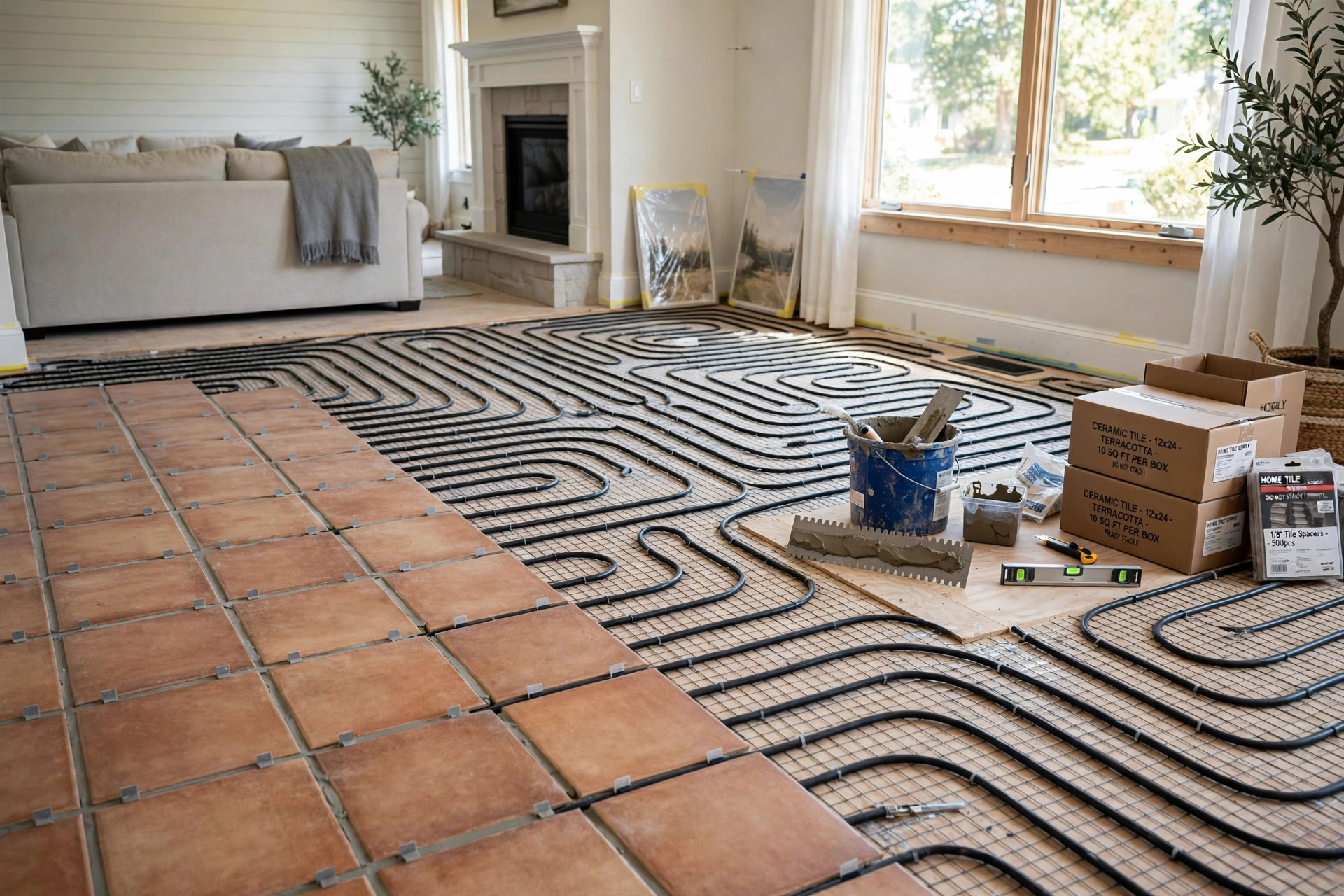

The radiant floor heating installation cost USA homeowners face is the first question most people ask before they commit to warm floors. Few upgrades change the feel of a home as much as heat that rises gently from underfoot. Tile no longer feels cold on a winter morning. A bathroom turns from a cold shock into a warm room. But before the comfort comes the budget. A clear grasp of the real costs helps a homeowner plan well and avoid surprise charges in the middle of the project.
Why Radiant Floor Heating Matters
Radiant floor heat works in a simple way. Electric mats or warm water tubes sit under the floor finish. Heat spreads across the whole floor and rises into the room. The result is even warmth from ankle to head. Forced-air systems push hot air from vents. That heat often pools near the ceiling while feet stay cool. Radiant heat solves this problem at the source.
The comfort gain is the main reason people choose this system. There are practical gains too. Radiant systems run quiet. There are no fans and no ducts. Dust does not blow around the rooms. People with allergies often notice the difference. Rooms also look cleaner. There are no radiators or vents to work around when placing furniture.
Energy savings can follow. Radiant floors heat people directly rather than the air alone. Many homeowners report that they can set the thermostat a few degrees lower and still feel warm. Lower thermostat settings mean lower fuel bills over a long heating season. In cold states such as Minnesota, Maine, and Wisconsin, where winter runs for months, this saving can be large.
Home value is another factor. Heated floors are a selling point in real estate listings. A warm master bathroom or a warm kitchen appeals to buyers. An agent may list the feature in the advertisement and note it during showings. It does not always raise the price dollar for dollar, but it can make a home sell faster in a cold market.
What to Look For Before You Buy: Radiant Floor Heating Installation Cost Usa
The first thing to check is the floor finish. Radiant heat works best under stone, ceramic, or porcelain tile. These materials pass heat well and store it. They feel cool underfoot without heat, so the system makes a real difference. Luxury vinyl plank floors and engineered wood can work too, but they pass heat less well. Each product has a maximum heat limit set by the maker. A check with the flooring maker is wise before any money is spent.
The second thing to check is the room size. Small bathrooms and entryways are the most common radiant projects. They cost less and give clear comfort. Whole-house systems cost much more. A homeowner should decide if one room or the whole floor needs heat. Many projects start with the master bath or the kitchen and expand later.
The third thing to check is the home layout. Concrete slab homes accept hydronic tubes well. Homes with wood subfloors often suit electric mats. A slab on grade keeps tubes in place with wire mesh or foam panels. Access from below matters too. If the crawl space under a room is open, tube or cable work may be easier.
The fourth thing to check is the electrical panel. Electric systems draw real power. An older home with a full panel may need a new circuit or even a panel upgrade. This adds cost. A licensed electrician should check the panel before the project starts. The same check applies to hydronic systems, which need power for pumps and a boiler or water heater.
The fifth thing to check is local codes. Some cities and counties have rules about floor heating. Permits are often required when new circuits or boilers are added. A short call to the local building department saves trouble. Consumer Reports and home guides such as This Old House both advise readers to verify permits and code rules before a remodel begins.
Types of Radiant Floor Heating
There are two main types: electric and hydronic. The choice drives the price more than any other single factor.
Electric Radiant Heat
Electric systems use thin mats or loose cable. The mat unrolls on the subfloor or on backer board. Thin-set mortar goes on top. Then tile or stone is set as usual. Cable systems are similar but the wire is laid in loops, which fits odd room shapes. Electric heat warms up fast. A bathroom mat can reach full heat in thirty to sixty minutes.
Electric systems are cheap to install. The parts cost less. The labor is simple. No boiler is needed. For a small room, electric heat is usually the right choice. The running cost is higher, because electricity costs more per unit of heat than gas in most parts of the country. This matters in large rooms that run all day.
Hydronic Radiant Heat
Hydronic systems move hot water through plastic tubes under the floor. A boiler or water heater warms the water. A pump moves it through the loops. The tubes often sit in a concrete slab or in aluminum plates under the subfloor. Hydronic heat warms up slowly but holds heat for hours. It is steady and even.
Hydronic systems cost more to install. A boiler, pump, and controls add to the bill. Labor takes longer. The tubes must be laid with care and tested for leaks. But the running cost is lower for large areas. For a whole house or a large open floor, hydronic heat is often the better value over ten or twenty years.
Radiant Floor Heating Installation Cost: The Full Picture
The national range is wide. Most homeowners in the United States pay between $6 and $20 per square foot for the full installation. A small electric bathroom project often lands near the low end. A large hydronic project with a new boiler can reach the high end. These figures cover parts and labor in one total. Tile installation prices per square foot are a useful point of comparison, since the tile work is often part of the same bill.
Electric system costs run from about $8 to $12 per square foot for a typical job. A 50-square-foot bathroom may cost $400 to $600 for the mat and parts. Labor for the electric hookup and tile work adds $500 to $1,500. Total bills for a small bath often fall between $1,000 and $2,500. A 200-square-foot kitchen may run $1,600 to $2,400 for parts and $2,000 to $4,000 total with labor and tile.
Hydronic system costs start near $10 per square foot and can reach $25 in complex jobs. The tubes themselves are cheap. The boiler or water heater is the large cost. A new boiler can add $3,000 to $8,000. Controls, pumps, and manifolds add more. A 1,000-square-foot hydronic job often totals $10,000 to $20,000. Larger homes with new boilers can pass $25,000.
Labor is a large share of the bill. In high-cost cities such as New York, Boston, or San Francisco, hourly rates run high. The same job in a small town may cost 30 percent less. Quotes from three licensed installers are the best defense. Each quote should list parts, labor, and the finish work separately.
There are ways to lower the cost. Do the floor heat and the remodel together. If tile is already coming up for a bathroom remodel, the mat adds little labor. Heat only the rooms that need it. Bathrooms, kitchens, and mudrooms give the most comfort per dollar. Keep the shape simple. Straight runs of mat or tube cost less than cuts around many corners. Flooring brands and flooring retailers often sell complete kits that match common room sizes, which can trim the parts bill.
Energy tax credits may apply in some cases. Rules change from year to year, so a homeowner should check the latest federal and state programs. The energy office guidance at ENERGY STAR and retailer project guides at The Home Depot and Lowe’s list current rebates and credit programs that may cover part of the cost.
Care and Upkeep
Radiant floor systems need little upkeep. Electric mats have no moving parts. Once they are set in mortar and tile, they sit untouched for years. The thermostat is the only control the homeowner touches. A programmable thermostat is worth the small extra cost. It warms the floor before morning and lowers heat at night.
Hydronic systems need a bit more care. The boiler needs yearly service like any boiler. Pumps and valves should be checked each fall. Air can collect in the tubes. A purge each year keeps the flow even. The water should be clean. Dirty water can wear pumps early. A filter on the fill line helps.
Floor care matters too. The floor finish over the system needs normal care. Sweep and mop tile as usual. Do not cut into the floor later. If a new fixture or a grab bar must be drilled in, find the tube or wire path first. Heat can make some floors expand. Follow the flooring maker’s gap rules at walls and doorways. Shaw Floors and other tile makers publish heat limits for their products, and these limits should be honored.
Keep spare parts in mind. For hydronic systems, keep the boiler manual and the thermostat manual in a safe place. Write down the tube layout if the installer draws one. Future owners will thank you. A photo of the mats or tubes before the tile goes down is a smart record.
Safety
Floor heat is safe when it is installed to code. The main risk is electrical. Electric mats must be on a GFCI circuit in wet areas such as bathrooms. A licensed electrician should make the final hookup. Never nick or cut the heating wire during tile work. A damaged wire can short and fail. Test the mat with a meter before and after the tile is set.
Hydronic systems carry hot water. Boilers and pressure tanks must be set to safe levels. Pressure relief valves are required. Keep the boiler room clear of boxes and paper. A yearly check by a service tech keeps the system safe.
Heat limits protect the floor. Too much heat can crack tile or dry out wood. Thermostats made for floor heat include floor sensors that cap the temperature. Do not bypass these limits. Keep rugs off heated floors where possible. Thick rugs trap heat and can raise floor temperature past safe levels.
Children and pets like warm floors. That is a benefit, not a risk, as long as the floor sensor works. Floors should feel warm, not hot. If a spot feels too hot, call the installer. A failed sensor is a repair, not a feature.
Frequently Asked Questions
How much does radiant floor heating cost per square foot?
Most United States jobs run $6 to $20 per square foot, parts and labor included. Electric systems in small rooms land near $8 to $12. Hydronic systems with a new boiler can reach $20 to $25 in complex whole-house jobs. Simple electric mats in a small bath are the cheapest entry point.
Is electric or hydronic radiant heat cheaper?
Electric heat is cheaper to install. Hydronic heat is cheaper to run in large areas. For one bathroom, choose electric. For a whole floor or a large open plan, choose hydronic. The break-even point often sits near 400 to 600 square feet, though local energy prices shift the math.
Can radiant heat go under any floor?
No. It works best under tile and stone. It can work under some vinyl plank and engineered wood within the maker’s heat limits. It does not suit thick carpet. Refinishing the hardwood over a hydronic system needs care too, since sanding machines and high heat do not mix well. Always check the flooring maker’s rules.
Does radiant floor heating raise my energy bill?
It can lower total heating cost. Radiant floors let many homes run the thermostat lower while feeling warm. Electric mats cost more per hour to run than a gas boiler, but they run only in small rooms and often on timers. The net bill depends on local gas and power prices.
How long does a radiant floor system last?
Electric mats often last 20 to 30 years with no upkeep. Hydronic tubes can last 50 years or more inside a slab. Boilers last 15 to 25 years with yearly service. Thermostats may need replacement sooner. Buy parts from a maker with a long warranty and a real service line.
Do I need a permit to install radiant floor heat?
Usually yes. New electric circuits need an electrical permit and inspection. New boilers need a plumbing or mechanical permit. Floor-only work without wiring may not need a permit in some towns. A call to the local building department gives the firm answer.
Final Word
Warm floors change how a home feels every day. The project is not cheap, but the costs are clear once they are broken down by type, room size, and labor. Electric mats suit small rooms and remodels. Hydronic tubes suit large areas and whole-house heat. Get three quotes, check the panel and the permits, and keep the layout simple. Do that, and the first warm step onto the bathroom tile will be worth every dollar of the bill.
References
Consumer Reports. (n.d.). Product reviews and ratings. https://www.consumerreports.org Daltile. (n.d.). Ceramic and porcelain tile. https://www.daltile.com ENERGY STAR. (n.d.). Energy efficient products. https://www.energystar.gov LL Flooring. (n.d.). Hardwood, vinyl, and tile flooring. https://www.llflooring.com Lowe’s. (n.d.). Home improvement products. https://www.lowes.com Mohawk Flooring. (n.d.). Flooring products. https://www.mohawkflooring.com Shaw Floors. (n.d.). Flooring products. https://www.shawfloors.com The Home Depot. (n.d.). Home improvement products. https://www.homedepot.com This Old House. (n.d.). Home renovation guidance. https://www.thisoldhouse.com
Was this guide helpful?

About Robert Taylor
The My Garden US editorial team writes practical, in-depth home and garden guides for American homeowners — tested advice, no fluff.
You May Also Like
Linear Drain for Curbless Shower Reviews: A Buyer’s Guide for USA Homes
September 26, 2026 0 views
Terrazzo Tile Flooring Cost Per Square Foot: A Plain Guide for 2026
February 18, 2026 0 views
Moisture Resistant Flooring for Coastal Homes: A Buyer’s Guide
April 25, 2026 0 views