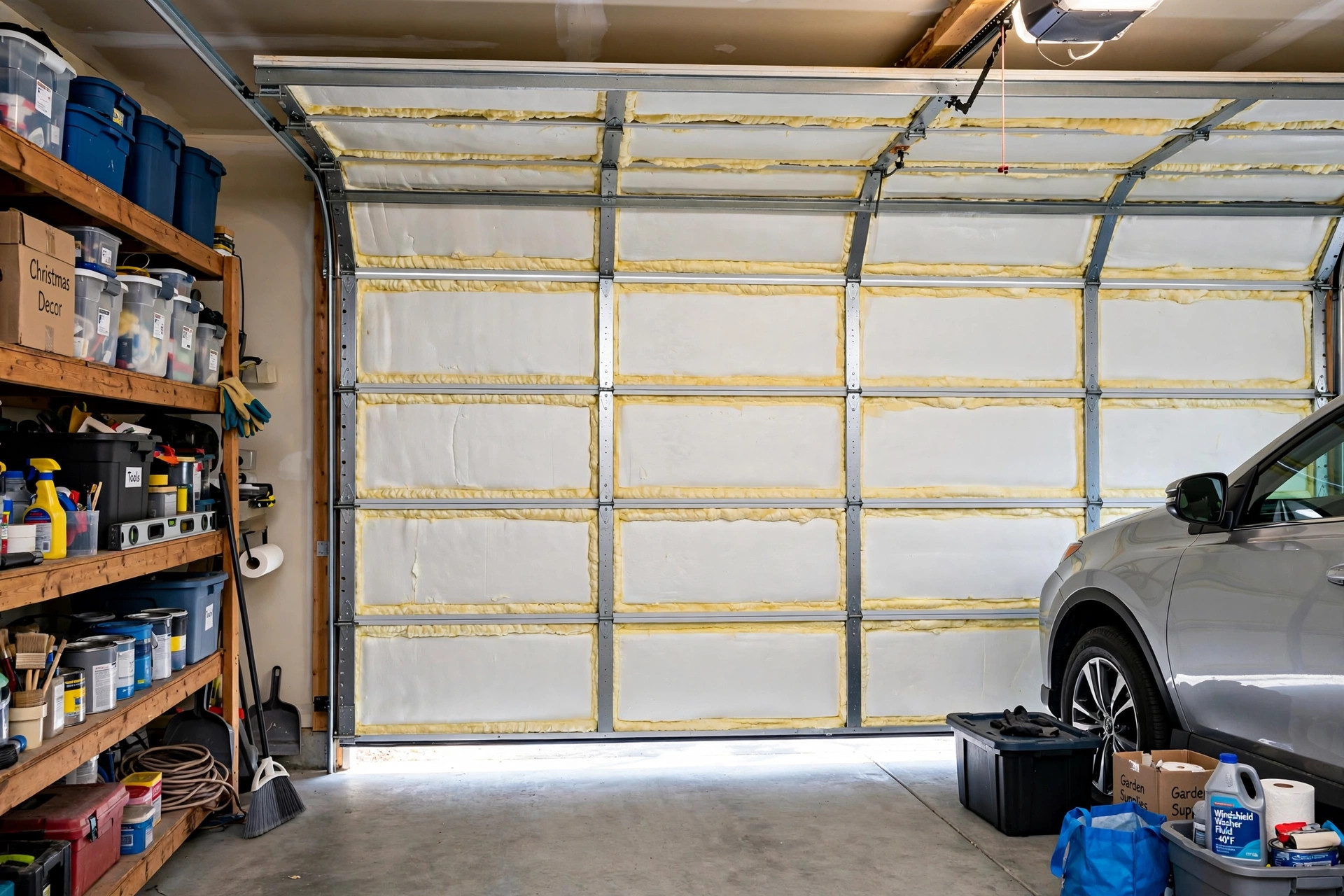

The garage door is the largest moving part of most homes. It is also one of the biggest sources of heat loss. A thin metal door lets cold air in during winter and hot air in during summer. This garage door insulation r value guide usa will explain what R-value means, which rating fits your climate, what types of insulation are sold, and what the work should cost. If you use your garage as a workshop, a gym, or just a place to park the car, the right insulation makes the space far more comfortable and can lower your energy bills.
Why R-Value Matters for Your Garage Door
R-value is a number that tells you how well a material resists heat flow. A higher R-value means better insulation. A lower R-value means heat passes through more easily. Door makers use this rating so buyers can compare products in a clear way.
A garage door with no insulation may have an R-value near zero. A door with basic foam panels may rate around R-6 to R-9. A thick polyurethane door may rate R-16 to R-18. These numbers matter because the garage often sits next to living rooms and bedrooms. Heat that escapes through the door can pull warmth from the whole house.
Insulation also cuts noise. Insulation adds strength to thin steel panels as well, so the door dents less and lasts longer.
How to Read an R-Value Rating: Garage Door Insulation R Value Guide Usa
Manufacturers print the R-value in the door specs. You may also see it on a sticker on the inside of the door. When you compare two doors, make sure the numbers were tested the same way.
The rating on a door covers the panels only. The gaps around the edges, the tracks, and the seal at the bottom can still leak air. Weatherstripping matters almost as much as the rating itself. A high R-value door with torn seals will still feel drafty.
Keep in mind that R-values can be added up. If a door rates R-8 and you add an R-4 insulation kit to the panels, the total rises to about R-12. This rule helps when you plan a do-it-yourself project on an old door.
What R-Value Do You Need?
The right rating depends on your climate and on how you use the garage. The United States spans hot deserts, humid coasts, and freezing northern states. One rating does not fit every home.
Cold Northern Climates
In states with long winters, such as Minnesota, Maine, and Montana, aim for R-12 to R-18. The garage door is often the coldest surface in the house. A strong rating keeps pipes near the garage from freezing and makes the rooms above warmer. If you heat the garage in winter, a high R-value pays for itself faster.
Moderate Climates
In states like Ohio, Virginia, and Oregon, R-8 to R-12 usually works well. Winters are cold but short. Summers are warm but not brutal. A mid-range door with good seals gives comfort without a high price tag.
Hot Southern Climates
In Texas, Florida, and Arizona, heat is the enemy. Aim for R-8 to R-12 as well. Insulation works in both directions. It keeps the hot air out just as well as it keeps warm air in. A garage that shares a wall with the kitchen can pump heat into the house all summer. Insulation plus weatherstripping cuts that heat transfer.
How You Use the Garage
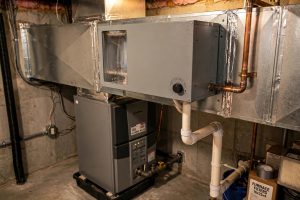
A garage used only for parking needs less insulation than a workshop. If you spend hours in the garage, or if you store items that suffer in the cold, move up one level. If you plan on heating and cooling the garage with a dedicated unit, insulation is even more important. Brands such as Carrier, Trane, Lennox, Rheem, and Goodman make compact units suited to garages. The unit will run less and last longer when the door holds the temperature steady. In hot weather, an evaporative cooler for the garage can add comfort, but insulation still does the heavy lifting.
Types of Garage Door Insulation
Four main types of insulation are used in garage doors. Each has its own R-value range, price, and best use.
Polystyrene Panels
Polystyrene is the white or blue foam board you see in many mid-priced doors. It comes in rigid sheets that sit between the steel layers. Typical ratings run from R-4 to R-9. It is light, cheap, and easy to cut. Many factory doors use this type. It insulates well, but it can leave small air gaps at the edges of the panels.
Polyurethane Foam
Polyurethane foam is sprayed into the door so it fills every corner. It bonds to the steel and adds strength. Ratings run from R-12 to R-18, the highest of any common door insulation. It costs more than polystyrene, but it seals better and quiets the door more. High-end insulated doors almost always use this type.
Reflective Foil Kits
Reflective kits use a thin layer of foil over bubble wrap or foam. They are sold as do-it-yourself kits for old uninsulated doors. They reflect radiant heat and can add R-1 to R-4 to a bare door. They work best in hot climates where the sun beats on the door. They are light and simple to install with adhesive or clips.
Batt Insulation
Batt insulation is the fluffy fiberglass or mineral wool used in walls and attics. Some kits use batts cut to fit garage door panels. It can add R-6 to R-8. Batts must stay dry, because wet fiberglass loses its value. Use this type only in dry garages. A good comparison of blown-in versus batt insulation shows why batts fit some jobs and loose fill fits others.
What to Look For When Choosing
Start with the climate zone of your home. A rating that is right for Florida will fall short in Wisconsin. Check local energy guides for a suggested level. The federal government publishes guidance on insulation levels for homes, and sites like Energy.gov explain how ratings relate to savings.
Next, look at the door itself. Older doors may be too thin to hold thick panels. A new insulated door often gives the best result, because the factory builds the foam into the design. Retrofitting an old door works, but the frame and opener must handle the extra weight. Most modern openers handle insulated doors with no trouble, but very old openers may strain.
Check the seals. New bottom seals, side seals, and a top seal stop air leaks that insulation alone cannot fix.
Consider noise. If you want a quiet door, polyurethane foam wins. Polystyrene panels also help, but they can rattle a little inside loose frames. Reflective kits add almost no sound control.
Think about fire safety. Some foam products give off toxic smoke in a fire. Look for panels with a fire rating or a flame spread label. Building codes in some areas require a thermal barrier over foam in attached garages. Check with your local office before you buy.
Cost and Price Guide
Prices vary by door size, type, and region, but the ranges below give a fair picture.
A new insulated garage door, installed, usually costs between 900 and 2,500 dollars for a standard double door. Polystyrene doors sit at the low end. Polyurethane doors sit at the high end. The labor is often half the total.
A do-it-yourself insulation kit for an existing door costs between 50 and 250 dollars. Reflective kits are the cheapest. Polystyrene panel kits cost a bit more. A two-car garage needs a full kit with enough panels for every section.
Weatherstripping and seals cost another 30 to 100 dollars. These small parts pay for themselves quickly.
Professional installation of insulation on an existing door runs 200 to 600 dollars. The price depends on the door size and the type of insulation. Retailers such as Lowe’s sell kits and can suggest local installers.
Energy savings depend on your climate and your heating system. In cold states, an insulated door can trim heating costs by a noticeable amount over a few years. In mild states, the comfort gain is often the main benefit. The federal Energy Star program offers tips on where insulation gives the best return.
DIY Installation or Hiring a Pro
Many homeowners can insulate a garage door in a weekend. Reflective and polystyrene kits come with cut-to-fit panels and simple fasteners. You will need a utility knife, a tape measure, and a ladder. The job takes two to four hours for a double door.
Read the kit instructions first. Some kits use strong adhesive that is hard to remove. Others use clips that snap into the panel rails. Clips are easier to adjust. Make sure the panels sit flat so they do not rub against the tracks when the door moves.
Call a professional when the door is old, damaged, or very heavy. A pro can check the springs and the opener before adding weight. Garage door springs hold great tension and can injure you if handled wrong. Never adjust springs yourself. This rule is the most important safety point in this guide.
Guides from This Old House and the Family Handyman walk through garage projects step by step. They are good references if you want to do the work yourself.
Care and Upkeep
Insulated doors need little care, but a few habits keep them working well.
Inspect the panels once a year. Look for foam that has pulled away from the steel. Press loose panels back into place or replace them. Check the reflective foil for tears.
Clean the tracks and rollers. Dust and grime make the door run hard. A light spray of silicone lubricant on the rollers helps. Do not use heavy grease, which attracts dirt.
Replace worn seals. Bottom seals crack from sun and use. Side and top seals wear where they rub the door. New seals cost little and take minutes to fit.
Watch the door balance. An insulated door is heavier than a bare door. If the door will not stay halfway open when you lift it by hand, the springs may need adjustment. Call a technician for this job. Spring work is not a do-it-yourself task.
Safety Notes
Garage doors are heavy machines. The springs, cables, and opener all carry risk.
Never touch the torsion springs above the door. They store enough force to cause serious harm. Hire a trained technician for any spring work.
Unplug the opener before you work on the door. This stops a stray signal from moving the door while your hands are in the panels.
Check the auto-reverse feature after you add insulation. The added weight can change how the door closes. Place a roll of paper towels on the floor in the door path. The door should reverse when it touches the roll. If it does not, adjust the opener or call a pro.
If you use foam products, read the fire labels. Some codes require a covering over exposed foam in attached garages.
Frequently Asked Questions
What is the best R-value for a garage door? For most American homes, R-8 to R-12 gives a good balance of price and comfort. Cold northern states benefit from R-12 to R-18. Mild southern areas do fine with R-8. Match the rating to your climate and to how you use the garage.
Does garage door insulation really save money? It can. In cold climates, a well-insulated door cuts heat loss through one of the largest surfaces in the home. Savings grow if the garage is heated or if rooms sit above the garage. In mild climates, the comfort and noise benefits often matter more than the dollar savings.
Can I insulate my existing garage door myself? Yes, in most cases. Do-it-yourself kits with foam panels or reflective foil fit standard sectional doors. The job takes a few hours and basic tools. Do not touch the springs or cables. If the door is old or the springs look worn, have a technician check the door first.
Will insulation make my garage door too heavy for the opener? Most modern openers handle insulated doors without trouble. Older openers may strain, especially with thick polyurethane panels. Check the opener rating and the door balance after the job. If the motor sounds labored, a technician can adjust the springs or suggest a stronger opener.
What R-value does a standard non-insulated door have? A bare steel door has an R-value close to zero. It blocks wind but almost no heat. Even a basic polystyrene panel kit, which adds about R-4 to R-6, makes a large difference on such a door.
Is polyurethane or polystyrene better for garage doors? Polyurethane gives higher R-values, better sealing, and a quieter door, but it costs more. Polystyrene costs less and still insulates well. Choose polyurethane for cold climates and for doors under bedrooms. Choose polystyrene when the budget is tight and the climate is mild.
A Final Word
An insulated garage door is a simple upgrade with real benefits. Pick an R-value that fits your climate. Seal the gaps around the door. Keep the springs and opener in good shape. With those steps, the garage stays more comfortable in every season, the house uses less energy, and the door runs quieter for years. Whether you buy a new door or add a kit to the old one, insulation is one of the smartest home projects you can finish in a single weekend.
References
Carrier. (n.d.). Heating and cooling systems. https://www.carrier.com ENERGY STAR. (n.d.). Energy efficient products. https://www.energystar.gov Family Handyman. (n.d.). DIY home repair and maintenance. https://www.familyhandyman.com Goodman. (n.d.). Heating and cooling equipment. https://www.goodmanmfg.com Lennox. (n.d.). Heating and cooling systems. https://www.lennox.com Lowe’s. (n.d.). Home improvement products. https://www.lowes.com Rheem. (n.d.). Heating, cooling, and water heating. https://www.rheem.com This Old House. (n.d.). Home renovation guidance. https://www.thisoldhouse.com Trane. (n.d.). Heating and air conditioning. https://www.trane.com U.S. Department of Energy. (n.d.). Energy efficiency and renewable energy. https://www.energy.gov
Was this guide helpful?

About Emily Rodriguez
The My Garden US editorial team writes practical, in-depth home and garden guides for American homeowners — tested advice, no fluff.
You May Also Like
Mini Split vs Central AC Cost Comparison USA: What Each System Really Costs
July 9, 2026 0 views
Best Space Heater for Large Room USA: A Simple Guide to Buying Right
July 19, 2026 0 views
Electric Garage Heater 240V Reviews USA: What Buyers Need to Know
September 24, 2026 0 views