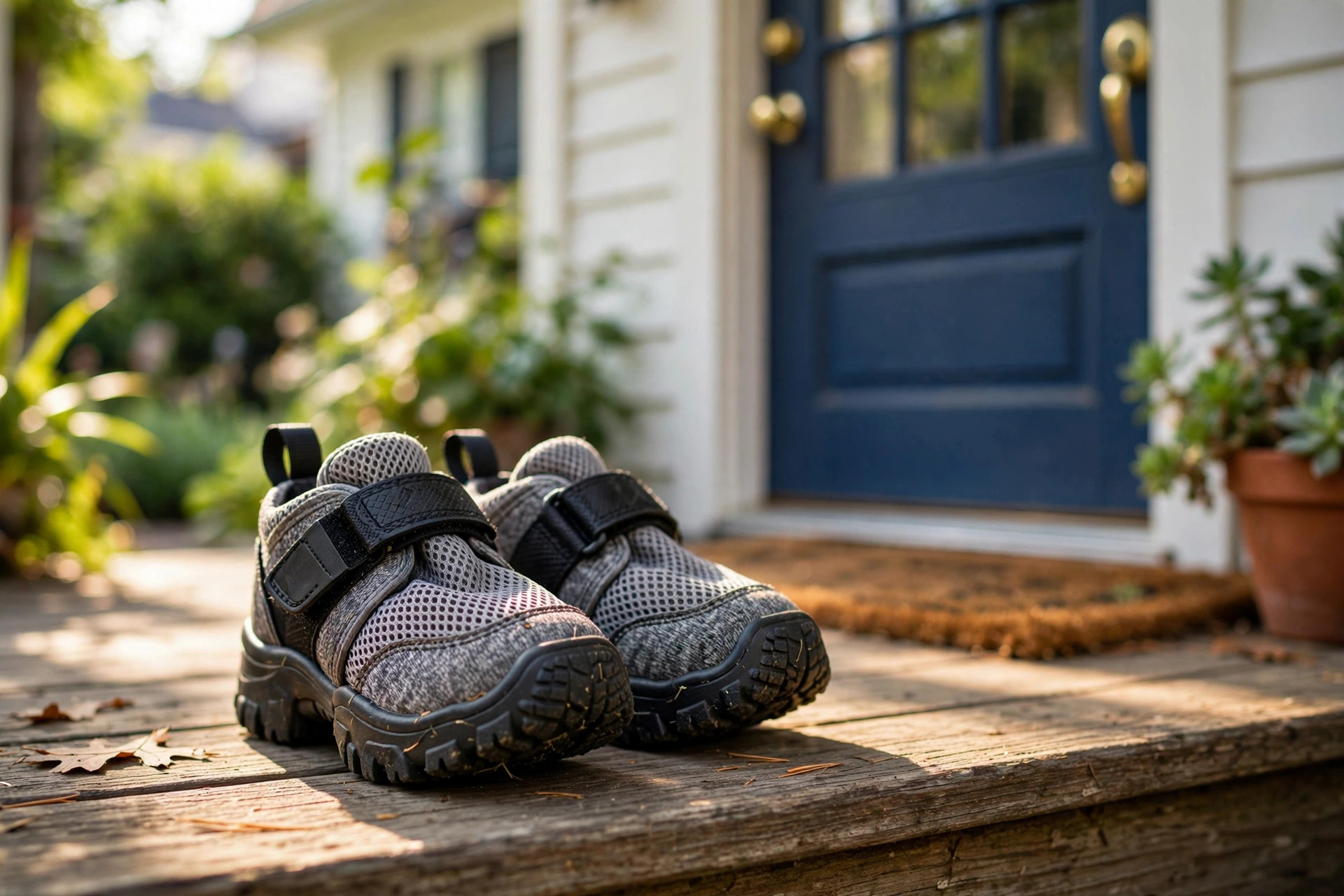

Summer brings long days and long walks. It also brings hot ground. When the air is 85 degrees, the asphalt under your feet can be 135 degrees. A dog that walks on that heat with bare paws can suffer real burns in less than a minute. Dog booties for hot pavement summer walks give your pet a layer of defense. They are not a fashion item. They are a simple tool that keeps a walk safe when the ground is too hot to touch.
Most owners learn this lesson the hard way. The dog pulls ahead. The owner feels fine in thick shoes. The dog starts to limp, or it sits down and refuses to move. By then the pads may already be sore. A good pair of booties stops the problem before it starts. This guide explains why hot pavement is a risk, what to look for in a pair of booties, how to pick the right type, and how to get your dog to accept them.
Why Hot Pavement Is a Danger to Dog Paws
A dog’s paw pads look tough, but they are skin. They have blood vessels close to the surface. Heat passes through them fast. On a summer afternoon, sidewalks, streets, parking lots, and patios all store heat from the sun. Dark asphalt is the worst of all. It can burn skin on contact.
The signs of burned paws are easy to spot once you know them. The dog limps or hops. It licks its feet again and again. It refuses to walk or lies down on the grass. When you look at the pads, they may be red, dark, or torn. Blisters can form. In bad cases the pad peels. A burned pad hurts the dog for days and can get infected.
The seven-second rule helps you judge. Press the back of your hand on the pavement and hold it for seven seconds. If the heat hurts your hand, it will hurt your dog’s paws. Most owners test the ground in the morning and skip the test in the afternoon, when it matters most. Dog booties for hot pavement summer walks take the guesswork out. With booties on, the ground test matters less, because the sole of the bootie takes the heat, not the pad.
Heat also comes from long walks at midday. Dogs cannot sweat through their skin. They cool off through their paws and by panting. When the ground is hot and the air is hot, the dog overheats fast. This is why many vets advise walking early in the morning or after sunset. When you must walk in the heat, protective footwear is one part of a smart plan. Shade, water, and rest are the other parts.
What to Look for When You Choose Dog Booties: Dog Booties for Hot Pavement Summer Walks
Not all booties are made for heat. Some are made for snow. Some are made for rocky trails. The pair you buy for summer should be built for summer. Here are the points that matter most.
Heat-Resistant Soles
The sole is the heart of the bootie. Look for thick rubber soles that are made to resist heat. A thin fabric sole will not help on a hot street. The sole should feel firm and stiff when you press it. Some makers test their soles on hot surfaces and print the rating on the box. That is a good sign.
Breathable Uppers
Rubber soles stop the heat. The upper part of the bootie should let air move. Mesh panels or light woven fabric help the paw breathe. A paw that is sealed in heavy plastic will sweat, and a sweaty paw slides inside the bootie. That leads to blisters of a different kind. Look for booties that mix a tough sole with a light, airy top.
Secure Closure
A bootie that falls off in the middle of the street is useless. Good booties use two closures. A velcro strap around the ankle is standard. The best designs add a second strap above it. The bootie should fit snug but not tight. You should be able to slide one finger under the strap. If the strap is too loose, the bootie twists. If it is too tight, it cuts off blood flow.
Size and Shape
Dogs have wide front paws and narrow rear paws in most breeds. Many bootie sets come in one width for all four feet. That means the rear booties may need extra care with the straps. Measure each paw, front and rear, before you order. Place the paw on paper while the dog stands. Mark the width at the widest point and the length from the back of the pad to the tip of the longest nail. Compare both numbers to the maker’s size chart. When a paw falls between sizes, most trainers advise going up one size and tightening the strap.
Reflective Strips
Summer walks often happen at dawn or dusk to beat the heat. A small reflective strip on each bootie helps drivers see the dog. It is a small feature, but it adds real safety on roads with no sidewalks.
Types of Dog Booties for Summer
Shops sell three main kinds. Each has a use. Pick the kind that fits your dog’s walks.
Rubber-soled trail booties are the most common pick for heat. They have thick bottoms and mesh or canvas tops. They grip well on pavement and stay on during a fast walk. They cost more than the other kinds, but they last the longest.
Thin disposable booties are made from a soft rubber film. They look like small balloons or thin socks. They give some heat defense and they are cheap. They tear fast, and they offer no grip on smooth floors. They suit a short walk to the corner and back.
Paw wax and balm is not a bootie at all. It is a wax that you rub into the pads before a walk. It gives a thin shield against heat and rough ground. It helps on mild days, but it is no match for hot asphalt at noon. Some owners use wax for cool mornings and switch to booties for hot afternoons.
For most families, a set of rubber-soled trail booties is the right buy. They handle the heat of the street and the rough edge of the sidewalk. They also work on the boat dock and the hot sand at the beach.
Cost and Price: What You Should Expect to Pay
Dog booties for hot pavement summer walks sell at a wide range of prices. A set of four thin disposable booties costs only a few dollars. A set of four rubber-soled trail booties from a known maker costs between twenty and fifty dollars. Top-end sets with two straps and reflective trim can reach sixty dollars.
Price follows the sole. Thin soles are cheap to make. Thick heat-tested soles cost more. Do not judge by looks alone. Turn the bootie over and press the sole with your thumb. A sole that bends in half with light pressure will not shield a paw from hot asphalt. A firm sole is worth the extra money.
Buy one set first. Some dogs chew through booties in a week. Some dogs wear the same set all summer. Once you know your dog’s habits, you can buy a spare set or step up to a better brand. Sets of two are sold for rear paws alone, which helps when the front and rear paws need different sizes.
How to Train Your Dog to Wear Booties
Most dogs hate booties at first. They lift their feet high. They chew at the straps. They freeze in place. This is normal. A dog has never felt anything on its paws before. With patience, almost every dog learns to walk in booties within a week.
Step one: let the dog see and sniff. Put the booties on the floor. Let the dog touch them with its nose. Give a small treat. Do this for a day or two.
Step two: fit one bootie. Put a single bootie on one front paw. Fasten the strap snug. Give a treat right away. Let the dog wear it for five minutes inside the house. Take it off. Repeat with a different paw the next time.
Step three: fit all four. Once the dog ignores a single bootie, put all four on. Take the dog into the yard. Most dogs walk funny for the first minute. They prance and shake their feet. This passes. Walk the dog on grass first, where the ground feels soft and safe.
Step four: take a short street walk. Pick a cool morning. Walk one block. Watch the dog’s gait. If a bootie twists, stop and fix the strap. End the walk with praise and a treat. Build up to full walks over several days.
Never force the issue. If the dog panics, take the booties off and try again the next day. Short, calm sessions beat long, hard ones. Puppies often learn faster than old dogs, but old dogs learn too. A dog that wears booties for summer walks will also accept them for winter salt and rough trails, which makes the training pay off twice.
Care and Upkeep
Booties last longer when you care for them. After each walk, shake out the dirt and sand. Wipe the soles with a damp cloth. Let the booties air dry away from direct sun. Heat from the sun can warp rubber soles, so do not leave them baking on the porch.
Check the straps once a week. Velcro wears out with dust and hair. Pick the lint out of the velcro with a stiff brush or an old toothbrush. If a strap no longer holds, replace that bootie rather than risk losing it on a walk.
Wash fabric booties by hand in warm water with mild soap. Rinse well. Do not use the washing machine unless the maker says it is safe. Machine heat and spin can shrink the fit. Keep a spare set on hand. When a sole wears thin, you will see the fabric show through the bottom. That bootie is done. A worn sole gives no heat defense.
Store the set by the door you use for walks. A mesh bag hung on a hook keeps all four together. Many owners lose one bootie and end up buying a whole new set. A simple bag solves that.
Safety Tips for Summer Walks
Booties are one part of a safe summer walk. Keep these rules in mind.
Walk at the cool hours. Early morning and late evening are best. The air is cooler, and the ground has had time to cool or has not yet heated up. Midday walks in July and August are the riskiest.
Bring water. Carry a bottle and a fold-out bowl. Offer water every fifteen minutes. A dog that pants hard with a dry tongue is getting too hot. Cut the walk short.
Watch the tongue and gums. A dog that is too hot pants with a wide, flat tongue. The gums may turn bright red. These are warning signs. Move the dog to shade, offer water, and wet the belly and paws with cool water. Do not use ice water, which can shock the system.
Know the breed risk. Flat-faced breeds like bulldogs and pugs overheat fast. Dark-coated dogs absorb more sun. Old dogs and very young pups tire sooner. Adjust the walk to the dog, not to your plan.
Check the booties during the walk. Stop once or twice and feel inside a bootie. If the paw is very hot or damp, the bootie may be too warm for that day. Let the paw air out in the shade. Some owners carry a spare pair of thin socks to swap in.
Never leave a dog in a parked car. Even with the windows cracked, a car heats to deadly levels in minutes. This rule holds no matter what gear the dog wears.
Pair these habits with the right cooling gear and your dog stays safer all season. A dog cooling mat for hot summer patios usa gives the dog a cool place to rest after the walk. If you hike with a small dog, a pet carrier backpack for small dogs hiking lets you carry the pup when the trail gets too hot. And a best gps dog collar for escape artist dogs adds peace of mind when the dog roams off leash in open parks.
Frequently Asked Questions
Do dogs really need booties in summer?
Many do. If your walks cross asphalt, concrete, or sand on warm days, booties guard against burns. The seven-second hand test tells you when the ground is too hot. If you would not stand on it barefoot, your dog should not stand on it with bare paws.
Will booties make my dog’s feet sweat?
A little. That is why breathable uppers matter. Mesh tops let heat escape. Take the booties off when the walk ends so the paws can air out. Check between the toes for redness after long walks.
Can my dog swim in booties?
Most booties are not made for swimming. They fill with water and drag. Take them off before the dog goes in the water. Put them back on for the hot walk home from the beach.
How long do dog booties last?
A well-made set lasts one to two summers of daily walks. Cheap thin booties may last only a few walks. The sole wears first. When the tread is smooth or the fabric shows through, replace the set.
What if my dog will not keep them on?
Go back to training basics. Fit one bootie at a time with treats. Make sure the size is right, because a loose bootie is the top reason dogs kick them off. Some dogs do better with a snug sock-style bootie than a stiff trail bootie. Try both kinds before you give up.
Are booties safe for puppies?
Yes, with care. Measure puppy paws often, because they grow fast. Use light, flexible booties rather than stiff ones. Keep walks short. A puppy that is still learning to walk on a leash has enough to think about without fighting its footwear.
A Final Word
Hot pavement is one of the quiet risks of summer. It does not look dangerous. It has no warning sign. But it can burn a dog’s paws in under a minute on a bright afternoon. Dog booties for hot pavement summer walks are a small, cheap fix for a real problem. Pick a pair with firm soles and breathable tops, fit them with care, and train your dog with patience and treats. Then walk with a clear mind, knowing your dog’s feet are safe under every step.
For more background, see ASPCA, PetMD, and American Kennel Club. Buying guides are also published by The Spruce Pets and The Home Depot. See also Petco and PetSmart for further detail.
References
American Kennel Club. (n.d.). Dog care and training resources. https://www.akc.org ASPCA. (n.d.). Pet care and animal welfare resources. https://www.aspca.org Chewy. (n.d.). Pet supplies. https://www.chewy.com Petco. (n.d.). Pet supplies and services. https://www.petco.com PetMD. (n.d.). Pet health information. https://www.petmd.com PetSmart. (n.d.). Pet supplies and services. https://www.petsmart.com The Home Depot. (n.d.). Home improvement products. https://www.homedepot.com The Spruce Pets. (n.d.). Pet care guides and product reviews. https://www.thesprucepets.com
Was this guide helpful?

About Sarah Mitchell
The My Garden US editorial team writes practical, in-depth home and garden guides for American homeowners — tested advice, no fluff.
You May Also Like

The Best Cat Tree for Maine Coon Large Breed Cats
September 27, 2026 0 views
Dog Food Puzzle Toys for Boredom Relief in the USA: A Full Guide
April 23, 2026 0 views
Best Pet Camera With Night Vision Audio: A Practical Guide for Pet Owners
September 17, 2026 0 views