
Introduction
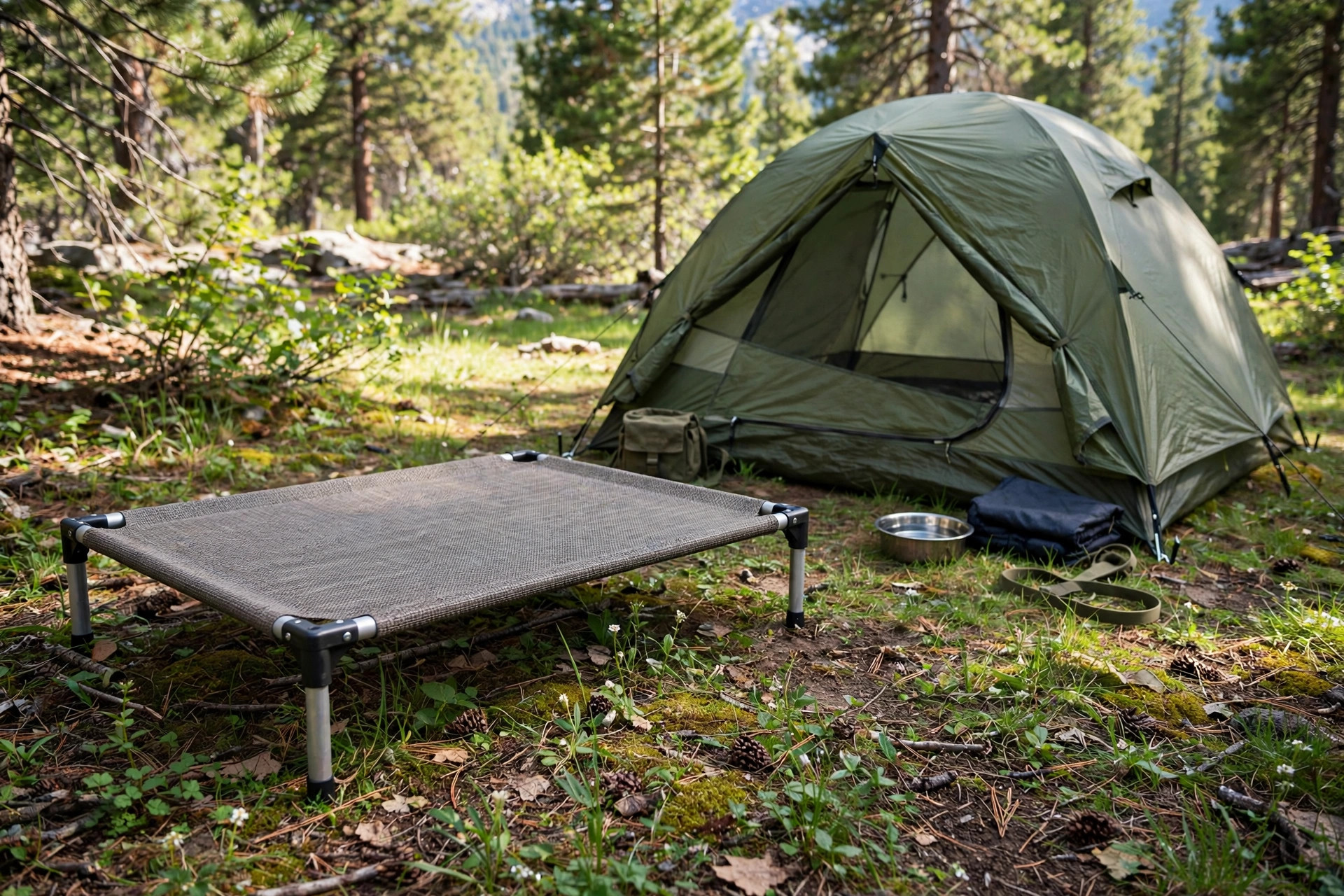
An outdoor dog bed raised cot for camping is a simple piece of gear. It is a raised bed with a tight fabric top. The frame holds the dog a few inches above the ground. Many campers bring one so the dog has a dry place to rest at the camp.
A dog that sleeps on bare ground gets cold fast. The ground steals body heat. A damp tent floor can chill a dog in one night. A raised cot stops that problem. Air moves under the fabric. The dog stays dry and cool.
A cot is also easy to carry. Most fold flat. They weigh far less than a stuffed bed. They fit in the back of a car or a truck with the rest of the camp gear.
This guide covers why a cot matters, what to look for, and how to keep it in good shape. It also covers cost, safety, and common questions. Every dog deserves a clean, dry place to rest at the end of a long day on the trail.
Why a Raised Cot Matters at Camp: Outdoor Dog Bed Raised Cot for Camping
A dog uses energy on a camping trip. It walks the trails. It swims in the lake. It greets the neighbors. By nightfall the dog is tired. A good bed helps it rest well.
Bare dirt is a poor bed. It holds cold water. It can hide sharp stones and thorns. An outdoor dog bed raised cot for camping solves these problems with height. The fabric top keeps the dog off the dirt. The frame keeps the shape steady all night.
Air flow is the main gain. A flat foam pad traps heat under the dog. A raised cot lets air pass below. This keeps the dog cool in warm weather. The American Kennel Club notes that dogs can overheat fast in summer. A cot that breathes can help on hot days.
Clean bedding is another gain. Dirt, pine needles, and sand fall through the mesh or brush off the fabric. The dog lies on a clean top. At home, many owners wipe the fabric with a damp cloth after each trip. This keeps odors away.
A cot also trains the dog where to rest. Dogs learn fast. After two or three trips, the dog will walk to the cot when the camp is set up. The dog learns that the cot is its own spot. This keeps the dog out of the tent and off the camp chairs.
What to Look for When You Choose One
Frame strength
The frame must hold the dog with ease. Check the weight limit on the box. Buy a cot rated well above the dog’s weight. A 60-pound dog should use a cot rated for 100 pounds or more. The extra margin keeps the frame from bowing.
Aluminum and steel are the common frame metals. Aluminum is light. It resists rust. Steel is heavier but strong. Either works for car camping. For a long hike to camp, lighter is better.
Fabric type
The top fabric takes the wear. Look for a tight weave. Canvas and polyester are common. Some cots use a mesh center that vents heat. Mesh is best for summer. Canvas is best for cool nights.
The fabric should clean with a hose or a cloth. Stains should not sink in. Pet supply shops like Chewy sell replacement covers for many popular cots. A replaceable cover makes the cot last longer.
Size
The dog should fit the cot without hanging over the edge. Measure the dog from nose to tail while it lies down. Add four inches to that length. That is the right cot length.
Too small a cot will sag in the middle. Too large a cot is hard to carry. Size labels run small, medium, large, and extra large. Check the chart on the box before you buy.
Weight and pack size
A cot for car camping can weigh five or six pounds. That is fine. A cot for backpacking should weigh less than three pounds. Folded size matters too. A long roll is easy to strap to a pack.
Some cots fold into a flat rectangle. Others roll into a tube. Flat packs slide behind a truck seat. Rolls strap to the outside of a pack. Outdoor stores such as REI list packed size in the specs.
Feet and ground grip
The feet touch the ground. Wide feet spread the weight. They keep the cot from sinking in soft soil. Small feet can sink after rain. Some cots have rubber caps. The caps protect a tent floor and keep the cot from sliding.
If you plan to use the cot inside the tent, rubber feet are a must. Bare metal feet can poke the tent floor. That repair is costly.
Types and Options
There are three main types of raised dog beds for camp use.
Standard raised cots. These have a frame with four legs and a tight fabric top. They are the most common. They work well for most dogs. Prices are fair. They fold flat for the car.
Mesh center cots. These look like a standard cot but use a breathable mesh middle. Air moves up through the mesh. The dog stays cool. These suit hot climates and summer trips. The mesh can snag on long nails, so keep nails trimmed.
Bolster cots. These have a raised edge on one or more sides. The edge works like a pillow. Dogs that like to lean will prefer this type. Bolster cots weigh more. They also take more space in the car.
A few cots come with a shade canopy. The canopy blocks sun during the day. It folds with the cot. This option suits desert camps with little shade.
Travel guides at The Spruce Pets compare many of these styles. Reading reviews before a trip is a wise move.
Cost and Price
Prices for an outdoor dog bed raised cot for camping vary with size and brand.
– Small cots: 25 to 45 dollars – Medium cots: 40 to 70 dollars – Large cots: 60 to 100 dollars – Extra large cots: 90 to 140 dollars
Mesh center cots cost a little more than plain fabric cots. A cot with a shade canopy can cost 120 dollars or more. Heavy steel frames cost less than light aluminum frames.
These prices are a fair range for the current market. Big pet stores such as Petco and PetSmart carry many models.
Buy the best cot you can afford. A cheap frame bends under a heavy dog. A good frame lasts for years of trips. Replacement covers cost 15 to 30 dollars. They can extend the life of a strong frame.
Care and Upkeep
A cot needs little care. Brush off dirt after each trip. Hose it down when it is dirty. Let it dry in the sun before you store it. A damp cot can grow mold in a storage bag.
Check the fabric before each trip. Look for frayed edges and thin spots. A torn cover can drop the dog to the frame. Replace the cover when it shows wear. Most brands sell spares.
Check the frame joints too. Bolts can loosen on rough roads. Tighten them with a wrench at the start of the season. Oil the hinges once a year if the cot has folding joints.
Store the cot dry and flat. Do not leave it out in the rain for weeks. The sun will fade the fabric over time. A garage or a shed is a fine home for it.
Veterinary sites like PetMD remind owners that clean bedding helps prevent skin problems. A cot that is brushed and washed stays kind to the skin.
Safety at Camp
A cot is safe when it is used with care. Still, follow these rules.
Test the cot at home first. Let the dog try it in the yard before the trip. Some dogs step on the fabric and feel unsure. A few treats on the cot will build trust. The dog should step on and off with ease.
Keep the cot away from the fire. A campfire is a real risk. Fabric and canvas can burn. Place the cot upwind of the fire ring. Never leave the dog tied to the cot near an open flame.
Do not use a cot as a tie-out. Tie the leash to a tree or a stake. The cot can tip if a strong dog lunges. A tipped cot can scare the dog.
Watch the sun. Metal frames get hot in direct sun. Move the cot into the shade at midday. A wet towel on the fabric can cool it down.
Check for bugs. Ticks and fleas wait in tall grass. A raised cot keeps the dog off the grass while it rests. Still, check the dog each night. The ASPCA lists tick checks as a key part of pet care.
The U.S. Consumer Product Safety Commission tracks recalls of pet products. A quick check of its site before a big purchase is a smart habit.
Frequently Asked Questions
Can a puppy use a raised cot for camping?
Yes, with care. A young puppy can slip between the bars of some frames. Pick a cot with a tight fabric and small gaps. Watch the puppy until it learns to step on and off. Most puppies learn in one or two days.
Is a cot warm enough for cold nights?
A cot keeps the dog off the cold ground, but air moves under it. On a cold night, add a blanket on top. A foam pad on the fabric adds warmth. In deep cold, bring the dog inside the tent. A cot is a warm-weather tool first.
How do I get my dog to use the cot?
Start at home. Place treats on the fabric. Let the dog sniff it. Praise each step the dog takes onto the cot. Feed the dog on the cot for a few days. Soon the dog will see the cot as its place. Bring the cot on short day trips first, then on overnight camps.
Should I buy the same cot I use at home?
Many owners keep one cot for the yard and one for the camp. A camp cot takes abuse. It gets dirty and scratched. A home cot stays clean. Two cots also help the dog feel at home. The dog knows the shape and smell. If you only want one, pick a tough model that washes well. Home stores like The Home Depot stock cots that work for both yard and camp.
What if my dog chews the fabric?
Chewing is common with young dogs. Pick a cot with a thick canvas top. Avoid thin mesh until the chewing stops. Give the dog a chew toy on the cot. A tired dog chews less. Long walks during the day will help.
Does a cot help an older dog?
Yes. A cot is easy to step onto. The dog does not sink into a soft pad. The firm top supports the joints. For an older dog with stiff legs, pair the cot with an orthopedic bed for a senior large dog at home. The cot is for camp. The thick bed is for the house.
A Final Word
An outdoor dog bed raised cot for camping is one of the best small buys for a dog owner who loves the outdoors. It costs little. It weighs little. It keeps the dog dry, clean, and cool. The dog will learn to love it as its own spot at camp.
Pick a strong frame. Pick the right size. Clean it after each trip. Store it dry. Follow the safety rules above. Do these things, and the cot will serve the dog for many seasons.
A camping trip is better when the dog rests well. The owner sleeps better too. A calm dog at camp makes the whole trip calm. That is the true value of a simple raised cot.
For more camp comfort ideas, see a ramp that helps a dog climb into an SUV for the drive to camp, and an outdoor kennel for large breeds for safe yard time at home.
References
American Kennel Club. (n.d.). Dog care and training resources. https://www.akc.org ASPCA. (n.d.). Pet care and animal welfare resources. https://www.aspca.org Chewy. (n.d.). Pet supplies. https://www.chewy.com Petco. (n.d.). Pet supplies and services. https://www.petco.com PetMD. (n.d.). Pet health information. https://www.petmd.com PetSmart. (n.d.). Pet supplies and services. https://www.petsmart.com REI. (n.d.). Outdoor gear. https://www.rei.com The Home Depot. (n.d.). Home improvement products. https://www.homedepot.com The Spruce Pets. (n.d.). Pet care guides and product reviews. https://www.thesprucepets.com U.S. Consumer Product Safety Commission. (n.d.). Product safety information. https://www.cpsc.gov
Was this guide helpful?

About Emily Rodriguez
The My Garden US editorial team writes practical, in-depth home and garden guides for American homeowners — tested advice, no fluff.
You May Also Like

Best Pet Safe Weed Killer for Lawns Dogs Can Roam Without Worry
January 19, 2026 0 views
Best Pet Gate for Hallway with Door Opening: A Buyer’s Guide
July 29, 2026 0 views
Indoor Dog Potty for Apartment Living Training: A Simple Guide
May 29, 2026 0 views