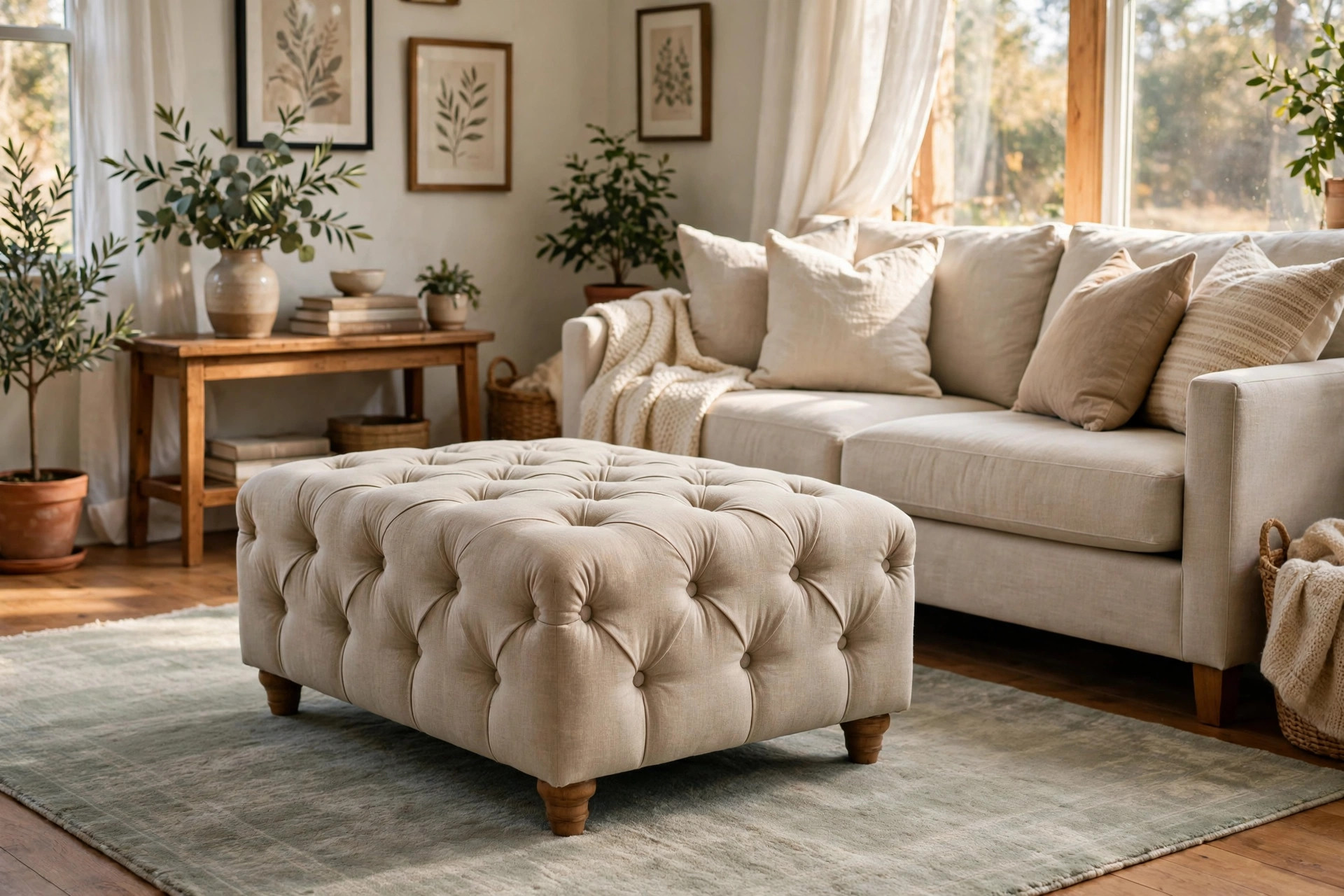

An ottoman is one of the most useful pieces in a living room. It can be a footrest, a spare seat, or a coffee table. This living room ottomans reviews buying guide usa will help you sort through the many choices sold in American stores today. The guide covers why an ottoman matters, what to look for, the main types, typical prices, care tips, and safety notes. It ends with answers to common questions. By the time you finish reading, you should know which ottoman fits your room, your budget, and your daily life.
Why a Living Room Ottoman Matters
A living room is the heart of the home. Family and friends gather there each day. An ottoman adds comfort to that space in a quiet way. It gives tired legs a soft place to rest at the end of a long day. It also gives small rooms a seat that can be moved with one hand.
A good ottoman serves three jobs. First, it is a footstool that pairs with a sofa or a chair. Second, it is an extra seat when guests arrive. Third, it can act as a low table for a tray of books or a board game. Few other pieces of furniture do this much work for this little money.
Style matters too. An ottoman can tie a room together. A bold color can wake up a dull corner. A soft neutral tone can calm a busy room. Because ottomans are small, you can change the look of the whole room by changing this one piece. That makes it a smart buy for people who like to refresh their decor without buying all new furniture.
Home editors often call the ottoman a secret tool of interior design. Guides on Apartment Therapy show how small pieces like ottomans can change the feel of a room. Photo galleries on Houzz show real American homes where a single ottoman finishes the seating area. These sources agree on one point. The right ottoman makes a living room look finished.
What to Look for When You Buy an Ottoman: Living Room Ottomans Reviews Buying Guide Usa
Shopping for an ottoman is easier when you know what counts. Reviews of ottomans in the United States keep coming back to the same points. Size, fabric, fill, and build quality decide how happy you will be.
Size and Shape
Measure your room before you shop. A good rule is simple. The ottoman should be about the same height as your sofa seat. That way your feet rest level when you put them up. Most sofa seats sit between 16 and 19 inches high. Most ottomans sold in the USA sit in that same range.
Length matters too. A wide ottoman can sit in front of a long sofa. A small cube ottoman fits beside a single chair. Leave at least 18 inches of walk space around the piece. In a small room, one ottoman is often enough. In a large room, two matching ottomans can frame a coffee table or sit side by side.
Shape changes the feel of the room. Round ottomans soften a room full of square corners. Square and rectangle ottomans match modern furniture. Long bench style ottomans work well at the foot of a sofa. Think about the shapes you already own, then pick a shape that fits in.
Fabric and Fill
The fabric of an ottoman sets its look and its life span. Reviews of living room ottomans often praise performance fabric. This is a tough woven cloth that resists stains and fading. It suits homes with children or pets. Linen blends look soft and relaxed but wrinkle fast. Velvet looks rich and catches the light, though it needs more care. Leather and faux leather wipe clean with a damp cloth, but they can feel cold in winter.
The fill inside decides comfort. Foam fill holds its shape well and feels firm. Down or feather fill feels soft and sinks under your weight. A blend of foam and down gives both support and softness. Reviews on Wayfair often mention that a solid wood base under the cushion keeps the ottoman from sagging. Check the frame as well. Kiln dried hardwood frames last far longer than cheap particle board.
Weight is a small but real point. A light ottoman moves with ease when guests come. A heavy one stays put. Pick based on how you will use the piece each day.
Build Quality and Details
Look at the legs or base. Solid wood legs age well. Metal legs suit a modern look. Some ottomans sit flat on the floor with no legs at all. That low profile works in rooms with low ceilings.
Check the stitching. Straight, even seams show care in the making. Tufting with buttons adds a classic look, though dust can gather in the folds. Zippers on the cover let you remove and wash it. That is a strong plus for busy homes.
Read the three star reviews first. They often give the most honest picture, with both good and bad points.
Types of Living Room Ottomans
Ottomans come in several main types. Each type serves a different need. Knowing the types will make any buying guide more useful.
Storage ottomans are the most popular type in the United States. The top lifts or hinges open to show hidden space inside. You can store blankets, remotes, or toys there. They are a smart pick for small rooms. Many reviews praise them as the best mix of comfort and function. For entryways, a similar idea works well; see our guide to entryway storage benches for more storage ideas.
Pouf ottomans are soft, round, and often woven by hand. They have no hard frame. They are light and easy to move. They suit casual rooms and boho styles. They do not hold as much weight as framed ottomans, so check the weight limit before you buy.
Coffee table ottomans are large and flat on top. You can set a tray on them and use them as a table. Many come with a cushion top that can be flipped to show a hard wood or metal surface. This two in one design is a favorite in family rooms.
Bench ottomans are long and narrow. They work at the foot of a sofa or under a window. They give extra seating for two people. Some have storage inside, like a chest.
Recliner ottomans match a single chair or a recliner. They are often sold with the chair as a set. The top may tilt to match the angle of your legs. They are the best pick for a reading corner.
Ottoman sets include two or three small cube ottomans that tuck under a larger table. Pull them out when you need seats. Push them back when you do not. They save floor space in a clever way.
Product pages at West Elm, Crate and Barrel, and CB2 show these types with clear photos and dimensions. Browsing those pages side by side is a good way to compare styles before you read full reviews.
Cost and Price in the United States
Ottoman prices in the USA span a wide range. Simple fabric cube ottomans often cost between 40 and 120 dollars. Mid range storage ottomans in performance fabric often cost between 150 and 400 dollars. Large leather ottomans from design brands can cost 500 dollars or more.
Price tracks with three things. The frame material is the first. Solid wood frames cost more than particle board. The fabric is the second. Real leather and thick performance weaves cost more than basic cotton. The brand is the third. Designer names charge more than store brands.
Watch for sales. Holiday weekends bring price cuts at most large stores. Online deals can cut the price by a third. Our guide to living room TV stands shows the same sale pattern across living room furniture. Sign up for store emails if you can wait. You may catch a sale that saves you real money.
Shipping can add to the cost. Large ottomans may carry a delivery fee. Some stores offer free shipping over a set amount. Returns also matter. A store with free returns lets you try the ottoman in your own room. That is worth more than a small discount.
Set a budget before you shop. A 200 dollar budget will buy a solid mid range ottoman with good reviews. A 500 dollar budget opens the door to leather or designer pieces. Below 100 dollars, focus on simple cubes from big box stores. They can still serve well if you pick sturdy ones.
Care and Upkeep
An ottoman will last many years with simple care. Vacuum the fabric once a week with a soft brush head. Turn the cushion often if the design allows it. This spreads the wear.
Treat spills at once. Blot, do not rub. Rubbing pushes the stain deeper. For water safe fabrics, a damp cloth with mild soap works well. For velvet or delicate fabrics, follow the tag. Many tags use codes. W means water based cleaners are safe. S means solvent cleaners only. WS means both are safe. X means vacuum only.
Leather needs a damp cloth and a leather conditioner once or twice a year. Keep leather away from direct sun. Sun dries and cracks the hide over time. The same rule holds for fabric. Bright sun fades color.
Storage ottomans need care inside as well. Empty the storage space twice a year. Wipe it out. Check the hinges. A drop of oil on a squeaky hinge keeps it smooth. If the cover comes off, wash it on a gentle cycle or take it to a dry cleaner, as the tag says.
Pets bring extra wear. A washable throw over the ottoman protects it from claws and hair. Pick a throw that matches your room. It doubles as a style accent.
Care guides on HGTV offer simple steps for cleaning common furniture fabrics. Following those steps will keep your ottoman looking new for years.
Safety
Ottomans are safe pieces of furniture, but a few points deserve care. Heavy ottomans can tip if a child climbs on the edge. Place storage ottomans against a wall or in a low traffic spot if small children use the room. Teach children not to stand on them.
Storage ottomans with heavy lids can pinch small fingers. Look for soft close hinges. These lower the lid slowly and gently. If your ottoman lacks them, keep the lid closed when children are near.
Keep ottomans out of main walk paths. A low piece in a dark hall can trip a guest at night. A night light in the living room helps. Round corners are kinder to shins than sharp square edges.
Some ottomans have legs that screw in. Check them twice a year. Tighten any that feel loose. A wobbly ottoman is a fall risk. If the legs will not stay tight, replace them or retire the piece.
Frequently Asked Questions
What size ottoman should I buy for my sofa? Match the seat height of your sofa. Most sofa seats sit 16 to 19 inches high. The ottoman should sit in that same range. For length, a wide ottoman works with a long sofa. A small cube works with a single chair. Leave 18 inches of walk space around it.
Are storage ottomans worth the extra cost? In most homes, yes. The hidden space holds blankets, toys, and remotes. That keeps the living room tidy. Reviews in the USA rate storage ottomans among the most loved furniture buys. The extra cost is often 50 to 100 dollars over a plain ottoman. Most buyers say the storage is worth it.
Which fabric is best for a home with pets? Performance fabric is the best pick. It resists stains, claws, and hair. Leather is a close second because hair wipes off with ease. Avoid loose weaves and light colors. They show hair and pull marks fast. A removable washable cover is a strong plus.
Can an ottoman replace a coffee table? Yes, if you pick the right one. Choose a large flat topped ottoman. Add a sturdy tray on top. The tray holds drinks and keeps them steady. Many buyers prefer this setup in homes with small children. There are no hard corners to bump into.
How do I style an ottoman with my current sofa? Pick a fabric that echoes a color already in the room. A pillow, a rug, or a curtain can share that color. If your sofa is plain, choose an ottoman with a bold pattern. If your sofa is bold, choose a calm solid tone. Guides on Article show many real rooms where the ottoman links the sofa to the rug. The same trick works with other pieces, like sofa console tables.
Where can I read trusted ottoman reviews in the USA? Start with large stores that show verified buyer reviews. Wayfair, IKEA, and Crate and Barrel all publish reviews with photos from real homes. Read the middle ratings for the most balanced view. Independent guides on Apartment Therapy add expert takes on style and quality.
A Short Final Word
The best ottoman is the one that fits your room, your habits, and your budget. Measure first. Pick a fabric that suits your daily life. Read real reviews before you buy. A well chosen ottoman will serve your living room for many years as a footrest, a seat, and a table in one. This living room ottomans reviews buying guide usa has given you the facts you need. The next step is yours. Pick the piece that feels right and enjoy the comfort it brings.
References
Apartment Therapy. (n.d.). Home design ideas and inspiration. https://www.apartmenttherapy.com Article. (n.d.). Modern furniture. https://www.article.com CB2. (n.d.). Modern furniture and decor. https://www.cb2.com Crate and Barrel. (n.d.). Furniture and home decor. https://www.crateandbarrel.com HGTV. (n.d.). Home and garden ideas. https://www.hgtv.com Houzz. (n.d.). Home design and remodeling. https://www.houzz.com IKEA. (n.d.). Home furnishings. https://www.ikea.com Wayfair. (n.d.). Furniture and home goods. https://www.wayfair.com West Elm. (n.d.). Modern furniture and home decor. https://www.westelm.com
Was this guide helpful?

About David Wilson
The My Garden US editorial team writes practical, in-depth home and garden guides for American homeowners — tested advice, no fluff.
You May Also Like

Living Room Floor Lamps USA Online Deals: A Simple Guide
September 27, 2026 0 views
Mid Century Chairs for Texas Homes USA: A Plain Guide
May 18, 2026 0 views
Velvet Living Sofas for Sale USA: A Complete Buying Guide
January 23, 2026 0 views