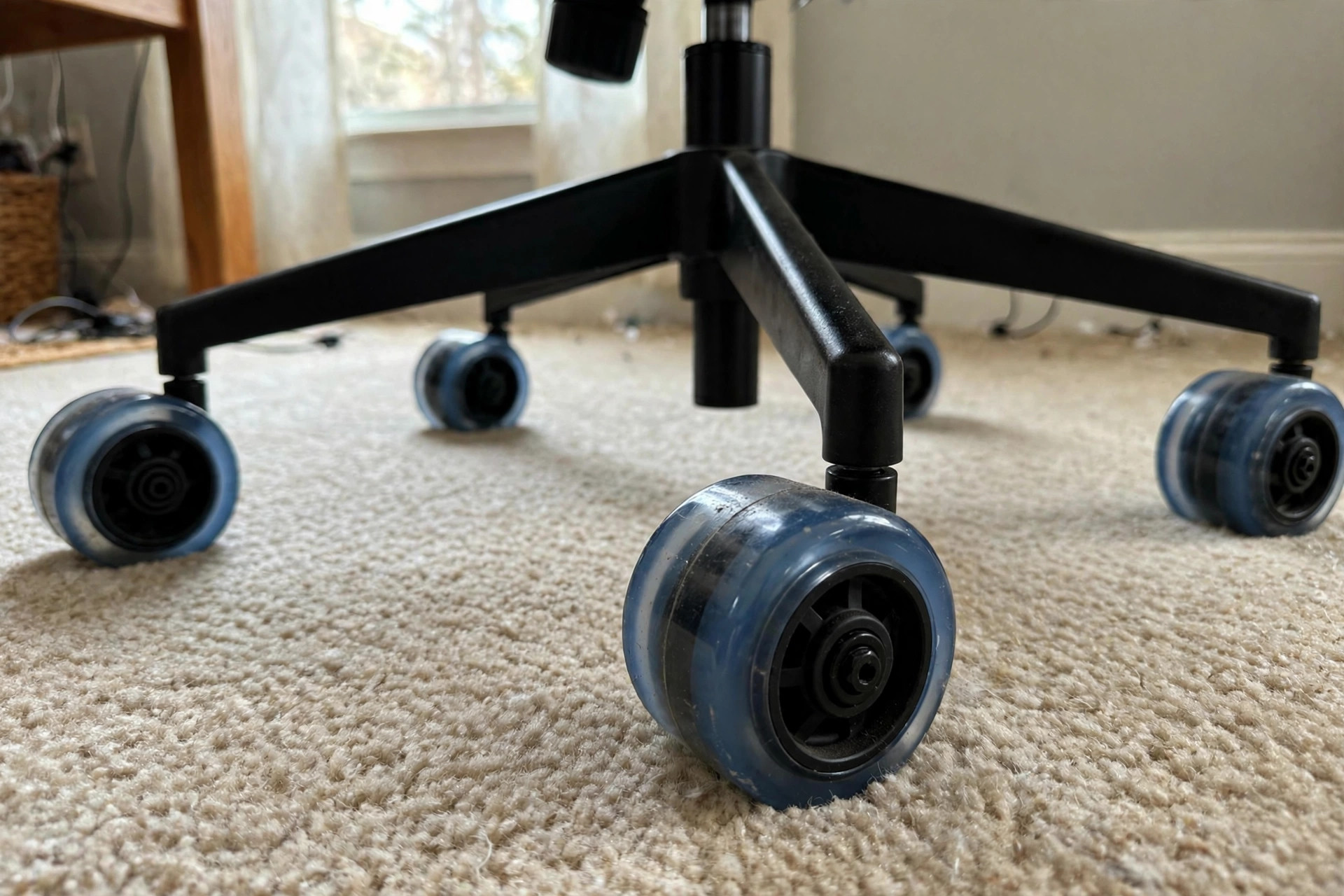

A home office chair can feel like a fine piece of furniture on a hard floor. Move it onto carpet, and the same chair may turn stiff and slow. The wheels sink into the pile. Each push takes effort. Over time, the floor gets worn tracks and the chair gets harder to use. The good news is that you do not need a new chair. Home office chair replacement wheels for carpet solve the problem at its root. They replace the small, hard casters that came with your chair with larger, softer wheels made to roll on carpet. This guide explains why the change matters, what to look for, which types exist, what they cost, and how to fit them yourself in minutes.
Why Chair Wheels Matter on Carpet
Most office chairs ship with small, hard plastic wheels. These are twin-wheel casters built for hard floors like wood or tile. They work fine on a flat surface. On carpet, they fail. The small contact point digs into the fibers. The pile wraps around the axle. The chair stops rolling and starts dragging.
A dragging chair causes three problems. First, it strains your body. You push harder with your legs to reach the printer or the file drawer. That repeated strain can tire your back and hips during a long workday. Second, it wears out the carpet. The hard wheels press deep tracks into the pile, and those tracks can become permanent. Third, it wears out the chair. The bearings take extra load, and the casters crack or lock up much sooner than they should.
Home office chair replacement wheels for carpet fix all three issues. They are wider, taller, and made of softer material. They spread the weight of the chair over more of the carpet. They roll on top of the pile instead of digging in. Many buyers say the difference feels like getting a new chair.
What to Look for When You Choose New Wheels: Home Office Chair Replacement Wheels for Carpet
Wheel Diameter
Diameter is the most important measure. Standard chair casters are about 50 millimeters across, or two inches. Replacement wheels for carpet run from 75 to 100 millimeters, or three to four inches. The larger circle lifts the chair higher above the carpet. It also crosses over carpet fibers instead of catching on them. For thick pile, choose wheels of at least 75 millimeters. For very deep carpet, go for 100 millimeters.
Stem Size
The stem is the small metal pin that fits into the chair base. Almost all office chairs in the United States use an 11-millimeter grip-ring stem. This is the standard size. Before you buy, pull one caster from your chair and measure the stem. A 7-millimeter ruler check takes seconds. If the stem is 11 millimeters, any standard replacement wheel will fit. A few chairs use a threaded stem, which screws in rather than pushing in. Those are rare in home offices, but you should check.
Load Capacity
Each caster carries part of the weight of the chair and the person in it. Cheap wheels may list a low limit, such as 50 pounds per caster. Five casters at 50 pounds each give a total of 250 pounds, which is enough for many people. Heavier users should look for wheels rated at 80 to 100 pounds each. The product page from a trusted seller such as Wayfair or IKEA usually lists the load rating in the specifications.
Bearing Type
Good wheels use sealed ball bearings. The bearings sit inside the wheel and let it spin with little friction. Open bearings can clog with carpet fibers and dust. Sealed bearings stay clean and keep rolling smooth for years. This is one detail where a slightly higher price pays off.
Material
The wheel surface should be soft enough to grip carpet but tough enough to last. Polyurethane is the most common choice. It rolls quietly and does not mark the floor. Silicone-coated wheels are even softer and glide with very little noise. Avoid wheels with hard nylon surfaces for carpet work. Nylon is fine on hard floors, but on carpet it digs in just like the original casters.
Types of Replacement Wheels for Carpet
Rollerblade-Style Wheels
These are the most popular choice. They look like the wheels on inline skates: a single wide wheel with a colored hub. The wide face spreads the load and rolls over carpet pile with ease. They come in 75-millimeter and 100-millimeter sizes. Most are polyurethane with sealed bearings. They fit the standard 11-millimeter stem.
Twin-Wheel Casters
Traditional twin-wheel casters have two narrow wheels side by side on one stem. Carpet-rated versions use softer compounds and larger wheels than the stock casters that came with your chair. They turn a little more freely in tight spaces than rollerblade-style wheels. They are a good pick if you like the classic caster look and your carpet is low or medium pile.
Ball Casters
A ball caster is a single round ball held in a cup. It rolls in every direction at once, so the chair glides no matter which way you push. Ball casters are quiet and gentle on carpet. The trade-off is stability. A chair on ball casters can feel loose to some people, and the ball can collect carpet lint. Clean the cup once in a while to keep them rolling.
Brake and Locking Wheels
Some replacement wheels include a small brake lever. Step on the lever and the wheel locks in place. This is useful if your desk sits on a slope, or if your chair tends to drift while you type. Locking wheels cost a little more. You can mix them with plain wheels: put brakes on the two front casters only, and leave the back three free.
Cost and Price
Home office chair replacement wheels for carpet are a small purchase. A set of five basic wheels starts at around fifteen dollars. Mid-range sets with sealed bearings and polyurethane tires run from twenty-five to forty dollars. Premium sets from office furniture brands can reach sixty to eighty dollars.
Price follows quality in three ways. First, bearings. Sealed steel bearings add cost but last much longer. Second, tire material. Good polyurethane is more expensive than plain plastic. Third, brand and warranty. Names you know, such as Herman Miller or Steelcase, charge more but stand behind the part.
Compare the price with the cost of a new chair. Even a modest ergonomic mesh office chair under 200 dollars costs several times more than a set of wheels. If your chair is otherwise sound, new wheels are the clear value. Many office supply stores, including Staples and Office Depot, stock replacement casters both online and on the shelf.
How to Install the New Wheels
Fitting home office chair replacement wheels for carpet is a simple job. Most people finish in under ten minutes. You need no tools, though a flat-head screwdriver can help.
1. Tip the chair over or lay it on its side so the base faces you. 2. Grip one old caster and pull it straight out of the base. It may need a firm tug. If it resists, work a flat-head screwdriver under the caster body and lever gently. 3. Check the stem of the old caster against the new one. They should match in length and diameter. 4. Push the new wheel’s stem into the empty socket until you feel it click or seat firmly. 5. Repeat for the other four casters. 6. Set the chair upright and roll it back and forth to check that all five wheels turn freely.
One caution: do not hammer the stem. A hard blow can crack the socket in the chair base. If a stem will not seat, check that no dirt or a broken piece of the old caster is stuck in the hole. Clean it out and try again. Review sites such as Wirecutter and PCMag note that most fit problems come from debris in the socket, not from wrong sizing.
Care and Upkeep
Replacement wheels last longer with light care. Hair, thread, and carpet fibers wrap around the axle over time. Once a month, flip the chair and pick off what you can see. A pair of tweezers works well for tangled hair. This small habit keeps the bearings free and the wheels rolling straight.
Wipe the wheels with a damp cloth every few months. Dust and grit act like sandpaper on the tire surface. Let them dry before you set the chair down. Do not oil sealed bearings. The seals keep the grease inside, and adding oil on the outside only attracts dirt.
Check the carpet itself now and then. Even good wheels can leave marks on very soft carpet. A chair mat is not needed with proper carpet wheels, but some people use a thin mat to spread the load still further. If you use one, choose a mat rated for carpet rather than hard floors. A floor protector guide from The Spruce can help you pick the right type.
If your chair also moves across a hard floor strip at the door, brush grit off the wheels before rolling onto carpet. Small stones pressed into a soft tire can scratch hard flooring. For a workspace that mixes surfaces, a standing desk anti fatigue mat for hardwood floors is a separate comfort upgrade worth a look.
Safety
New wheels raise the chair. A 100-millimeter wheel can add an inch or more to the seat height. After you install them, lower the chair if it has a height lever, and make sure your feet still rest flat on the floor. Poor posture causes more harm than bad wheels ever did.
Make sure each stem is fully seated. A caster that sits half in the socket can pop out when you lean back. After installation, tug each wheel firmly. It should hold. Test the chair on the carpet before you sit down for a full day.
Keep the locking levers clear of loose cables. A brake lever that catches a power cord can trip you or pull equipment off the desk. Route cables up and away from the wheels. Reviews of home office gear on The Home Depot and Lowe’s often mention cable management as the most skipped safety step in a home office.
Children and pets deserve one extra thought. Small locking levers attract curious fingers. A chair that rolls freely on fresh wheels can move across the room if a child pushes it. Store the chair at the desk, brakes on if you have them, when the workday ends.
Frequently Asked Questions
Will replacement wheels fit my chair?
Almost certainly yes. Nearly all home office chairs sold in the United States use the 11-millimeter grip-ring stem. Pull one caster out and measure the stem to confirm. If it is 11 millimeters across, standard replacement wheels will fit. Older or specialty chairs may use a threaded stem. For those, look for thread-in casters made for that fitting.
Do I need a chair mat with carpet wheels?
No. The whole point of carpet-rated wheels is that they work without a mat. That said, a mat can still help on the deepest carpet, and it protects the carpet from long-term wear. If you buy one, choose a mat built for carpet use. Hard-floor mats can crack on carpet and curl at the edges.
How long do replacement wheels last?
A good set lasts five to ten years in a home office. The tires wear slowly on carpet, which is a kind surface for them. Bearings are the usual failure point. Sealed bearings in a quality set hold up far longer than open bearings in a cheap set. Clean off hair and fibers now and then, and you will get the long end of that range.
Are rollerblade-style wheels better than twin-wheel casters for carpet?
For thick carpet, rollerblade-style wheels usually win. The wide single tire spreads the weight and rolls over pile. Twin-wheel casters turn a bit more sharply in small spaces, which some people prefer at a crowded desk. Either type beats the small hard casters that came with the chair. The choice comes down to your carpet depth and your taste.
Can I use carpet wheels on a hard floor too?
Soft polyurethane wheels work fine on hard floors and will not scratch them. They roll a little slower than hard nylon wheels, but most people do not mind. If your chair crosses both surfaces daily, a soft carpet-rated wheel is the better all-round choice. Hard nylon wheels, by contrast, dig into carpet and should stay on hard floors.
Will new wheels fix a chair that sinks or leans?
New wheels fix rolling problems only. If the chair sinks slowly, the gas cylinder in the seat post is worn, and that part needs replacing. If the chair leans, check the bolts under the seat. A best office chair for long hours home office guide can help you decide when repair beats replacement. Sometimes the right answer is a new chair, not new parts.
A Final Word
The smallest part of a chair can make the biggest change in a workday. Home office chair replacement wheels for carpet cost little, fit in minutes, and turn a dragging chair into a gliding one. They protect your carpet, spare your back, and stretch the life of a chair you already like. Measure the stem, pick a wheel rated for carpet depth, and seat each caster with a firm push. Your home office will feel new before lunch. Office furniture makers like Uplift Desk build whole desks around comfort, but comfort often starts at floor level, with the wheels.
References
Herman Miller. (n.d.). Office furniture and ergonomic seating. https://www.hermanmiller.com IKEA. (n.d.). Home furnishings. https://www.ikea.com Lowe’s. (n.d.). Home improvement products. https://www.lowes.com Office Depot. (n.d.). Office supplies and furniture. https://www.officedepot.com PCMag. (n.d.). Technology product reviews. https://www.pcmag.com Staples. (n.d.). Office supplies and furniture. https://www.staples.com Steelcase. (n.d.). Office furniture and workplace research. https://www.steelcase.com The Home Depot. (n.d.). Home improvement products. https://www.homedepot.com The Spruce. (n.d.). Home and garden advice. https://www.thespruce.com UPLIFT Desk. (n.d.). Standing desks and ergonomic office furniture. https://www.uplift-desk.com Wayfair. (n.d.). Furniture and home goods. https://www.wayfair.com Wirecutter. (n.d.). Product reviews from The New York Times. https://www.nytimes.com/wirecutter
Was this guide helpful?

About Michael Thompson
The My Garden US editorial team writes practical, in-depth home and garden guides for American homeowners — tested advice, no fluff.
You May Also Like

Adjustable Monitor Arm for Dual Screen Setup
June 23, 2026 0 views
Home Office Door Lock for Private Workspace
July 20, 2026 0 views
Narrow Ladder-Style Bookshelves for the Home Office
February 26, 2026 0 views