
A Desk That Folds Away When the Work Is Done
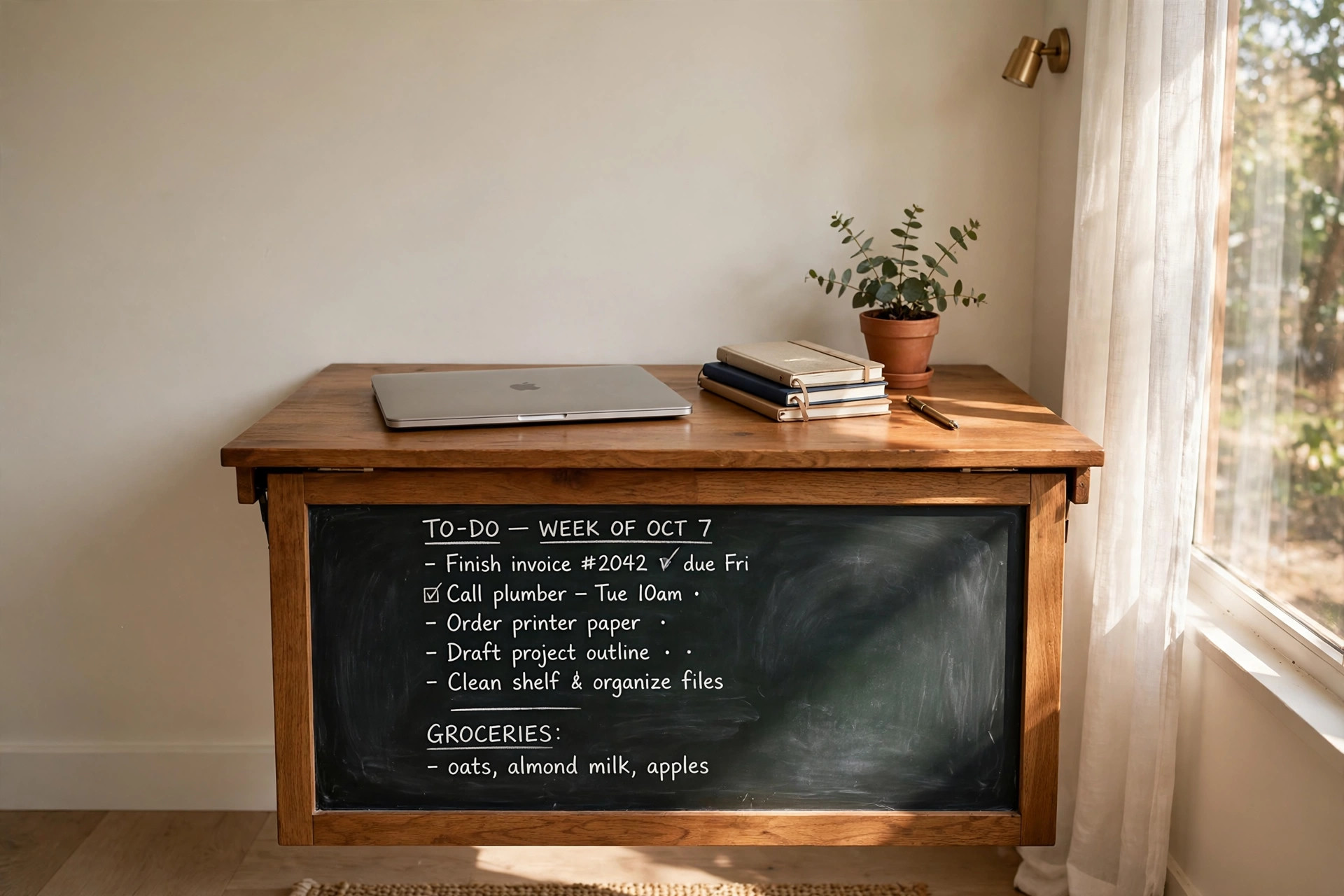
A wall mounted folding desk with chalkboard is a desk that bolts to the wall and folds flat when it is not in use. The front of the closed desk serves as a chalkboard. You can write notes, lists, and plans on it with chalk. When work time comes, you pull the desk top down to a level position. It becomes a full desk surface in seconds. When work is over, you fold it back up. The room looks tidy again, and the chalkboard stays on the wall for notes and ideas.
This kind of desk has been popular for many years in small homes. In the past, wall desks were simple boards on hinges. The chalkboard face is a newer touch that adds real value. It gives you a planning board and a work surface in one piece of furniture. It fits in a hallway, a bedroom corner, a laundry room, or a kitchen nook. It works well in apartments where every square foot counts.
Why It Matters: Wall Mounted Folding Desk with Chalkboard
Floor space is the main reason people buy this desk. A normal desk takes up four to eight square feet of floor at all times. A folding wall desk takes up zero floor space when it is closed. Only the depth of the closed unit stays on the wall, often two to four inches.
A wall mounted folding desk with chalkboard also gives order to a small room. Clutter hides when the desk is closed. The chalkboard side looks neat and calm. Many people find that a room that can change shape helps them focus. The desk opens for work and closes for rest. The change marks the start and end of the workday.
It can also save money. One piece does two jobs. You do not need to buy a separate desk and a separate chalkboard or whiteboard. For a small home office on a tight budget, that matters.
How to Choose the Right One
Size of the work surface
Measure your wall first. Most models run 24 to 48 inches wide. A 24-inch desk suits a laptop and a notebook. A 36- or 48-inch desk suits papers, books, and a small lamp. Depth is often 16 to 22 inches when open. Make sure the open desk does not block a door or a walkway.
Weight capacity
Check how much weight the desk can hold. Basic models carry 25 to 35 pounds. Stronger models carry 50 pounds or more. Think about what will sit on the desk each day. A laptop, a lamp, and a stack of papers add up fast. It is wise to pick a desk rated well above your daily load.
Mounting and wall type
These desks must anchor into wall studs or solid masonry. Drywall alone will not hold them. Read the mounting guide before you buy. If you live in a rental, ask the landlord first. Some units leave only small screw holes that are easy to patch. Others need larger anchors.
The chalkboard surface
A good chalkboard takes chalk smoothly and wipes clean with a damp cloth. Some boards use a painted surface that ghosts, or keeps faint marks, after months of use. A porcelain or enamel chalkboard costs more but stays clean longer. Check whether the desk comes with chalk and an eraser tray.
Folding hardware
The hinge and support arm do the hard work. Steel hinges and solid support arms last longer than plastic ones. Look for a locking arm or a latch that holds the desk level. A soft-close hinge is a nice touch. It keeps the desk from slamming shut.
Height
The top of the desk should sit about 28 to 30 inches from the floor for most adults. Many wall desks are fixed at one height. Some allow you to set the height during installation. Measure your chair and your own arm height before you drill holes.
Types and Options
Single panel desks
The most common type is a single panel that folds down from the wall. The outside face is the chalkboard. This design is simple and low cost. It suits a laptop user or a student.
Desk with storage cubbies
Some models add small shelves or cubbies inside the closed unit. When the desk folds down, the cubbies face you. You can store pens, notebooks, and a small organizer there. These cost more but add real storage.
Wide double door models
Wider models look like a cabinet with two doors. Both doors have chalkboard faces. The desk top folds down between them. These suit a shared family space where two people may use the board at once.
Drop-leaf with side shelves
A few designs keep side shelves on the wall beside the desk. These stay in place when the desk folds. They hold books or plants and frame the chalkboard nicely.
Solid wood vs. engineered wood
Solid wood desks look warm and last for decades. They cost more and weigh more. Engineered wood, such as MDF, costs less and comes in many finishes. MDF can sag over time if it carries heavy loads, so match the material to your needs.
Chalkboard vs. dry-erase face
Most of these desks use a chalk face, but some models offer a dry-erase face instead. Chalk gives a soft, classic look and costs less. Dry-erase markers write in bright color and wipe off fast, but the board can stain if ink sits for weeks. If you like both, keep chalk on the wall and add a small framed dry-erase board nearby. Pick the surface you will enjoy using every day.
If you work long days at home, an ergonomic standing desk for small home office may suit you better. It trades the folding feature for full height change during the day. For a small flat, a small corner desk with drawers for apartment office gives steady floor use with drawers for supplies.
Cost and Price
Prices run wide. A basic wall mounted folding desk with chalkboard costs about 60 to 120 dollars. Mid-range models with better hinges and storage cubbies run 120 to 250 dollars. Solid wood or large double-door models can cost 250 to 500 dollars or more.
What drives the price up? Solid hardwood adds cost. A porcelain chalkboard adds cost. Soft-close hinges and locking arms add cost. Built-in storage adds cost. What keeps the price down? Engineered wood, simple painted boards, and basic steel hinges.
Do not forget installation cost. If you hire a handyman to mount the desk, expect 50 to 150 dollars. Many owners do it themselves in under an hour with a drill, a level, and a stud finder. Good planning guides from sites like The Spruce can help you plan the job.
Care and Upkeep
Cleaning the chalkboard
Wipe the board with a damp cloth or a felt eraser each day. For deep cleaning, use a mix of water and a little white vinegar. Do not use rough pads. They scratch the board and make ghosting worse. Let the board dry fully before writing again.
Caring for the desk top
Dust the surface weekly with a soft cloth. Wipe spills at once. Water left on engineered wood can cause swelling. Use coasters under drinks. If the finish looks dull, a wood-safe polish brings back the shine.
Checking the hardware
Once every few months, check the screws and bolts. Wood homes shift, and fasteners loosen over time. Tighten them with a screwdriver. If a hinge squeaks, a drop of light oil on the joint helps. Do not overload the desk beyond its rated weight. Heavy loads strain the wall anchors first.
Touch-up
Painted chalkboard faces can chip at the edges. Keep a small bottle of chalkboard paint for touch-ups. One thin coat fixes most chips and dries in a day.
Safety
Mounting is the main safety issue. A desk that pulls free from the wall can fall on feet and hands. Always anchor into studs or masonry. Never hang a wall desk on drywall anchors alone. If you are unsure about your wall, ask a skilled person for help. The U.S. Consumer Product Safety Commission offers general guidance on anchoring furniture.
Teach children how the desk works. Small fingers can get pinched at the hinge. Some models have soft-close hinges that lower this risk. Keep the desk latched closed when small children play nearby. Do not let children climb on the open desk.
Mind the edge of the open desk. A folded-down desk top at hip height can catch a passing hip in a dark room. A night light near the desk helps. For a full desk review of home office gear, PCMag and Wirecutter test products that sit well beside a folding desk.
FAQ
How much weight can a wall mounted folding desk with chalkboard hold?
Most models hold 25 to 50 pounds. Basic models sit at the low end. Models with steel support arms and solid anchors sit at the high end. Always follow the rating from the maker. Spread heavy items across the desk rather than piling them in one spot.
Can I mount it on any wall?
No. You need wood studs or solid masonry behind the wall. Plain drywall will fail. Use a stud finder to locate the studs. If your wall has metal studs, buy fasteners made for them. Renters should get written permission first, since the desk leaves screw holes.
Does the chalkboard surface wear out?
It can dull over time, especially on low-cost painted boards. Regular wiping and soft chalk slow the wear. A porcelain board resists ghosting for many years. If a painted board dulls, a fresh coat of chalkboard paint renews it.
Is a folding wall desk sturdy enough for daily office work?
Yes, if it is mounted well and rated for your load. Many people use them as a daily work desk for a laptop, notes, and a lamp. Very heavy gear, such as large desktop computers or many books, suits a fixed desk better. Pair your setup with an affordable dual monitor setup for remote workers usa only if the desk rating covers the extra weight.
Can I paint the chalkboard a different color?
You can repaint a plain chalkboard face with chalkboard paint in black, green, or other shades. Sand the old surface lightly first. Do not paint the hinge area or the latch. Let the paint cure fully before you write on it.
Where is the best place to put one in a small home?
Any wall that has studs and a clear swing space works. Good spots include a bedroom wall, a hallway end, a dining nook, or beside a kitchen. Avoid walls with pipes or wires behind them. Keep a power outlet within reach for a lamp or a laptop charger.
Can I use it as a craft or homework station?
Yes. The chalkboard is handy for sketching layouts, writing supply lists, and tracking project steps. Crafters like that the desk folds away to hide works in progress. Keep sharp tools in a closed box on the shelf rather than on the desk edge, so nothing falls when you fold it up.
A Short Final Word
A wall mounted folding desk with chalkboard is a plain, honest answer to small rooms. It gives you a desk when you need one and a wall when you do not. Pick a size that fits your work, mount it into solid studs, and keep the hardware tight. With basic care, it will serve your home office for many years.
For more ideas on furnishing a compact workspace, the buying guides at IKEA and Wayfair show many small-space desks. If you want a deeper look at work seating and posture, Herman Miller and Steelcase publish helpful guides. For standing desk ideas that fit small rooms, UPLIFT Desk is worth a look. And for step-by-step mounting help, The Home Depot and Bob Vila offer clear how-to guides.
References
Bob Vila. (n.d.). Home improvement advice. https://www.bobvila.com Herman Miller. (n.d.). Office furniture and ergonomic seating. https://www.hermanmiller.com IKEA. (n.d.). Home furnishings. https://www.ikea.com PCMag. (n.d.). Technology product reviews. https://www.pcmag.com Steelcase. (n.d.). Office furniture and workplace research. https://www.steelcase.com The Home Depot. (n.d.). Home improvement products. https://www.homedepot.com The Spruce. (n.d.). Home and garden advice. https://www.thespruce.com UPLIFT Desk. (n.d.). Standing desks and ergonomic office furniture. https://www.uplift-desk.com Wayfair. (n.d.). Furniture and home goods. https://www.wayfair.com Wirecutter. (n.d.). Product reviews from The New York Times. https://www.nytimes.com/wirecutter
Was this guide helpful?

About Lisa Anderson
The My Garden US editorial team writes practical, in-depth home and garden guides for American homeowners — tested advice, no fluff.
You May Also Like
Best Home Office Desk for Left Handed Users: A Practical Buying Guide
June 23, 2026 0 views
Ergonomic Zero Gravity Office Chair Recliner: A Complete Buyer Guide
June 4, 2026 0 views
Best Surge Protector with USB Ports for Desk: A Practical Buyer’s Guide
January 16, 2026 0 views