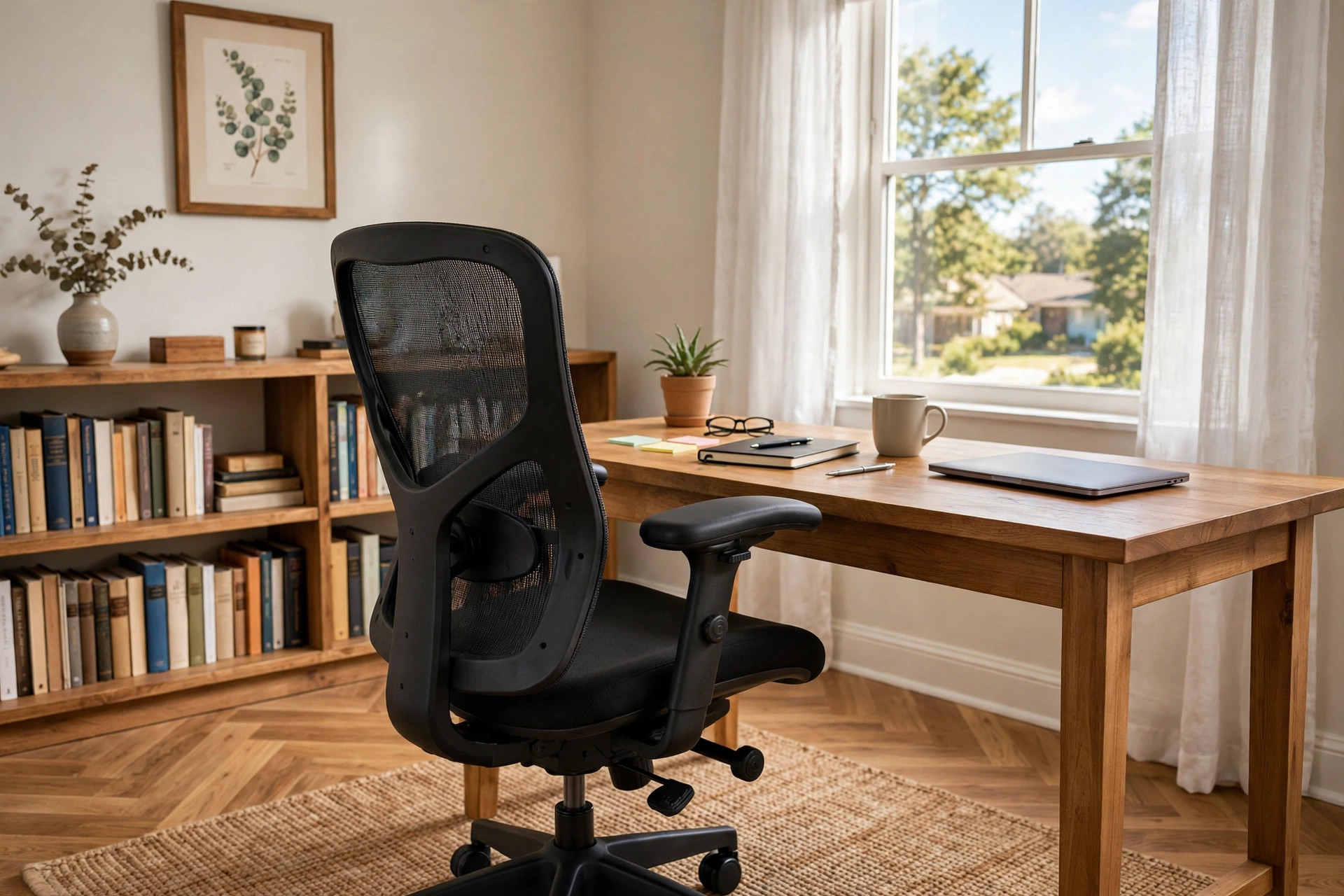

A good chair is the foundation of a good workday. When you work from home, you sit for hours at a time. The desk, the lamp, and the screen all matter. But the chair carries your weight. An ergonomic chair for home office with arms supports the back, the neck, the shoulders, and the arms all at once. It keeps the body in a natural position. It lowers the risk of aches that build up over weeks and months.
Many people buy the cheapest chair they find. They regret it within a month. Back pain, stiff shoulders, and sore wrists are common complaints. A well-chosen chair prevents much of that trouble. This guide explains what to look for in an ergonomic chair for home office with arms. It covers the parts of the chair, the types on the market, the cost, and how to keep the chair in good shape for years.
Why It Matters
The human body was not built to sit still for eight hours. Yet most home office work demands exactly that. A poor chair forces the spine into a curved shape. The muscles of the lower back strain to hold the body up. The shoulders rise toward the ears. The arms rest on a hard desk edge or hang in the air.
An ergonomic chair for home office with arms answers each of these problems. The backrest follows the natural curve of the spine. The armrests take the weight of the arms, so the shoulders can relax. The seat height adjusts so the feet rest flat on the floor. These small details add up. At the end of the day, the worker feels less tired. Over the years, the joints and muscles stay in better shape.
Health experts and furniture makers have studied sitting posture for decades. Their findings point in one direction. Support matters more than softness. A firm chair with the right shape beats a soft chair with no shape. Reviews at The Spruce often make this point. Comfort that lasts comes from fit, not padding.
What to Look For: Ergonomic Chair for Home Office with Arms
A chair may look fine in a photograph. The real test is in the details. Check these features before you buy.
Adjustable Armrests
The arms give this chair its name. Good armrests move up and down. The best ones also move in and out, forward and back, and pivot slightly. When the armrest height is right, the elbows bend at about ninety degrees. The shoulders hang loose. If the armrests sit too high, the shoulders lift. If they sit too low, the arms pull the shoulders down. Adjustability solves both problems. Fixed armrests work only if they happen to match your body.
Lumbar Support
The lower back has an inward curve. A chair should fill that curve. Look for a backrest with a lumbar pad or a built-in curve. Some chairs let you move the lumbar support up or down. This matters because people are different heights. The support must land at the belt line, not above or below it. Makers such as Herman Miller and Steelcase have long built their designs around this principle.
Seat Height and Depth
The seat must adjust so the feet rest flat on the floor and the knees sit level or a touch lower than the hips. Most office chairs rise and fall with a gas cylinder. Seat depth matters too. There should be a gap of two to four inches between the front edge of the seat and the back of the knees. Many chairs let the seat slide forward and back. Taller workers need more depth. Shorter workers need less.
Backrest Tilt
A backrest that locks in one upright position is a poor choice. The body needs movement. A tilt mechanism lets the chair lean back. A tension knob controls how easy the lean feels. Some chairs lock the back at several angles. The healthiest habit is to shift position through the day. Lean back for phone calls. Sit upright for typing.
Materials
Mesh, fabric, and leather each have strengths. Mesh breathes well. It stays cool in summer. Fabric feels warmer and comes in many colors. Leather looks formal but can get hot. The seat of the chair matters most. It takes the full weight of the body. A wirecutter review often notes that mesh seats age well if the weave is tight and the frame is strong.
Base and Casters
A five-point star base gives stability. The casters should match the floor. Hard wheels suit carpet. Soft wheels suit wood and tile. A UPLIFT Desk buying guide notes that the wrong caster can scratch floors in a single season. Check the product page for the wheel type before you order.
Types and Options
Chairs with arms come in several families. Each suits a different worker.
The Task Chair
The task chair is the standard office chair. It has a padded or mesh seat, a backrest, armrests, and wheels. It is the safest choice for a home office. It fits under most desks. It suits long hours of computer work. If you need a chair for long hours in a home office, start here.
The Executive Chair
The executive chair is larger. It has a high back, thick padding, and often a leather cover. It looks formal. It suits managers and people who meet clients on video calls. It costs more. It can feel too warm in hot climates. It also needs more floor space.
The Mesh Chair
The mesh chair uses an open weave for the seat and back. Air moves through it. It is light in weight. It is a good pick for warm rooms and for workers who run warm. A popular budget target is the ergonomic mesh office chair under 200 dollars. Many of these chairs offer strong value if the frame is metal.
The Drafting Chair
The drafting chair has a tall seat. It pairs with a standing-height desk or a drafting table. It usually has a foot ring. It is a niche choice. Most home office workers do not need it.
For back pain, the right chair depends on the cause of the pain. Workers with lower back trouble should look at the best ergonomic office desk chair for back pain. Lumbar support and tilt tension matter most in that case.
How to Choose the Right Fit
Follow these steps when you shop.
First, measure your desk height. The seat must rise high enough that your elbows rest at desk level. Standard desks are about twenty-nine to thirty inches high. Most chairs handle this. Very tall or very short workers should check the range.
Second, test the armrests. Sit down. Let your arms hang. The armrests should meet your elbows without lifting your shoulders. If you share the chair with a partner, adjustability is a must.
Third, check the weight rating. Most chairs hold two hundred fifty to three hundred pounds. Heavier workers should look for a higher rating. The rating appears on the product page.
Fourth, read the warranty. A chair with a five-year warranty signals a maker that trusts its own product. A one-year warranty on a costly chair is a warning sign. Big retailers like IKEA and Wayfair list warranty terms on each product page.
Fifth, sit if you can. No review replaces a test sit. Showrooms and office stores let you try the chair. Sit for ten minutes. Move the adjustments. Notice what you feel in the lower back and shoulders.
Cost and Price
Prices run from under one hundred dollars to over one thousand. The spread reflects materials, build quality, and brand name.
Budget chairs cost one hundred to two hundred dollars. They offer basic height adjustment and fixed or simple armrests. They suit light use. They may wear out in two to three years of daily use.
Mid-range chairs cost two hundred to five hundred dollars. They add adjustable armrests, better lumbar support, and stronger tilt mechanisms. This is the sweet spot for most home offices. The chair lasts longer. The comfort is clearly better.
Premium chairs cost five hundred dollars and up. They use top-grade parts. They carry long warranties. They suit people who work ten-hour days. The cost per year of use can be low, because the chair lasts a decade.
Price alone does not tell the whole story. A review at PCMag often compares chairs on a value scale, not just on price. A mid-range chair that lasts eight years costs less per year than a budget chair replaced every two years. Do the math before you judge a price tag.
Shipping and assembly are part of the cost too. Some chairs ship in a flat box and need forty minutes of assembly. Some ship whole. White-glove delivery costs more. Read the fine print.
Care and Upkeep
A chair is a machine. It needs care.
Clean the fabric or mesh once a month. Use a vacuum with an upholstery tool. Wipe leather with a damp cloth. Spills should be blotted at once, not rubbed.
Tighten the bolts twice a year. Chairs loosen with use. A wobbly armrest is often just a loose bolt. Keep the Allen key that came with the chair.
Check the casters. Hair and thread wrap around the wheels. Pull it out with tweezers. Clean wheels roll better and mark floors less.
Oil the moving parts once a year. A drop of silicone spray on the tilt mechanism keeps it smooth. Do not use cooking oil. It attracts dust.
Protect the chair from sun. Long hours of direct sunlight fade fabric and dry out leather. Move the desk away from the window or use a curtain.
With this care, a good chair gives ten years of service. CNET maintenance guides stress the same point. Small habits extend the life of any office chair.
Safety
Office chairs are safe when used as intended. A few rules keep them that way.
Do not stand on the chair. The base can tip. Use a step stool instead.
Do not lean back beyond the tilt limit. The chair is balanced for sitting, not acrobatics.
Keep the chair away from small children when the gas cylinder is exposed. Teach children not to play with the adjustment levers.
Check the weight rating and respect it. Overloading strains the cylinder and the base. Failure is rare but not impossible.
Place the chair on a level floor. A chair on a slope rolls away from the desk. A chair mat or rug can help on slick floors, but it must lie flat.
FAQ
Do armrests really make a difference?
Yes. Armrests carry the weight of the arms. Without them, the shoulder muscles hold the arms up all day. This causes tension and pain. Adjustable armrests are best because they fit different bodies.
Is mesh or fabric better for a home office?
It depends on the climate. Mesh stays cool and suits warm rooms. Fabric feels softer and suits cool rooms. Both work well if the build quality is good. Try both if you can.
How long should an ergonomic chair last?
A well-built chair lasts seven to ten years with daily use. Budget chairs last two to four years. The warranty is a useful guide to expected life.
Can one chair suit two people of different heights?
Yes, if it has wide adjustment ranges. Look for generous seat height travel, a sliding seat, and armrests that move in several directions. Each user should reset the adjustments when they sit down.
What is the best seat height for desk work?
Set the seat so the feet rest flat on the floor and the thighs are level or slope slightly down toward the knees. The elbows should rest near desk height. This is the standard posture taught in office ergonomics.
Should the backrest always stay upright?
No. The upright position suits typing. A slight recline suits reading and phone calls. The best habit is to change position through the day. A chair with a smooth tilt mechanism makes this easy.
A Final Word
An ergonomic chair for home office with arms is not a luxury. It is a tool of the trade. The right chair keeps the spine straight, the shoulders low, and the arms supported. It pays for itself in comfort and health over the years. Take time to choose. Check the adjustments. Read the warranty. Sit in the chair before you buy if you can. Your back will thank you every evening.
References
CNET. (n.d.). Technology news and reviews. https://www.cnet.com Herman Miller. (n.d.). Office furniture and ergonomic seating. https://www.hermanmiller.com IKEA. (n.d.). Home furnishings. https://www.ikea.com PCMag. (n.d.). Technology product reviews. https://www.pcmag.com Steelcase. (n.d.). Office furniture and workplace research. https://www.steelcase.com The Spruce. (n.d.). Home and garden advice. https://www.thespruce.com UPLIFT Desk. (n.d.). Standing desks and ergonomic office furniture. https://www.uplift-desk.com Wayfair. (n.d.). Furniture and home goods. https://www.wayfair.com Wirecutter. (n.d.). Product reviews from The New York Times. https://www.nytimes.com/wirecutter
Was this guide helpful?

About Sarah Mitchell
The My Garden US editorial team writes practical, in-depth home and garden guides for American homeowners — tested advice, no fluff.
You May Also Like

Home Office Wall Mounted Storage Cabinets: A Practical Guide
August 3, 2026 0 views
Best Surge Protector with USB Ports for Desk: A Practical Buyer’s Guide
January 16, 2026 0 views
A Practical Guide to a Home Office Humidifier for Dry Winter Air
March 5, 2026 0 views