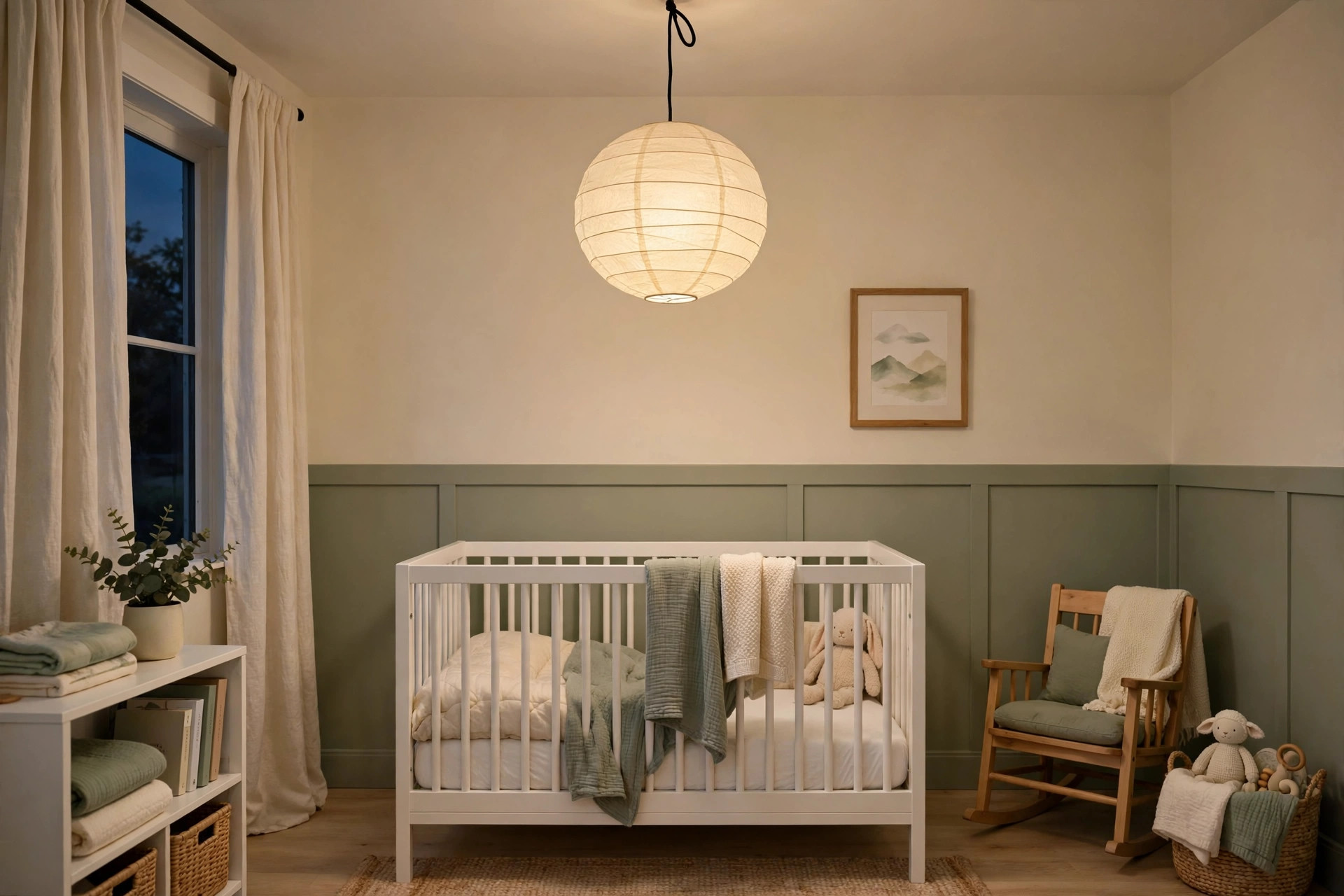

A nursery pendant light for ceiling decor hangs from the ceiling and gives soft, even light to a baby’s room. It is one of the first things new parents see when they enter the room at night. It can set the mood for late feeds, quiet rocking, and calm sleep. A plain ceiling fixture often feels too harsh. A lamp on a table can take up space and can tip over. A pendant light stays out of reach, saves floor and table space, and adds a warm look to the room. This guide explains how to pick one that is safe, pretty, and easy to live with for years.
Why a Pendant Light Matters in a Nursery
The right light changes how a room feels. Bright overhead light can wake a baby up during a night feed. A soft pendant glow keeps the room calm while you see what you are doing. When you rock a child to sleep, low light helps both of you stay drowsy. Good light also matters for safety. You need to see the crib, the changing table, and the floor path when you walk in a dark room. A pendant light placed in the center of the ceiling spreads light wide, so you do not trip over toys or blankets.
A pendant light also shapes the look of the room. A nursery pendant light for ceiling decor acts like a piece of art. It draws the eye up and makes a small room feel taller. Many parents pick a shade with stars, clouds, or animals to match the room theme. Others pick a simple drum shade that will still look right when the child grows older. Because a pendant hangs high, it keeps working as the child moves from crib to toddler bed to big-kid bed. Few decor items serve that long.
Light also plays a role in daily rhythm. Warm, dim light in the evening tells the body that rest is near. Cold, bright light can make sleep harder. Many pendant lights now take warm LED bulbs and work with dimmer switches. That gives parents full control from day one.
What to Look for When You Choose: Nursery Pendant Light for Ceiling Decor
Brightness and Dimming
Pick a pendant that gives gentle, warm light. Look for bulbs marked 2700K, which gives a warm white glow like an old lamp. Cool bulbs marked 4000K or higher look blue and harsh in a small room. A dimmer switch is worth the cost. It lets you turn light low for night feeds and raise it for playtime or cleaning. If your home has no dimmer, you can use a smart bulb with a phone app to change brightness. Check that the shade and bulb allow dimming before you buy. Some LED bulbs buzz when dimmed, so read the box for a dimmer list.
Bulb Type
LED bulbs are the best choice for a nursery. They stay cool, use little power, and last for years. Old-style bulbs get hot and can warm up a paper or fabric shade. Make sure the socket type fits common bulbs so you can buy replacements anywhere. The ENERGY STAR program lists efficient bulbs that meet set standards, which helps you pick a bulb that saves power and lasts long.
Size and Height
Match the shade size to the room. A shade wider than 18 inches can crowd a small nursery. A tiny shade can look lost in a large room. As a rule, the shade should hang at least 7 feet above the floor so adults do not hit it. Never hang a pendant with a pull cord or long cord over or near the crib. Cords are a known hazard for young children, and safety groups advise keeping cords fully out of reach. The U.S. Consumer Product Safety Commission publishes nursery safety guidance that every parent should read before setting up the room.
Materials and Style
Fabric shades give soft, diffused light and a cozy feel. Paper shades look light and airy but need care and a cool bulb. Wood, rattan, and wicker shades fit a nature or boho theme and cast pretty patterns on the ceiling. Metal shades give a clean modern look but can feel cold in a nursery. Glass shades look classic and wipe clean with ease. Think about how long you want the style to last. A plain shade in a soft color works from birth through the early school years. A shaped theme light, like a cloud or hot-air balloon, is fun but may feel babyish by age five. Browse design ideas on sites like The Spruce to see how different shades look in real rooms.
Types and Options
Drum shades. A drum shade is a simple cylinder of fabric or paper. It spreads light evenly up and down. It fits almost any style and costs little. Many parents start here.
Paper lantern pendants. These round shades are light, cheap, and easy to hang. They glow warm and soft. Use them only with LED bulbs that stay cool. Keep them away from sprinklers and heat vents.
Themed pendants. Clouds, stars, moons, animals, and hot-air balloons are popular nursery shapes. They turn the light into part of the decor story. Retailers such as Pottery Barn Kids carry many themed nursery lights in soft colors. Pair one with matching wall art for a pulled-together look.
Wood and rattan pendants. Natural materials add texture and warmth. Rattan shades let light pass through small gaps, which makes star-like spots on the ceiling. They fit well in modern and nature-themed nurseries.
Multi-globe or cluster pendants. Several small glass globes hang at different heights from one mount. These give good light and look upscale. They cost more and need more cleaning, but they make a strong centerpiece.
Convertible and flush-mount hybrids. Some lights can be installed as a pendant or close to the ceiling. These suit rooms with low ceilings where a long drop would hang too low.
When you shop, compare choices at large home stores and online lighting shops. Wayfair lists thousands of options with reviews from other parents. IKEA offers low-cost pendants that pair well with its nursery furniture. A lighting specialist site like Lumens carries higher-end designs with detailed specs for size and bulb type.
Cost and Price
A nursery pendant light for ceiling decor fits most budgets. Basic paper and fabric drum pendants cost about 25 to 75 dollars. Mid-range wood, rattan, and themed shades run from 75 to 200 dollars. Designer or large statement pendants can cost 200 to 500 dollars or more. A dimmer switch adds 15 to 40 dollars if you hire no electrician and do a simple swap yourself. Hiring an electrician to add a pendant where no ceiling box exists can add 150 to 300 dollars. LED bulbs cost a few dollars each and last for years, so running cost is low. Spending more usually buys better materials, safer build quality, and a style that ages well. There is no need to buy the most costly option. A simple, well-built shade with a warm LED bulb and a dimmer does the job as well as any luxury piece.
Care and Upkeep
Pendant shades collect dust. Wipe fabric shades with a dry soft cloth once a month. Paper shades need only light dusting with a feather duster, since water can stain them. Glass and metal shades can be wiped with a damp cloth. Always turn the light off and let the bulb cool before cleaning. Check the mount twice a year. Gently tug the shade to make sure screws are still tight. Replace bulbs at the first sign of flicker, since flicker strains eyes and can bother a baby. If your shade hangs on a cord, check the cord for wear where it meets the ceiling mount. Keep spare bulbs on hand so you are never stuck without light at 2 a.m.
Safety
Safety comes first in any nursery. Hang the pendant high and centered, well away from the crib. Never place a corded light within reach of a curious toddler. Make sure the ceiling mount is rated for the shade weight and is fixed to a ceiling box or joist, not just drywall. Use bulbs that stay cool, and never put a bulb with higher wattage than the shade label allows. Check that the shade material is not flammable, or keep heat fully away from it with a low-heat LED bulb.
Room light is part of a safe sleep setup. The American Academy of Pediatrics, through HealthyChildren.org, offers guidance on safe sleep spaces, including keeping the room free of hazards near the crib. What to Expect also publishes parent-friendly guides on setting up a safe, calm nursery. Good lighting helps you check on the baby without waking them fully, which supports safer night care. If your pendant uses a smart bulb, set a night mode with warm dim light so you never need to turn on a bright lamp at 3 a.m. When the child starts to stand in the crib, recheck that nothing hangs low enough to grab.
FAQ
How high should a nursery pendant light hang?
Hang it so the bottom of the shade is at least 7 feet above the floor. This keeps it out of reach and out of the way. In a room with a standard 8-foot ceiling, a short mount or semi-flush style works best.
Can I hang a pendant light over the crib?
It is safer to hang it in the center of the room rather than directly over the crib. This avoids any risk if the mount ever fails, and it keeps cords and shades out of reach. Center placement also spreads light more evenly.
What wattage bulb is best for a nursery pendant?
A bulb equal to 40 to 60 watts of old-style light is enough for most nurseries. With a dimmer, you can drop brightness to a soft glow at night. Always stay under the maximum wattage printed on the shade.
Are paper pendant shades safe in a nursery?
Yes, when used with cool LED bulbs. Paper can catch fire from hot bulbs, so never use old-style or halogen bulbs in a paper shade. Hang paper shades high and away from heat vents.
Should the light be dimmable?
A dimmer is one of the best upgrades for a nursery. It lets you feed, change, and rock the baby in low light. If you cannot add a dimmer switch, use a smart bulb that dims from a phone or voice control.
How do I clean a fabric pendant shade?
Turn the light off and let the bulb cool. Dust the shade with a dry microfiber cloth or a soft brush. For spots, use a barely damp cloth and let it dry fully. Never soak a fabric shade or spray cleaner on it while it hangs.
A Short Final Word
A nursery pendant light for ceiling decor does two jobs at once. It gives the soft, safe light a baby’s room needs, and it adds warmth and style to the ceiling. Pick a shade that fits the room size, hang it high and away from the crib, use a warm LED bulb with a dimmer, and keep cords out of reach. With those simple steps, the light will serve your family well from the first night home through the early school years. For more ideas to finish the room, see how blackout shades help sleep in our guide to kids bedroom blackout shades for better sleep, add playful storage with a kids bookshelf tree shaped for playroom, or plan ahead for guests with a kids bunk bed with trundle for sleepovers.
For more background, see Target.
References
American Academy of Pediatrics. (n.d.). HealthyChildren.org. https://www.healthychildren.org IKEA. (n.d.). Home furnishings. https://www.ikea.com Pottery Barn Kids. (n.d.). Kids furniture and decor. https://www.potterybarnkids.com Target. (n.d.). Retail store. https://www.target.com The Spruce. (n.d.). Home and garden advice. https://www.thespruce.com U.S. Consumer Product Safety Commission. (n.d.). Product safety information. https://www.cpsc.gov Wayfair. (n.d.). Furniture and home goods. https://www.wayfair.com What to Expect. (n.d.). Pregnancy and parenting guidance. https://www.whattoexpect.com
Was this guide helpful?

About James Carter
The My Garden US editorial team writes practical, in-depth home and garden guides for American homeowners — tested advice, no fluff.
You May Also Like
Nursery Bookcase Narrow for Small Corner: A Practical Guide
July 29, 2026 0 views
A Kids Bookshelf Tree Shaped for Playroom: What Parents Should Know
August 31, 2026 0 views
The Best Nursery Crib for Twins Small Room: A Complete Guide
January 18, 2026 0 views