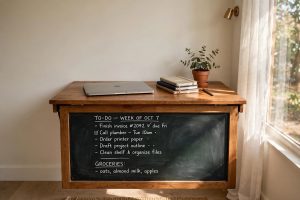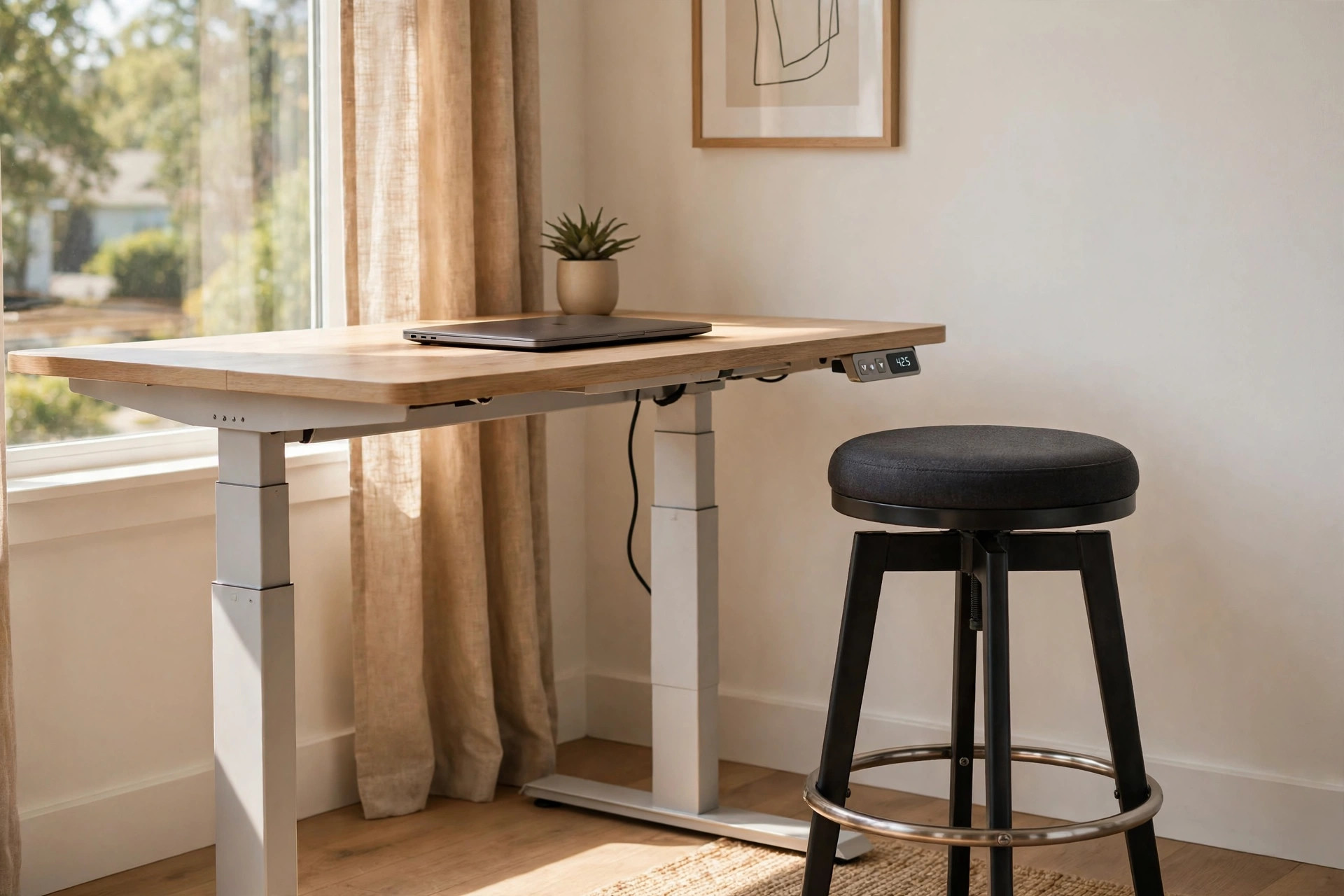

A standing desk changes the way a workday feels. You stand, you move, and your back thanks you for it. But after an hour or two on your feet, the floor begins to feel hard. An adjustable height stool for standing desk break time solves this problem in a simple way. It lets you perch and rest your legs without giving up your standing posture or your desk height. This guide explains what these stools are, why they matter, and how to pick the right one for your home office.
Why a Standing Desk Break Stool Matters
Most doctors agree that movement is good. Standing part of the day can ease back pain and fight the slump that comes from sitting in one chair for eight hours. But standing all day is not good either. Feet swell. Knees ache. Energy drops. The best habit is to change position often: sit a while, stand a while, and take short rests in between.
That middle rest is where an adjustable height stool shines. A normal chair is too low. If you sit in it, your desk is up near your chin. You have to bend your neck to see the screen. A tall stool, on the other hand, lifts you close to standing height. You can lean back, take weight off your feet, and still keep your hands and eyes where they belong.
Many remote workers use a rhythm. They stand for forty-five minutes, perch on the stool for ten, then stand again. Some lower the desk and sit for a longer spell later. The stool makes the change easy. There is no need to drag a heavy chair across the room. The stool waits beside the desk, ready when your legs need a pause.
Posture improves as well. A good perch stool tips your hips open, much like standing. Your spine stays long. Your shoulders stay back. This is different from the deep fold of a soft office chair. People with tight hips and sore lower backs often find that perching feels better than sitting low for hours.
What to Look for When You Choose One: Adjustable Height Stool for Standing Desk Break
Start with the height range. A stool made for a standing desk break should rise high enough to meet your desk. Most standing desks move between 38 and 48 inches when raised. Your seat should sit a few inches below your bent elbow when you are perched. Look for a stool with a height range of roughly 24 to 34 inches. If you are tall, check the top of the range with care.
Next, study the seat. A saddle seat or a padded perch pad works best. It cradles you without cutting into your thighs. Round bar-stool seats are fine for short rests, but they can grow hard after twenty minutes. A waterfall edge, where the front of the seat slopes down, takes pressure off the backs of your legs.
The base matters for safety. A wide five-star base with casters rolls well on hard floors and carpet alike. A round disc base stays put but does not move with you. If you plan to roll the stool away under the desk, pick casters that lock. Some workers prefer a model with a tilting seat that follows the body as you lean toward the keyboard. This small tilt keeps your weight balanced.
Check the weight limit. Most quality stools hold 250 to 300 pounds. Cheaper models may stop at 200. Buy with a margin. A stool that strains under daily use will wobble within a year. Read the fine print on the gas cylinder too. A good cylinder is rated for years of daily lifts.
Think about the footrest. When your feet dangle, blood pools in your legs. A foot ring or a footrest bar gives your feet a place to rest. This takes strain off the lower back. Some stools have a ring that slides up and down the center pole. This is a fine feature if two people of different heights share the stool.
Types and Options on the Market
Perch stools look like a tall bike seat on a pole. They tilt forward and support about half your weight. You stay nearly upright. These are the purest form of the standing desk break stool. They cost more, but office workers who perch all day swear by them. Brands that study workplace ergonomics, such as those reviewed by Herman Miller and Steelcase, helped popularize this style.
Drafting stools are the classic choice. They look like tall office chairs with a backrest and a foot ring. Many have armrests. They adjust from about 24 to 33 inches. If you want back support during longer breaks, a drafting stool is the better pick. Keep in mind that armrests can bump against the desk edge when you roll the stool in. You may want to measure first.
Wobble stools have a rounded base instead of casters. They rock gently as you shift. This keeps your core muscles working even while you rest. Some people love the motion. Others find it distracting. Wobble stools are light and easy to carry from room to room.
Counter-height bar stools can serve the same role. If you already own sturdy bar stools for a kitchen island, try one at your desk before you buy anything new. The height may be close. The drawback is that most bar stools do not adjust. What fits today may not fit if you change your desk height later.
Folding step-style stools are a budget answer. They fold flat and slide into a closet. They lack padding and height adjustment. They work for quick five-minute rests but not for real comfort. Think of them as a bridge until you buy a proper stool.
For readers building a full setup, it helps to plan the desk and the stool together. An adjustable height desk converter for existing table can turn a normal table into a standing desk, and the right stool makes the new setup complete.
Cost and Price
Prices run from about thirty dollars to more than four hundred. At the low end sit basic drafting stools and folding perch stools. They do the job. The padding is thin, and the gas cylinder may lose air after a year or two. For a test run, a budget stool is fine.
The middle range, roughly one hundred to two hundred fifty dollars, is where value lives. Stools in this range have thicker foam, wider bases, and better cylinders. The seats tilt. The foot rings adjust. Many home offices stop here and stay happy for years. Large furniture sellers such as IKEA and Wayfair carry many models in this band, which makes it easy to compare.
Above two hundred fifty dollars you enter the world of true ergonomic perch stools. The engineering shows. The seat shapes are studied. The materials last. Companies that build standing desks, like Uplift Desk, often sell matching perches made for their frames. If you work from home full time, this can be money well spent.
Watch for hidden costs. Some stools ship unassembled and need tools you may not own. Others need a floor mat to protect hardwood from caster wheels. A good mat costs twenty to forty dollars and is worth every penny.
Care and Upkeep
A stool lasts longer with small, steady care. Once a month, wipe the seat with a damp cloth and mild soap. Leather and vinyl crack if they dry out. A light conditioner twice a year keeps them soft. Fabric seats can be vacuumed and spot-cleaned with upholstery spray.
Check the screws and bolts every few months. Daily height changes loosen them over time. A loose base is the main cause of wobble. Keep the small wrench that came in the box in your desk drawer so the fix takes one minute.
The gas cylinder needs little care. Do not oil it. Oil attracts dust and grinds the seals. If the stool starts to sink slowly under your weight, the cylinder is worn. Many makers sell replacement cylinders for twenty to forty dollars. Swapping one takes ten minutes and doubles the life of the stool.
Casters pick up hair and thread. Flip the stool over once a season and pull the debris from the wheels. If a caster cracks, replace all five at once so the stool rolls level. On carpet, a plastic chair mat under the stool keeps rolling smooth and protects the fibers.
Sunlight fades seats over months. If your desk sits by a window, turn the stool now and then, or pull the blind during the hottest part of the day. Small habits keep the stool looking new.
Safety
A tall stool is a taller fall if it tips. Always set all five casters flat on the floor before you sit. Never stand on the seat to reach a high shelf. The seat is made for perching, not for climbing. Keep the stool on level ground. A thick rug edge under one leg can rock the base.
Lock the casters when you perch if your model has locks. This stops the stool from rolling out from under you as you shift your weight. If your floor is slick, such as polished tile, place a rubber mat under the stool.
Set the height before you sit, not after. Reach down, squeeze the lever, and raise the seat to the right level. Then sit down slowly and center your weight. Lean slightly forward toward the desk. This keeps your balance over the base.
Children may see a tall stool as a toy. Teach them that it is work furniture. Store the stool with the seat lowered if small children play nearby. A low stool is harder to climb and less fun to spin.
Check weight limits and use them. An overloaded gas cylinder can fail without warning. The result is a sudden drop of several inches. It rarely causes injury, but it can startle and strain your back. Buy a stool rated well above your weight.
Frequently Asked Questions
How tall should my stool be for a standing desk?
Measure your desk at its standing height. Your seat should sit about ten to twelve inches below the desk surface. For most adults, this means a seat height between 28 and 33 inches. If you share the desk with someone taller or shorter, pick a stool with a wide adjustment range.
Is perching as good as standing?
Perching sits between sitting and standing. You take about half the load off your legs while keeping your hips open and your spine upright. It is not a full replacement for standing or walking. It is best used as a break within a standing session. Move, stretch, and change position through the day.
Can I use a regular bar stool instead?
You can, if the height is right. Many kitchen bar stools rise to 30 inches, which suits a desk at 40 to 42 inches. The trade-off is comfort and adjustment. A bar stool will not move with your desk height. For daily office use, a purpose-built adjustable stool is the better long-term choice.
Do I still need a regular office chair?
Most experts say yes. The healthiest workday mixes sitting, standing, and perching. A good chair supports your back during long focused tasks like writing or video calls. The stool covers the in-between moments. Together with proper monitor placement, such as a best laptop stand for standing desk posture, they build a complete ergonomic setup.
How do I stop the stool from rolling away?
Use the caster locks if your stool has them. A chair mat with a grippy underside also holds the base still. On hard floors, rubber replacement casters grip better than hard plastic ones. Some workers simply push the stool under the desk when they stand, which keeps it close and out of the way.
What is the difference between a perch stool and a drafting chair?
A perch stool has a small seat and no backrest. It supports a half-standing pose. A drafting chair for tall desk users is taller and fuller, with a backrest and often armrests. The drafting chair suits longer seated breaks. The perch stool suits quick rests between standing bouts. Many home offices own one of each.
A Short Final Word
An adjustable height stool for standing desk break time is a small purchase with an outsized effect. It removes the main excuse for skipping your standing sessions. When your feet tire, you perch instead of quitting. Your desk stays at the right height. Your posture stays honest. Your workday flows on.
Buy for your body first. Measure your desk. Sit in the seat if you can before you order. Read reviews from people who work the way you work. Guides from testing labs like Wirecutter and PCMag, as well as practical home office advice from The Spruce, can help you compare models before you spend. Then set a timer, stand, perch, and stand again. Your back will notice the difference within a week.
References
Herman Miller. (n.d.). Office furniture and ergonomic seating. https://www.hermanmiller.com IKEA. (n.d.). Home furnishings. https://www.ikea.com PCMag. (n.d.). Technology product reviews. https://www.pcmag.com Steelcase. (n.d.). Office furniture and workplace research. https://www.steelcase.com The Spruce. (n.d.). Home and garden advice. https://www.thespruce.com UPLIFT Desk. (n.d.). Standing desks and ergonomic office furniture. https://www.uplift-desk.com Wayfair. (n.d.). Furniture and home goods. https://www.wayfair.com Wirecutter. (n.d.). Product reviews from The New York Times. https://www.nytimes.com/wirecutter
Was this guide helpful?

About Michael Thompson
The My Garden US editorial team writes practical, in-depth home and garden guides for American homeowners — tested advice, no fluff.
You May Also Like
Ergonomic Desk Chair for Plus Size Adults: A Complete Buying Guide
April 10, 2026 0 views
The Best Desk Pad with Wireless Charging Mat: A Complete Buyer’s Guide
April 12, 2026 0 views
Home Office Desk Pad With Mouse Pad Combo: What You Should Know
May 20, 2026 0 views