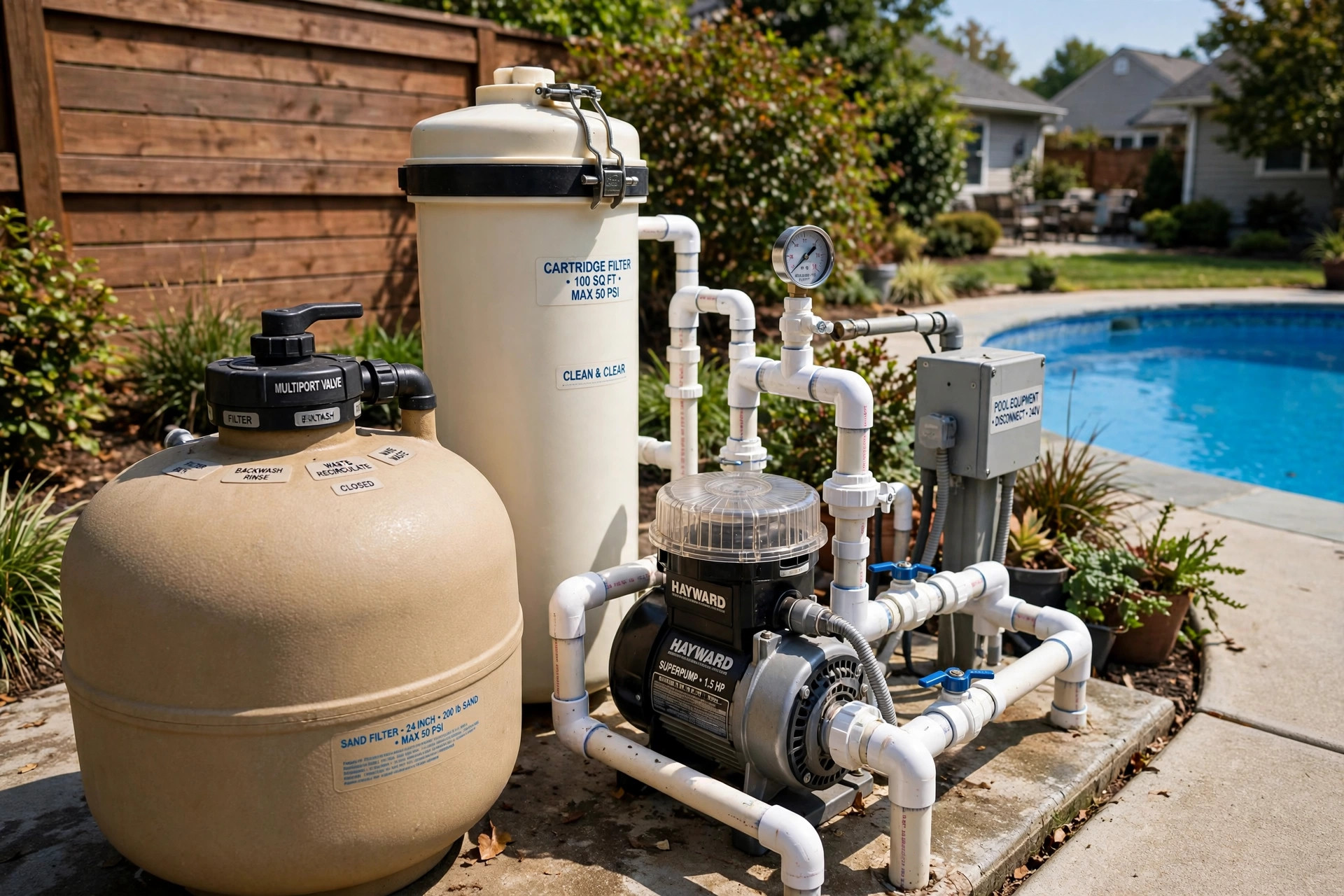

Every pool owner asks the same question sooner or later. When it comes to the best pool filter sand vs cartridge, which one is the better buy? The filter is the heart of your pool system. It keeps the water clear and safe. A poor choice can cost you time and money for years. The two most common types in American homes are sand filters and cartridge filters. Each one cleans the water in a different way. Each one has strengths and weak points. This guide walks through both types step by step. You will learn how they work, what they cost, and how much care they need. By the end, you will know which one fits your pool and your budget.
Why Your Filter Choice Matters
The filter works with your pump to clean the pool. The pump pushes water through the filter. The filter traps dirt, leaves, and tiny particles. Algae can grow fast in dirty water. Chemical costs go up when the filter is weak. Swimmers can get skin and eye irritation from poorly filtered water.
A filter is also a long-term purchase. Most filters last eight to fifteen years. A wrong choice means higher bills and more work every season. The right choice means clear water with less effort. That is why the debate over the best pool filter sand vs cartridge never ends. Both types serve the same goal. They just take different roads to get there.
How a Sand Filter Works: Best Pool Filter Sand vs Cartridge
A sand filter is a large tank filled with special filter sand. Water enters the top of the tank. It flows down through the sand bed. The sand traps dirt and debris as the water passes through. Clean water exits from the bottom and returns to the pool. Most sand filters catch particles down to about 20 to 40 microns in size. A micron is a very small unit of measure. For comparison, a grain of sand is about 200 microns across.
Over time, the sand bed gets full of trapped dirt. Pressure inside the tank rises. That is the sign to backwash the filter. Backwashing reverses the flow of water. It flushes the trapped dirt out of the sand and sends it to waste. The process takes only a few minutes. After backwashing, the pressure drops and the filter works well again. Filter sand lasts about five to seven years before it needs to be replaced. Some owners switch to filter glass or special media, but sand remains the most common choice.
Sand filters are the old standby of the pool world. They have been used for decades. Pool builders trust them because they are simple and tough.
How a Cartridge Filter Works
A cartridge filter uses one or more pleated cartridges instead of sand. The pleats look like the folds of an accordion. These folds give the filter a large surface area in a small space. Water flows from the outside of the cartridge to the inside. Dirt gets caught on the pleated surface. Clean water passes through to the pool. Most cartridge filters catch particles down to 10 to 15 microns. That is finer than a sand filter. The water often looks clearer with a cartridge system.
There is no backwashing with a cartridge filter. When the cartridge gets dirty, you take it out and rinse it with a garden hose. The cleaning takes about twenty to thirty minutes. You do this several times per season. Once or twice a year, you can soak the cartridge in a special cleaning solution. This deep clean removes oils and scale from the pleats. Cartridges last about two to three years with good care. Then you replace them with new ones.
Cartridge filters run at lower pressure than sand filters. That means the pump does less work. In areas where water is costly or scarce, this matters a lot.
Sand vs Cartridge: A Head-to-Head Comparison
Water Clarity
A cartridge filter traps smaller particles than a sand filter. The result is often slightly clearer water. Sand filters still give clean water. The difference is small but real. If perfect clarity is your top goal, the cartridge has an edge. If you keep up with chemicals either way, both give safe and pleasant water.
Cost Up Front
Sand filters usually cost less to buy and install. A typical home sand filter setup costs less than a comparable cartridge setup. The parts are simple. Installation is quick. Cartridge filters cost more at the start. The tanks and cartridges are priced higher. But the gap is not huge. Shop prices vary by pool size and brand, and Home Depot lists current models for both types so you can compare side by side.
Upkeep and Effort
Sand filters need less hands-on care. You watch the pressure gauge. When pressure rises, you backwash. That is about it for a normal month. Cartridge filters need more regular attention. You must open the tank and rinse the cartridges by hand.
Water Use
Backwashing a sand filter uses a good amount of water each time. A single backwash can use 200 to 300 gallons. If you backwash monthly, that adds up over a season. Cartridge filters use far less water. Rinsing a cartridge with a hose uses only a small amount. In dry regions of the country, this is a strong point for cartridges.
How to Choose the Right Filter for Your Pool
Start with your pool size. Small to medium home pools do very well with cartridge filters. The cartridges are easy to reach and clean. Large pools, especially those with heavy leaf loads, often do better with sand. The sand bed can hold more dirt before it needs attention.
Think about your habits. If you like simple routines, a sand filter may suit you. Backwashing is fast and you never touch dirty cartridges. If you do not mind a bit of hands-on work, a cartridge filter will reward you with fine water clarity. Also think about your water supply. If water is costly where you live, the cartridge saves water over time.
Talk to your local pool shop too. Leslie’s Pool Supplies and Pool Warehouse both carry full lines of sand and cartridge filters and can help you size one for your pool. Sizing matters. A filter that is too small will clog fast and run at high pressure. A filter that is too big costs more than you need. Match the filter to your pump and your pool volume for the best results.
If you run a salt water pool system, both filter types work fine with it. The choice between sand and cartridge does not change with a salt system. Your focus there should be on matching flow rates, as noted in our guide to the best pool filter for saltwater systems. A well-sized filter of either type will keep a salt pool clear.
Cost and Price Details
Sand filter systems for home pools often run from a few hundred dollars to around one thousand dollars installed. The price depends on tank size and your local labor rates. Replacement sand costs little. A bag of filter sand is cheap. You will need several bags every five to seven years. That keeps long-term costs low.
Cartridge filter systems often run a bit higher at the start. The replacement cartridges are the main ongoing cost. A set of new cartridges can cost one to two hundred dollars. You replace them every two to three years. Over ten years, the total cost of both types can end up fairly close. The sand system wins on simplicity. The cartridge system wins on water clarity and lower water use.
Do not forget hidden costs. A sand filter that needs frequent backwashing raises your water bill. A cartridge filter that runs on a smaller pump can lower your power bill. Ask a local dealer for a full quote that includes installation. Online guides from Swim University break down filter costs in plain terms and can help you plan your budget.
Care and Upkeep Through the Season
A sand filter asks for little during the season. Check the pressure gauge once a week. Note the clean starting pressure after a backwash. When the gauge reads about 8 to 10 psi above that number, it is time to backwash. Turn off the pump first. Set the valve to backwash. Turn the pump on and let it run until the sight glass runs clear. Then switch to rinse for about thirty seconds. Return the valve to filter mode. The whole job takes ten minutes.
Keep an eye on the sand bed every few years. Sand can channel, which means water finds one path through the sand and skips the rest. If backwashing stops helping, it may be time for new sand. Changing the sand is a bigger job. Many owners hire a service for this step. Fresh sand restores the filter to full power.
A cartridge filter needs rinsing every four to eight weeks in a busy season. Turn off the pump and release the air from the tank. Open the lid and lift the cartridges out. Spray them from top to bottom with a garden hose. Do not use a pressure washer. High pressure can tear the pleats. Once a year, soak the cartridges overnight in a filter cleaner. Rinse them well after soaking. Store a spare set if you can. Then you can swap in a clean set and clean the dirty ones at your leisure.
Watch the pressure on a cartridge system too. A steady rise means the cartridges are loading up with dirt. A sudden drop can mean a torn cartridge. Check the pleats for rips and flat spots each time you rinse. Good upkeep advice is also available at Pool Supply World, which stocks replacement cartridges for most major brands.
If your water stays cloudy even after filter care, the filter may not be the only cause. Check your chemicals first. Our guide on how to fix cloudy pool water walks through the common causes in order, from chemistry to circulation to filter problems.
Safety Notes for Home Pool Owners
Filters run under pressure. Never open a filter tank while the pump is running. Turn off the pump and open the air relief valve first. Let all pressure bleed off. Then open the tank. This rule applies to both sand and cartridge systems. A tank under pressure can burst open and cause serious injury.
Keep chemicals away from the equipment pad. Chlorine and acid should sit in a dry, shaded spot. Do not store them right next to the filter or pump. Heat and fumes can damage the equipment. Read every chemical label before use.
The U.S. Consumer Product Safety Commission offers free pool safety guides for home owners. They cover drain covers, barriers, and safe equipment habits. Trouble Free Pool is another trusted source where pool owners share safe care methods. Good habits around the equipment pad keep the whole family safe.
Frequently Asked Questions
Which lasts longer, a sand filter or a cartridge filter?
The tanks for both types last about the same, often ten years or more. The difference is in the media. Filter sand lasts five to seven years. Cartridges last two to three years. A sand filter asks for fewer replacement purchases over its life.
Can I switch from a sand filter to a cartridge filter?
Yes. Many owners make the switch when they replace old equipment. A pool shop can fit a cartridge filter to your current pump and pipes. Check that the flow rates match. You may need small plumbing changes. Pentair makes both types and lists sizing charts for easy matching.
Does a cartridge filter really give clearer water?
Most of the time, yes. Cartridge filters trap particles down to about 10 microns. Sand filters trap down to about 20 microns. The difference shows as a bit more sparkle in the water. Good chemistry matters more than the filter type for basic safety.
How often should I backwash a sand filter?
Backwash when the pressure gauge reads 8 to 10 psi above the clean reading. For most home pools, that is about once a month in the swim season. Heavy rain or storms can make backwashing needed sooner. The Spruce offers a simple seasonal pool care calendar that helps you stay on schedule.
Are cartridge filters hard to clean?
They are not hard, just hands-on. You remove the cartridges and rinse them with a hose. It takes twenty to thirty minutes. Most owners do this a few times per season. Deep soaking once a year keeps the pleats in top shape.
Which type uses less water?
The cartridge filter uses much less water. It never needs backwashing. A sand filter can use hundreds of gallons each time you backwash. If you live where water is costly, this can tip the scales toward a cartridge system. Bullfrog Spas notes the same water-saving logic for spa filtration.
A Final Word
There is no single winner in the best pool filter sand vs cartridge debate. The best choice is the one that fits your pool, your habits, and your budget. Sand filters are simple, tough, and cheap to run. Cartridge filters give finer water, use less water, and run on smaller pumps. Weigh the points above. Talk to a local pool professional. Then enjoy the clear water that a well-chosen filter gives you all season long.
References
Bullfrog Spas. (n.d.). Hot tubs and spas. https://www.bullfrogspas.com Leslie’s Pool Supplies. (n.d.). Pool supplies and equipment. https://www.lesliespool.com Pentair. (n.d.). Pool and spa equipment. https://www.pentair.com Pool Supply World. (n.d.). Pool and spa supplies. https://www.poolsupplyworld.com Pool Warehouse. (n.d.). Pool equipment and supplies. https://www.poolwarehouse.com Swim University. (n.d.). Pool and hot tub care guides. https://www.swimuniversity.com The Home Depot. (n.d.). Home improvement products. https://www.homedepot.com The Spruce. (n.d.). Home and garden advice. https://www.thespruce.com Trouble Free Pool. (n.d.). Pool school and care methods. https://www.troublefreepool.com U.S. Consumer Product Safety Commission. (n.d.). Product safety information. https://www.cpsc.gov
Was this guide helpful?

About Emily Rodriguez
The My Garden US editorial team writes practical, in-depth home and garden guides for American homeowners — tested advice, no fluff.
You May Also Like
Pool Equipment Pad Installation Guide
March 31, 2026 0 views
The Best Pool Deck Paint for Concrete: A Homeowner’s Guide
March 8, 2026 0 views
Best Hot Tub for Backyard Parties: How to Choose the Right One
May 15, 2026 0 views