A clean pool is a happy pool. No one wants to swim through leaves, dirt, and dead bugs. Yet brushing and skimming by hand takes time. A long summer day should be spent swimming, not sweeping. That is why many pool owners now look for the best pool vacuum for automatic cleaning. These small machines move around the pool on their own. They scrub the floor, the walls, and the waterline. They pick up dirt and leaves while you sit back. This guide explains how they work, which kind may suit you, what to look for, what they cost, and how to keep them running well.
Why a Pool Vacuum Matters
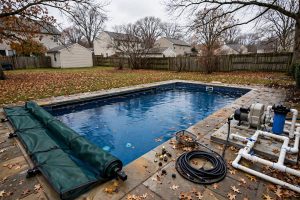
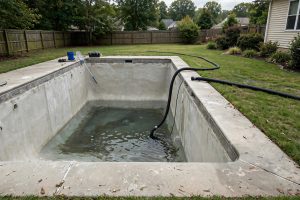
A swimming pool gathers dirt every day. Wind blows in leaves and dust. Grass clippings fall in from the yard. Sunscreen, sweat, and lotion wash off swimmers and mix into the water. If this debris stays in the pool, it feeds algae. Algae turns water green and cloudy. It makes floors slippery. Once algae takes hold, it is hard and costly to remove.
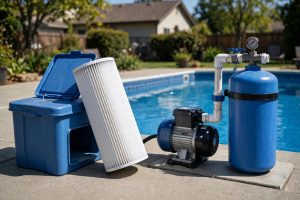
An automatic pool vacuum keeps the water clean day after day. It works on a steady schedule, often two or three times a week. It catches dirt before the dirt can break down. This cuts down on chemical use. Clean water needs less chlorine to stay clear. The pump and filter also last longer because they do not clog with heavy debris. Guides at Swim University stress that steady cleaning is the heart of easy pool care. A pool that is cleaned often is a pool that stays blue.
Time is the other gain. Hand vacuuming a large pool can take an hour or more. An automatic cleaner does the job while you are at work, at school, or on the couch. For busy families, this saved time is the real value. If you also keep the best above ground pool for families in good shape, an automatic vacuum protects that investment year after year.
What to Look for in a Pool Vacuum: Best Pool Vacuum for Automatic Cleaning
Shopping for an automatic cleaner can feel confusing. Many models look alike. The price range is wide. Focus on a few key points, and the choice becomes clear.
Pool Type and Size
First, match the vacuum to your pool. An inground pool needs a stronger machine with good wall climbing. An above ground pool needs a lighter model that does not strain the liner. A small round pool of 18 feet can use a basic cleaner. A large L-shaped pool needs a long run time and strong suction. Check the label. Makers like Leslie’s and Pool Warehouse list which pool sizes each model handles.
Cord or Hose Length
The vacuum must reach every corner. Measure from your skimmer or power outlet to the farthest corner of the pool. Add several feet. For robotic models, a 50-foot cord suits most home pools. For suction models, the hose must stretch from the skimmer to the far wall. A short cord or hose leaves a dead zone that never gets cleaned.
Filter and Debris Basket
A fine filter bag or large basket traps small dirt, sand, and pollen. Cheap models use coarse filters that miss fine silt. Look for a basket that is easy to open and rinse. Some models have a top-loading basket. This makes cleaning quick and keeps your hands dry.
Climbing and Coverage
Good cleaners climb walls and scrub the waterline. The waterline is where oils and scum collect. A machine that only cleans the floor leaves a dirty ring around the top edge. Look for models with brushes or scrubbing rollers. Smart navigation helps too. Better robots learn the pool shape and cover every inch without tangling the cord.
Warranty and Parts
A pool vacuum works in harsh water full of chemicals and sun. Parts wear out. A solid warranty of one to two years shows that the maker stands behind the product. Check that spare parts, such as brushes and filter bags, are easy to buy. The Home Depot and Lowe’s both carry common replacement parts for popular cleaners.
Types of Automatic Pool Vacuums
There are three main kinds of automatic pool cleaners. Each has its own strengths. The best pool vacuum for automatic cleaning for your home depends on your pool, your pump, and your budget.
Robotic Pool Vacuums
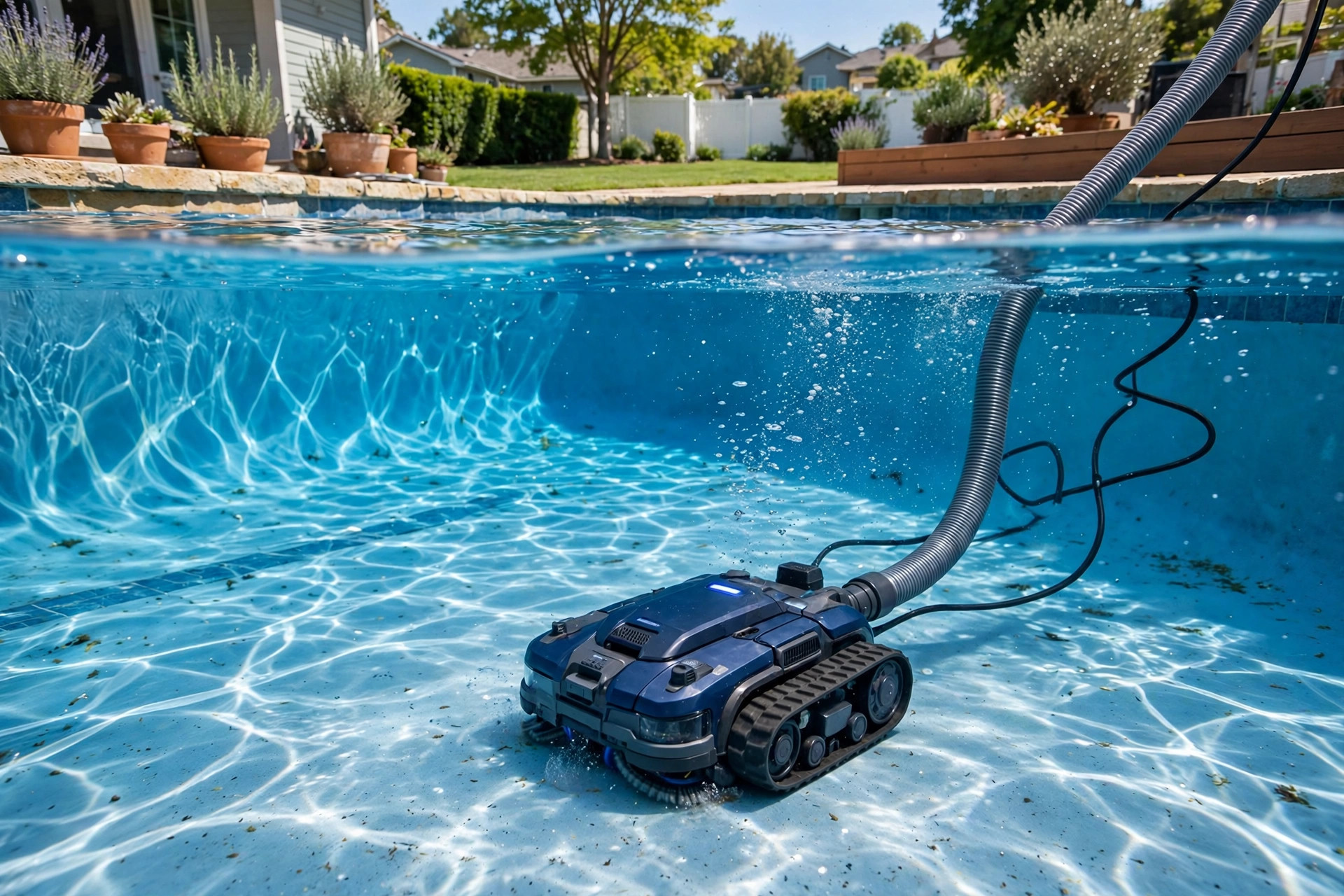
Robotic cleaners are the most popular choice today. They have their own electric motor and power supply. You plug them into a normal outlet, lower them into the water, and press start. They do not use the pool pump at all. This saves energy and keeps the pump free for other work.
Most robots use smart navigation. They map the pool and clean in neat rows instead of random circles. They climb walls and scrub the waterline with rollers. Many models have a two-hour cycle. Some have remote controls or phone apps. Robotic pool vacuum models for inground pools often clean the largest area in the shortest time. They cost more up front, but they clean best and cost less to run. Reviews and buying guides at The Spruce often rate robotic models highest for ease of use.
Suction-Side Pool Cleaners
Suction-side cleaners hook to the skimmer or a dedicated suction line. The pool pump pulls water through the cleaner, which sucks up dirt as it moves. They are simple and low cost. Many come with a long hose that you connect in sections.
These cleaners work well for light dirt and leaves. They have few moving parts, so there is less to break. The downside is that they use your pool pump. The pump must run longer, which raises the electric bill. They also send all the dirt to the pool filter. You will clean the filter more often. Suction side pool cleaner reviews often note that they miss fine silt and struggle with large pools. Still, they are a solid budget pick for smaller pools.
Pressure-Side Pool Cleaners
Pressure-side cleaners connect to the return line, where clean water flows back into the pool. They use water pressure to drive wheels and a sweep tail. Dirt is swept into a filter bag on the cleaner itself, not into the pool filter. This keeps the main filter cleaner for longer.
Pressure models are strong and fast. They handle large debris, such as acorns and twigs, better than suction models. Many need a booster pump for full power. That adds to the setup cost. They tend to move in random patterns, so coverage can be uneven. Automatic pool cleaner reviews often place pressure models in the middle: stronger than suction, cheaper than robotic.
Cost and Price
Prices for automatic pool vacuums vary a great deal. Basic suction-side models sell for about one hundred to two hundred dollars. Mid-range pressure models cost about three hundred to six hundred dollars. Robotic models range from about five hundred to over one thousand dollars for top units.
The purchase price is not the whole story. Think about running costs. Suction and pressure cleaners raise pump run time. That can add several dollars a month to the electric bill. Robotic cleaners use very little power, often less than a light bulb. They can pay back their higher price over a few seasons.
Also plan for upkeep. Filter bags, brushes, and hoses wear out. Set aside thirty to fifty dollars a year for parts. Cheap off-brand models may seem like a deal, but weak warranties and hard-to-find parts make them costly in the long run. Shoppers on Amazon can compare long lists of models and read owner notes before buying.
Care and Upkeep
A pool vacuum lasts longer with simple care. After each cycle, lift the cleaner from the water. Do not leave it sitting in the pool between cleanings. Long soaking in chlorinated water wears out seals, cables, and bags. Empty the filter bag or basket after every use. A full bag cuts suction and strains the motor.
Rinse the unit with fresh water once a week. Check the brushes and rollers for hair and string. Hair wraps around axles and slows the wheels. Cut it away with scissors. Check the power cord for cuts or cracks. A damaged cord is a shock risk. Store the cleaner in a shaded spot, away from direct sun. Heat and sunlight age plastic fast.
Test the pool water often. Balanced water keeps both the pool and the cleaner healthy. A salt water pool test kit reviews guide can help if you run a salt system, and you can read more in our article on salt water pool test kit reviews. High acid levels corrode metal parts. High chlorine fades plastic and rubber. Keep levels in the normal range, and the vacuum will serve you for many seasons.
Safety
Pool safety comes before clean water. Never swim while a suction or pressure cleaner is running. These machines connect to the pool plumbing. A stuck cleaner or a loose hose can trap hair or limbs near suction ports. Keep swimmers out until the cycle ends and the cleaner is out of the water.
For robotic cleaners, unplug the power supply before you put your hands in the water to lift the unit. Use only the cord and power box that came with the machine. Do not splice cords or use a wet extension cord. The U.S. Consumer Product Safety Commission posts pool safety guidance that every owner should read. A best pool cover for safety kids adds another layer of protection when the pool is not in use.
Keep the power supply box dry and shaded. Do not let it sit in a puddle. Store it off the ground on a shelf or stand. Teach children to leave the cleaner alone. It is a machine, not a toy. With these simple rules, an automatic vacuum is as safe as any other pool tool.
Frequently Asked Questions
How long should a pool vacuum run each day?
Most pools need two to three hours of cleaning, two or three times a week. Heavy leaf fall or a pool party may call for a longer run. Robotic models often have a fixed two-hour cycle. That is enough for a typical home pool.
Can a pool vacuum climb walls?
Many can. Robotic models are the best climbers. They use strong suction and tracks to grip walls and scrub the waterline. Suction-side models climb less well and often clean only the floor. Check the product label before you buy if wall cleaning matters to you.
Will an automatic vacuum replace my pool filter?
No. The vacuum picks up settled dirt. The filter still clears fine particles from the water. You still need to run the pump daily, skim the surface, and balance the chemicals. The vacuum makes filter work easier, but it does not take the place of the filter.
Can I leave a robotic cleaner in the pool all week?
It is not a good idea. Constant soaking in treated water wears out the unit faster. Sun and heat age the plastic shell. Lift it out after each cycle, rinse it, and store it in the shade. Your cleaner will last years longer with this habit.
Does an automatic pool vacuum work in an above ground pool?
Yes. Many models are made for above ground pools. Look for lighter units with soft brushes that will not tear the vinyl liner. Some robotic models are built just for above ground use. They are smaller and gentler than inground models.
How often should I clean the filter bag?
After every cleaning cycle. A full bag chokes suction and forces the motor to work harder. Rinse the bag or basket with a hose. Let it dry before you put it back. This small habit keeps cleaning power high.
A Final Word
Finding the best pool vacuum for automatic cleaning does not have to be hard. Start with your pool type and size. Pick the cleaner kind that fits your budget and your pump. Robotic models clean best and cost least to run. Suction models cost least to buy. Pressure models sit in the middle with strong large-debris pickup. Whichever you choose, clean the bag often, lift the unit from the water, and keep the power dry. Do that, and the machine will repay you with clear blue water and long summer days free for swimming. For spa owners, Hot Spring and Bullfrog Spas offer care guides for hot tub water too, where the same habits of steady cleaning apply.
References
Amazon. (n.d.). Online shopping. https://www.amazon.com Bullfrog Spas. (n.d.). Hot tubs and spas. https://www.bullfrogspas.com Hot Spring Spas. (n.d.). Hot tubs and spas. https://www.hotspring.com Leslie’s Pool Supplies. (n.d.). Pool supplies and equipment. https://www.lesliespool.com Lowe’s. (n.d.). Home improvement products. https://www.lowes.com Pool Warehouse. (n.d.). Pool equipment and supplies. https://www.poolwarehouse.com Swim University. (n.d.). Pool and hot tub care guides. https://www.swimuniversity.com The Home Depot. (n.d.). Home improvement products. https://www.homedepot.com The Spruce. (n.d.). Home and garden advice. https://www.thespruce.com U.S. Consumer Product Safety Commission. (n.d.). Product safety information. https://www.cpsc.gov
Was this guide helpful?

About Emily Rodriguez
The My Garden US editorial team writes practical, in-depth home and garden guides for American homeowners — tested advice, no fluff.