
A slow drain can ruin a morning. Water pools around the feet in the shower. The kitchen sink fills with dirty water. A plunger may fail. A bottle of chemicals may fail too. Many homeowners now buy powerful drain clog remover tools with free shipping instead of calling a plumber. The tools arrive at the door without a shipping fee. They cost far less than a service call. They work in minutes when used the right way.
This guide explains what these tools do. It shows the main types. It covers what to look for before buying. It covers cost, care, and safety. It answers common questions. By the end, the reader will know which tool fits which clog.
Why It Matters
Clogs are one of the most common home repair problems. Hair builds up in bathroom drains. Grease and food coat kitchen pipes. Soap scum narrows shower drains. Leaves and grit enter floor drains. Over time, water flows slower. Odors rise from the drain. In bad cases, water backs up into the tub or the sink.
A plumber visit often costs one hundred dollars or more. Many visits last only twenty minutes. A homeowner with the right tool can finish the same job. That saves money again and again. One tool may serve a house for years. Families with long hair, pets, or old pipes use these tools more often. Rental landlords keep them on hand to protect their pipes.
Quick action matters. A small clog grows. Grease hardens. Hair mats into a tight ball. A clog that clears in five minutes today may take an hour next month. It may also damage pipes if ignored. Standing water breeds germs. It can stain the tub or sink. A good tool stops these problems early.
What To Look For: Powerful Drain Clog Remover Tools with Free Shipping
Not every tool suits every drain. A wise buyer checks a few points before ordering.
Pipe Type
Pipes differ from home to home. Older homes may have cast iron or galvanized steel. Newer homes often use PVC. Some tools can scratch porcelain or soft pipes. The package should list safe pipe types. Read that list first.
Drain Size
Bathroom sink drains are small. Kitchen sinks are wider. Main drains are much wider. A small hair tool cannot reach a clog deep in a main line. A large auger may not fit a small sink drain. Match the tool length and width to the drain.
Clog Type
Hair clogs respond well to grabbers and snakes. Grease clogs may need a drill auger that can chew through buildup. Tree root clogs in outdoor lines need professional gear. A good buyer names the clog first, then picks the tool.
Handle And Grip
The tool must feel steady in the hand. A rubber grip helps when hands are wet. A hand crank should turn with ease. A drill attachment should lock in place. Weak plastic parts break under strain. Metal heads last longer.
Free Shipping Terms
Many sellers offer free shipping on these tools. Some set a minimum order. Some ship free only in the lower forty-eight states. Some add the shipping cost into the price. Read the shipping note on the product page. Compare the total price, not just the list price.
Helpful background on buying tools online can be found on The Spruce, which tests many home repair products for real-world use.
Types And Options
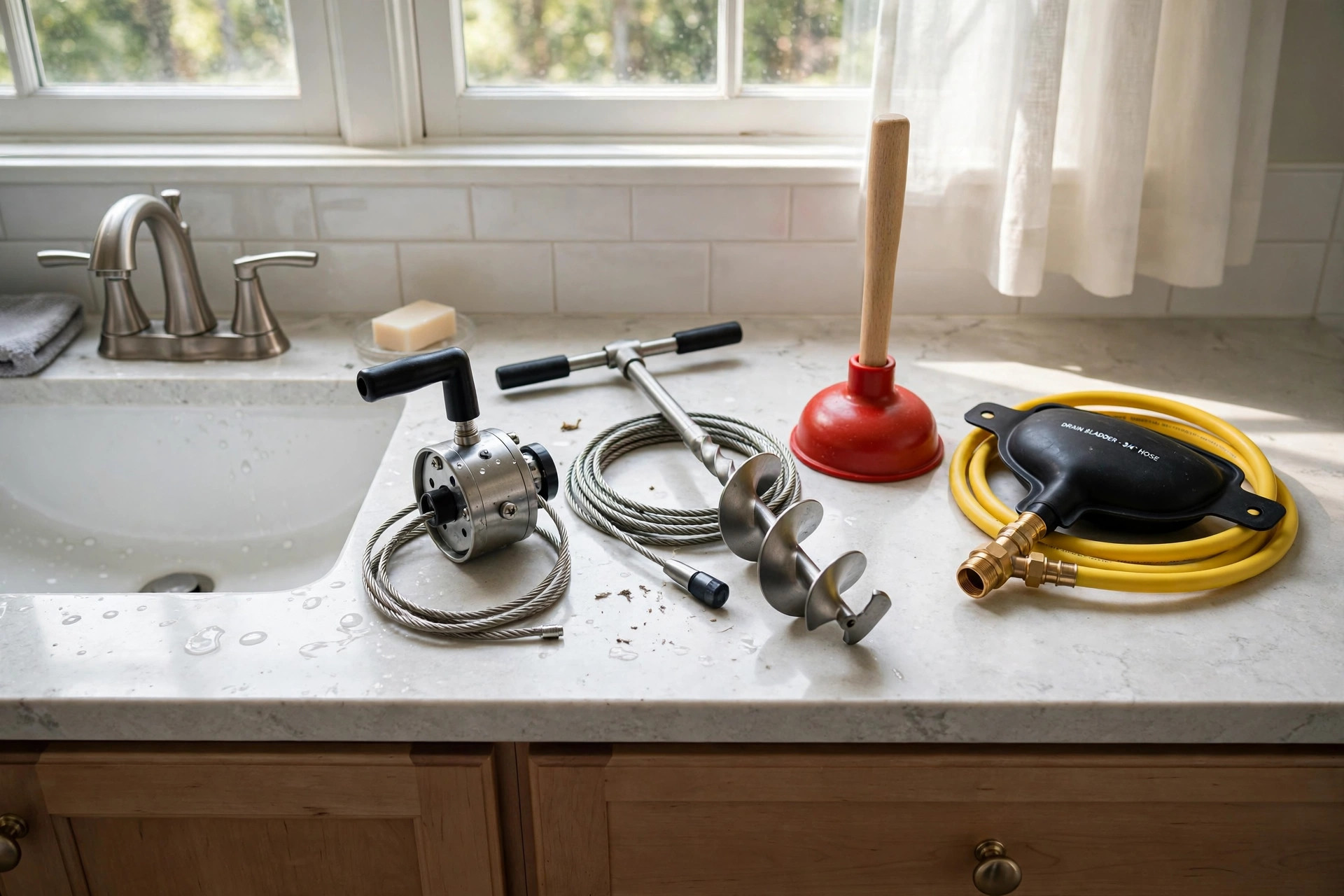
Several kinds of drain clog remover tools sell well. Each fits a different job.
Drain Snakes And Augers
The drain snake is the classic tool. It is a long, flexible steel cable with a claw or coil at the end. The user feeds it into the drain and turns the handle. The head grabs or breaks the clog. Hand-crank models suit sinks and tubs. Closet augers fit toilet drains. A related choice is reviewed in this drain clog remover tools reviews and buying guide.
Drill-powered augers are stronger. The cable locks into a power drill. The drill spins the cable at speed. This cuts through dense hair mats and soft buildup. Cable lengths run from fifteen to fifty feet. Longer cables reach deeper clogs.
Drain Bladders
A drain bladder is a rubber sleeve that connects to a garden hose. It slides into the drain. Water pressure makes it swell and seal the pipe. Then it pulses strong jets of water at the clog. It suits floor drains and outdoor lines. It needs care near weak pipes, since pressure is high.
Hair Grabbers And Drain Brushes
Hair grabbers are thin plastic strips with barbs. They slide past the drain cover and pull hair out. They cost very little. They work well for shower and tub drains. Small drain brushes clean the walls of the pipe. They remove soap film before it hardens. They prevent clogs rather than clear them.
Plungers And Kinetic Plungers
The cup plunger fits sinks and tubs. The flange plunger fits toilets. Kinetic plungers use a burst of air or water. They are simple to use. They handle shallow clogs well. Deep clogs often need a snake instead.
Chemical And Enzyme Cleaners
Chemical cleaners dissolve grease and soap. Enzyme cleaners use natural germs to eat organic buildup. Enzymes are gentler on pipes. They work slowly, often overnight. They suit monthly upkeep. They may fail on solid blockages like toys or large hair mats.
For homes with septic systems, gentle methods matter. The EPA offers plain guidance on septic care that helps owners avoid harm to their systems.
How To Use A Drain Snake Safely
Most buyers pick a hand-crank snake. The steps below fit most models.
First, clear the area. Remove items from under the sink. Lay an old towel on the floor. Wear rubber gloves and eye protection. Some clogs splash.
Second, remove the drain cover or stopper. Many covers lift out or unscrew. Set screws in a cup so they do not roll away.
Third, feed the cable into the drain by hand. Push it in slow and steady. When it meets resistance, that is often the clog.
Fourth, turn the handle clockwise while pushing gently. Let the head grab or chew through the blockage. Do not force the cable. Force can bend the cable or damage the pipe.
Fifth, pull the cable out slow. Debris will come with it. Wipe the cable with a rag as it emerges.
Sixth, run hot water for one minute. Check the flow. If water still drains slow, repeat the pass. Most clogs clear in two passes.
Seventh, clean the tool. Rinse the cable with hot soapy water. Dry it well. Oil the cable lightly to stop rust. Store it in a dry spot.
Step-by-step visual help appears on Family Handyman, which walks through many common plumbing fixes.
Cost And Price
Prices for these tools range wide. Small hair grabbers cost only a few dollars. A pack of three may cost less than ten dollars. Hand-crank snakes cost about fifteen to forty dollars. Drill-powered augers cost about thirty to eighty dollars. Drain bladders cost about ten to twenty-five dollars. Kinetic plungers cost about twenty to fifty dollars.
Shipping changes the real price. A twenty-dollar tool with a ten-dollar shipping fee costs thirty dollars in truth. Free shipping removes that fee. Many large stores ship these tools free with no minimum. Smaller shops may set a twenty-five or thirty-five dollar minimum. Some sellers raise the list price to cover the shipping cost. The wise move is to compare the delivered price across three or four sellers.
Professional service sets the true benchmark. A plumber may charge one hundred to two hundred fifty dollars to clear a simple clog. One tool bought with free shipping can pay for itself on the first use. A commercial grade drain clog remover tools for sale page can help compare stronger options for repeated use.
Good value does not always mean the lowest price. A cheap cable may kink on the first job. A mid-range steel cable lasts for years. Read the return policy too. A free return policy adds safety to the purchase.
Consumer testing groups compare many models side by side. Consumer Reports rates tools for strength and build quality, which helps buyers avoid weak products.
Care And Upkeep
A drain tool lasts longer with simple care. Rinse the cable or head after each use. Dry it before storage. Moist steel rusts in a damp garage. A light coat of oil guards the metal. Keep the tool in a dry place off the floor.
Clean the drain between clogs. Pour boiling water down kitchen drains once a week to melt grease. Use a hair catcher in the shower. It costs little and stops most hair clogs. Brush bathroom drains with a small bottle brush once a month. These small steps stretch the time between hard jobs.
Check the tool before each use. Look for bent cables, cracked handles, and loose locks. A bent cable may jam inside the pipe. Replace worn parts before they fail. Keep the product box or manual. It holds the cable length, pipe sizes, and safety notes.
Broader home upkeep advice from This Old House covers how regular small repairs protect a house over time.
Safety
Safety comes first with drain work. Wear gloves. Drain water holds germs and sharp bits of debris. Wear eye protection. Splashes happen when cables spin.
Keep chemical cleaners away from these tools. If a chemical cleaner sits in the pipe, the spinning cable can fling it back. That burns skin and eyes. If chemicals were used, wait a full day. Flush with lots of water first.
Turn off power to garbage disposals before work. Remove the disposal plug. Keep the drill steady and the speed low. High speed can whip the cable. Never let loose clothing or long hair hang near a spinning drill.
Know when to stop. If the cable will not advance after several tries, the clog may be deep or solid. If water backs up in several drains at once, the main line may be blocked. That job calls for a plumber. Forcing the tool can crack a pipe. A cracked pipe costs far more than a service call.
Child and pet safety matter during the job. Keep cleaning tools and any leftover chemicals locked away. Good Housekeeping publishes useful safety checklists for home repair tasks.
Frequently Asked Questions
Do these tools really clear tough clogs?
Yes, in most cases. Hair mats, soap buildup, and grease clogs respond well to snakes and augers. Very deep blockages or tree roots need a plumber. The tool works best on clogs within twenty-five feet of the drain opening.
Will a drain snake scratch my pipes or tub?
It can if used with force. Use a plastic guide tube where the cable enters the drain. Keep the speed low. Choose a tool rated for the pipe type. Porcelain tubs need extra care around the drain mouth.
Is free shipping really free?
Mostly. Some sellers build the cost into the price. Others set a minimum order. Read the shipping terms. Compare the delivered price, not the list price. Large retailers such as The Home Depot and Lowe’s often ship small tools free with clear terms.
Can I use these tools in a toilet?
Use a closet auger made for toilets. A standard sink snake can scratch the porcelain bowl. The closet auger has a curved guide that protects the bowl. Never use chemical cleaners in a toilet with a septic system unless the label allows it.
How do I keep drains from clogging again?
Use hair catchers in showers. Wipe grease from pans before washing. Run hot water after each use. Clean drains with enzyme treatment once a month. Small habits prevent most clogs. Practical prevention tips also appear on Bob Vila.
Are enzyme cleaners safe for septic tanks?
Yes. Enzyme cleaners are the gentlest choice for septic systems. They use natural organisms to digest waste. Avoid harsh chemicals that can kill the useful bacteria in the tank.
A Short Final Word
Powerful drain clog remover tools with free shipping put the fix in the homeowner’s own hands. They cost less than a single plumber visit. They arrive at the door with no shipping fee. They clear most household clogs in minutes. The key is to pick the right type, use it with care, and keep up with simple prevention. A home with clear drains is a home that works the way it should. More options in the same family of tools, including commercial grade gutter cleaning tools with free shipping, can round out a full home maintenance kit.
References
Bob Vila. (n.d.). Home improvement advice. https://www.bobvila.com Consumer Reports. (n.d.). Product reviews and ratings. https://www.consumerreports.org Family Handyman. (n.d.). DIY home repair and maintenance. https://www.familyhandyman.com Good Housekeeping. (n.d.). Product reviews and home advice. https://www.goodhousekeeping.com Lowe’s. (n.d.). Home improvement products. https://www.lowes.com The Home Depot. (n.d.). Home improvement products. https://www.homedepot.com The Spruce. (n.d.). Home and garden advice. https://www.thespruce.com This Old House. (n.d.). Home renovation guidance. https://www.thisoldhouse.com U.S. Environmental Protection Agency. (n.d.). Protecting human health and the environment. https://www.epa.gov
Was this guide helpful?

About Lisa Anderson
The My Garden US editorial team writes practical, in-depth home and garden guides for American homeowners — tested advice, no fluff.
You May Also Like
Cordless Air Duct Cleaning Services Near Me
January 27, 2026 0 views
Top Rated Post Construction Cleaning Services Reviews: How to Read Them and Choose a Good Crew
September 10, 2026 0 views
Reliable Spin Mop Bucket Systems With Free Shipping: A Buyer’s Guide
August 8, 2026 0 views