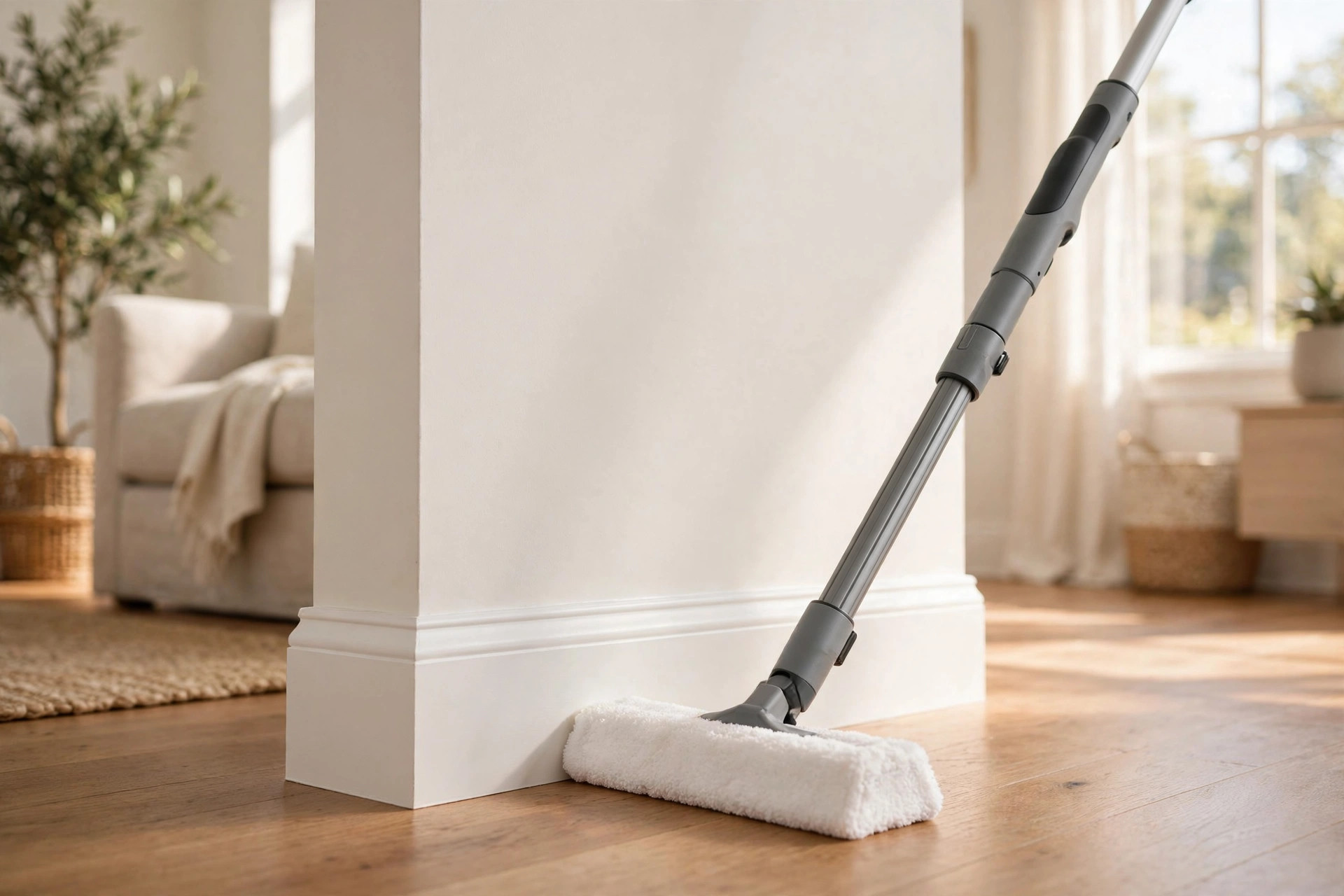

Baseboards gather dust faster than most people notice. They sit low on the wall, close to foot traffic, pet hair, and mop splash. After a few months they turn gray along the top edge. This powerful baseboard cleaning tools buying guide explains how to choose strong tools that clean trim well without harming paint or wood. You will learn which tools suit painted wood, stained wood, and vinyl baseboards. You will also learn what they cost and how to keep them working for years.
Why Strong Baseboard Tools Matter
Dust does not sit still. It floats through the air and lands on every flat surface, and the top of a baseboard is a perfect shelf for it. In homes with forced-air heat, dust piles up faster because the air moves all day. Pets add hair. Kitchens add grease that drifts on warm air and sticks to trim. Once grime bonds with paint, a weak rag smears it around instead of lifting it.
A strong tool solves this. It reaches the floor line without forcing you to kneel in every corner. It holds enough pressure to scrub scuffs yet stays gentle on paint. The right tool also cuts cleaning time. Many homeowners report that a proper baseboard tool turns a two-hour chore into a thirty-minute job. Reviews of baseboard cleaning tools price comparison show that buyers who invest in a purpose-built tool clean their trim more often, and trim that is cleaned often needs less scrubbing each time.
Types of Powerful Baseboard Cleaning Tools: Powerful Baseboard Cleaning Tools Buying Guide
Extendable Handle Cleaning Pads
These are the most popular choice. A flat or curved cleaning head snaps onto a pole that extends from three to five feet. You walk along the wall and slide the pad across the top and face of the baseboard. Many heads swivel, which helps in corners and behind furniture. The pads are usually microfiber and washable. Some brands sell chenille pads that grab dust like fingers.
Firm Bristle Scrub Brushes
When dust has turned into stuck grime, bristles help. Baseboard brushes have stiff but flexible bristles set in a narrow head that fits the face of the trim. Some have angled heads for the top edge. A brush works well on scuff marks left by shoes and vacuum heads. Choose bristles that bend rather than scratch. Test on a hidden spot first if your paint is new.
Steam Cleaning Attachments
Steam tools loosen grime with heat instead of chemicals. A small triangular or narrow nozzle directs steam along the baseboard, and you wipe with a cloth as you go. Steam cuts through sticky kitchen film fast. It works on sealed paint and tile baseboards. Do not use steam on raw wood or peeling paint, because moisture can lift the finish.
Electric Scrubbing Brushes
Cordless scrub brushes spin or vibrate a cleaning head for you. They shine on textured trim and deep scuffs. They also help people with sore knees and backs, because the tool does the pressing. Compare models in a cordless electric scrubbers price comparison before buying, since battery life and head options differ widely. A good unit runs at least forty minutes per charge.
Spray Mops With Baseboard Attachments
Some spray mops sell a narrow baseboard attachment. You fill the tank with water or a gentle cleaner, spray ahead of the head, and glide along the wall. This type suits quick weekly touch-ups more than deep seasonal cleans.
Two-Step Dust and Polish Kits
These kits pair a dry dusting head with a second head for damp wiping. You dust the whole room first, then damp-wipe. The two-step method keeps you from turning dry dust into mud on the paint. It is a favorite method among professional cleaners. Housekeeping experts at Good Housekeeping often recommend dusting before any wet step for this reason.
What to Look for When You Buy
Cleaning Power Against Real Grime
Power means the tool removes dust, hair, and scuffs without repeated passes. Read buyer reviews and look for comments about pet hair and shoe marks. Tools that work in one or two passes save real time. Consumer Reports publishes lab tests of cleaning tools, and their ratings can confirm whether a tool lives up to its claims.
Reach and Handle Design
Your tool should reach baseboards behind the sofa and under the bed. A handle of at least four feet covers most rooms. Foam grips reduce hand fatigue. Swivel heads turn into corners. If you have high baseboards, six inches tall or more, choose a head wide enough to cover the face in one pass.
Head Material and Refills
Microfiber pads lift dust by static charge. Bristles scrub. Some heads combine both. Check the price of replacement pads before you buy. A cheap tool with costly refills can cost more over two years than a pricier tool with washable pads. Family Handyman notes that washable microfiber keeps working through hundreds of wash cycles, which lowers long-term cost.
Safe for Your Finish
Painted wood needs a gentle touch. Satin and semi-gloss paints resist scrubbing better than flat paint. Vinyl and PVC baseboards tolerate firmer brushes. Stained wood trim needs mild cleaners and soft pads. Avoid steel wool and harsh powders on any painted surface. If you are unsure, test the tool behind a door where no one will see a mark.
Ease of Cleaning the Tool Itself
The best tool is one you will actually clean. Microfiber pads should rinse or machine wash easily. Brushes should shed hair with a comb or a rinse. Tools with sealed heads resist mold if you store them damp. Simple designs beat clever ones that trap dirt in hinges.
Weight and Storage
A tool you use monthly should hang on a hook or stand in a closet. Heavy electric scrubbers tire your arm on a long wall. If the tool weighs more than two pounds, look for a model with a shoulder strap or a floor rest.
Cost and Price: What to Expect
Baseboard tools span a wide range. Simple extendable dusting pads cost about ten to twenty dollars. Mid-range sets with several heads and washable pads run twenty to forty dollars. Cordless electric scrubbers cost forty to ninety dollars depending on battery size and attachments. Steam cleaners that include a baseboard nozzle range from sixty to one hundred fifty dollars.
Running costs matter too. Washable pads cost almost nothing per use. Disposable pads can add five to ten dollars a month if you clean often. Electric tools need replacement batteries after a few years, often twenty to thirty dollars. Cleaning solutions add a few dollars per bottle; many people switch to plain water with a drop of dish soap, which costs pennies.
Compare total cost before you buy. A baseboard cleaning tools price comparison across stores helps you spot real deals. Check seasonal sales, since cleaning tools often drop in price during spring cleaning season. The Home Depot and Lowe’s both stock full lines of baseboard tools, so you can compare handles side by side in the store.
Care and Upkeep of Your Tools
Wash microfiber pads after each use. Shake off dry dust outside first, then wash in warm water with mild detergent. Skip fabric softener, which coats the fibers and kills their static charge. Air dry or tumble dry on low heat.
Rinse bristle brushes under warm water. Pull out trapped hair with an old comb. Stand brushes bristle-up to dry so the bristles keep their shape. For electric scrubbers, charge the battery after each use and store the tool in a dry place. Wipe the handle monthly with a damp cloth to keep the grip clean.
Replace pads when they stop picking up dust even after washing. Replace brush heads when bristles splay outward. With basic care, a good baseboard tool lasts three to five years of regular use.
Safety Notes
Keep electrical tools away from standing water. Unplug steam cleaners before changing nozzles. Wear gloves when using strong cleaners, and keep the room aired. The EPA advises reading cleaner labels and using only the amount directed, because more soap does not mean more clean and can leave sticky film.
Watch your posture. Long handles exist so you do not bend or kneel. If a tool forces you into an awkward position, it is the wrong tool. Keep cords clear of your path to avoid trips. Store tools where children and pets cannot reach the small parts.
How to Clean Baseboards Step by Step
Start with dry dusting. Fit a microfiber pad or soft brush head and sweep the tops and faces of all baseboards in one room. Work from the far corner toward the door so you do not walk through dust you just moved.
Next, damp wipe. Lightly dampen a pad with water and a drop of dish soap. Wring it well; trim should never drip. Wipe the face of the baseboard, then the top edge. Rinse the pad often in clean water.
Then handle spots. Press a bristle brush or scrub pad on scuffs and sticky spots. Use short, firm strokes. For grease near the kitchen, a little baking soda on a damp pad works well. Guidance from The Spruce suggests working in small sections so cleaner does not dry on the paint.
Finish by drying. Run a dry cloth along the trim to pick up moisture. This step prevents dust from sticking to damp paint. Open a window or run a fan to speed drying in humid rooms. If you live in a humid climate, read tips for baseboard cleaning tools for humid climates, where drying and mold prevention matter more.
FAQ
How often should I clean my baseboards?
Dust them every two to four weeks with a dry tool. Do a damp wipe two to four times a year. Homes with pets or forced-air heat may need monthly damp cleaning.
Will a scrub brush scratch my paint?
A brush made for baseboards should not scratch cured paint. Test behind a door first. Avoid metal bristles and abrasive powders. Soft to medium bristles are safe for satin and semi-gloss paint.
Can I use a steam cleaner on wood baseboards?
Only on sealed, painted wood in good condition. Never use steam on raw wood, cracked paint, or peeling finish. Keep the nozzle moving so heat does not sit in one spot.
What cleaner is safe for baseboards?
Warm water with a drop of dish soap handles most jobs. For grease, add a spoonful of baking soda. Avoid bleach and ammonia on painted trim unless the label says it is safe. Bob Vila’s home care guides remind readers to test any cleaner on a hidden area first.
Are electric scrubbers worth the price?
They are worth it if you have textured trim, heavy scuffs, or joint pain. For light dust, a simple pad works as well and costs far less. Match the tool to the job, not the other way around.
How do I reach baseboards behind heavy furniture?
Use a flat swivel head on a long handle. Slide it behind the furniture without moving it. For tight spots, a slim brush with an angled head fits where pads cannot go. This Old House shows techniques for cleaning behind fixtures without moving them.
A Final Word
Clean baseboards change how a whole room feels. The walls look taller, the paint looks newer, and the room smells fresher. You do not need the priciest tool on the shelf. You need a tool with real cleaning power, a handle that fits your rooms, and pads you can wash and reuse. Buy once, buy well, and clean on a simple schedule. Your trim will thank you for years.
References
Bob Vila. (n.d.). Home improvement advice. https://www.bobvila.com Consumer Reports. (n.d.). Product reviews and ratings. https://www.consumerreports.org Family Handyman. (n.d.). DIY home repair and maintenance. https://www.familyhandyman.com Good Housekeeping. (n.d.). Product reviews and home advice. https://www.goodhousekeeping.com Lowe’s. (n.d.). Home improvement products. https://www.lowes.com The Home Depot. (n.d.). Home improvement products. https://www.homedepot.com The Spruce. (n.d.). Home and garden advice. https://www.thespruce.com This Old House. (n.d.). Home renovation guidance. https://www.thisoldhouse.com U.S. Environmental Protection Agency. (n.d.). Protecting human health and the environment. https://www.epa.gov
Was this guide helpful?

About David Wilson
The My Garden US editorial team writes practical, in-depth home and garden guides for American homeowners — tested advice, no fluff.
You May Also Like
The Best Pressure Washers for Driveways for USA Homes
January 4, 2026 0 views
How to Buy Tile Grout Cleaning Machines Online in Arizona
January 11, 2026 0 views
Best Roof Moss Removal Services Near Me: How to Find a Good One
March 6, 2026 0 views