A clean house takes steady work. It also takes the right tools. One of the simplest tools a home can own is a cleaning caddy. When shoppers look for powerful all purpose cleaning caddies for sale, they are really looking for one thing. They want a carrier that holds all their supplies and goes room to room with them.
This guide explains what makes a cleaning caddy truly useful. It covers materials, size, and design. It gives price ranges and care tips. It also answers common questions. By the end, the choice will feel simple.
Why a Good Cleaning Caddy Matters
Cleaning takes time. A typical American home has a kitchen, two baths, a living room, and several bedrooms. Each room needs a different set of products. Without a caddy, supplies sit under the sink. They hide in closets. They get lost behind the washer.
A caddy changes the habit. Every bottle and brush has one home. The caddy travels from room to room. Nothing is left behind. Nothing is searched for. The job moves faster.
Speed is not the only gain. A caddy also cuts waste. Bottles are easy to find, so they get used up instead of replaced. Sprays do not knock over in a crowded cabinet. Brushes dry in open air instead of sitting damp in a dark box. These small savings add up over a year.
There is also a comfort factor. Cleaning is easier when the work feels orderly. A full caddy, set on the counter, signals that the task is ready to begin. Many homemakers say this small ritual makes the chore less of a burden.
What to Look for When You Shop: Powerful All Purpose Cleaning Caddies for Sale
The market is full of options. Many listings for powerful all purpose cleaning caddies for sale look alike in photos. The differences show up in use. Here are the traits that count most.
Sturdy Build
The caddy must carry weight. A gallon of cleaner, several spray bottles, a box of baking soda, and a set of brushes can weigh ten pounds or more. Thin plastic walls bow under this load. Thick molded plastic or coated metal holds its shape. Check the handle joint most of all. That is where cheap caddies fail.
A Comfortable Handle
The handle is the point of contact. A narrow strip of plastic digs into the palm. A wide grip with a rounded edge feels far better. Some caddies offer a handle tall enough for a full arm carry. Others sit low and compact. Think about stairs. A tall handle suits a two-story house. A low profile fits under a sink shelf.
Smart Compartments
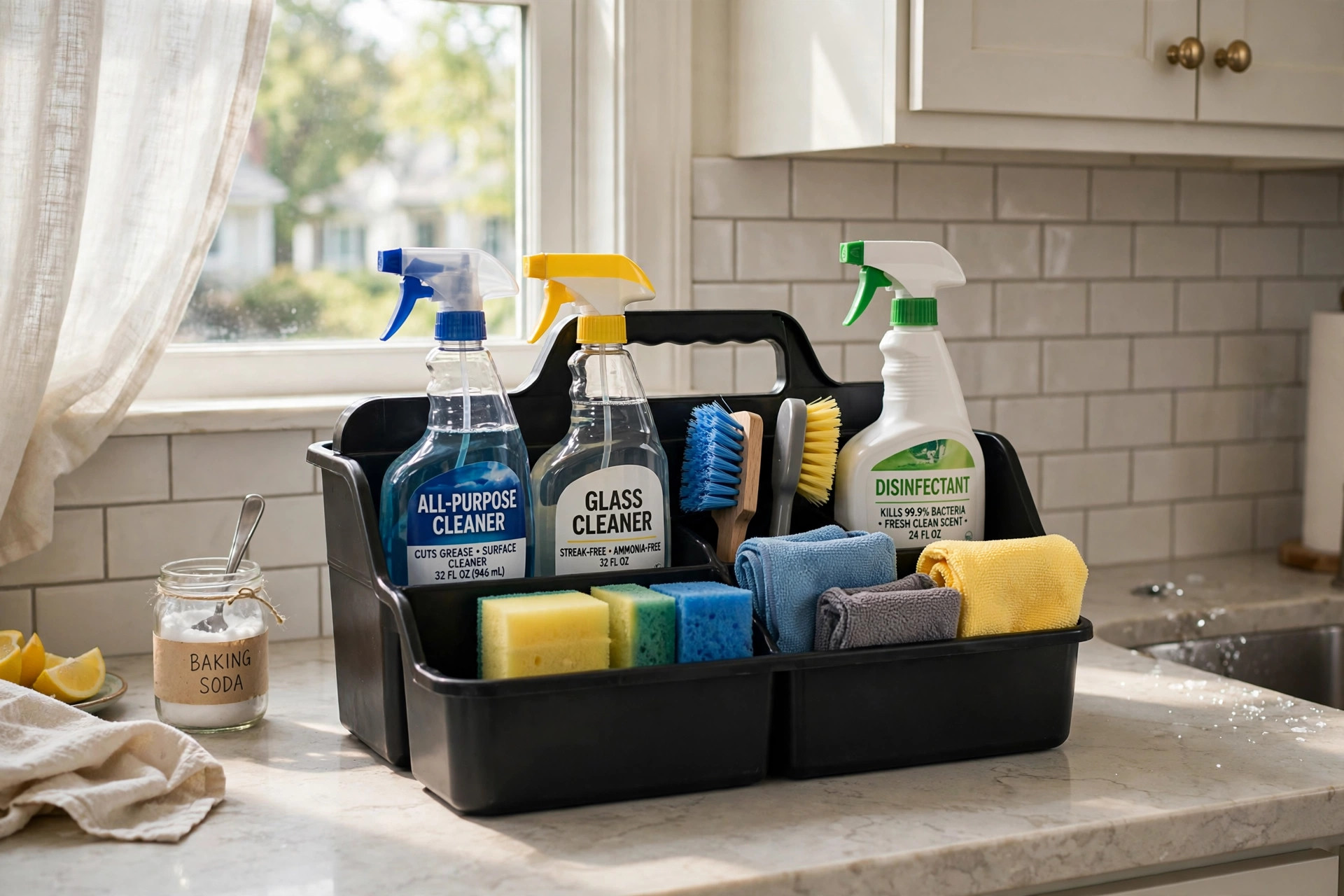
One big open bucket is not enough. Bottles tip. Sponges sink to the bottom. The best caddies divide the space. A center well holds tall spray bottles. Side pockets take scrub pads and cloths. Small slots keep toothbrushes for grout and detail brushes upright. A few dividers make a plain box into a working tool.
Easy to Clean
Cleaners spill. That is a fact of the job. The caddy itself should wipe clean in seconds. Smooth plastic is ideal. Fabric organizers stain and hold odors. Wire racks rust when wet bottles sit in them. Pick a surface that rinses under the tap.
Right Size for the Job
Bigger is not always better. A caddy that holds twenty products becomes too heavy to lift. A good size carries eight to twelve items. That covers a full room pass. Measure the storage spot too. If the caddy must live under a sink, it must clear the pipes and the door.
Types and Options on the Market
Shoppers will meet several styles. Each suits a different home and habit.
Open tote caddies. This is the classic form. It looks like a bucket with a handle and divided sections. It is light, cheap, and easy to rinse. Most families start here.
Caddies with lids. A lid keeps dust out and hides the contents. It also stops small items from falling when the caddy tips. These cost a bit more. They suit homes where the caddy rides in a car to a rental property or a second home.
Caddies on wheels. A rolling caddy carries heavy loads with no lifting. It works well on hard floors. It is less handy on stairs. Some models split into a lift-out tote plus a rolling base, which gives the best of both.
Apron and belt caddies. Professionals wear their tools. A belt holds spray bottles at the hip. This leaves both hands free. It is a serious choice for big houses or cleaning services.
Metal and wire caddies. These look sharp and last long. Coated metal resists rust. Bare chrome does not. They weigh more than plastic. They suit buyers who want a caddy that looks good enough to leave on a counter.
Guides from sources like The Spruce often review these styles side by side. Hands-on tests at Good Housekeeping and Consumer Reports can help buyers compare how different models hold up over months of use.
Cost and Price: What to Expect
Prices for all purpose cleaning caddies vary widely. A basic plastic tote costs between five and fifteen dollars. These do the job for light weekly cleaning.
Mid-range models run from fifteen to thirty dollars. They add stronger handles, better dividers, and spill-proof pockets. This is the sweet spot for most households. The caddy feels solid but the price stays fair.
Heavy-duty and specialty caddies range from thirty to sixty dollars. These use thick resin, metal frames, or rolling bases. Professional cleaners favor them. A large family with a big house may also find the price worth it.
Retailers such as Home Depot and Lowe’s stock a wide range of these price points. Shoppers who want organizer-style models can also browse the storage sections at The Container Store. Prices change with sales, so a short wait for a holiday weekend can save real money.
When the budget is tight, remember that the caddy is a one-time buy. A ten-dollar difference spread over five years is nothing. Buy the sturdier model.
Care and Upkeep
A caddy needs little care, but a few habits keep it fresh for years.
Rinse it after messy jobs. A quick wash under the tap clears drips and dust. Dry it before loading bottles again. Standing water breeds mildew.
Check the handle each month. Screws loosen with use. A quick turn of a screwdriver takes seconds. Caught early, a loose handle never becomes a broken one.
Replace worn dividers. Some caddies use removable cups or trays. These crack before the main body does. Many brands sell replacement parts. A fresh tray costs far less than a new caddy.
Store the caddy with the load balanced. Heavy bottles on one side warp thin walls over time. Keep weight even. The shape will stay true.
Project guides from This Old House and Family Handyman offer many such small maintenance habits for household tools. Practical walk-throughs at Bob Vila cover similar ground for home upkeep gear.
Safety Notes
Safety starts with how the caddy is packed. Keep bleach away from ammonia-based cleaners. The two must never mix. Their fumes can harm the lungs. A caddy with separate sections helps keep them apart.
Store the loaded caddy out of reach of small children and pets. A locked cabinet under the sink is best. Never leave a full caddy on the floor where a toddler can reach it.
Read every label. The EPA offers guidance on safer cleaning products and proper storage. Labels tell how to use a product and what to do if it spills. A caddy is only as safe as the habits of the person who packs it.
Ventilate the room while cleaning. Open a window or run a fan. Many sprays irritate the eyes and throat in closed air. This is a simple step that many people skip.
What Goes Inside: A Starter List
A new caddy needs the right fill. Here is a plain starter list for a typical home.
– All-purpose spray cleaner – Glass cleaner – Bathroom scrub and a grout brush – Microfiber cloths, at least four – A non-scratch scrub sponge – Dish soap, which also cleans many surfaces – Baking soda for odors and mild scrubbing – A dusting cloth or extendable duster – Rubber gloves – Small trash bags for quick pickups
This list covers most rooms. Add specialty items as needed. Wood polish, stainless cleaner, and tile grout pens all earn their place once the basics are in hand. Pairing the caddy with good cloths and tools, like the ones in our guide to microfiber cleaning cloth sets, makes the whole kit work harder.
How to Pack a Caddy Like a Pro
Packing order matters. Place the heaviest bottles in the center well. They sit low and keep the caddy stable. Tall sprays go in the middle so they do not tip the load.
Put cloths and sponges in side pockets. They are light and easy to grab. Small tools, such as a grout toothbrush or a razor scraper, go in the narrow slots. Nothing should rattle. If items shift during the carry, the layout needs work.
Keep a spare trash bag folded flat at the bottom. It adds no weight. It saves a trip back to the kitchen more often than one would think.
Refill check before each use. A thirty-second glance beats a mid-job trip to the store shelf. This habit is what separates a casual cleaner from an efficient one. Power scrubbers, covered in our cordless electric scrubbers guide, pack well in the same caddy when a job needs extra force.
Frequently Asked Questions
What is the best material for a cleaning caddy? Thick molded plastic is the best all-around choice. It is light, cheap, and rinses clean. Coated metal lasts longer but weighs more. Avoid fabric for wet supplies and bare wire for anything that stays damp.
How many bottles should a caddy hold? Eight to twelve items is the practical range. That is enough for a full room pass without making the caddy too heavy. Very large caddies tempt buyers to overload them, which strains the handle.
Can one caddy serve the whole house? Yes, for most homes. One well-packed caddy can cover kitchen, baths, and living areas. Keep a second small kit with glass cleaner and a cloth near the main mirror if streaks are a worry. Some owners also keep a separate vacuum-based kit, as discussed in our HEPA vacuum cleaner buying guide.
Are expensive caddies worth the price? Often yes, within reason. The jump from a five-dollar tote to a twenty-dollar model brings a real gain in strength and layout. Above forty dollars, the gains shrink unless the caddy has wheels or a professional belt system.
How do I stop bottles from tipping in the caddy? Use the dividers. Tall bottles belong in the center well, braced on all sides. Short items go in pockets. If the caddy has no dividers, add small plastic cups or cut a piece of foam to fill gaps. A snug fit is the whole trick.
Where should I store the caddy? A cool, dry cabinet near the center of the home works best. Under the kitchen sink is common. A laundry room shelf is better if space allows. Keep it off the floor in damp basements, where moisture can creep into cardboard packaging and rust metal parts.
A Short Final Word
The search for powerful all purpose cleaning caddies for sale ends with a simple truth. The best caddy is the one that fits the home, the hands, and the habit. Strong walls, a kind handle, and smart pockets matter more than brand names. Pick a size that carries a full load without strain. Pack it well. Rinse it often. It will serve the household for years, one clean room at a time.
References
Bob Vila. (n.d.). Home improvement advice. https://www.bobvila.com Consumer Reports. (n.d.). Product reviews and ratings. https://www.consumerreports.org Family Handyman. (n.d.). DIY home repair and maintenance. https://www.familyhandyman.com Good Housekeeping. (n.d.). Product reviews and home advice. https://www.goodhousekeeping.com Lowe’s. (n.d.). Home improvement products. https://www.lowes.com The Container Store. (n.d.). Storage and organization products. https://www.containerstore.com The Home Depot. (n.d.). Home improvement products. https://www.homedepot.com The Spruce. (n.d.). Home and garden advice. https://www.thespruce.com This Old House. (n.d.). Home renovation guidance. https://www.thisoldhouse.com U.S. Environmental Protection Agency. (n.d.). Protecting human health and the environment. https://www.epa.gov
Was this guide helpful?

About Sarah Mitchell
The My Garden US editorial team writes practical, in-depth home and garden guides for American homeowners — tested advice, no fluff.