
This childproof fireplace screens reviews and buying guide is written for parents and grandparents. A fireplace gives warmth and comfort on a cold night. It also gives off strong heat and throws sparks. A small child can be hurt in a second. A good screen is a simple guard that stands between a child and the fire. This guide explains why these screens matter, what types are sold, what to check before you buy, what they cost, and how to keep them in good shape.
Why Childproofing Your Fireplace Matters
A lit fireplace has a glass front or an open firebox that can reach very high heat. A toddler does not understand danger. Children pull up on furniture and reach for bright, moving things. The flames draw them in. Contact with a hot screen or glass can burn skin at once. Sparks and small embers can also jump from an open fire and land on a rug, a toy, or clothing.
A screen does not take the place of watching your child. It gives you extra time. It slows a crawling baby or a walking toddler. It catches sparks that fly from burning wood. It keeps pokers, tools, and hot logs where they belong. For homes with young children, a childproof screen is one of the first safety buys for the living room.
Homes with gas fireplaces have the same need. A gas unit has no sparks, but its glass front gets very hot while it runs and stays hot long after it is turned off. A barrier keeps small hands from touching that glass. The U.S. Consumer Product Safety Commission shares safety advice for homes with small children, and its guidance is worth reading before you buy any hearth guard.
What to Look for When You Buy: Childproof Fireplace Screens Reviews and Buying Guide
A Stable, Tip-Resistant Frame
A child will push, pull, and lean on a screen. The frame must stand firm. Look for heavy steel or wrought iron. Four feet or a wide flat base helps the screen resist tipping. Some models bolt to the wall or to the side of the firebox. Wall mounting is the most secure choice in a home with toddlers. A free-standing screen should be heavy enough that a child cannot move it by hand.
Mesh That Blocks Sparks and Stays Cooler
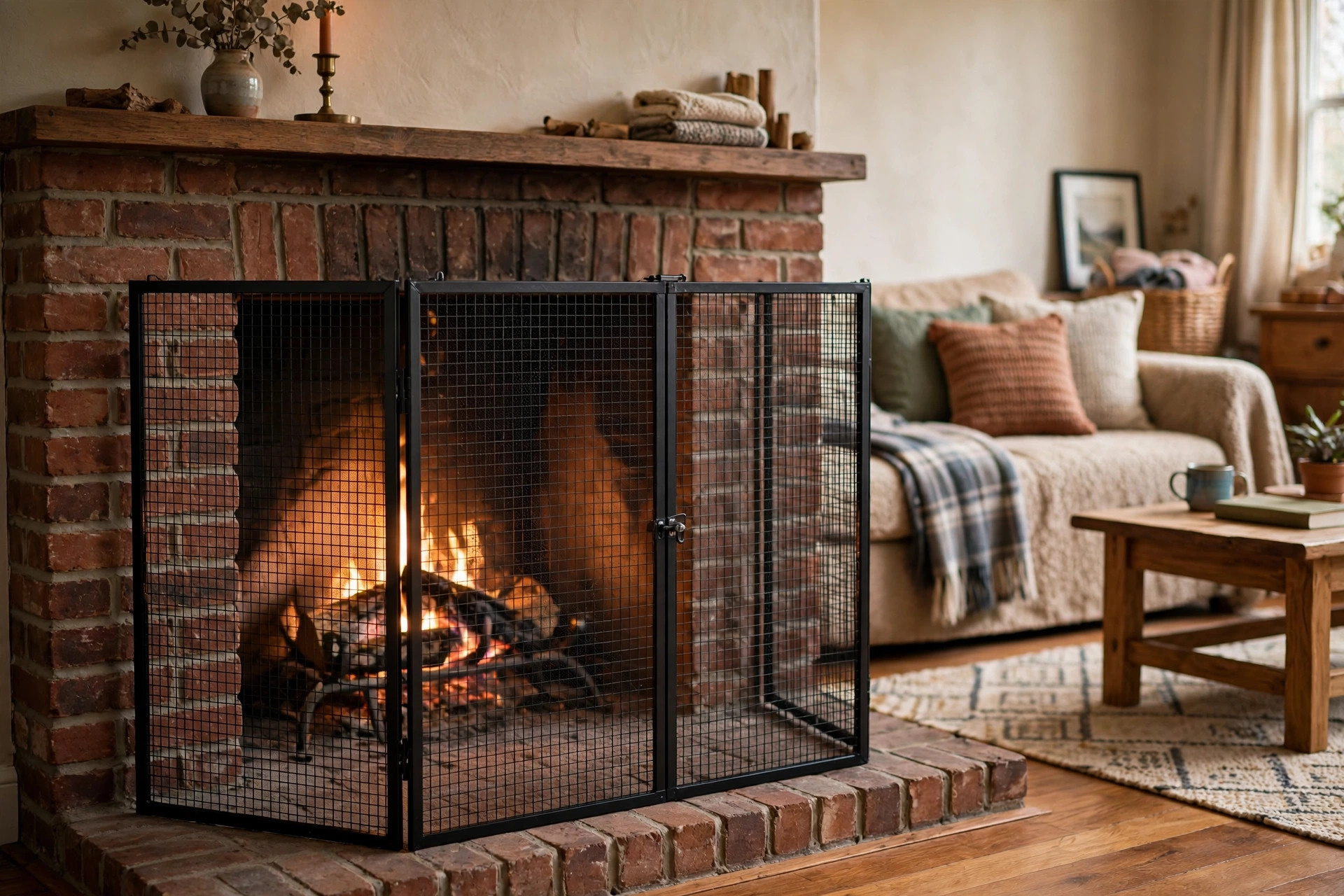
Fine steel mesh stops sparks and embers. Flat black mesh also hides soot and ash. The mesh itself can get warm, but a good design keeps the hottest parts away from the outer frame. Double-layer mesh screens cost more but add strength. Avoid thin, flimsy panels that bend when pressed.
Size and Fit
Measure your firebox opening before you shop. Note the width and the height. A screen should cover the whole opening with two to three inches of overlap on each side. If it is too small, gaps at the edges let heat and sparks through. If it is too tall, it may not sit flat. Bring your measurements to the store or keep them handy when you shop online. The Home Depot and Lowe’s both list screen sizes on their product pages, which makes sizing easier.
Mounting Style and Ease of Use
Decide how the screen will attach. Free-standing screens are simple and need no tools. Hinged panels fold open for loading wood and close tight for burning. Gate-style screens screw into the wall and swing open with a latch. A latch should be out of a child’s reach or hard for small hands to open. Think about how often you use the fireplace. If you burn wood each night, a hinged or gate model saves daily effort.
Types of Childproof Fireplace Screens
Flat Mesh Screens
Flat screens sit right in front of the firebox. They are the most common and the least costly. A single flat panel works well for small openings. Three-panel flat screens fold around larger hearths and adjust to odd shapes. They are light, easy to move, and easy to store in summer. They offer less tip resistance than heavier models, so they suit homes with older children more than homes with toddlers.
Arched Screens
Arched screens bow outward over the hearth. The curved shape keeps the mesh farther from the flames, which helps the screen run cooler. They look more formal and suit traditional living rooms. They are heavier and more stable than flat screens. The curve also gives room for andirons and log holders behind the screen.
Fireplace Gates and Fences
A fireplace gate is a fence that stands one to three feet in front of the hearth. It is often sold as a five or six panel play yard style fence. Gates work best for babies and toddlers who crawl or take first steps. They keep a child fully out of reach of the hearth edge, the tools, and the wood pile. Many models mount to the wall on both sides for full strength. If you need a wide safety zone, a gate is the best pick. Look for a walk-through door with a child-resistant latch for easy adult access.
Glass Doors With Locks
Glass doors close off the firebox fully. They stop sparks, hold in heat, and can improve the look of an old fireplace. Many glass door sets include a lock or a stiff handle that a small child cannot open. Doors get hot, so they do not remove the need for a barrier in front of the glass. If you prefer glass panels over mesh, our fireplace glass doors reviews and buying guide covers styles, costs, and fitting tips in full detail.
How to Choose the Right Screen for Your Home
Start with your child’s age. A crawling baby needs a gate with a wide safety zone. A preschool child needs a sturdy screen with a stable frame. An older child who understands rules may be safe with a strong flat or arched screen.
Next, look at your fireplace type. Wood-burning fireplaces throw sparks and need fine mesh. Gas fireplaces need a barrier in front of hot glass. Electric stoves run cooler, and a simple screen may be enough. Check the maker’s guide for your unit. Brands such as Napoleon and Heatilator publish safety and clearance guides for their fireplaces that help you pick a matching screen.
Think about your hearth shape. A raised hearth with sharp stone corners adds a second risk. A soft hearth pad or a fireplace hearth rug under the screen can cushion a fall and catch stray embers. Round fireplaces and corner units need screens that bend or fold. Measure twice and buy once.
Finally, set your budget. Prices vary by size, metal, and finish. A plain flat mesh screen can cost little. A wall-mounted gate with a locking door costs more but gives the most protection for toddlers. The reviews site Bob Vila and the home site The Spruce both publish roundups of top-rated models that can help you compare.
Cost and Price
Simple flat mesh screens often sell for twenty to sixty dollars. Mid-range arched and three-panel screens run from sixty to one hundred fifty dollars. Heavy wrought iron models and decorative screens can reach two hundred dollars or more. Fireplace gates and fences usually cost from eighty to two hundred fifty dollars, based on width and panel count. Glass door sets are the priciest option, often from two hundred to six hundred dollars before fitting.
Price is not the same as safety. A cheap screen with a heavy base can protect better than a costly light one. Read buyer reviews and check the weight of the unit. Heavier is usually more stable. Sales at large home stores can cut prices in season. Plan to spend a bit more if you need wall-mount hardware or a custom width. If you want to see current prices, browse our list of top rated childproof fireplace screens for sale for models in each price band.
Care and Upkeep
A screen needs little care, but regular checks keep it safe. Wipe the mesh with a dry cloth each week during the burning season. Soot builds up and can block your view of the fire. For heavy soot, use a damp cloth and mild soap, then dry the screen fully to stop rust.
Check the frame each month. Tighten any loose screws or hinges. Look for bent mesh, cracked welds, or sharp edges. A damaged screen should be fixed or replaced at once. A gate latch should click shut each time. If the latch sticks or feels loose, clean it and test it again. Oil the hinges once a year with a light machine oil.
Keep the area around the screen clear. Store wood, kindling, and fire starters at least three feet from the firebox. Do not hang stockings or decorations on the screen. Heat can scorch them, and a child may pull them down along with the screen. The EPA offers guidance on safe wood burning that pairs well with good screen care.
Safety Rules Every Family Should Follow
A screen is one part of a safe fireplace. Teach children that the hearth area is off limits. A simple rule, repeated often, works better than a long talk. Never leave a small child alone in a room with a lit fire. Keep matches and lighters locked away. Use a carbon monoxide alarm on each floor if you burn wood or gas.
Have your chimney cleaned and checked each year by a trained sweep. Creosote buildup can catch fire inside the flue. Make sure the damper opens fully before you light a fire. Burn only dry, seasoned wood. Wet wood makes more smoke and more creosote. The home site This Old House explains chimney care and draft basics in clear terms. For step-by-step hearth projects, Family Handyman has helpful how-to guides.
Install a smoke alarm near the fireplace room and test it each month. Keep a fire extinguisher within reach and learn how to use it. Know your local fire codes. Some towns have rules about open burning and screen types. A quick call to your fire department can answer questions.
Frequently Asked Questions
Are fireplace screens enough to keep a toddler safe?
A screen helps a great deal, but it is not enough on its own. A wall-mounted gate gives the most protection for toddlers because it keeps the child well back from the heat. Always watch young children near a fire, even with a screen in place.
What is the safest type of screen for a home with a baby?
A fireplace gate or fence with a child-resistant latch is the safest pick for a baby. It creates a wide safety zone around the whole hearth. Choose a model that mounts to the wall for the best stability.
Do I need a screen for a gas fireplace?
Yes. The glass front of a gas fireplace gets very hot and stays hot after shutoff. A barrier screen in front of the glass keeps small hands from touching it. Many gas units now come with a safety barrier, but an added gate gives more protection.
How far should a screen stand from the fire?
A flat screen can sit close to the opening, just in front of the firebox. A gate should stand one to three feet back from the hearth edge to create a safe zone. Check the maker’s guide for the exact clearance your model needs.
Can I use a fireplace screen with glass doors?
Yes. Many families use both. The doors close off the firebox, and a screen or gate stands in front of the hot glass. This double layer is a strong setup for homes with very young children.
How do I clean soot off a mesh screen?
Wipe it with a dry cloth first. For stuck soot, use a damp cloth with mild soap, then dry it at once. Do not use harsh cleaners or steel wool on coated finishes. Clean the screen when it is fully cool.
A Short Final Word
The right childproof screen is the one that fits your fireplace, stands firm against a push, and suits your child’s age. Measure your opening, pick a stable frame, and mount it well. Pair the screen with clear rules and close watch. A warm fire and a safe child can share the same room with the right guard in place.
References
Bob Vila. (n.d.). Home improvement advice. https://www.bobvila.com Family Handyman. (n.d.). DIY home repair and maintenance. https://www.familyhandyman.com Heatilator. (n.d.). Fireplaces and fireplace products. https://www.heatilator.com Lowe’s. (n.d.). Home improvement products. https://www.lowes.com Napoleon. (n.d.). Fireplaces, grills, and heating products. https://www.napoleon.com The Home Depot. (n.d.). Home improvement products. https://www.homedepot.com The Spruce. (n.d.). Home and garden advice. https://www.thespruce.com This Old House. (n.d.). Home renovation guidance. https://www.thisoldhouse.com U.S. Consumer Product Safety Commission. (n.d.). Product safety information. https://www.cpsc.gov U.S. Environmental Protection Agency. (n.d.). Protecting human health and the environment. https://www.epa.gov
Was this guide helpful?

About James Carter
The My Garden US editorial team writes practical, in-depth home and garden guides for American homeowners — tested advice, no fluff.
You May Also Like
Ventless Chimineas for Patios for Sale: A Complete Buyer’s Guide
May 9, 2026 0 views
Ventless Fireplace Dampers for Midwest Homes: A Plain Guide
March 4, 2026 0 views
The Best Fireplace Log Holders for Texas Homes: A Practical Buying Guide
February 10, 2026 0 views