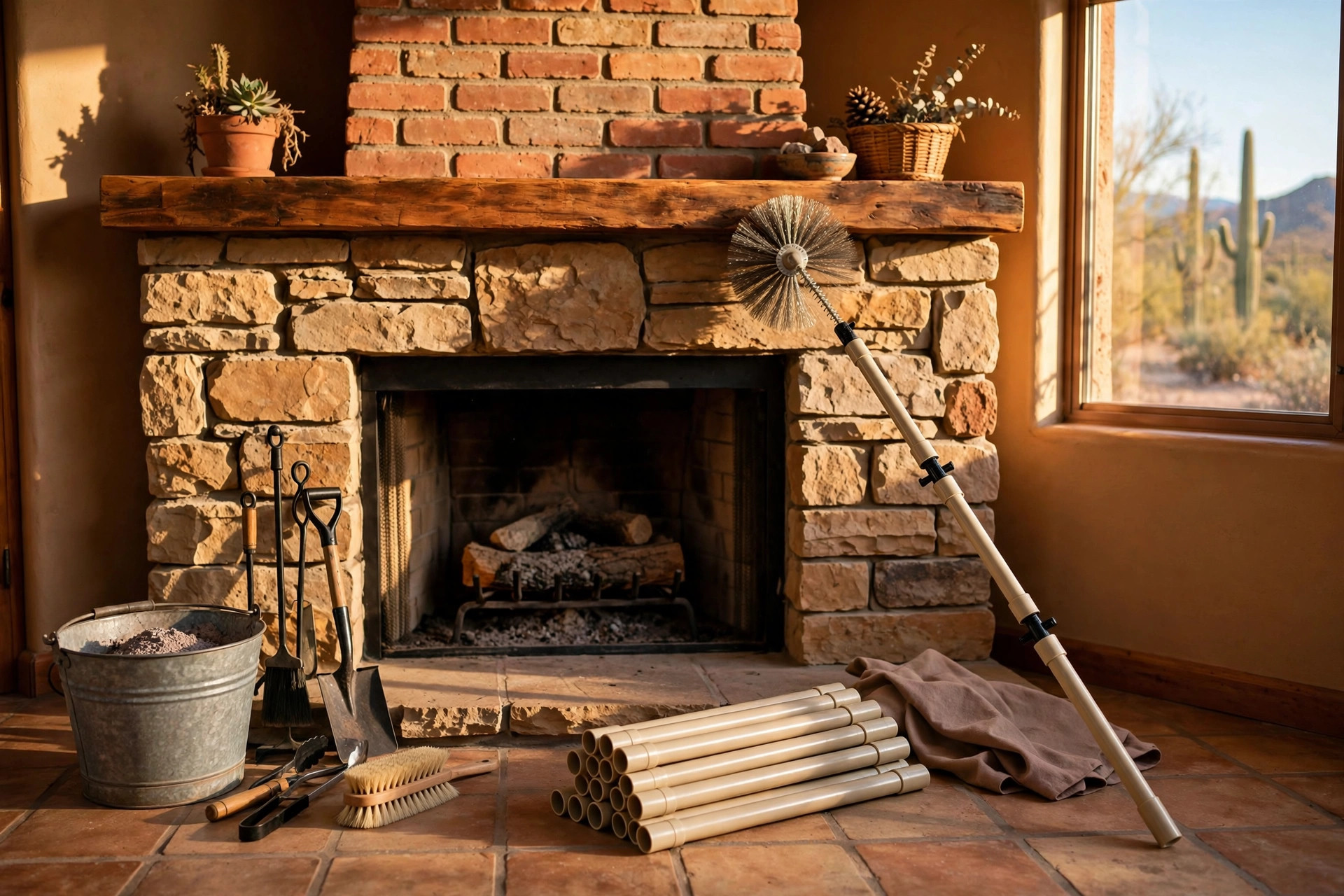

If you own a home with a fireplace in the Grand Canyon State, there comes a day when you must decide to buy chimney cleaning brushes online in Arizona. The idea is simple. A brush scrapes the dark buildup, called creosote, from the walls of your flue. Creosote is the tar-like soot left by wood smoke. It catches fire with ease, and a chimney fire can spread to the whole house. For this reason, fire experts urge every wood-burning home to have its chimney swept once a year before the heating season begins.
Arizona may bring to mind desert heat and cactus, yet the high country tells a different story. Flagstaff, Prescott, Show Low, Payson, and the White Mountains see real winters. Many homes there burn wood in fireplaces and stoves from October through April. In Phoenix and Tucson, patio fireplaces and outdoor chimineas see heavy use in the cool months. Wherever wood burns, soot builds up. A good brush, bought at a fair price and used with care, keeps that buildup under control between professional sweeps.
Why It Matters
A dirty chimney is a quiet risk. Creosote forms in stages. The first stage is a light, dusty film that a brush takes off with ease. The second stage is a hard, flaky crust. The third stage is a thick glaze that burns like fuel. Homeowners who let a year or two pass without a sweep may find the glaze stage, and at that point a brush alone may not do the job. Regular brushing keeps the flue at stage one, where work is easy and safe.
Buying the brush online makes sense for many Arizona homes. Stores in Phoenix may stock a thin range. A mountain town like Payson may have one hardware store with high prices. Online sellers ship rods and brushes straight to your door, often with free shipping, and you can compare sizes and prices side by side. The key is to buy the right size and the right bristle type for your flue, and that is what this guide will help you do.
A brush does not replace a certified sweep every year. Think of the brush as the toothbrush and the sweep as the dentist. You brush at home, and the professional checks the whole system once a year. Between visits, your own brushing keeps the flue clean and lets you spot trouble early, such as cracks, loose mortar, or nests left by birds.
How to Choose the Right Brush: Buy Chimney Cleaning Brushes Online in Arizona
Choosing a chimney brush is mostly about measurement. Three facts decide the purchase: the shape of your flue, the size of your flue, and the material of your flue liner.
Shape. Most flues are round, square, or rectangular. Look up the chimney from the firebox with a flashlight, or look down from the roof. A round flue takes a round brush. A square or rectangular flue takes a square or rectangular brush. A round brush in a square flue will miss the corners, and a square brush in a round flue will not touch the walls evenly.
Size. Measure the inside of the flue at its widest point. Buy a brush that is the same size or slightly larger than the opening. A brush that is too small will slide past the soot. A brush that is much too large will be hard to push. Common round sizes are 6 inch, 7 inch, and 8 inch. Square sizes are often 8 by 8 inch or 9 by 9 inch.
Material. Flues lined with clay tile or steel take a stiff steel wire brush. Flues lined with metal pipe, such as a stainless steel liner, need a softer polypropylene brush so the bristles do not scratch the metal. Scratches on a metal liner can invite rust. Check your liner type before you order. If you do not know, a softer brush is the safer pick.
Rods. The brush is only half the tool. Fiberglass rods screw together in sections, each about 3 or 4 feet long. Buy enough sections to reach the full height of your chimney from the bottom or the top. Most two-story homes need 20 to 30 feet of rods. Flexible rods bend around dampers. When you shop, look for rod kits that bundle brush and rods at a discount.
When you buy chimney cleaning brushes online in Arizona, read the full product listing before you click. Good listings name the flue size, the bristle material, the rod length, and the thread type. Listings that hide these facts are not worth your money. Shoppers can compare such details across sellers like the big home centers (Home Depot) and Lowe’s, which both ship across the state.
Types of Chimney Brushes
Brushes fall into a few clear types. Each suits a different flue.
Wire brushes. Stiff steel bristles cut through heavy soot in clay tile and masonry flues. These are the classic choice for older brick chimneys, common in historic parts of Phoenix, Tucson, and Prescott.
Poly brushes. Softer plastic bristles clean metal liners without scratching. Many newer factory-built fireplaces and wood stoves use metal flues, and poly is the right tool there.
Flat wire brushes. Thin, flat bristles work well on light, powdery soot and on oval flues.
Chimney sweep logs and chemical cleaners. These are not brushes, but they often appear in the same search results. A sweep log loosens creosote so the next brushing removes more of it. It does not replace brushing.
Brush and rod kits. A kit bundles the brush with enough rods for a full-height chimney, plus a cleaning cloth and sometimes a dust mask. For a first-time buyer, a kit is usually the best value.
Some Arizona homeowners also use a reliable fireplace ash vacuum with fine filters to clean the firebox before brushing, and a gutter cleaning tool kit for the roofline while they are up there. A clean hearth and clean gutters go hand in hand with a clean flue.
For those who would rather hire the job out, reading about chimney sweep services helps you know what a fair service visit should include.
Cost and Price
Prices for chimney cleaning brushes are modest. Expect the following ranges in 2026 dollars when you buy chimney cleaning brushes online in Arizona:
– A single wire or poly brush: 15 to 40 dollars, depending on size and brand. – A set of fiberglass rods (6 sections, about 18 feet): 25 to 50 dollars. – A full kit with brush, rods, and extras: 40 to 90 dollars. – A high-end rotary power-sweeping kit that fits a drill: 80 to 150 dollars.
Shipping matters in a big state. Many online sellers offer free shipping on orders over a set amount, which a kit will often reach. Watch for sales in late summer and early fall, when stores clear summer stock ahead of heating season. Independent testers at Consumer Reports advise comparing unit prices, not just headline prices, since kit contents differ.
A professional chimney sweep in Arizona usually costs 150 to 350 dollars per visit, depending on the chimney height and the amount of buildup. One kit pays for itself the first time you use it between service calls. Home project guides at Bob Vila and This Old House note that do-it-yourself sweeping is fine for light, yearly maintenance but not for glazed creosote or damaged flues.
How to Use the Brush Safely
Safety comes first. Chimney work puts you on a roof or up a ladder, and it fills the air with fine soot. Follow these steps in order.
1. Pick a cool, calm day. Never brush a hot flue. Work in the morning before the desert sun heats the roof. 2. Gear up. Wear a dust mask rated N95 or better, safety glasses, gloves, and old clothes. Soot stains everything it touches. 3. Seal the firebox. Close the damper as far as it goes, or tape a drop cloth across the fireplace opening. This keeps soot out of the living room. Advice from The Spruce on home cleaning projects stresses sealing work areas before stirring up dust. 4. Assemble the rods. Screw the first rod into the brush. Add sections as you go, brushing with firm up-and-down strokes. 5. Brush the full flue. Work from the top down if you can reach the roof safely, or from the bottom up through the firebox. Cover every wall with overlapping strokes. 6. Clean up. Vacuum the firebox and hearth, then open the damper and look up the flue with a flashlight. The walls should look clear of heavy black buildup.
If the brush meets hard, shiny glaze that will not come off, stop. Glazed creosote needs a professional with rotary tools or chemical treatment. Do not force the brush, and do not guess. A chimney sweep service can finish what a hand brush cannot.
Roof safety deserves its own note. Arizona tile roofs are slick and fragile. Walk only on the lower third of the tiles, wear soft-soled shoes, and use a stable ladder with a spotter. Many homeowners choose to brush from the bottom up and skip the roof entirely. If heights worry you, that is a fine choice, or hire the job out.
Care and Upkeep of Your Brush
A chimney brush lasts for years if you treat it well. After each use, knock the loose soot from the bristles and wipe the brush with a dry cloth. Do not soak a wire brush in water; it will rust. Store the brush and rods in a dry garage or shed, hanging or lying flat so the bristles keep their shape. Check the screw threads on the rods each year. A rod that comes loose inside the flue is a hard problem to fix.
Clean the hearth tools and the ash shovel at the same time. Empty ash into a metal can with a lid and set it outside, away from the house, for at least three days before you throw it away. Hot ash starts fires in trash cans every winter. Fire safety pages from the U.S. Environmental Protection Agency remind homeowners that wood smoke and ash carry fine particles, so good ventilation and sealed storage matter.
How often should you brush? The common rule is once a year, before the first fire of the season. Homes that burn two or more cords of wood a year, or that burn pine and other sappy woods common in northern Arizona, may need a mid-season brushing as well. If you notice smoke backing into the room, a weak draft, or a strong smoky smell when the fireplace is cold, sweep sooner.
Where Arizona Homeowners Shop Online
Arizona shoppers have no shortage of online options. The big national home centers ship to every zip code in the state. Specialty chimney supply stores carry a wider range of sizes, including odd sizes for old adobe and brick chimneys. Auction and marketplace sites can be cheap, but check the seller’s reviews and make sure the brush size is stated in inches, not vague terms like “standard.”
When you buy chimney cleaning brushes online in Arizona, a few state facts help. Shipping to rural zip codes, such as those around the Navajo Nation or the far corners of Mohave County, may take longer and cost more. Order two to three weeks before you plan to sweep. Phoenix-area buyers can often pick up same-week delivery from local warehouses. Shoppers who like to compare tools across brands can read how-to guides at the Family Handyman and Good Housekeeping sites before they order.
Energy-minded homeowners may also want to look at the U.S. Department of Energy resources on heating efficiency, since a clean flue drafts better and wastes less heat up the chimney.
Frequently Asked Questions
What size chimney brush do I need? Measure the inside width of your flue and match the brush to it. A 6-inch round flue needs a 6-inch round brush. A square 8-by-8-inch flue needs an 8-by-8-inch square brush. When in doubt, buy the exact size, not a smaller one.
Can I use a wire brush on a metal chimney liner? No. Use a polypropylene brush on metal liners. Steel wire scratches metal and can lead to rust and liner damage. Use wire brushes only on clay tile, brick, or masonry flues.
How often should I clean my chimney in Arizona? At least once a year, before heating season. Heavy users in the high country who burn several cords of wood should brush mid-season as well. Any sign of poor draft or smoke in the room means it is time.
Is it cheaper to buy a brush or hire a sweep? A kit costs 40 to 90 dollars and lasts for years. A single professional visit costs 150 to 350 dollars. The brush saves money for yearly upkeep, but you should still hire a certified sweep for a full inspection once a year.
Can I clean the chimney from the bottom without going on the roof? Yes. Feed the brush up through the firebox with rods added section by section. Seal the fireplace opening first so soot does not fill the room. This method works well for straight flues.
What is creosote, and why is it dangerous? Creosote is the tar-like residue left by wood smoke on flue walls. It is highly flammable. A thick layer can ignite and cause a chimney fire that reaches the roof and walls. Regular brushing removes it before it builds up.
A Short Final Word
To buy chimney cleaning brushes online in Arizona is a small purchase with a large payoff. Measure your flue, pick the right bristle type, order early enough for shipping, and brush before the first cold night. Pair your own upkeep with a yearly professional inspection, and your fireplace will stay what it should be: a warm, safe heart of the home.
References
Bob Vila. (n.d.). Home improvement advice. https://www.bobvila.com Consumer Reports. (n.d.). Product reviews and ratings. https://www.consumerreports.org Family Handyman. (n.d.). DIY home repair and maintenance. https://www.familyhandyman.com Good Housekeeping. (n.d.). Product reviews and home advice. https://www.goodhousekeeping.com Lowe’s. (n.d.). Home improvement products. https://www.lowes.com The Home Depot. (n.d.). Home improvement products. https://www.homedepot.com The Spruce. (n.d.). Home and garden advice. https://www.thespruce.com This Old House. (n.d.). Home renovation guidance. https://www.thisoldhouse.com U.S. Department of Energy. (n.d.). Energy efficiency and renewable energy. https://www.energy.gov U.S. Environmental Protection Agency. (n.d.). Protecting human health and the environment. https://www.epa.gov
Was this guide helpful?

About David Wilson
The My Garden US editorial team writes practical, in-depth home and garden guides for American homeowners — tested advice, no fluff.
You May Also Like
Best Carpet Stain Remover Kits for USA Homes
July 25, 2026 0 views
Top Rated Pressure Washing Service Companies for Homeowners: A Complete Guide
July 10, 2026 0 views
Top Rated Post Construction Cleaning Services Reviews: How to Read Them and Choose a Good Crew
September 10, 2026 0 views