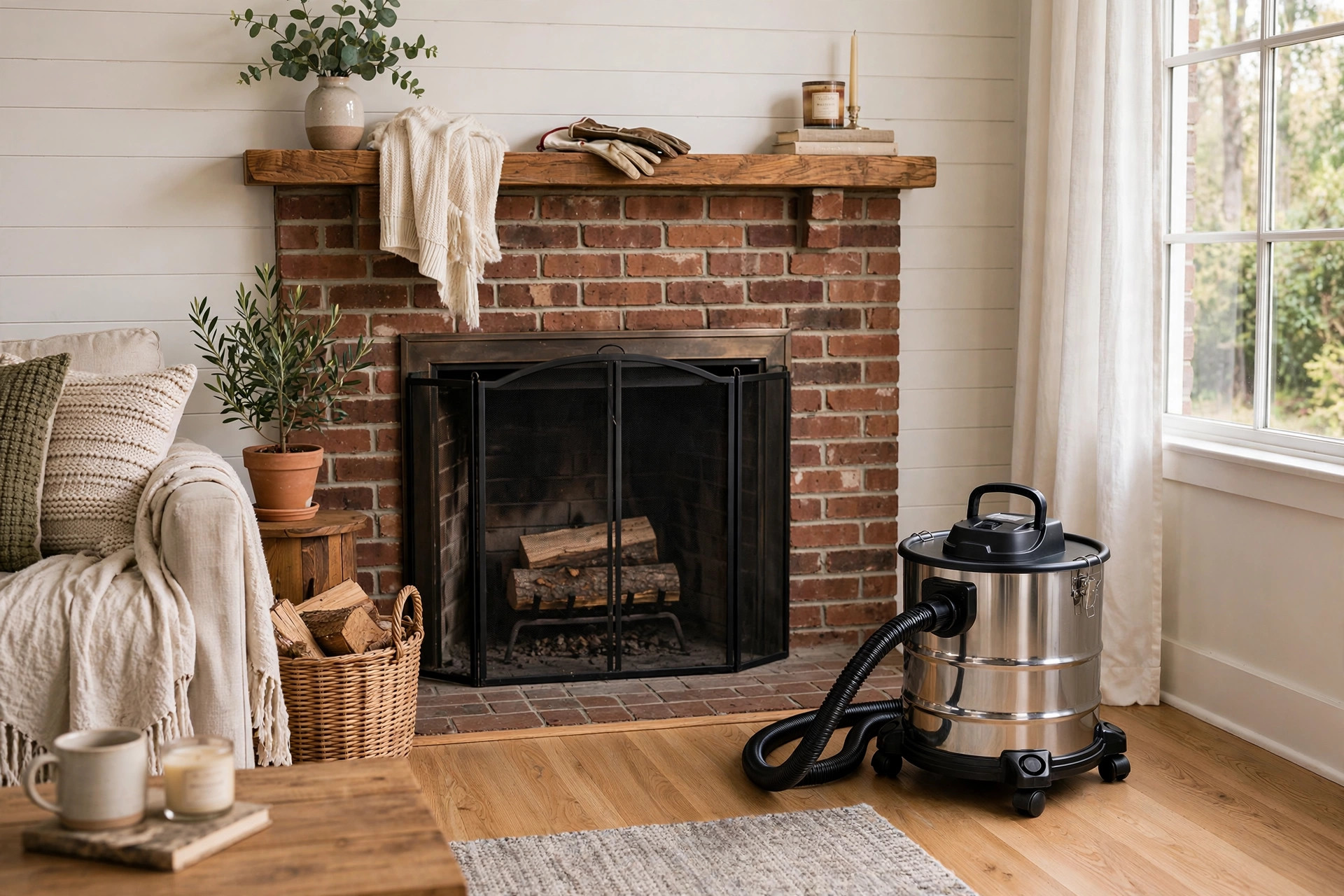

A wood stove or fireplace fills a house with warmth. It also leaves behind a gray pile of ash. Scooping that ash with a shovel takes time and raises dust. Many people now buy reliable fireplace ash vacuums with free shipping to do the job faster and cleaner. These machines look like small shop vacuums, but they are built for hot ash and fine dust. This guide explains why they matter, what to look for, how much they cost, and how to use them safely.
Why Ash Cleanup Matters
Ash builds up in every wood-burning fireplace and stove. A thick bed of ash blocks air flow to the fire. When air cannot reach the wood, the fire burns cooler and dirtier. Smoke rises into the room instead of up the flue. Walls and furniture collect a thin gray film. People with allergies or asthma feel the difference at once.
A clean firebox also protects the metal. Hot ash holds moisture from the air. That moisture can eat at the steel of a stove or the grate of a fireplace. Removing ash on a regular schedule extends the life of the hearth. It also makes each fire start easier, because a small layer of warm ash actually helps new logs catch.
The old way of cleaning ash means a shovel, a bucket, and a dustpan. The shovel lifts the heavy lumps. The dustpan catches the fine powder. But fine ash slips past a dustpan and hangs in the air. It settles on every surface in the room. Homeowners who sweep chimneys and clean often know that indoor air quality deserves the same care as the chimney itself. An ash vacuum draws the fine powder straight into a sealed tank. The room stays clean while the firebox gets empty.
What Makes an Ash Vacuum Reliable: Reliable Fireplace Ash Vacuums with Free Shipping
Not every vacuum can handle ash. Ordinary household vacuums have paper bags and plastic parts. Hot ash melts them. Fine ash passes through their filters and burns out their motors. A reliable fireplace ash vacuum has special parts for the job.
Heat-Resistant Parts
The tank and hose should resist high heat. Look for a metal tank, usually steel. The hose should be metal-lined or rated for warm ash. Plastic hoses can warp when hot ash passes through them. Metal parts also last longer in a room where soot and dust are common.
A Strong Filter
Ash dust is very fine. A weak filter lets it blow back into the room. Good ash vacuums use a pleated cartridge filter. The best ones add a heat-resistant pre-filter or a metal mesh screen in front of it. Some models carry a HEPA-style filter that catches the smallest particles. When you read about filters, independent testing groups publish plain reports on how well vacuum filters work. A filter that you can shake clean or wash will save money over the years.
Enough Power
Most ash vacuums have motors between 600 and 1200 watts. More power means stronger suction. Strong suction pulls ash out of corners and from around andirons. But power is not everything. A well-sealed tank keeps suction high even when the filter begins to load. A weak seal lets air leak in and suction drop.
A Sensible Size
Tanks range from about two to six gallons. A small tank empties often but stores easily in a closet. A large tank handles a big stove or an outdoor fire pit without stopping. Think about how much ash your hearth makes in a week. Match the tank to that amount.
Easy Dumping
The best models open at the bottom or lift off cleanly. You carry the tank to the trash or the garden and tip it out. Some people spread cold wood ash in the garden as a soil helper, but only after it has sat for several days and is stone cold. Home and garden guides explain safe ways to handle fireplace ash around the yard.
Types of Ash Vacuums
Ash vacuums come in a few common shapes. Each suits a different kind of home.
Compact canister ash vacuums. These are small, round tanks with wheels or handles. They cost less and fit beside the hearth. They suit owners of small fireplaces and pellet stoves.
Large shop-style ash vacuums. These look like workshop vacuums with bigger tanks and longer hoses. They suit wood stoves that burn all winter and produce buckets of ash.
Ash vacuums with attachments. Some units ship with crevice tools and brush heads. The tools reach between logs and into the corners of the firebox. A long hose, five to eight feet, lets you clean without dragging the tank across the floor.
Pellet stove ash vacuums. Pellet stoves make a fine, powdery ash. Vacuums made for them have tighter filters and gentler suction so the powder does not blow around. If you heat with pellets, look for a model that names pellet stoves on the box.
When you compare types, retailers list the full specs side by side so you can weigh tank size against price. Reading the specs before you buy saves regret later.
Cost and Price
Prices for ash vacuums run from about forty dollars to more than two hundred. Small canister models sit at the low end. Large shop-style units with metal parts sit at the high end.
The sticker price is not the whole story. Check the cost of replacement filters. A cheap vacuum with costly filters can be the dearest choice in three years. Some brands sell filter packs of two or three at a fair price. Others charge a premium for each one. Home improvement stores often stock filters from many brands in one aisle, which makes comparison easy.
Free shipping changes the math. Ash vacuums are heavy. A metal-tank model can weigh fifteen pounds or more in its box. Shipping fees on heavy items run high. Many online sellers now ship these machines free to the door. When you shop, add the shipping cost to the price before you compare. A ninety-dollar vacuum with free shipping beats an eighty-dollar vacuum with a twenty-dollar shipping fee. Deal columns in home magazines often note which sellers include free delivery.
Watch for seasonal sales. Ash vacuums sell best in fall, when people ready their hearths. Prices drop in spring when stores clear stock. If you buy off-season, you may find a reliable model with free shipping for much less.
How to Use an Ash Vacuum Safely
Safety comes first with ash. Fire hides in gray powder. Follow these steps every time.
Let the fire die down. Wait at least twelve hours after the last fire. Ash can hold live embers for days. The vacuum is made for warm ash, not for burning coals. If you see any glow, stop and wait longer.
Open the damper. Air moving up the flue pulls loose dust away from you. It also keeps soot from drifting into the room while you work.
Use the metal nozzle. Ash vacuums ship with a metal or heat-rated nozzle. Use it. Keep the nozzle moving so heat does not build up in one spot of the hose.
Empty the tank outside. Carry the tank out of the house before you open it. Dump the ash into a metal can with a tight lid. Let it sit for at least three days before you throw it away or use it in the garden. Fire safety guides from stove makers stress that ash must be fully cold before storage.
Check the filter. Shake or tap the filter clean after each use. A clogged filter strains the motor and weakens suction. Replace the filter when it looks worn or when suction stays weak after cleaning.
Many owners also pair their ash vacuum with a regular cleaning routine. After the ash is gone, a damp cloth wipes the mantel and hearth. For the rest of the house, a good HEPA vacuum keeps fine dust from settling back into rooms. The two machines work well as a team.
Care and Upkeep
An ash vacuum lasts many years with simple care. The tank needs no special cleaner. A damp rag wipes soot from the outside. The inside can be rinsed when the ash is fully out, then left to dry with the lid off.
Store the unit in a dry place. Moisture rusts the metal tank from the inside. A garage corner or a closet near the fireplace works well. Coil the hose loosely so it does not kink.
The motor needs little attention. Keep the vents clear of dust. If the motor sounds strained, stop and check for a clog. Most clogs happen at the nozzle or where the hose meets the tank. A quick look usually finds the blockage.
Keep spare filters on hand. One spare means you never skip a cleaning because the filter is drying after a wash. Workshop guides show simple filter-care routines that apply to ash vacuums too.
Choosing With Free Shipping in Mind
Free shipping sounds simple, but the details matter. Some sellers offer free shipping only above a certain order total. Others limit it to certain regions. Read the shipping policy before you click buy.
Check the return policy too. A vacuum that arrives with a cracked tank or a weak motor should go back at the seller’s cost. Reputable sellers pay return shipping on damaged items. Consumer advice columns list the questions to ask before ordering heavy tools online.
Compare delivery times. Free shipping that takes three weeks may not help when winter has already arrived. Some sellers offer free standard shipping and paid express options. If you need the machine soon, the express fee may be worth it.
Also look at bundle deals. Some sellers pair the ash vacuum with extra filters or a fireproof ash bucket and still ship free. A bundle can be the best value if you need those extras anyway.
A Note on Other Hearth Cleaning Tools
An ash vacuum handles the firebox, but a hearth has more surfaces. The glass door collects soot that needs a special cleaner. The mantel gathers dust. The floor in front of the hearth catches sparks and ash that escape during loading.
For deep carpet cleaning near the hearth, cordless carpet deep cleaning machines give strong results without a cord in the way. For bathroom surfaces elsewhere in the house, professional grade shower door descalers keep glass clear in small apartments. Keeping the whole home clean protects the same air you breathe by the fire.
Frequently Asked Questions
Can I use my regular vacuum to clean ash?
No. Regular vacuums are not built for ash. Hot ash melts plastic parts and paper bags. Fine ash passes through standard filters and can ruin the motor. Worse, a live ember in a regular vacuum bag can start a fire. Always use a vacuum made for ash.
How often should I vacuum the ash out?
It depends on how much you burn. Daily burners should clean the firebox every one to two days. Weekend users can clean once a week. Leave about an inch of ash on the floor of a wood stove. That thin layer insulates the coals and helps the next fire start.
Is wood ash safe to put in the garden?
Cold wood ash can help some soils, but use it with care. Ash is alkaline. It suits acidic soils and harms plants that like acid ground. Never spread ash that might hold embers. Wait several days, then test a small area first. Old house and garden writers give measured advice on using ash in the yard.
What size ash vacuum do I need?
For a small fireplace or pellet stove, a two to three gallon tank is enough. For a large wood stove or an outdoor fire pit, choose four gallons or more. A bigger tank means fewer trips to empty it.
Do ash vacuums work on pellet stoves?
Yes, many do. Pellet stoves make a very fine ash. Choose a model with a tight filter so the powder does not escape. Some makers sell models built just for pellet stoves with softer suction and finer filters.
Why does my ash vacuum lose suction?
The filter is usually the cause. Fine ash packs into the pleats and blocks air flow. Shake the filter clean or wash it if the maker allows. Check the hose and nozzle for clogs. Also check the tank seal. A lid that does not close tight lets air leak in and kills suction.
A Short Final Word
A reliable fireplace ash vacuum turns a dusty chore into a quick job. Choose a metal tank, a strong filter, and the right size for your hearth. Buy from a seller with free shipping and a fair return policy. Use it only on cold ash, keep the filter clean, and store the ash safely. Do these simple things and your fireplace will burn cleaner, your rooms will stay clearer, and your hearth will serve you well for many winters.
References
Bob Vila. (n.d.). Home improvement advice. https://www.bobvila.com Consumer Reports. (n.d.). Product reviews and ratings. https://www.consumerreports.org Family Handyman. (n.d.). DIY home repair and maintenance. https://www.familyhandyman.com Good Housekeeping. (n.d.). Product reviews and home advice. https://www.goodhousekeeping.com Lowe’s. (n.d.). Home improvement products. https://www.lowes.com Napoleon. (n.d.). Fireplaces, grills, and heating products. https://www.napoleon.com The Home Depot. (n.d.). Home improvement products. https://www.homedepot.com The Spruce. (n.d.). Home and garden advice. https://www.thespruce.com This Old House. (n.d.). Home renovation guidance. https://www.thisoldhouse.com U.S. Environmental Protection Agency. (n.d.). Protecting human health and the environment. https://www.epa.gov
Was this guide helpful?

About Emily Rodriguez
The My Garden US editorial team writes practical, in-depth home and garden guides for American homeowners — tested advice, no fluff.
You May Also Like
Buy Chimney Cleaning Brushes Online in Arizona: A Homeowner’s Guide
August 8, 2026 0 views
Buy Mold Removal Sprays Online in Texas: A Complete Guide
March 5, 2026 0 views
How to Buy Ceiling Fan Dusters Online in Colorado
May 16, 2026 0 views