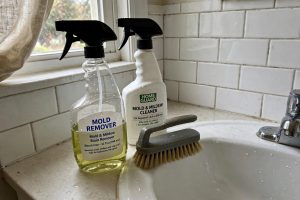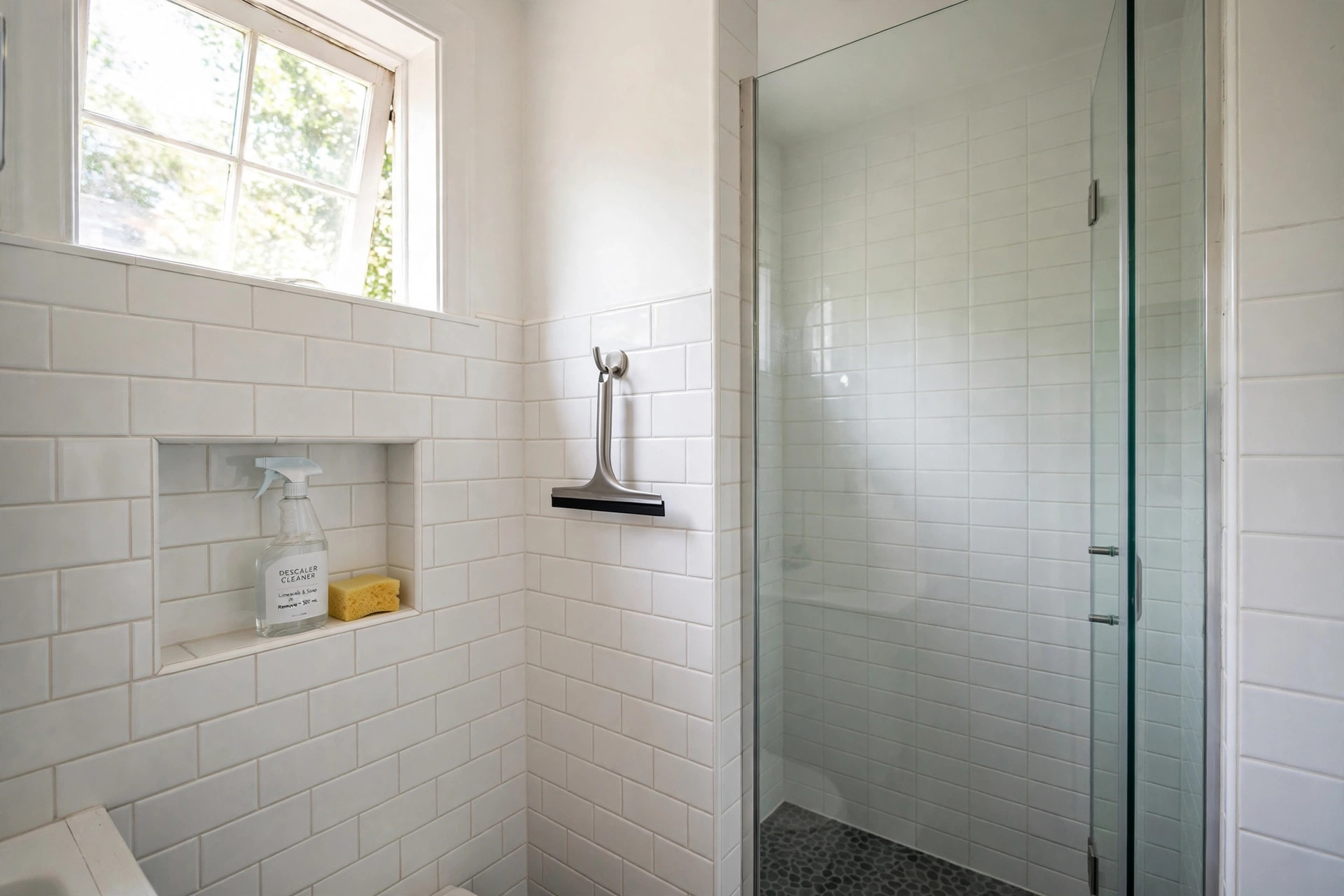

Hard water leaves white marks on glass. In a small apartment, the shower door takes the worst of it. The glass is close to the spray, the room is small, and the stains build fast. A professional grade shower door descaler for small apartments can bring the glass back to clear. This guide explains what these products are, how to pick one, how much they cost, and how to use them with care.
Why Hard Water Ruins Shower Doors
Most tap water carries minerals. Calcium and magnesium are the main two. When water dries on glass, the minerals stay behind. This is called limescale. It looks like white spots or a cloudy film.
The film builds in layers. Fresh spots wipe away with soap and water. Old layers do not. After months, the glass looks frosted even when it is clean. Soap adds to the trouble. Soap mixes with the minerals and makes soap scum. The scum sticks to the scale. The result is a dull, white crust.
Small apartments have a harder time with this. The bathroom is often the smallest room in the flat. The shower door stands close to the walls. Water splashes on it from every angle. Ventilation may be poor. A weak fan means the water takes longer to dry, and longer drying gives minerals more time to grip the glass.
Some renters think the door is beyond help. It is not. Limescale is a mineral, and descalers are acids that dissolve minerals. The right product can clear years of build-up. Knowing which product to use, and how to use it, is what matters.
What “Professional Grade” Really Means: Professional Grade Shower Door Descalers for Small Apartments
The words “professional grade” appear on many bottles. The term has no legal definition. No agency certifies it. Still, the label points to real traits that buyers can look for.
A professional grade product usually has a higher level of active acid than a common retail spray. It may use phosphoric acid, sulfamic acid, or a blend of mild acids with surfactants. The surfactants help the liquid spread and cling to the glass. That matters on a vertical door, where a thin spray runs off before it can work.
Professional products also list their active ingredients on the label. Cheap products often hide behind words like “cleaning agents.” A serious product names the acid and states the percentage. That is a sign of honest formulation.
The label should also give dwell time, dilution rates, and surface warnings. A product meant for pros expects the user to read and follow steps. It warns against use on marble, natural stone, or aluminum trim. These warnings are a good sign, not a bad one. They show the maker knows what the acid can and cannot touch.
For a small apartment, one more trait matters: the form of the product. A gel or foam clings where it is placed. That keeps fumes low in a small room and keeps the acid off the floor and trim. A runny liquid does not cling, and in a tight bathroom that can mean damage to surfaces you did not mean to treat.
Types of Shower Door Descalers
Gel Descalers
Gel descalers are thick. You squeeze them from a bottle and spread them with a sponge or brush. The gel stays on the glass. It does not drip down the door. This is the best form for heavy scale.
Gels need ten to thirty minutes of contact time. After that, you rinse and wipe. They cost more per ounce than sprays, but you use less per job. For a small apartment, a single bottle can last many months. Storage is easy. The bottle stands on a small shelf.
Foam Sprays
Foam sprays come in trigger bottles. They shoot a white foam that clings for a few minutes. Foam is easy to apply. It covers the door fast and reaches the edges and tracks.
Foam works best on light to medium scale. For heavy crust, you may need two rounds. The smell can be strong, so the bathroom fan should run. Many buyers of professional grade shower door descalers for small apartments choose foam for weekly upkeep and gel for deep cleaning. Used together, the pair keeps the door clear year round.
Liquid Concentrates
A concentrate is a strong liquid sold in a small bottle. You mix it with water in a sprayer. This is the cheapest way to buy a professional grade shower door descaler for small apartments. One bottle can make many gallons of working solution.
Concentrates suit renters who clean often and want to save money. The risk is user error. Mix too strong, and the acid can etch glass or eat at metal trim. Mix too weak, and it will not touch the scale. Measure with a marked cup and follow the label.
How to Choose the Right Descaler for a Small Apartment
Check the Ventilation
A small bathroom traps fumes. Read the label for the product’s odor level. Products based on sulfamic or citric acid usually smell less than products based on hydrochloric acid. Run the bath fan during use. If the bathroom has no fan, crack the door and place a small fan in the hall to pull air through.
The Spruce offers plain guidance on bathroom cleaning routines that pair well with a descaling schedule. Good habits between deep cleans keep the fumes and the work to a minimum.
Match the Product to Your Door Finish
Glass doors come in many styles. Some have metal frames, some have painted tracks, some are frameless. Read the label’s surface list. Make sure it names glass and your type of trim. If the door has aluminum parts, look for a product that states it is safe on aluminum, or protect the trim with painter’s tape before you start.
Bob Vila publishes repair guides that help renters identify the materials in their bathrooms. Knowing your trim material before you buy saves the door.
Mind the Bottle Size and Storage
Small apartments have small storage. A quart bottle is enough for most renters. Concentrates are even smaller. Keep the bottle in a locked cabinet if children visit. Keep it upright and away from heat.
Consumer Reports tests cleaning products for safety and performance. Its buying guides help sort honest labels from loud claims.
Look for Clear Instructions
A serious product tells you the dwell time, the rinse steps, and what to do if the scale is old. It warns about mixing with bleach. Never mix an acid descaler with bleach or ammonia cleaners. The fumes can be dangerous. The Environmental Protection Agency explains how household cleaners interact and why label directions matter.
How to Use a Descaler Step by Step
1. Ventilate the room. Run the fan or open the door. 2. Put on rubber gloves. Wear eye protection if the product sprays. 3. Wet the glass with warm water. This helps the product spread. 4. Apply the descaler. Spread gel with a sponge. Spray foam evenly. Do not let it dry on the glass. 5. Wait the time the label states. Ten to twenty minutes is common. 6. Scrub lightly with a non-scratch pad. Do not use steel wool. Steel wool scratches glass. 7. Rinse well with warm water. Rinse the tracks and the floor edge too. 8. Dry with a squeegee or a clean towel. Drying stops new spots from forming.
For old, thick scale, repeat the cycle. Two light rounds work better than one harsh round. If a spot will not move after two rounds, it may be etched glass, not scale. Etching is damage to the glass itself. No descaler can fix etching.
A related option for renters on a budget is to start with an affordable product and step up only if the scale resists. Many buyers compare the best shower door descalers with free shipping before settling on a professional grade choice.
Cost and Price
Prices vary by form and strength. A foam spray from a retail brand runs about four to nine dollars for twenty-two to thirty-two ounces. A gel descaler runs about ten to twenty dollars for a quart. A liquid concentrate runs about twelve to twenty-five dollars for a pint, but it makes several gallons of working solution.
Price per use is what matters. A quart of gel may handle twenty deep cleanings. That is under a dollar per cleaning. A cheap spray may need three bottles to do one hard job. That costs more in the end.
Watch for false savings. A product that is too weak wastes your time. A product that is too harsh can damage the door frame. Damage to a rental costs far more than the bottle. Read reviews before you buy. Family Handyman and This Old House both publish reader-tested cleaning advice that helps buyers judge value.
Shipping costs matter for apartment buyers without a car. Many online sellers offer free shipping on orders over a set amount. Pairing your descaler with a squeegee or a grout brush can push the order over the line. If hard water also stains your tile, a tile grout cleaning machine can be worth comparing before you check out.
Care and Upkeep After Descaling
A descaler removes old scale. It does not stop new scale. Upkeep is what keeps the glass clear.
Use a squeegee after every shower. It takes thirty seconds. The squeegee removes the water before the minerals can dry. This one habit cuts scale build-up by more than half. Hang the squeegee on a hook inside the shower so it is always at hand.
Once a week, wipe the door with a mild daily shower spray or a mix of dish soap and water. This stops soap scum from bonding to the glass. Once a month, check the corners and tracks. Tracks collect water and grow mildew. A small brush cleans them in minutes.
Some renters apply a glass protectant after descaling. These are wipe-on coatings that make water bead and run off. They do not last forever. Reapply every few months. Good Housekeeping reviews home care products and can help you pick a protectant that is worth the cost.
Hard water is a home problem, not just a bathroom problem. A whole-house softener is the true fix, but renters cannot install one. A showerhead filter is a smaller step. It will not remove all minerals, but it can reduce them. That means less work for your descaler.
Safety in a Small Space
Small bathrooms need extra care with acid cleaners. The air volume is low, so fumes build fast. Always run the fan. Leave the door open a crack if you can.
Wear gloves every time. Acids irritate skin, and repeated contact can cause dryness and cracking. If the product gets in your eyes, rinse with water for fifteen minutes and seek care if pain stays.
Store the product high and locked if children or pets live in the flat. Keep it away from food and from other cleaners. Never pour a descaler into a bottle that once held another product. Mixing residues can cause bad reactions.
Pets deserve thought too. Rinse the tub or shower base well before a pet uses it. Cats and small dogs may lick wet surfaces. A full rinse keeps them safe.
If you feel dizzy or your throat burns, leave the room at once. Get fresh air. These signs mean the ventilation is not enough. Do not go back until the air clears.
Frequently Asked Questions
Will a descaler damage my glass shower door?
No, when used as directed. Glass stands up well to mild acids. Damage comes from the wrong product, the wrong dwell time, or abrasive pads. Follow the label. Use a non-scratch pad. Rinse fully.
Can I use a descaler on a rented apartment door?
Yes. Descaling is normal cleaning, and landlords expect it. Test a small corner first. Protect metal trim with tape if the label warns about it. A clear door at move-out can save your deposit.
How often should I descale the door?
It depends on your water. In hard water areas, deep descale every one to three months. In soft water areas, twice a year may be enough. Daily squeegee use stretches the time between deep cleans.
Are natural options like vinegar enough?
White vinegar dissolves light scale. It is cheap and safe. For heavy crust, vinegar is slow and weak. A professional grade shower door descaler for small apartments works faster and needs less scrubbing. Many renters use vinegar for weekly upkeep and a professional product for deep cleaning.
What if the white marks will not come off?
The marks may be etching, not scale. Etching happens when minerals sit on glass for years. The glass surface itself is damaged. Try one more round with a gel and a plastic scraper. If the cloud stays, the door is etched. Replacement glass is the only fix, and that is a landlord’s job in a rental.
Where can I buy a professional grade descaler?
Hardware stores, home centers, and online sellers all carry them. Home Depot and Lowe’s stock cleaning chemicals in store and online. Buying online helps renters without a car. Compare prices and check the label before you order.
A Short Final Word
Clear glass changes a small bathroom. The room looks bigger. The light reaches further. A professional grade shower door descaler for small apartments is a small tool that makes a big change. Pick the right form for your door, follow the label, ventilate the room, and keep up with the squeegee. The scale will not win.
References
Bob Vila. (n.d.). Home improvement advice. https://www.bobvila.com Consumer Reports. (n.d.). Product reviews and ratings. https://www.consumerreports.org Family Handyman. (n.d.). DIY home repair and maintenance. https://www.familyhandyman.com Good Housekeeping. (n.d.). Product reviews and home advice. https://www.goodhousekeeping.com Lowe’s. (n.d.). Home improvement products. https://www.lowes.com The Home Depot. (n.d.). Home improvement products. https://www.homedepot.com The Spruce. (n.d.). Home and garden advice. https://www.thespruce.com This Old House. (n.d.). Home renovation guidance. https://www.thisoldhouse.com U.S. Environmental Protection Agency. (n.d.). Protecting human health and the environment. https://www.epa.gov
Was this guide helpful?

About Emily Rodriguez
The My Garden US editorial team writes practical, in-depth home and garden guides for American homeowners — tested advice, no fluff.
You May Also Like
Cordless Oven Cleaning Kits for California Apartments
April 10, 2026 0 views
Eco Friendly Oven Cleaning Kits with Free Shipping
June 18, 2026 0 views
How to Find the Best Window Cleaning Service Companies Near Me
January 7, 2026 0 views