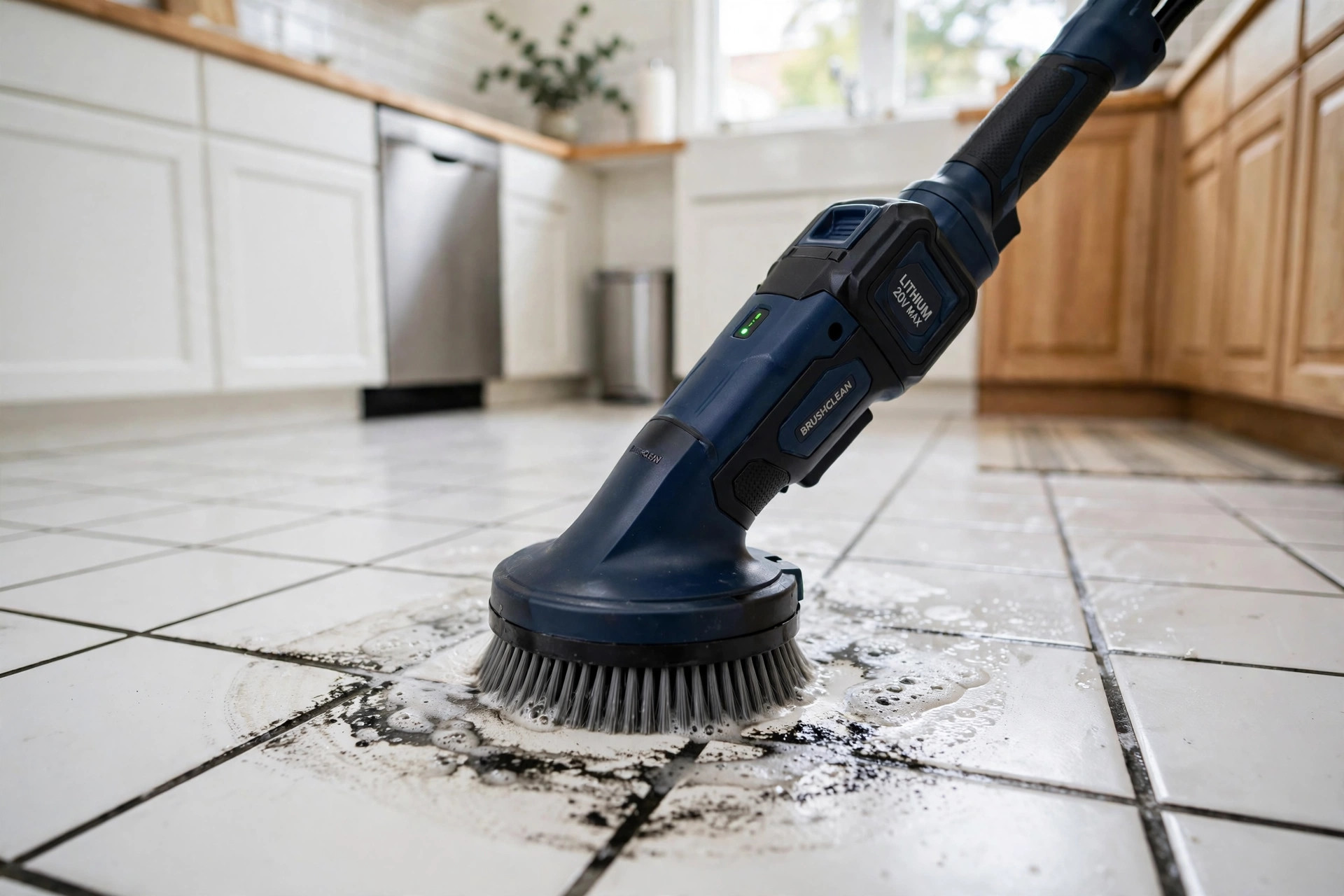

This tile grout cleaning machines price comparison usa guide helps you pick the right machine at the right price. Grout lines between tiles trap dirt, soap, and grease. A mop cannot reach deep into those lines. A machine made for grout can. Prices run from under thirty dollars to several hundred. This article shows what each price range buys you, and how to compare machines side by side.
Why Grout Gets Dirty and Why Machines Help
Grout is porous. It soaks up spills and grime like a sponge. Foot traffic grinds dirt into it. In kitchens, cooking grease settles into the lines. In bathrooms, soap scum and hard water stains build up. Hand scrubbing with a brush works, but it is slow and hard on the knees and back.
A grout cleaning machine solves this with speed and power. Some use steam to loosen dirt. Some use spinning brush heads to scrub. Some use hot water and suction to lift the dirt away. A machine can clean a whole bathroom floor in twenty minutes. The same job by hand can take two hours. For large tile areas, a machine is not a luxury. It is a practical tool that saves time and effort.
What to Look for When You Compare Machines: Tile Grout Cleaning Machines Price Comparison Usa
Before you compare prices, know what matters. A cheap machine that lacks power is a waste of money. An expensive machine with features you never use is also a waste. Judge each machine on the same points.
Cleaning Method
Steam machines clean with hot vapor. They loosen dirt and kill germs with heat. Spin scrubbers use motorized brushes and cleaning fluid. They are best for heavy stains. Upright machines wash and vacuum in one pass. They work well on big open floors. Pick the method that fits your main problem. Steam suits kitchens with grease. Spin scrubbers suit stained bathroom grout.
Power and Water Use
Corded machines give steady power and never run out of charge. Cordless machines give freedom of movement. A cordless model should run at least forty minutes on one charge. Check tank size too. A small tank means many refills. For a full kitchen floor, look for a tank that holds at least half a gallon.
Size and Weight
Handheld units weigh a few pounds. They suit counters, shower walls, and small floors. Upright models can weigh ten to fifteen pounds. They suit large rooms. Check if the handle adjusts for your height. A machine that is too heavy will sit unused in the closet. Buy one you are willing to lift and push.
Types of Tile Grout Cleaning Machines
Machines fall into four main types. Each has a different price range and a different job.
Handheld steam cleaners. These are small, light, and cheap. They shoot hot steam through a nozzle. A small brush tip scrubs the grout line. They work well for shower stalls and backsplashes. They are slow for whole floors. Price range: twenty to sixty dollars.
Spin scrubbers. These have a powered head that spins a round brush. You add cleaning solution. They plug in or run on batteries. They are strong against dark stains. Many come with brush heads of different sizes. Price range: forty to one hundred dollars.
Steam mops with grout brushes. These look like stick mops. They heat water into steam and push it through a floor pad. Some models include a small brush for grout lines. They cover floors fast. They work well for weekly upkeep. Price range: sixty to one hundred and fifty dollars.
Upright grout scrubbers and extractors. These are the heavy units. They scrub with brushes and pull dirty water back up. They clean the widest area per pass. They suit large kitchens and rental owners with many tile floors. Price range: one hundred and fifty to four hundred dollars.
For buyers who clean whole homes, a spin scrubber or steam mop pairs well with a robot vacuum for daily floors. A dehumidifier also helps keep grout dry between cleanings, and mold sprays handle problem corners in damp rooms.
Price Comparison in the USA
Here is what shoppers in the USA can expect to pay. Prices vary by brand, features, and where you buy. Online prices often run ten to twenty percent lower than store prices.
– Handheld steam cleaners: $20 to $60. Good for small jobs. Look for at least fifteen minutes of steam time and a wide set of nozzle tips. – Spin scrubbers: $40 to $100. Good for tough stains. Battery models should offer sixty minutes of run time. Corded models give more power for the money. – Steam mops with grout tools: $60 to $150. Good for whole floors. Units over one hundred dollars usually heat faster and hold more water. – Upright scrubbers and extractors: $150 to $400. Good for big areas. Models under two hundred dollars clean well but hold less water. Units over three hundred dollars add strong suction and faster brush speeds.
Used machines can save money. Refurbished units often sell for half the new price. Check that the seller offers at least a ninety day warranty. Professional cleaners use truck mounted units that cost thousands. For home use, you do not need that level of machine.
Seasonal sales matter. Prices drop around major holiday weekends and at the end of summer. If you are not in a hurry, wait for a sale. Also compare the cost of cleaning pads and solutions. Some brands sell cheap machines and pricey refills. A machine that uses plain water and steam costs less over time than one that needs brand name cleaner.
How to Compare Prices Like a Pro
List price is only part of the story. The true cost of a grout cleaning machine includes what you spend over its life. Do the math before you buy.
First, add the cost of refills. Some machines need brand name cleaning pads. A box of pads can cost fifteen to twenty five dollars. If you clean monthly and use one pad each time, that is up to three hundred dollars a year. Machines that work with plain water or plain steam have almost no refill cost. Over three years, a cheap machine with costly pads can cost more than a pricey steam unit.
Second, check the warranty. A one year warranty is standard. Better brands offer two years. A longer warranty signals that the maker trusts the product. Read the fine print. Some warranties do not cover brushes and pads, which wear out first.
Third, look at shipping and returns. Heavy upright machines can carry high shipping fees. Free return shipping matters if you buy online. You want to test the machine on your own grout. If it does not clean well, you should be able to send it back at no cost.
Fourth, read real buyer reviews. Look for reviews from people with the same kind of tile you have. A machine that shines on ceramic may struggle on rough stone. Reviewers often post before and after photos of grout lines. These photos tell you more than any ad.
Finally, set a budget and stick to it. Write down your maximum price before you shop. Sales pressure can push you to spend more. A clear budget keeps the choice simple. Wirecutter updates its buying guides each year and is a solid place to start your price research.
Care and Upkeep
A grout cleaning machine lasts longer with basic care. Empty the water tank after every use. Do not leave dirty water sitting in it. Rinse brush heads and pads. Let them dry fully before storage. This stops mold from growing on them.
Descale steam machines once a month if your tap water is hard. Use plain white vinegar or a store bought descaler. Run the machine with the solution, then flush with clean water. Check cords for wear. Store the machine in a dry place. A machine kept clean and dry can work well for five to ten years.
Keep your grout sealed. Grout sealer is a clear coat that fills the pores. Sealed grout stains less and cleans faster. Reseal grout once a year in wet areas like showers. This simple step cuts cleaning time in half.
Safety
Steam machines make vapor hot enough to burn skin. Keep hands and feet away from the nozzle. Never point steam at people or pets. Let floors cool and dry before you walk on them. Wet tile is slippery.
Read the label on any cleaning fluid you use. Some strong cleaners should not mix with steam. Open a window or run a fan for air flow. Keep chemicals locked away from children. The U.S. Consumer Product Safety Commission offers general guidance on safe home product use, and Good Housekeeping covers home safety basics.
FAQ
Can a steam cleaner damage grout?
Good grout handles steam fine. Old or cracked grout can loosen under strong steam. Test a small hidden spot first. Use the lowest steam setting that still cleans. If grout crumbles, stop and repair it before you continue.
How often should I clean tile grout with a machine?
For kitchen floors, once a month is enough for most homes. For showers, every two to four weeks keeps stains from setting. High traffic entryways may need weekly passes. Daily mopping between deep cleans keeps the job easy.
Is a cheap machine worth it?
It depends on the job. A forty dollar handheld steamer cleans a shower well. It will tire you out on a whole kitchen floor. Match the machine to the area. For small areas, cheap machines do fine. For large floors, spend more on a bigger unit.
Steam or spin scrubber: which cleans better?
Steam is best for grease and germs. It sanitizes with heat. Spin scrubbers are best for dark stains that need brushing. Many owners keep both: a steam mop for floors and a small scrubber for spots. Consumer Reports tests both types and rates cleaning power.
Where is the best place to buy?
Big box stores let you see the machine before you buy. Home Depot and Lowe’s stock many models in store. Online stores often have lower prices and more reviews. Check return policies. A good return policy lets you test the machine on your own grout.
Do I still need to seal grout after machine cleaning?
Yes. Machine cleaning opens the pores of grout. Sealing right after a deep clean gives the best result. Wait until the grout is fully dry, usually twenty four hours. Then apply sealer and let it cure. This Old House and Bob Vila both publish guides on sealing grout.
A Short Final Word
A tile grout cleaning machine is a sound buy for any home with tile floors. Compare machines by method, power, size, and price. Pick the type that fits your space. A forty dollar tool can serve a small bath. A two hundred dollar unit can serve a whole house. Start with a mid price model if you are unsure. It cleans well without a big risk. You can always upgrade later and keep the small unit for spot jobs. Clean rooms and fresh grout lines will make the whole home feel newer, and the work gets easier every time you do it. For more home care advice, see The Spruce, Family Handyman, and Wirecutter.
References
Bob Vila. (n.d.). Home improvement advice. https://www.bobvila.com Consumer Reports. (n.d.). Product reviews and ratings. https://www.consumerreports.org Family Handyman. (n.d.). DIY home repair and maintenance. https://www.familyhandyman.com Good Housekeeping. (n.d.). Product reviews and home advice. https://www.goodhousekeeping.com Lowe’s. (n.d.). Home improvement products. https://www.lowes.com The Home Depot. (n.d.). Home improvement products. https://www.homedepot.com The Spruce. (n.d.). Home and garden advice. https://www.thespruce.com This Old House. (n.d.). Home renovation guidance. https://www.thisoldhouse.com U.S. Consumer Product Safety Commission. (n.d.). Product safety information. https://www.cpsc.gov Wirecutter. (n.d.). Product reviews from The New York Times. https://www.nytimes.com/wirecutter
Was this guide helpful?

About Sarah Mitchell
The My Garden US editorial team writes practical, in-depth home and garden guides for American homeowners — tested advice, no fluff.
You May Also Like

Reliable Deep Cleaning Service Packages in Colorado
May 2, 2026 0 views
Dehumidifiers for Basements: A Price Comparison USA Guide
September 17, 2026 0 views
Eco Friendly Chimney Sweep Services Near Me: A Plain Guide
January 4, 2026 0 views