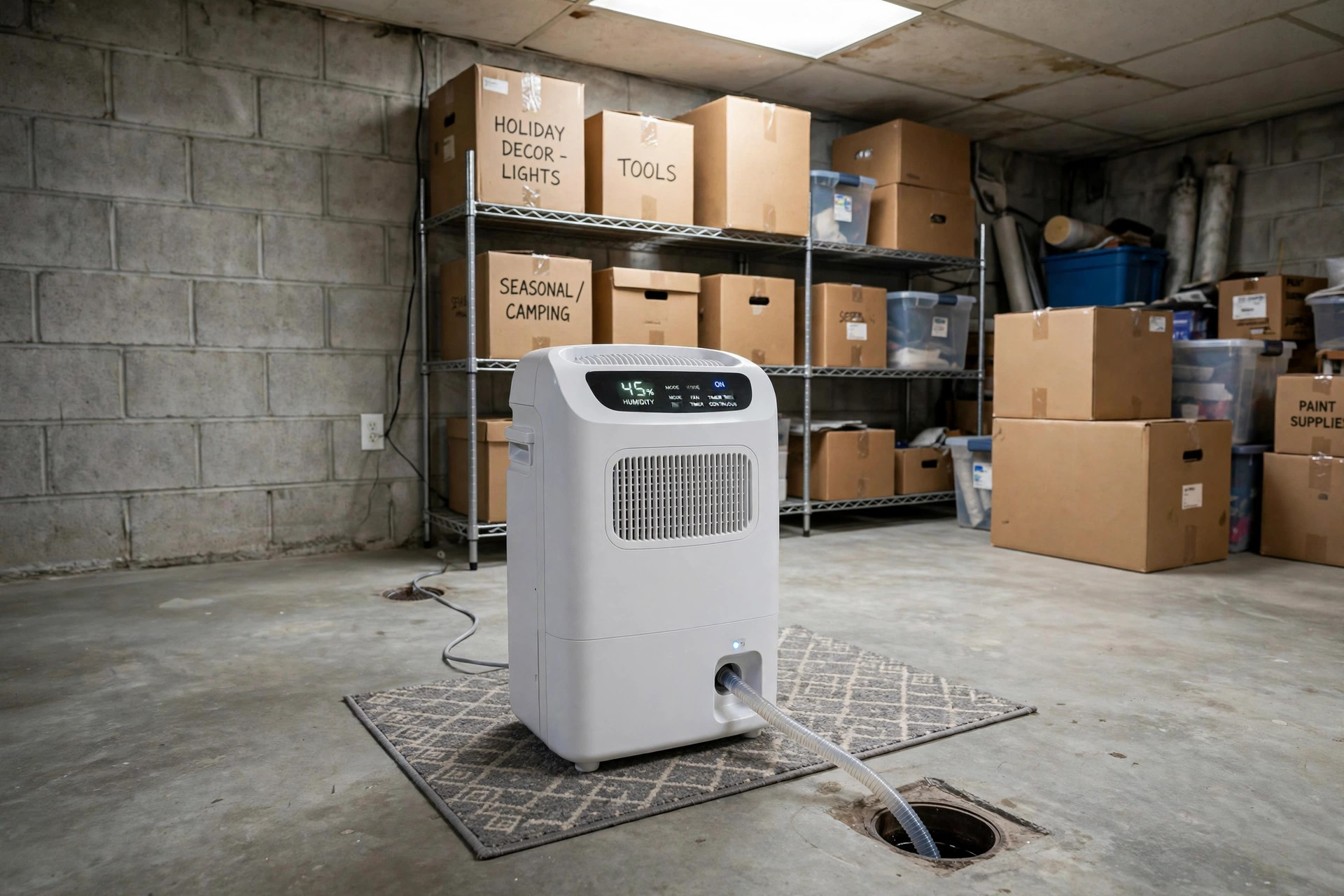

Every basement in America holds damp air. Warm summer air drifts down the stairs, meets cool concrete walls, and leaves moisture behind. That moisture feeds mold. It feeds dust mites. It ruins stored boxes, wood furniture, and the paint on your walls. A dehumidifier pulls that water from the air and keeps the room dry. But prices vary a great deal from one model to the next. This dehumidifiers for basements price comparison usa guide will help you understand what you pay for, what you can skip, and how to choose a unit that fits your space and your wallet.
Why Basement Humidity Matters
Most basements run damp. A healthy indoor level sits between thirty and fifty percent relative humidity. Many basements in the United States measure sixty percent or more, especially in summer. At that level, trouble begins. Mold spores grow on drywall and wood. Paint bubbles and peels. Metal tools and pipes rust. Cardboard boxes soften and collapse. A musty smell fills the room and creeps upstairs.
The United States Environmental Protection Agency advises homeowners to keep indoor humidity under sixty percent to stop mold growth. Their guidance on mold and damp indoor spaces explains why drying the air matters as much as cleaning it. A dehumidifier does the drying work day and night, without fans, sprays, or chemicals.
A dry basement also feels better. Heat feels less heavy. Clothes stored downstairs stay fresh. Finished rooms, from game rooms to home offices, remain comfortable. A good unit pays for itself in what it protects: the furnace, the water heater, the stored goods, and the structure of the house itself.
What to Look For When You Compare Prices: Dehumidifiers for Basements Price Comparison Usa
Price tags tell only part of the story. Two units that cost the same on the shelf can differ a great deal in size, power use, and build quality. When you compare, start with these points.
Pint Capacity
Dehumidifiers are rated in pints per day. That number tells how much water the unit can pull from the air in twenty-four hours. A small basement of three hundred square feet may need only twenty or thirty pints a day. A large, very damp basement may need fifty or seventy pints. Buy too small, and the unit runs all day and still falls short. Buy too large, and you pay more than you need and cycle the machine on and off more often.
Coverage Area
Match the unit to the room size. Makers list a coverage range on the box, often in square feet. A fifty-pint unit suits most medium basements. For spaces over two thousand square feet, look at seventy-pint models or plan on more than one unit.
Drainage Options
Every dehumidifier collects water. Small units fill a bucket you empty by hand. Larger units offer a hose connection so water drains into a floor drain or sink. Some models carry a built-in pump that pushes water up and out to a distant drain. Pump models cost more, often fifty to one hundred dollars extra, but they save daily trips to the basement.
Energy Use
Dehumidifiers run for long hours, so power use matters. Units with the Energy Star mark use less power for the same work. The energy-saving guidance for home appliances is a useful place to learn what efficient design looks like, and it appears again in the reading below. Over a year, an efficient model can save thirty to fifty dollars on power.
Noise and Controls
A basement unit does not need to be silent, but noise matters if you sleep above it. Look for sound ratings under fifty decibels. Digital controls with a built-in humidistat let you set a target level, often forty-five percent, and let the machine rest when it reaches it. Auto-restart after a power outage is a useful feature in storm country.
Independent test groups, such as the team behind appliance ratings and reviews, test dehumidifiers side by side for water removal, noise, and energy use. Their methodical comparisons show why two machines with the same pint rating can perform quite differently in a real room.
Types and Options
Dehumidifiers for basements fall into a few clear groups. Each group has its own price range.
Small portable units (20 to 30 pints). These suit small basements, crawl spaces, and laundry rooms. They are light and easy to move. Prices run from about one hundred forty to two hundred fifty dollars in the United States. They fill their buckets fast, so a hose hookup helps.
Mid-size units (35 to 50 pints). This is the most common group for American basements. Fifty-pint models handle twelve hundred to fifteen hundred square feet in damp conditions. Prices run from about two hundred to three hundred fifty dollars. Most offer a hose connection, and many include a pump option.
Large units (70 pints and up). These serve large or very wet basements. They drain faster and reach the target humidity sooner. Prices run from about two hundred eighty to four hundred fifty dollars. They weigh more and use more power, so check the circuit.
Whole-house units. These mount on the heating and cooling system and treat the entire home, basement included. They cost far more, often one thousand five hundred to three thousand dollars installed, but they run quiet and need no bucket. Most homeowners buy a portable unit first and consider whole-house only for large, finished basements.
For general buying guidance, the practical buying guides at home product buying advice walk through size and feature choices in plain language. Renovation specialists at basement improvement guidance also cover moisture control as part of a dry, healthy basement.
Cost and Price: What You Pay in the USA
A price comparison needs real numbers. Here is what shoppers in the United States see today.
– Budget portable models, 20 to 30 pints: 140 to 220 dollars. Fine for small spaces. Often louder, and drain options are basic. – Mid-range models, 35 to 50 pints: 200 to 350 dollars. The best value for most basements. Good controls, hose hookup, and solid build. – Large models, 70 pints: 280 to 450 dollars. For big or very damp basements. Faster drying, heavier, more power use. – Pump models: add 50 to 100 dollars to the base price. Worth it if no floor drain sits nearby. – Whole-house installed units: 1,500 to 3,000 dollars. Best for finished basements and large homes.
Running costs matter too. A fifty-pint unit may draw about five hundred watts. At average power rates, eight hours a day costs roughly sixty to ninety cents. Over a humid summer, that adds sixty to one hundred dollars to the power bill. Energy Star models trim that bill by a noticeable amount.
Do not forget the small costs. Replacement filters run ten to twenty dollars. A drain hose, if not included, costs under ten dollars. These are minor, but they belong in a fair comparison.
A fair price comparison also looks at the seller. Big home stores compete on price, and appliance price listings let you check current prices side by side from home. Seasonal sales, often in spring before the humid season, can cut prices by ten to twenty percent.
Care and Upkeep
A dehumidifier works hard and needs basic care. The good news is that care is simple and cheap.
Empty the bucket before it fills if you do not use a hose. A full bucket shuts the machine off, and the room grows damp again. Clean the bucket once a month with warm water and a drop of soap to stop slime.
Clean or replace the air filter every few weeks in heavy use. A clogged filter makes the fan work harder and pulls less water. Most filters rinse clean under a tap.
Wipe the coils once a season. Dust on the coils cuts power and can freeze the unit in cool rooms. If your basement stays under sixty-five degrees, choose a model built for low temperatures, or the coils will ice up.
Check the drain hose for kinks and blockages. A slow drip that stops can flood a corner before you notice. The hands-on repair guides at home maintenance how-to guides show simple fixes for common dehumidifier troubles, from blocked hoses to frozen coils. The long-running home project advice at This Old House basement advice also covers keeping basement air dry through the seasons.
For the rest of the home, good habits lower the load on the machine. Vent the dryer outside, fix leaking pipes, and grade the soil away from the foundation. Pair the unit with other upkeep tasks, such as keeping ducts clean, which you can read about in our guide to /cordless-air-duct-cleaning-services-near-me/, or planning the cost of other home services like our /pressure-washing-service-companies-cost-guide-usa/.
Safety
Dehumidifiers are safe machines when used with care. Keep the unit away from walls and curtains so air moves freely around it. Never place it on wet carpet or in standing water. Plug it straight into the wall outlet, not into a long extension cord, and make sure the outlet is grounded.
If the unit smells hot or the cord feels warm, unplug it and stop using it. Check for a product recall before you buy a used unit. Cold-room models need the low-temperature feature noted above; running a standard unit in a cold basement can ice the coils and strain the motor.
For households that battle broader moisture problems, the cleaning advice at household cleaning and care guidance covers safe cleaning routines for damp rooms. And if you clean with dryer vents or lint systems nearby, our note on /buy-dryer-vent-cleaning-kits-online-in-arizona/ may help you keep airflow strong, since dry, clean vents reduce indoor moisture too.
FAQ
How many pints do I need for my basement? Measure the room and judge the dampness. A mildly damp twelve-hundred-square-foot basement needs about thirty to forty pints a day. A very damp basement of the same size needs fifty to seventy pints. When in doubt, buy a size up. An oversized unit reaches the target sooner and then rests.
What is a fair price for a basement dehumidifier in the USA? Most buyers pay between two hundred and three hundred fifty dollars for a fifty-pint unit with a hose hookup. Budget thirty-pint models run one hundred forty to two hundred twenty dollars. Large seventy-pint models run two hundred eighty to four hundred fifty dollars.
Should I buy a pump model? Buy a pump model if no floor drain sits near the unit. The pump pushes water up and out to a sink or window drain. It adds fifty to one hundred dollars to the price but saves daily emptying.
Do dehumidifiers use a lot of power? A fifty-pint unit uses about as much power as a small window air conditioner. Expect sixty to one hundred dollars in power for a humid summer. Energy Star models use less and pay back the difference in a season or two.
Can a dehumidifier run all the time? Yes, but it should not need to. Set the humidistat to forty-five percent. The unit will run until the air reaches that level, then rest. If it never rests, the unit is too small or the room has a leak or open window.
Is a dehumidifier enough to stop mold? A dehumidifier controls new moisture and keeps mold from growing. It does not kill mold already on walls or wood. Clean existing mold first, fix the leak or seepage that feeds it, and then let the dehumidifier keep the air dry.
A Short Final Word
A dry basement starts with the right machine at a fair price. Compare pint capacity, drainage, power use, and noise before you compare price tags. Most American homes do well with a mid-size fifty-pint unit, a hose to the floor drain, and a target of forty-five percent humidity. Buy in spring, watch for sales, and keep the filter clean. The damp smell will fade, the boxes will stay dry, and the basement will feel like part of the home again.
References
Bob Vila. (n.d.). Home improvement advice. https://www.bobvila.com Consumer Reports. (n.d.). Product reviews and ratings. https://www.consumerreports.org ENERGY STAR. (n.d.). Energy efficient products. https://www.energystar.gov Family Handyman. (n.d.). DIY home repair and maintenance. https://www.familyhandyman.com Good Housekeeping. (n.d.). Product reviews and home advice. https://www.goodhousekeeping.com The Home Depot. (n.d.). Home improvement products. https://www.homedepot.com The Spruce. (n.d.). Home and garden advice. https://www.thespruce.com This Old House. (n.d.). Home renovation guidance. https://www.thisoldhouse.com U.S. Environmental Protection Agency. (n.d.). Protecting human health and the environment. https://www.epa.gov
Was this guide helpful?

About Robert Taylor
The My Garden US editorial team writes practical, in-depth home and garden guides for American homeowners — tested advice, no fluff.
You May Also Like

Buy Pet Hair Removal Tools Online in California: A Simple Guide
September 21, 2026 0 views
Buy Wet Dry Shop Vacuums Online in Arizona: A Plain Guide
February 16, 2026 0 views
Quiet Carpet Deep Cleaning Machines With Free Shipping
August 6, 2026 0 views