
Dryer lint builds up in every home. It builds up faster in Arizona than many people expect. Dust from desert air gets into homes. It joins the lint from clothes. It clogs the dryer vent over time. Many homeowners choose to buy dryer vent cleaning kits online in arizona to fix the problem themselves. The kits are easy to order. They are easy to use. They cost less than a service call in most cases. This guide explains what these kits do, how to pick one, what they cost, and how to use them safely.
Why Dryer Vent Cleaning Matters
A dryer works by blowing hot air through wet clothes. The moist air then leaves the house through a vent. Lint is a byproduct of that process. Some lint is caught by the lint trap. The rest travels into the vent tube. Over months, it coats the walls of the tube. A thick coat of lint slows the air flow. The dryer must run longer to dry a load. Energy bills rise. Clothes wear out faster from the extra heat.
A blocked vent is also a fire risk. Lint is very flammable. It catches fire from a small spark or from overheated air. The Consumer Product Safety Commission has long listed lint buildup in dryer vents as a leading cause of dryer fires. For that reason, many safety guides say vents should be cleaned once a year. In Arizona, some homes need it twice a year. Homes near open desert land collect more fine dust. That dust settles in the vent along with the lint.
A slow dryer is often the first sign of trouble. A load that once took forty minutes now takes an hour. The top of the dryer feels hot to the touch. The laundry room smells damp. Lint blows out around the outside vent hood. Any of these signs means the vent needs attention. A cleaning kit is a good first step.
What to Look for When You Buy a Kit: Buy Dryer Vent Cleaning Kits Online in Arizona
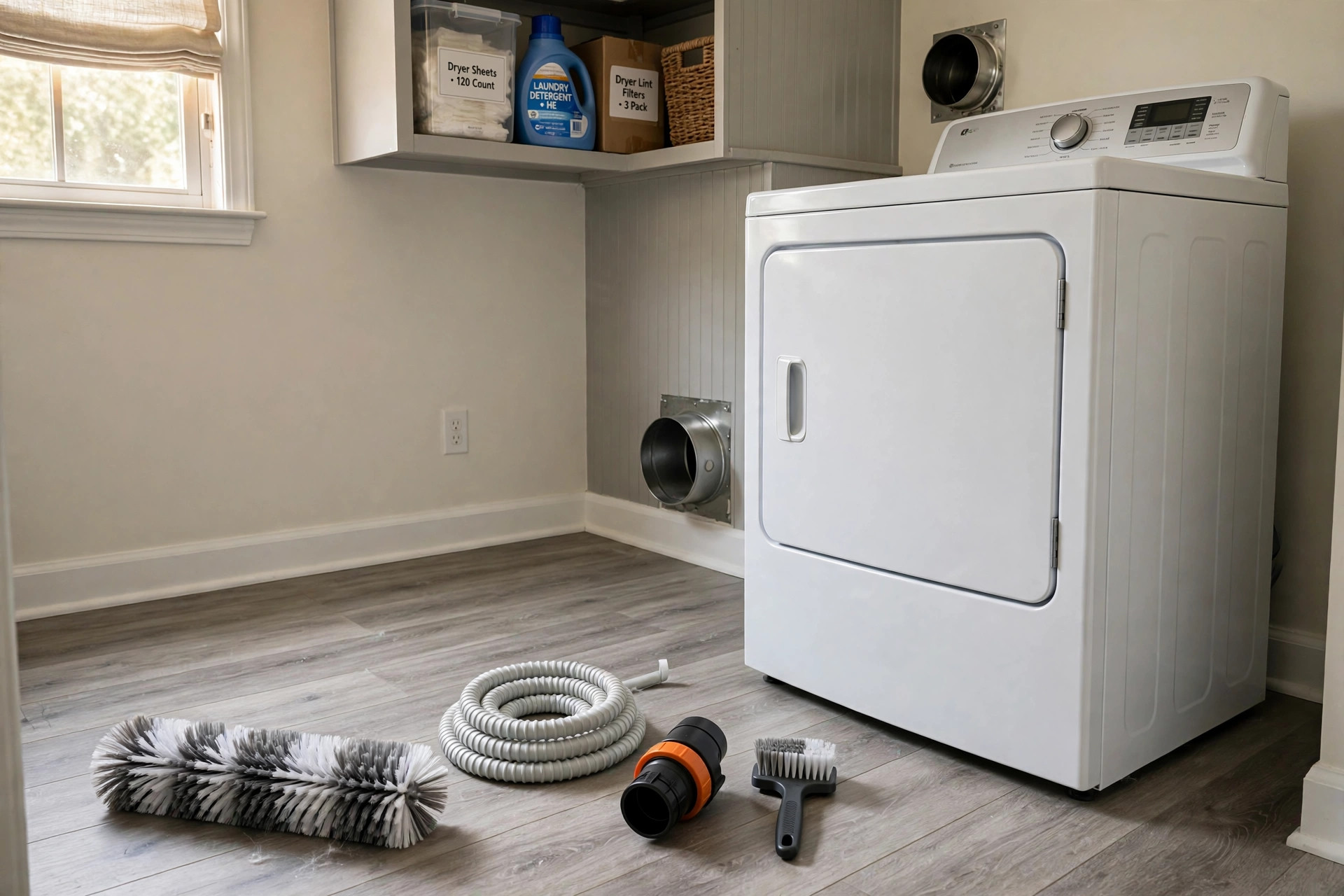
Not all kits are the same. A good kit has a few basic parts. First, it needs a flexible brush head. The brush should be wide enough to touch the walls of a four-inch vent. Most home vents are four inches across. The brush head should spin as it moves through the tube. Spinning action scrapes lint off the walls.
Second, the kit needs flexible rods. The rods link together. They let the brush reach deep into the vent. A vent may run ten or twenty feet through a wall. Look for a kit with at least twelve feet of rods. Long runs need more length. Check how the rods join. Good kits use snap locks or screw threads. Cheap kits use friction joints that come apart inside the vent. A rod stuck in the wall is a bad outcome.
Third, check what the kit works with. Many kits connect to a standard power drill. The drill turns the brush. This makes the job much faster. Some kits are manual only. They still work, but they take more effort. Drill-powered kits are worth the small price difference for most people.
Fourth, look for a vacuum adapter. The adapter lets you hook the brush to a shop vacuum so the loosened lint is sucked out. This keeps lint from blowing back into the room. If you want a separate buying guide for shop vacuums, see this wet dry shop vacuums reviews and buying guide. The adapter is a nice extra, not a must.
When you buy dryer vent cleaning kits online in arizona, read the reviews with care. Look for reviews from buyers in the Southwest. They often mention dust and long vent runs. Their notes match local conditions better than reviews from other regions.
Types of Dryer Vent Cleaning Kits
There are three main types of kits sold online.
Brush and rod kits. These are the most common. They include a brush head and a set of flexible rods. You feed the brush through the vent from the outside or from the dryer end. The brush turns with a drill or by hand. Prices are low. Results are good for normal lint.
Auger kits. These use a spiral metal head instead of soft bristles. The spiral digs through hard clogs. They are useful when a vent has not been cleaned in years. They can scratch metal vent walls if used hard. Use them with care.
Air-powered blowout kits. These attach to an air compressor or a leaf blower. They blast air through the vent. They clear loose lint fast. They are not as good at scrubbing stuck-on lint. Many pros use both a brush kit and air pressure. For a homeowner, a brush kit alone is enough in most cases.
Some kits are sold as full cleaning sets. They add a lint trap brush, a crevice tool, and a vacuum hose adapter. These extras help clean the dryer itself. The lint trap slot and the area behind the dryer collect lint too. A full set saves a separate trip to the store.
Cost and Price in Arizona
Online prices for dryer vent cleaning kits are steady across the country. A basic brush and rod kit costs about fifteen to twenty-five dollars. A longer kit with drill adapter costs about twenty-five to forty dollars. Full sets with vacuum parts cost about thirty-five to sixty dollars.
Shipping to Arizona is free from most large sellers. Lowe’s and Home Depot both ship to Arizona addresses with free standard delivery on most orders. Delivery times run from two to five days. If you need a kit fast, both stores offer pickup at local Arizona stores in Phoenix, Tucson, Mesa, and other cities.
A pro dryer vent cleaning service in Arizona costs about one hundred to one hundred eighty dollars per visit. A kit pays for itself after one use. The rods and brushes last for many cleanings if stored dry.
How to Use a Kit Safely: Step by Step
Safety comes first. Read the dryer manual before you start. Unplug the dryer. If it is a gas dryer, turn off the gas supply valve as well.
Step one: move the dryer. Pull the dryer a few feet from the wall. You need room to work behind it. Do not kink or crush the vent hose.
Step two: remove the vent hose. Loosen the clamp that holds the hose to the dryer outlet. Pull the hose off gently. Some homes have a rigid metal vent instead of a hose. The same steps apply.
Step three: clean from the dryer end. Attach rods to the brush head. Feed the brush into the vent opening in the wall. Add rods as you go deeper. Turn the drill slowly in one direction. Do not reverse the drill while the brush is deep in the vent. Reversing can unscrew the rods.
Step four: clean from the outside. Go to the outside vent hood. Open the flap. Feed the brush in from this side too. Long vent runs need both ends. Family Handyman suggests marking the rods so you know how deep the brush has gone.
Step five: vacuum the lint. Use a shop vacuum to pull loose lint from both ends. Clean the outside vent hood with a damp cloth. Clear the flap so it swings free.
Step six: put it back together. Reconnect the vent hose. Tighten the clamp. Push the dryer back into place. Run a short test cycle. Check the outside hood for strong air flow.
Do the job on a calm day if you can. Wind can blow lint back at you at the outside vent. Wear a dust mask. Lint and dust irritate the lungs. The EPA notes that fine dust can bother people with asthma.
Care and Upkeep
A clean vent needs upkeep to stay clean. Clean the lint trap after every load. This is the simplest step. It takes ten seconds. A full trap forces lint into the vent.
Wash the lint trap screen once a month. Dryer sheets leave an invisible film on the screen. The film blocks air flow. Scrub the screen with warm soapy water. Rinse it well. Let it dry before you put it back.
Check the outside vent hood every few months. Birds and small animals nest in vent hoods in Arizona. A nest blocks air flow fast. Clear any nest by hand. Make sure the flap closes on its own. The Spruce home site notes that a stuck-open flap also lets dust into the vent.
Store your cleaning kit in a dry place. Hang the rods on hooks so they keep their shape. Do not leave the kit in a hot garage in summer. Arizona garage heat can reach one hundred forty degrees. That heat can warp cheap plastic rods.
Plan a full vent cleaning once a year. Mark it on the calendar. Homes with pets or large families may need it every six months. Pet hair adds to the lint load fast.
Buying Online: Tips for Arizona Shoppers
Online shopping for home tools is easy, but a few tips help.
Compare total price, not just the list price. Shipping rules change by seller. A cheaper kit with a shipping fee can cost more than a pricier kit with free shipping. Consumer Reports advises buyers to check return policies too. A kit that does not fit your vent type should be easy to return.
Check the vent type first. Look behind your dryer. You will see either a flexible foil hose or a rigid metal duct. Rigid metal is best. Flexible foil can sag and trap lint. If you have foil, think about replacing it with rigid duct. This matches the advice on This Old House for safe dryer vent runs.
Read the length specs. Measure your vent run. A kit with twelve feet of rods will not clean a twenty-foot run. Buy extra rods if you need them.
Look for Arizona reviews. Some sellers show buyer locations. Reviews from Phoenix, Tucson, or Scottsdale buyers tell you how the kit handles desert dust. They also tell you about shipping speed to the state.
Keep the receipt. Most kits carry a one-year warranty. Save the order email. You may need it if a rod joint fails.
FAQ
How often should I clean my dryer vent in Arizona? Once a year is the standard advice. Clean every six months if you have pets, a large family, or a home near open desert. Dust from desert air adds to lint buildup.
Can I use a kit on a gas dryer? Yes. Turn off the gas supply before you start. Let the dryer cool fully. If you smell gas at any point, stop and call the gas company. Do not try to fix gas parts yourself.
Will a kit damage my vent? Brush kits are safe for rigid metal vents. Be gentle with flexible foil vents. Foil can tear. If your vent is foil, plan to replace it with rigid metal duct.
How do I know the vent is clean? Air flow at the outside hood should feel strong. Drying time should drop back to normal. You can also shine a light through a short vent to check for blockages.
Is a pro cleaning better than a kit? A pro has stronger tools and a camera to inspect the vent. A kit handles normal lint fine. If a kit does not fix the problem, or if the vent is very long with sharp turns, call a pro.
Can I clean from the roof vent? Some Arizona homes vent the dryer through the roof. Roof vent cleaning is harder. You must work from the roof. If you are not comfortable on a roof, hire a pro. Safety is more important than saving money.
Final Word
Dryer vents are easy to forget. They sit behind the dryer, out of sight. But they work hard every week. A small amount of care keeps them safe and fast. When you buy dryer vent cleaning kits online in arizona, you get a tool that pays for itself. Order the right length. Follow the steps. Clean once a year. Your dryer will run cooler, dry faster, and cost less to run. For related home upkeep guides, see commercial grade gutter cleaning tools with free shipping and steam mops for tile floors price comparison usa. Extra cleaning wisdom from Bob Vila, Good Housekeeping, and HGTV can help with the rest of your home maintenance plan.
References
Bob Vila. (n.d.). Home improvement advice. https://www.bobvila.com Consumer Reports. (n.d.). Product reviews and ratings. https://www.consumerreports.org Family Handyman. (n.d.). DIY home repair and maintenance. https://www.familyhandyman.com Good Housekeeping. (n.d.). Product reviews and home advice. https://www.goodhousekeeping.com HGTV. (n.d.). Home and garden ideas. https://www.hgtv.com Lowe’s. (n.d.). Home improvement products. https://www.lowes.com The Home Depot. (n.d.). Home improvement products. https://www.homedepot.com The Spruce. (n.d.). Home and garden advice. https://www.thespruce.com This Old House. (n.d.). Home renovation guidance. https://www.thisoldhouse.com U.S. Consumer Product Safety Commission. (n.d.). Product safety information. https://www.cpsc.gov U.S. Environmental Protection Agency. (n.d.). Protecting human health and the environment. https://www.epa.gov
Was this guide helpful?

About James Carter
The My Garden US editorial team writes practical, in-depth home and garden guides for American homeowners — tested advice, no fluff.
You May Also Like

Commercial Grade Robot Vacuum Cleaners Buying Guide
January 21, 2026 0 views
Eco Friendly Carpet Deep Cleaning Machines for Sale: A Practical Guide for American Homes
January 25, 2026 0 views
Quiet Hardwood Floor Buffers for Sale: What to Know Before You Buy
February 17, 2026 0 views