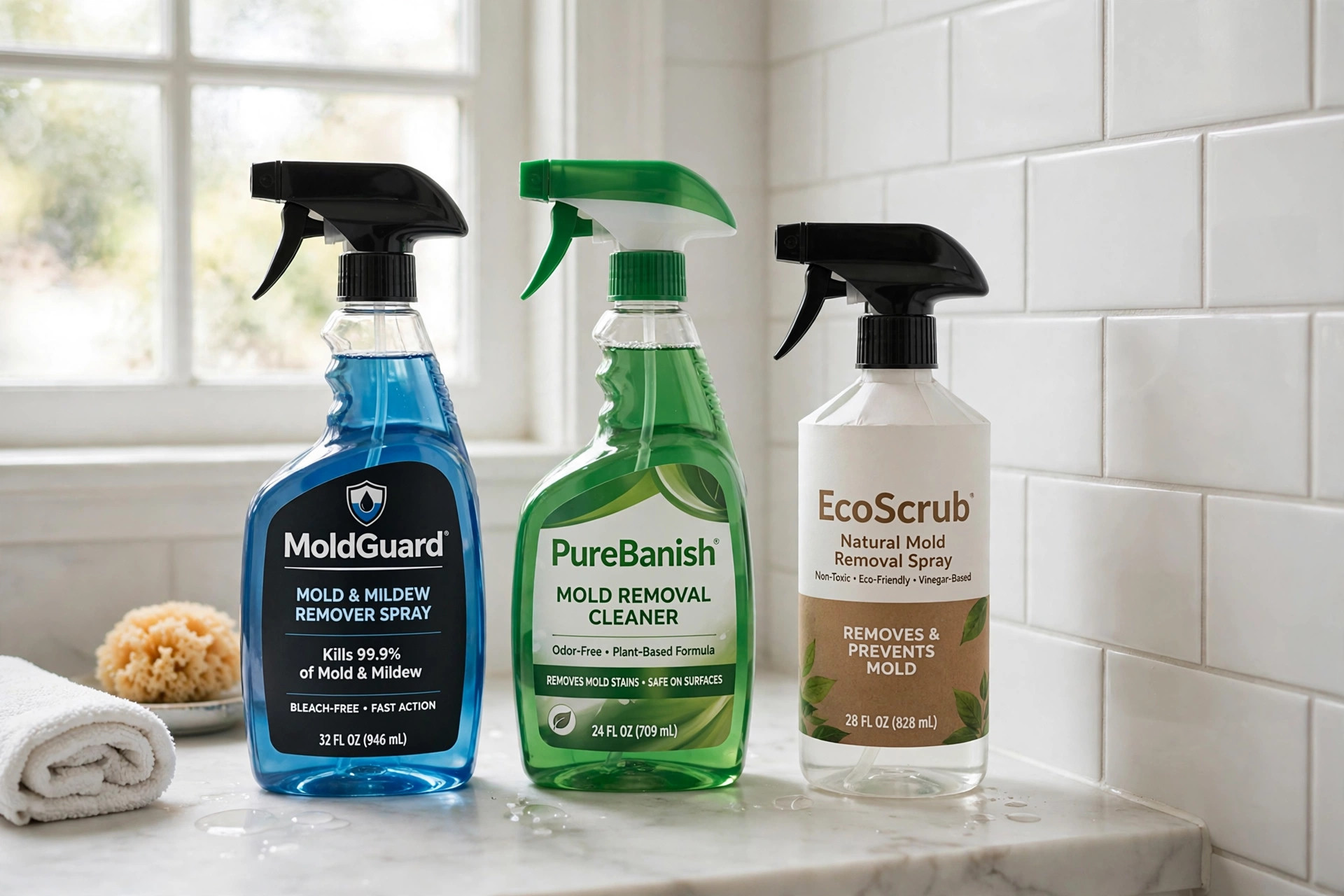

Mold is one of the most common problems in American homes. It grows in damp rooms, on tile grout, behind sinks, and around windows. A good spray can save you hours of scrubbing and keep your home healthy. This mold removal sprays reviews and buying guide walks you through what matters, how to choose, what each type does, what it costs, and how to stay safe while you clean. You will find no hype here, only plain facts that help you make a sound choice.
Why Mold Removal Matters
Mold is a living fungus. It feeds on dust, soap scum, and moisture. In the right spot it can spread across a bathroom wall in a matter of days. Many homes have small patches that owners ignore. Over time those patches grow and cause stains that are hard to remove.
The health question comes up in every review of mold removers. Mold spores float in the air. Some people feel fine around them. Others react with a stuffy nose, itchy eyes, or a cough. The Centers for Disease Control and Prevention offers public guidance on mold and health that any buyer can read for free. People with asthma or weak lungs should take mold more seriously and may want help from a pro.
Mold also harms the home itself. It eats into caulk, wood trim, and drywall. A stain you could have cleaned with a spray in March may need a new coat of paint or new grout by fall. For that reason, most buyers in this mold removal sprays reviews and buying guide are looking for a product that works fast on the first try.
How to Choose the Right Spray: Mold Removal Sprays Reviews and Buying Guide
Buying a mold spray is simpler than it looks. Start with the surface. Tile and glass can take strong formulas. Painted walls and wood trim need gentler ones. Read the label and match the product to the room.
Next, think about the size of the job. A small patch on shower grout needs only a ready-to-use spray bottle. A basement wall with heavy growth may need a concentrate that you mix with water. If the affected area is larger than about ten square feet, many guides advise calling a professional instead of buying more spray. The Environmental Protection Agency keeps free mold cleanup pages that spell out when a do-it-yourself job is safe.
Check the smell and the fumes. Bleach-based sprays are strong but harsh. Many buyers prefer them anyway because they kill surface mold fast and whiten stains. Non-bleach sprays are milder and often plant-based. They suit homes with kids, pets, or sensitive noses.
Finally, look at the reviews with a cool eye. The best mold removal sprays reviews and buying guide style testing comes from groups that buy products at retail and test them on their own. Paid web reviews can lean too sweet. Look for reviews that show before and after photos and name the surface tested.
Types of Mold Removal Sprays
Not every bottle in the cleaning aisle works the same way. The four groups below cover most of what you will find.
Bleach-Based Sprays
Bleach sprays are the old standard. Sodium hypochlorite kills mold on hard, non-porous surfaces such as tile, tubs, and glass. They also lighten dark stains, which makes them popular in bathrooms. They act in minutes. The trade-offs are real. Bleach can harm colored grout, etch stone, and damage fabrics. The fumes are strong, so you must open a window and wear gloves. Never mix a bleach spray with any other cleaner, above all not ammonia or vinegar. That mix can make a gas that harms the lungs.
Hydrogen Peroxide Sprays
Peroxide sprays offer a middle path. They kill mold on many surfaces and break down into water and oxygen, so they leave little residue. Many bathroom cleaners now pair peroxide with a light degreaser to cut soap scum at the same time. They are gentler on color than bleach but can still fade some dyes. They keep best in dark bottles and cool shelves. For a small bathroom, a peroxide spray is often the best mold removal spray for tile style picks you see in home test roundups.
Concrobium-Style and Botanical Sprays
Some brands sell non-bleach mineral or plant-based sprays that claim to crush mold as they dry. These are the gentlest option for painted drywall, wood, and fabrics. They have little odor. They work more slowly and may need a second pass on heavy stains. Readers of any mold removal sprays reviews and buying guide should know that milder sprays suit light, early growth best. They are a good pick for routine upkeep once the worst stains are gone.
Concents and Multi-Use Liquids
Concentrates are the heavy lifters. You mix them with water in a bucket or a pump sprayer and cover large areas for less money per gallon. They are made for basements, garages, and crawl spaces. They demand care: gloves, goggles, and fresh air. Read the mix ratio twice. Too strong a mix wastes money and harms surfaces. Too weak a mix will not work.
What Reviews Say
Across the trusted testing sites, a few patterns keep showing up. Bleach sprays win on speed and stain removal. Botanical sprays win on safety and odor. Peroxide sprays win as the all-round choice for the average home. One honest pattern: no spray removes mold from deep inside porous drywall or wood. Sprays kill surface growth and lighten the stain. When mold has grown through the material, the material must go. This Old House and Bob Vila both stress that fact in their mold guides.
Look for reviews that test on more than one surface. A spray that shines on white tile may fail on a painted wall. The stronger review sets also test whether the mold came back after a week. Regrowth tells you whether the product just bleached the stain or truly cleaned the root.
Cost and Price
Mold removal sprays are cheap compared with almost any other home repair. Ready-to-use spray bottles usually run between five and twelve dollars. Store-brand bottles can cost less and often match name brands in lab-style tests. Concentrates sell for twelve to thirty dollars and make several gallons, which cuts the cost per square foot far below ready-to-use bottles.
A full cleanup of a small bathroom may take one or two bottles. A basement wall may need a whole gallon of mix. Add gloves, goggles, and a mask, and a do-it-yourself job still lands well under fifty dollars. Compare that with a professional mold job, which often starts at several hundred dollars for a small area. Big-box shelves at Home Depot and Lowe’s carry the full price range, from budget sprays to pro-grade concentrates.
Good Housekeeping-style review panels note that the priciest bottle is not always the best. In their mold and mildew cleaner tests, mid-priced peroxide and bleach sprays have beaten luxury brands. Spend on the right type for your surface, not on the fanciest label.
How to Use a Mold Spray the Right Way
A good spray fails when the method is wrong. Work in this order.
First, fix the moisture. Mold returns when the dampness stays. Run the bath fan, open a window, and seal any leak. No spray beats a dry wall.
Second, gear up. Put on rubber gloves and eye protection. For strong formulas, add a mask that keeps out fine mist. Keep pets and small children out of the room.
Third, spray and wait. Coat the stain well and let the product sit for the time the label states. Ten minutes is common. Do not spray and wipe right away. The dwell time does the real work.
Fourth, scrub and rinse. Use a stiff brush on grout and a sponge on smooth tile. Rinse with clean water. Dry the area fully with a fan or a dry cloth. Damp spots invite the mold back.
Fifth, watch the spot. If the stain returns in a week, the mold may run deeper than the surface. That is the sign to call a professional or to replace the stained caulk or drywall.
Many buyers pair mold sprays with their regular cleaning kit. If you like to keep a full shelf, our quiet roof moss removal services near me notes and where to buy antibacterial disinfectant sprays in colorado picks sit in the same cleaning family. A shower that grows mold often grows soap scum too, so you may want our professional grade shower door descalers for small apartments guide as well.
Care and Upkeep After Cleaning
Cleaning once is not enough. Mold is a moisture problem, and sprays are only half the cure.
Keep the bathroom fan running for at least twenty minutes after a shower. Wipe down the tub and tile with a squeegee. A dry surface starves new mold. In basements, a dehumidifier that holds the air below fifty percent humidity does more long-term good than any spray.
Check caulk lines twice a year. Cracked caulk lets water slip behind the tile, where no spray can reach. A fresh bead of caulk costs little and blocks mold at the source.
Store your sprays in a cool, dry spot. Bleach sprays lose strength after about six months. Peroxide bottles fade faster in heat and light. If a spray has sat on the shelf for a year, replace it before a big job.
Safety First
Mold sprays are chemicals, and they deserve respect. Read the whole label before you open the bottle. The label lists the right surfaces, the wait time, and the gear you need.
Ventilate every room you clean. Open a window or run a fan that pushes air out. Never spray in a sealed room with no airflow.
Wear gloves and eye protection every time. Splashes in the eyes need a full rinse with water right away, so keep the label close at hand.
Never mix cleaners. Bleach plus vinegar, bleach plus ammonia, or bleach plus peroxide can release gases that burn the throat and lungs. If you want to try a second product, rinse the first one off and let the surface dry first.
People with asthma, allergies, or lung disease should be careful. The Centers for Disease Control and Prevention advises them to avoid heavy mold exposure and to wear a proper mask or let someone else do the job. Keep the room empty of children and pets until it airs out.
Dispose of empty bottles with the household waste as the label directs. Do not pour leftover spray down a well or a stream.
Frequently Asked Questions
Do mold removal sprays really kill mold?
Yes, on hard, non-porous surfaces. Bleach, peroxide, and mineral sprays all kill surface mold when used as directed. None of them can reach mold that has grown deep inside drywall, wood, or ceiling tile. In those cases the damaged material must be removed.
What is the difference between mold and mildew sprays?
Very little. Mildew is just an early, flat form of mold that grows on damp surfaces. Most sprays labeled for mildew also kill mold. Check the label for the exact claims rather than shopping by the word on the front.
Can I use a mold spray on painted walls?
Yes, with care. Use a gentler, non-bleach spray on paint and test a small hidden spot first. Bleach can lift color and leave light patches. For heavy mold on painted drywall, the mold may have soaked through the paint, and the wall may need repainting after cleaning.
How often should I spray to keep mold away?
Once the stain is gone, a light pass every month or two keeps bathroom tile and grout clear. The better habit is moisture control: run the fan, wipe down wet surfaces, and keep humidity low. Upkeep beats repeat spraying.
Are natural mold sprays as good as bleach sprays?
For light growth they can be. Botanical and mineral sprays work well on early stains and leave little odor. For heavy stains or dark grout, bleach sprays clean faster and whiten better. Many homes keep both: a mild spray for weekly upkeep and a strong one for tough spots.
When should I call a professional instead?
Call a pro when the mold covers more than about ten square feet, when it grows inside walls or on ceilings, or when it keeps coming back after proper cleaning. Also call one if anyone in the home has breathing trouble and reacts to mold. The Environmental Protection Agency lists these same rules in its free homeowner guides.
A Short Final Word
A mold spray is a small buy with a big payoff when you choose it well. Match the formula to the surface, give it time to work, and fix the moisture that let the mold grow. This mold removal sprays reviews and buying guide gave you the types, the costs, the method, and the safety rules. With those in hand, you can clean with confidence and keep your home dry, fresh, and sound for years.
References
Bob Vila. (n.d.). Home improvement advice. https://www.bobvila.com Centers for Disease Control and Prevention. (n.d.). Cleaning and disinfecting your home. https://www.cdc.gov Consumer Reports. (n.d.). Product reviews and ratings. https://www.consumerreports.org Family Handyman. (n.d.). DIY home repair and maintenance. https://www.familyhandyman.com Good Housekeeping. (n.d.). Product reviews and home advice. https://www.goodhousekeeping.com Lowe’s. (n.d.). Home improvement products. https://www.lowes.com The Home Depot. (n.d.). Home improvement products. https://www.homedepot.com The Spruce. (n.d.). Home and garden advice. https://www.thespruce.com This Old House. (n.d.). Home renovation guidance. https://www.thisoldhouse.com U.S. Environmental Protection Agency. (n.d.). Protecting human health and the environment. https://www.epa.gov
Was this guide helpful?

About Michael Thompson
The My Garden US editorial team writes practical, in-depth home and garden guides for American homeowners — tested advice, no fluff.
You May Also Like

Commercial Grade Cordless Stick Vacuums for Small Apartments
February 15, 2026 0 views
Professional Grade Deep Cleaning Service Packages for Homeowners
October 1, 2026 0 views
Top Rated Window Cleaning Service Companies Reviews
July 14, 2026 0 views