
Introduction
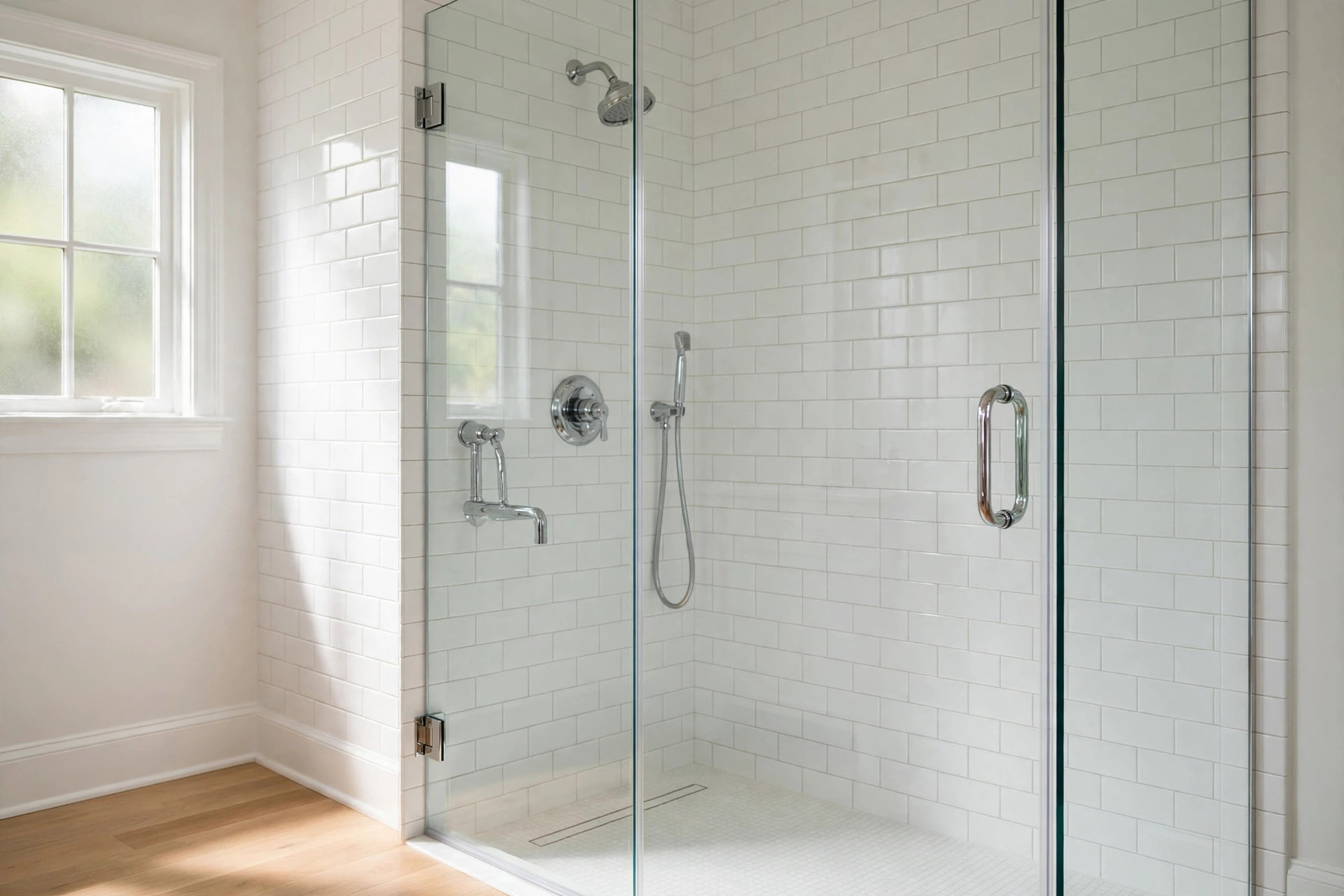
Hard water leaves white spots on glass. Soap leaves a dull film. After a few months, a glass shower door can look foggy even when it is clean. That is why so many homeowners search for budget friendly shower door descalers with free shipping. These are low-cost cleaners that dissolve mineral scale on shower glass. When they ship free, the total price stays low, and there is no surprise at checkout.
A descaler is not the same as a daily shower spray. A daily spray keeps soap scum from building up. A descaler attacks the hard mineral crust left behind by calcium and magnesium in the water. The right product can take a door from milky to clear in one or two treatments. This guide explains how these cleaners work, what to look for, what kinds you can buy, what they cost, and how to use them safely.
Why Hard Water Spots Ruin Shower Glass: Budget Friendly Shower Door Descalers with Free Shipping
Glass looks smooth, but up close it has tiny pores. Mineral-rich water dries on the surface and leaves calcium carbonate behind. Each shower adds another layer. Soap mixes with the minerals and forms a film that clings to the glass. Over time the spots etch into the surface. If the glass gets badly etched, no cleaner can fix it, so early treatment matters.
The problem is worse in homes with hard well water. City water can be hard too. Mineral content varies widely by region, and homes with very hard water face more buildup on fixtures and glass. A low-cost descaler used on a regular schedule stops new scale from bonding to the glass.
Clean glass also makes the bathroom look bigger and brighter. A foggy door casts a gray tone across the whole room. A clear door lets light pass through. For such a small job, the change in the room can be striking.
How to Choose a Shower Door Descaler
Start with the label. A good descaler names the acids it uses and tells you what surfaces it is safe for. Look for words like citric acid, glycolic acid, or sulfamic acid. These dissolve mineral scale without the harsh fumes of older formulas. Citric acid is plant-based and gentle. Glycolic acid works fast on heavy crust. Sulfamic acid is strong and common in professional products.
Check the safety line for glass and metal. Some strong cleaners can dull chrome frames, rubber seals, or stone tile. If your shower has natural stone, marble, or travertine nearby, make sure the product is safe for stone or keep it off the tile. Reviews from other homeowners are useful here. Test sites and cleaning guides often compare how each formula treats glass versus fixtures, and sources like Good Housekeeping’s cleaning reviews regularly test descalers side by side. Sprays are easy to aim at vertical glass. Foams cling longer, which helps on heavy buildup. Gels work well on tracks and edges where spray runs off. Many shoppers who hunt for low-cost descalers with no shipping charge compare foam and spray versions of the same brand to find the cheapest option.
Watch the price per ounce, not just the bottle price. A small bottle at a low price can cost more per ounce than a larger bottle. Free shipping makes the math easy, because the price you see is the price you pay. That is the whole point of looking for budget friendly shower door descalers with free shipping: the bargain stays a bargain.
Types of Descalers You Can Buy
Descalers come in a few main types. Each has strengths. Knowing them helps you pick the right one for your door.
Citric Acid Cleaners
Citric acid comes from citrus fruit. It is a mild acid that dissolves mineral scale and is kind to most surfaces. It works best on light to moderate buildup. Many of these products are sold as non-toxic and septic-safe. They often have a light citrus smell rather than a chemical odor. For regular upkeep, a citric acid cleaner is a fine choice.
Glycolic Acid Cleaners
Glycolic acid works faster than citric acid. It breaks down thick scale and old soap scum in less time. These formulas are a good middle ground: stronger than citric acid, gentler than hydrochloric acid. They cost a little more, but the low-priced options with free delivery still fit a budget.
Sulfamic Acid Cleaners
Sulfamic acid is the workhorse of the group. It cuts through heavy, old buildup that other acids leave behind. Professional cleaners use it often. It is harsher, so follow the directions and rinse well. Keep it away from natural stone unless the label says it is safe. For a door that has not been treated in years, this type often gives the best first result.
Vinegar-Based Homemade Mixes
White vinegar is the classic homemade descaler. Mix equal parts vinegar and water in a spray bottle. It works on light spots and costs almost nothing. The drawback is the smell and the weak strength. It also can harm stone and some finishes, so use it with care. For truly budget-friendly results, a homemade mix is hard to beat, though it takes more elbow grease than store-bought acids.
Descaling Wipes and Pads
Wipes and non-scratch pads add light abrasion to the chemical action. They are good for the bottom track of a sliding door, where scale piles up. Some pads are made for glass and will not scratch it. Others are too rough. Read the label before using any pad on glass.
Cost and Price: What Budget Really Means
A budget descaler usually costs between five and fifteen dollars a bottle. The cheapest store brands start near the bottom of that range. Brand-name acids sit a bit higher. Free shipping changes the math. A bottle that costs eight dollars with a five-dollar shipping fee is really a thirteen-dollar bottle. With free delivery, eight dollars is eight dollars.
Watch for multi-packs. Two or three bottles often cost less per bottle than one. If you plan to treat the door every few months, a multi-pack is the smart buy. Concentrates are another way to save. A small bottle of concentrate mixed with water can make many spray bottles of working solution.
Set a yearly budget for the job. Treating the door four times a year with an eight-dollar bottle comes to about thirty-two dollars a year. That is far cheaper than replacing a glass door, which can cost hundreds. In that light, a cheap descaler is one of the best bargains in home care. Shoppers looking for cordless electric scrubbers for midwest homes often pair a descaler with a good squeegee for the same reason. For jobs beyond glass, such as deep carpet work, quiet carpet cleaning service companies for homeowners are worth a call while you handle the door yourself.
Step-by-Step: Using a Descaler on a Glass Shower Door
Read the product label first. Every formula is a little different. Then follow these general steps.
1. Open a window or turn on the bath fan. Good air flow matters even with mild acids. 2. Rinse the door with warm water to wash off loose soap and dirt. 3. Spray or spread the descaler on the glass. Cover the spots fully. Do not miss the bottom edge and the track. 4. Let it sit for the time the label says, often five to fifteen minutes. Do not let it dry on the glass. If it starts to dry, spray a little more. 5. Wipe with a soft cloth or non-scratch sponge. Use light, even strokes. 6. Rinse well with clean water. Acid left on the glass can leave marks of its own. 7. Dry the glass with a clean towel or squeegee. Drying stops new water spots from forming.
For very heavy scale, repeat the treatment instead of scrubbing hard. Two gentle rounds beat one rough round. Hard scrubbing can scratch the glass, and scratches hold minerals forever. Home improvement guides such as This Old House and Family Handyman give the same advice: let the chemistry do the work.
While you have the supplies out, treat the shower head and faucet bases too. They collect the same scale. Many descalers work on chrome and plastic, which makes the whole job faster.
Care and Upkeep: Keeping Glass Clear After Treatment
A descaler fixes the problem. Habits keep it fixed. The single best habit is a squeegee. After each shower, run a squeegee down the glass. It takes thirty seconds. It removes most of the water before minerals can dry on the glass. A squeegee on the door handle costs little and saves a lot of cleaning later.
A daily shower spray also helps. These sprays stop soap scum from bonding. They are not strong enough to remove old scale, but they slow new buildup. Use one after the squeegee for the best result.
Watch your water. If spots come back fast, your water may be very hard. A water softener is a bigger purchase, but it protects every fixture in the house. Homes with very damp bathrooms or basements can also dry out faster with commercial grade dehumidifiers for basements with free shipping. Until then, treat the door every one to three months. Mark it on a calendar so you do not forget.
Check the door track and seals. Sliding doors trap water in the track. Lift out the track cover if it comes off and clean under it. Replace worn seals and sweeps. Water that leaks past a bad seal leaves scale on the glass edge where it is hardest to reach. If you want a broader set of supplies in one order, budget-friendly cleaning tools at Home Depot and Lowe’s pair well with a descaler. Cleaning experts at The Spruce and Bob Vila both stress track care in their bathroom guides.
When Spots Will Not Come Off
Sometimes spots survive a full treatment. The glass may be etched. Etching means the minerals have eaten into the surface. No acid can undo it. A glass polishing compound can reduce light etching, but it is slow work. Deep etching means the panel should be replaced. This is rare in doors less than ten years old that get cleaned now and then. Regular care with a cheap descaler is how you avoid it.
Safety: Using Acids Around Your Home
Even mild acids deserve respect. Wear rubber gloves. Keep the product off your skin and out of your eyes. Open a window or run the fan. Never mix a descaler with bleach or with any product that contains bleach. The fumes can be dangerous. This rule applies to every acid cleaner, even mild ones.
Keep descalers away from children and pets. Store them in a locked or high cabinet. Rinse the shower well before anyone uses it. If a product splashes in your eyes, rinse with water for fifteen minutes and call a doctor if pain lasts. Consumer testing groups such as Consumer Reports remind buyers to weigh safety ratings along with cleaning power when they compare products.
Check surface safety before you start. Test the product on a small hidden spot of any nearby stone, special finish, or older chrome. Wait the full sitting time, then rinse and look. If the finish looks dull, pick a gentler formula or shield the area with a damp cloth while you work.
Frequently Asked Questions
Will a descaler hurt my glass shower door?
A descaler made for glass will not hurt it when you follow the label. The risk comes from the wrong product or from scrubbing with rough pads. Use a glass-safe formula, let it sit the stated time, and wipe with a soft cloth. Never use steel wool or harsh scouring pads on glass.
How often should I descale a shower door?
It depends on your water. With moderately hard water, every two to three months is enough. With very hard well water, once a month works better. Daily squeegee use stretches the time between treatments. Start with a full treatment, then watch how fast spots return.
Can I use vinegar instead of a store-bought descaler?
Yes, for light buildup. Plain white vinegar in a spray bottle dissolves fresh spots. It is the cheapest option of all. It is weaker than commercial acids, so it takes longer on heavy scale. Do not use it on natural stone or marble. It can etch those surfaces.
Do I really need free shipping, or is the store price the same?
Free shipping often beats the store price once you add gas and time. It also makes online prices honest. Compare the final price at checkout, not the shelf price. A budget bottle that ships free is usually the lowest total cost, which is why so many shoppers search for this phrase.
What about the rubber seals and metal frames?
Most descalers are safe for brief contact with rubber seals and chrome frames, but long soaking can dull them. Rinse seals and frames quickly after the glass is done. If your frame is brass or a special finish, test a hidden spot first or cover the frame with a damp cloth.
Can a descaler remove soap scum too?
Most can, since many formulas include cleaners that cut soap film as well as acids that dissolve minerals. For doors with heavy soap scum and light scale, a daily shower cleaner may be enough. For chalky white mineral crust, you need a true descaler with an acid listed on the label.
A Short Final Word
A clear shower door is one of the cheapest upgrades in a home. A bottle of descaler, a squeegee, and a few minutes of work can make a bathroom look years newer. Shopping for budget friendly shower door descalers with free shipping keeps the cost low and the checkout simple. Pick a formula that matches your buildup, use it the way the label says, and keep up with the squeegee. Your glass will stay clear, and your wallet will stay full.
References
Bob Vila. (n.d.). Home improvement advice. https://www.bobvila.com Consumer Reports. (n.d.). Product reviews and ratings. https://www.consumerreports.org Family Handyman. (n.d.). DIY home repair and maintenance. https://www.familyhandyman.com Good Housekeeping. (n.d.). Product reviews and home advice. https://www.goodhousekeeping.com Lowe’s. (n.d.). Home improvement products. https://www.lowes.com The Home Depot. (n.d.). Home improvement products. https://www.homedepot.com The Spruce. (n.d.). Home and garden advice. https://www.thespruce.com This Old House. (n.d.). Home renovation guidance. https://www.thisoldhouse.com
Was this guide helpful?

About Lisa Anderson
The My Garden US editorial team writes practical, in-depth home and garden guides for American homeowners — tested advice, no fluff.
You May Also Like

The Best Pressure Washers for Driveways for USA Homes
January 4, 2026 0 views
Top Rated Dryer Vent Cleaning Services Reviews: A Plain Guide to Hiring Right
July 9, 2026 0 views
Tile Grout Cleaning Machines Price Comparison USA
August 14, 2026 0 views