
Introduction
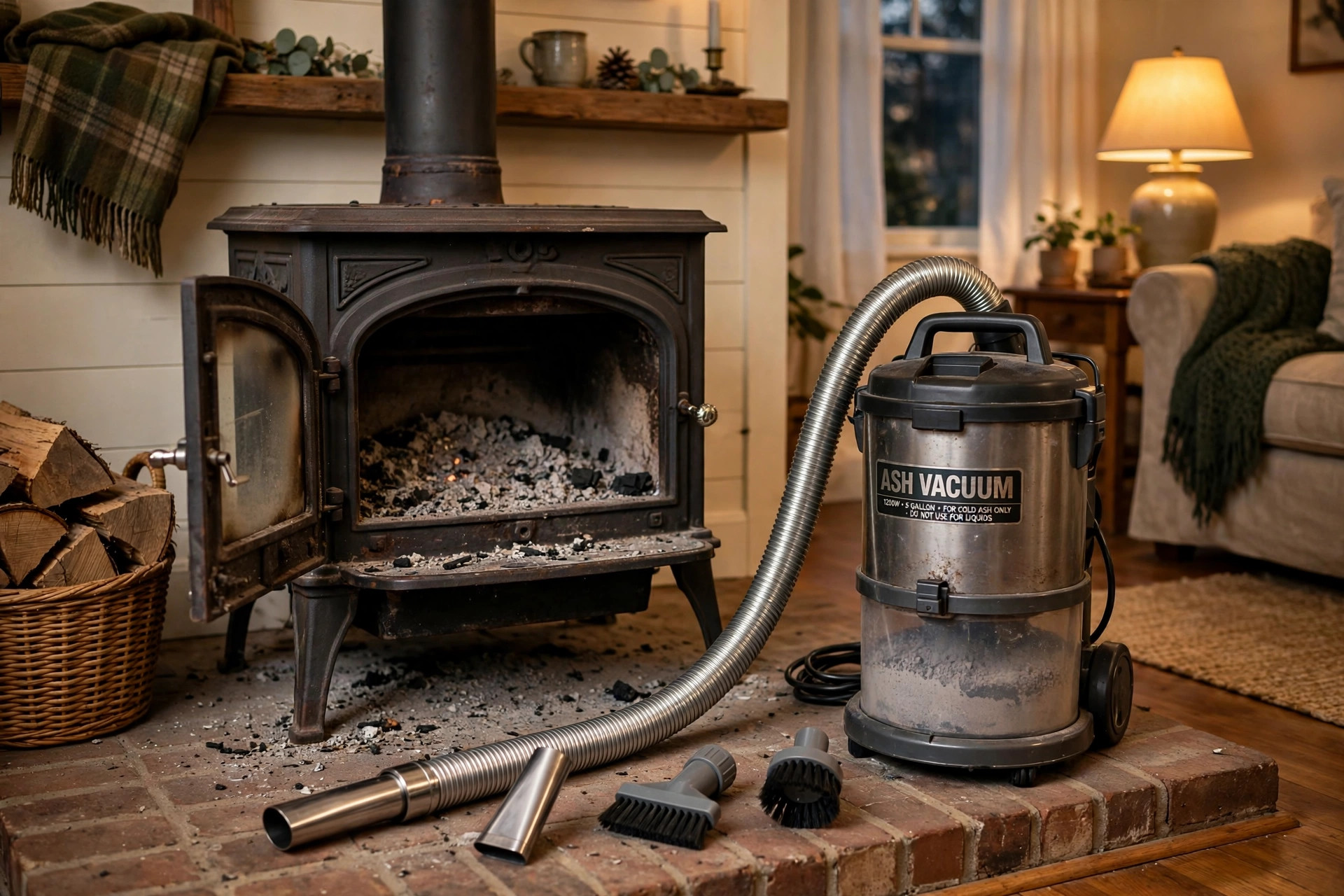
A wood stove warms a house in a way no furnace can match. It also leaves a mess. Fine gray ash builds up in the firebox after every burn, and a regular vacuum is not the tool for it. A standard household vacuum will choke on the fine dust, and its plastic parts can melt or smolder if the ash is still warm. A fireplace ash vacuum is a different machine. It has a metal canister, heat-rated parts, and a special filter made to catch the smallest ash dust.
This fireplace ash vacuums reviews and buying guide explains what these machines do, how they differ from regular shop vacuums, and what to look for before you buy one. The aim is simple: help you pick a model that cleans your fireplace or stove safely and lasts for years.
Why an Ash Vacuum Matters: Fireplace Ash Vacuums Reviews and Buying Guide
Ash looks harmless. It is powdery and light. But fireplace ash contains very fine particles that pass through ordinary filters and drift into the air of your home. Breathing that dust is not good for anyone, and it is worse for people with asthma or allergies. A good ash vacuum uses a HEPA or fine-dust filter that traps those particles instead of blowing them back out.
There is also the question of heat. Ash can hold heat for hours after the fire dies down. Homeowners often clean the firebox the next morning, but embers can still smolder deep inside the ash bed. A regular vacuum has plastic hoses and bags that can catch fire. An ash vacuum has a metal tank and a metal-lined hose designed for this exact risk. Some models carry heat ratings up to several hundred degrees. That is the margin of safety you want.
Fireplace Ash Vacuums Reviews and Buying Guide: How to Choose
Shopping for one of these machines is simpler than it looks. The machines all do the same basic job. What differs is size, power, and build quality.
Tank Size
Most ash vacuums hold between two and five gallons of ash. A small unit is fine if you clean a single wood stove once a week. If you heat with wood all winter, or if you clean a large fireplace plus a stove, a bigger tank saves trips to the ash can. Note that a full tank of ash is heavy. Bigger is not always better if you must carry it up stairs.
Suction Power
Ash is light, so you do not need the biggest motor on the market. But weak suction leaves fine dust behind in the corners of the firebox. Look for a motor of at least 600 to 800 watts, or a rating around 4 to 6 peak horsepower in American shop-style terms. A variable speed or throttle control is a plus. It lets you turn the suction down near delicate firebrick.
The Filter
The filter is the heart of the machine. Cheap units use a single paper filter that clogs fast and lets dust through. Better units use a two-stage system: a pleated cartridge filter plus a fine-dust or HEPA final filter. Some filters are washable, which saves money over time. Replaceable filters cost money every year, but they keep suction strong. Either way, make sure replacement filters are easy to buy. A fine check on Consumer Reports and The Spruce can tell you which models hold up in long-term tests.
Hose and Nozzle
The hose should be metal-lined or made of heat-resistant material, not thin plastic. Look for a long, flexible hose, ideally six feet or more, so you can reach the back of a deep firebox without dragging the canister across your hearth. A flat crevice nozzle and a brush attachment handle corners and hearth edges.
Heat Rating
Check the stated heat rating before you buy. The best units tolerate ash up to about 140 degrees Fahrenheit or higher. No ash vacuum should be used on live embers or visible flames. The rating is a safety margin, not a license to vacuum a live fire.
Types of Ash Vacuums
Dedicated Ash Vacuums
These are the classic models. A compact metal canister on a small cart or handle, built only for ash. They are affordable, usually between 60 and 200 dollars, and they are the most common choice for homeowners with one fireplace or stove. Their filters are made for fine dust. Many come with a small cart or carry handle, which helps on stairs and porches. In reviews, owners praise these simple models for one reason above all: they do a single job and do it well. If your only goal is to clean the firebox quickly each week, a dedicated ash vacuum is the safest bet.
Combination Ash and Dry Vacuums
Some larger units serve as both an ash vacuum and a general dry shop vacuum. They cost more and take up more space, but they can also clean sawdust in the garage or dust in the workshop. If you only want a machine for ash, a dedicated model is simpler and cheaper.
Attachment-Style Ash Collectors
A third type is not a vacuum at all. It is a metal ash-collection canister that connects to the hose of a regular vacuum cleaner. The ash collects in the metal can while the main vacuum provides the suction. These cost less, but they depend on your main vacuum working well, and they do not offer the same heat protection as a true ash vacuum.
Fireplace Ash Vacuums Reviews and Buying Guide: Cost and Price
Expect to pay between 60 and 250 dollars for a quality ash vacuum. At the low end, you get a small canister and a basic filter. In the middle, around 100 to 150 dollars, you find strong suction, washable filters, and metal hoses. Above 200 dollars, you are buying larger tanks, higher heat ratings, or professional features.
Running costs matter too. Washable filters keep yearly costs near zero. Replaceable filters can cost 15 to 30 dollars per set. If you burn wood all winter, you will replace filters once or twice a season. Budget for that when you compare prices.
Using Your Ash Vacuum Safely
Read the manual before the first use. The rules below apply to almost every model.
Wait until the fire is fully out. Give the firebox at least 12 to 24 hours of cooling time after the last burn. No visible embers should remain. Stir the ash with a metal poker and check for hot spots before you vacuum.
Empty the canister after every use. Ash piled in a warm canister can hold heat longer than you expect. Move the ash to a metal container with a tight lid. Store that container outside the house, away from wood decks and walls, for several days before you throw the ash away.
Do not vacuum anything else with the machine unless the maker says it is safe. Paper, plastic, and fine sawdust behave differently from ash in a hot canister.
Wear a dust mask while you work. Even a good filter lets a little dust escape when you open the tank. If you have breathing problems, ask someone else to do the job or use a respirator rated for fine dust. Keep children and pets out of the room while you clean. The fine ash can settle on furniture and floors, so a quick wipe of nearby surfaces after the job keeps the whole room cleaner.
For more on safe ash handling, see the guidance from EPA and the CPSC. Both agencies publish plain advice on fireplace and wood stove safety.
Care and Upkeep
An ash vacuum is simple to maintain. Shake or tap the filter clean after each use. Wash the filter when it looks gray and clogged, and let it dry fully before you put it back. Never run the machine with a wet filter. The dust will turn to paste.
Check the hose every few uses. Fine ash can build up inside and cut suction. A long brush or a gentle shake clears most of it. Inspect the metal canister for rust once a year, especially if you store the unit in a damp garage.
Keep spare filters on hand. A clogged filter is the most common reason a working machine seems to lose power. With a fresh filter, most units perform like new.
For general upkeep ideas that apply to all kinds of cleaning equipment, guides like Bob Vila and This Old House cover seasonal maintenance in plain language.
Where to Buy
Ash vacuums are widely sold at American home improvement stores, including Home Depot and Lowe’s. Both carry several models in stock during heating season and sell replacement filters online. Family Handyman publishes buying advice that can help you compare models before you go to the store.
Prices online often beat store prices in spring and summer, when demand drops. Filters are worth buying in pairs so you always have a dry spare ready.
Related Cleaning Equipment
An ash vacuum handles one job well. Other parts of the house need their own tools. Our guide to wet dry shop vacuums reviews and buying guide covers larger machines for garages and workshops. For floors, see steam mops for tile floors price comparison usa. And if your gutters need attention before winter, read commercial grade gutter cleaning tools with free shipping.
Frequently Asked Questions
Can I use a regular vacuum cleaner for fireplace ash?
No. A regular vacuum is not built for fine ash dust or hidden heat. The dust can pass through its filter and enter the air. The plastic parts can melt or catch fire if the ash is still warm. Buy a machine made for ash. Good Housekeeping reviews cleaning equipment and explains the difference between vacuum types.
How long should I wait before vacuuming ash?
Wait at least 12 to 24 hours after the fire dies. Stir the ash with a metal poker and look for glowing spots. If you see any ember at all, wait longer. When in doubt, wait another day.
Are ash vacuum filters washable?
Many are. Washable filters save money and work well if you dry them fully before reuse. Some models use replaceable paper filters instead. Check the manual for your model before washing anything.
What size ash vacuum do I need?
For one fireplace or stove cleaned weekly, a two to three gallon unit is enough. For full-time wood heating or multiple stoves, choose four to five gallons. Remember that a full tank of ash is heavy to carry.
Can ash vacuums handle warm ash?
They handle warm ash within their stated heat rating, usually up to about 140 degrees Fahrenheit. They are not made for hot coals or live embers. Never vacuum a fire that is still burning.
What do I do with the ash after vacuuming?
Put it in a metal container with a tight lid. Keep the container outside the house for at least three days. Then use the ash in the garden or put it in the trash, following your local rules. Never store ash in a paper bag or plastic bin.
A Final Word
A fireplace ash vacuum is a small machine that solves a real problem. It keeps fine dust out of your lungs and warm ash away from plastic vacuum parts that were never meant to handle it. Choose a model with a metal tank, a good filter, and a clear heat rating. Empty it after every use and store the ash outside. Follow this fireplace ash vacuums reviews and buying guide, and your fireplace or stove will be cleaner, safer, and easier to live with all winter long.
References
Bob Vila. (n.d.). Home improvement advice. https://www.bobvila.com Consumer Reports. (n.d.). Product reviews and ratings. https://www.consumerreports.org Family Handyman. (n.d.). DIY home repair and maintenance. https://www.familyhandyman.com Good Housekeeping. (n.d.). Product reviews and home advice. https://www.goodhousekeeping.com Lowe’s. (n.d.). Home improvement products. https://www.lowes.com The Home Depot. (n.d.). Home improvement products. https://www.homedepot.com The Spruce. (n.d.). Home and garden advice. https://www.thespruce.com This Old House. (n.d.). Home renovation guidance. https://www.thisoldhouse.com U.S. Consumer Product Safety Commission. (n.d.). Product safety information. https://www.cpsc.gov U.S. Environmental Protection Agency. (n.d.). Protecting human health and the environment. https://www.epa.gov
Was this guide helpful?

About Michael Thompson
The My Garden US editorial team writes practical, in-depth home and garden guides for American homeowners — tested advice, no fluff.
You May Also Like
Wet Dry Shop Vacuums Reviews and Buying Guide
September 18, 2026 0 views
Top Rated Robot Vacuum Cleaners for Southern States
April 22, 2026 0 views
Finding Reliable Same Day Appliance Repair Services Near Me
May 8, 2026 0 views